
Bakman PB1319 Terahertz Difference-Frequency Photoconductive Antenna (DF-PCA)
| Brand | Bakman |
|---|---|
| Origin | USA |
| Manufacturer Type | Authorized Distributor |
| Origin Category | Imported |
| Model | PB1319 |
| Price Range | USD 2,800 – 8,500 |
| Operating Temperature (Standard) | −40 °C to +85 °C |
| Operating Temperature (Cryogenic Variant) | 4.5 K to 350 K |
| Pump Wavelength | 760–855 nm |
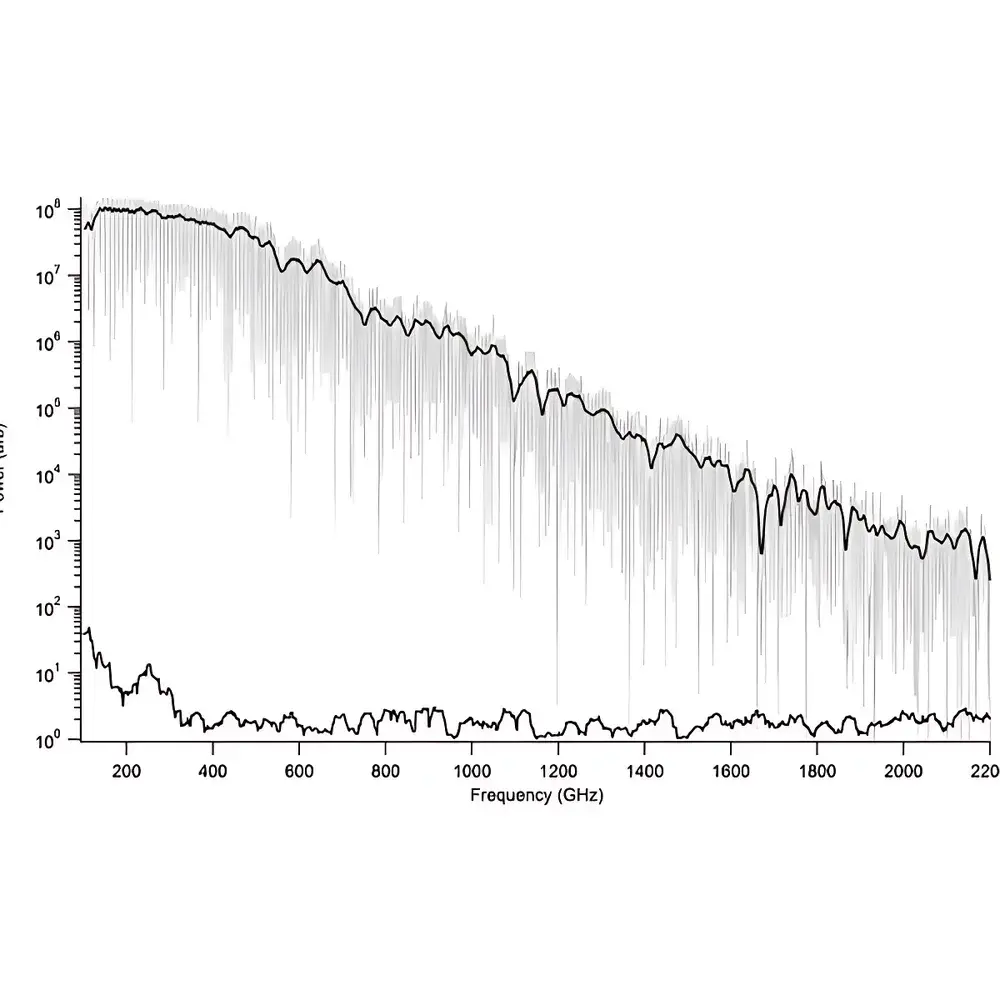
| THz Bandwidth | 0.1–3 THz |
| Bias Voltage Range | ±20 V (typ.), ±25 V (max) |
| Dark Current @20 V, 25 °C | ≤0.5 µA |
| THz Output Power @200 GHz, 30 mW pump | 0.02–0.5 µW |
| Dynamic Range @100 GHz / @1000 GHz | 70 dB / 50 dB |
| Optical Return Loss @780 nm | ≥40 dB |
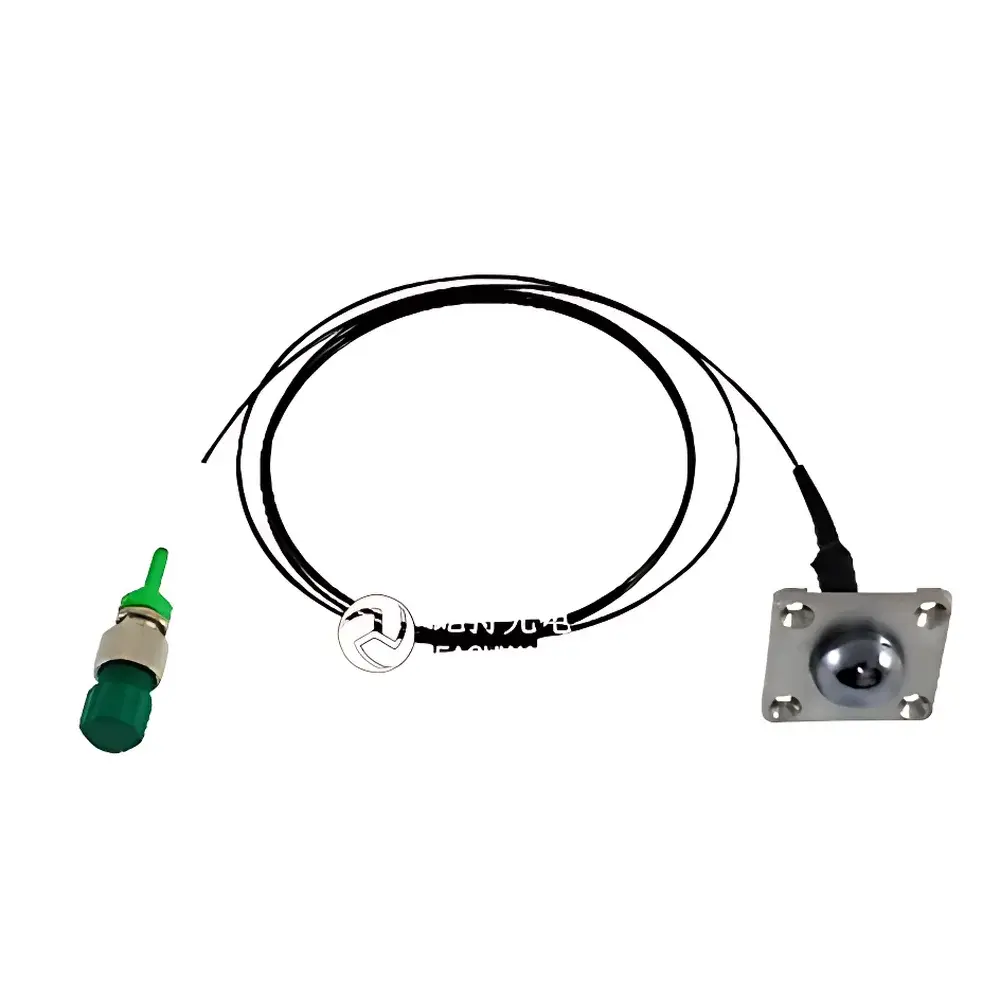
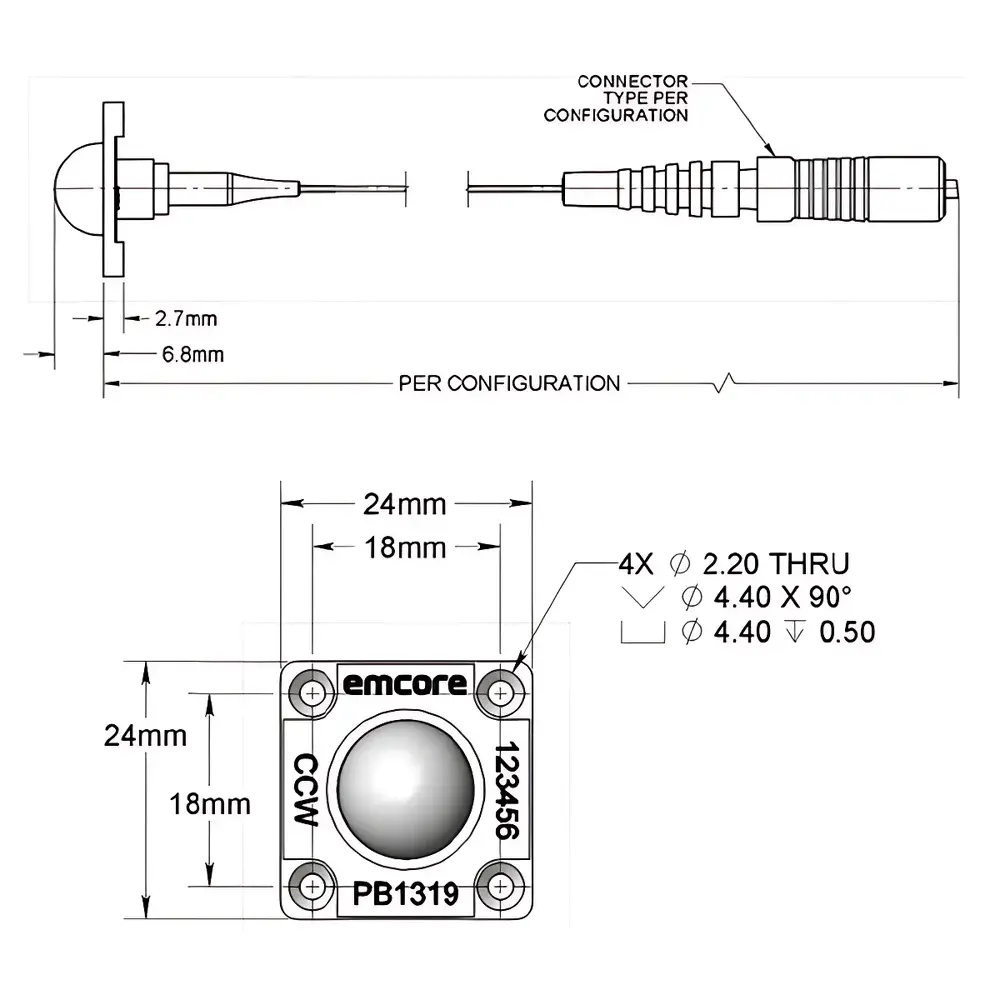
| Packaging | Fiber-coupled, hermetically sealed module with integrated silicon hyperhemispherical lens |
Overview
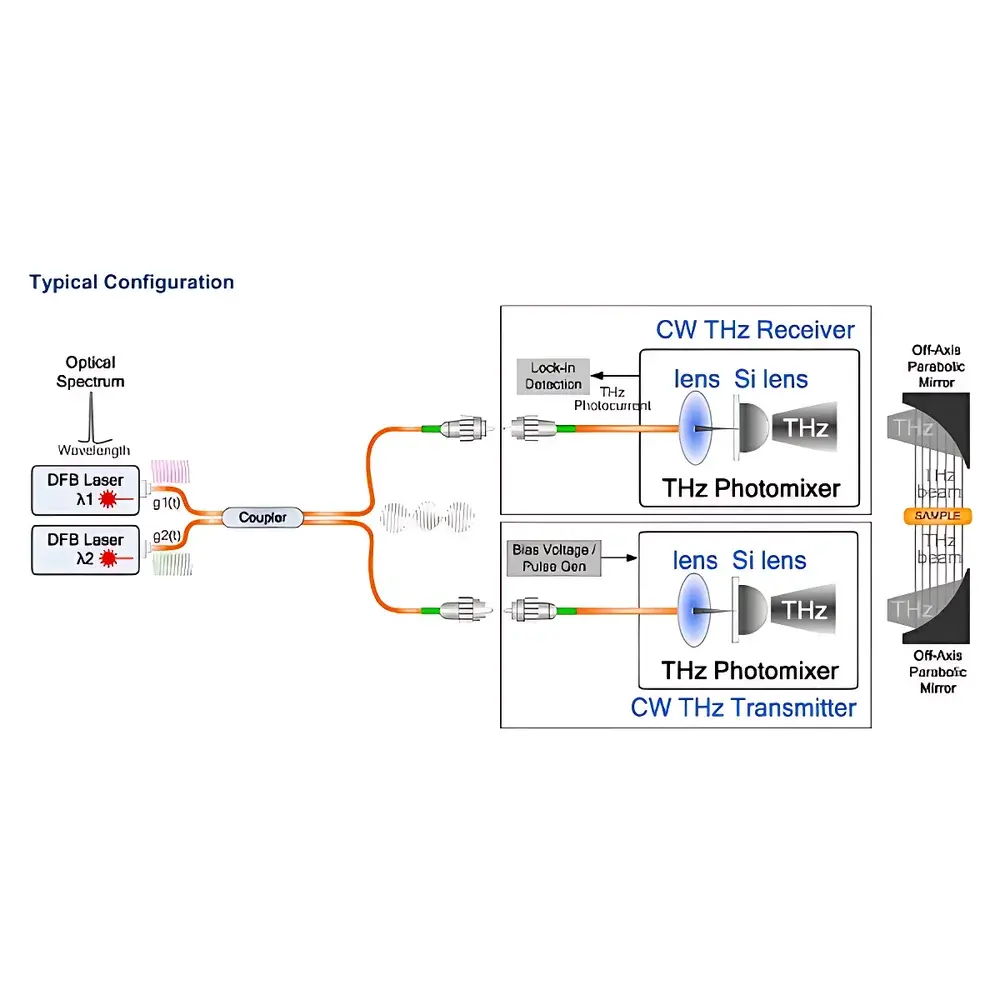
The Bakman PB1319 Terahertz Difference-Frequency Photoconductive Antenna (DF-PCA) is a fiber-coupled, cryogenically compatible optoelectronic transducer engineered for coherent, continuous-wave (CW) terahertz generation and detection in difference-frequency mixing (DFM) systems. Unlike pulsed photoconductive antennas, the PB1319 operates under dual-wavelength optical excitation—typically two near-infrared lasers with a frequency offset Δf—enabling tunable, narrowband THz radiation via optical heterodyning in low-temperature-grown gallium arsenide (LT-GaAs). This architecture eliminates the need for ultrafast femtosecond lasers while maintaining phase coherence, high signal-to-noise ratio, and precise frequency agility across 0.1–3 THz. The device leverages LT-GaAs’s sub-picosecond carrier lifetime and high dark resistivity to support stable biasing up to ±25 V, enabling efficient photocurrent-driven THz emission and heterodyne detection under ambient or cryogenic conditions.
Key Features
- Fiber-pigtailed design with FC/APC connector for seamless integration into fiber-based DFM setups
- Hermetically sealed, robust packaging incorporating a monolithically aligned silicon hyperhemispherical lens for optimized THz collimation and coupling efficiency
- Two operational variants: standard-grade (−40 °C to +85 °C) and cryogenic-grade (4.5 K to 350 K), both sharing identical spectral response and bias specifications
- Low dark current (≤0.5 µA at 20 V, 25 °C) ensures minimal thermal noise and high dynamic range in lock-in or homodyne detection schemes
- Optical return loss ≥40 dB at 780 nm minimizes feedback-induced laser instability in tightly coupled oscillator configurations
- Laser-welded mechanical assembly guarantees long-term alignment stability and vibration resistance in metrology-grade environments
- Customizable mounting interfaces and lens configurations—including threaded housing, kinematic mounts, or vacuum-compatible flanges—for integration into UHV THz spectrometers or scanning near-field platforms
Sample Compatibility & Compliance
The PB1319 DF-PCA is designed for use with commercial diode-pumped solid-state (DPSS) or distributed feedback (DFB) laser sources operating between 760 nm and 855 nm. Its LT-GaAs active layer exhibits uniform responsivity across this band, supporting dual-laser configurations with linewidths <100 kHz and relative intensity noise (RIN) <−140 dB/Hz. The antenna complies with IEC 61340-5-1 for electrostatic discharge (ESD) sensitivity (Class 1A), and its hermetic seal meets MIL-STD-883H Method 1014.10 for moisture resistance. While not certified for medical or aerospace deployment, its performance traceability aligns with ISO/IEC 17025 calibration practices when used within validated THz spectroscopy workflows compliant with ASTM E2998 (Standard Guide for Terahertz Spectroscopy).
Software & Data Management
The PB1319 functions as a hardware component within externally controlled THz DFM systems; it does not include embedded firmware or onboard processing. System-level data acquisition—such as THz amplitude/phase sweeps, frequency locking, or multi-tone heterodyne mapping—is coordinated via third-party platforms including LabVIEW-based drivers, Python-controlled DAQ systems (e.g., National Instruments PXIe), or MATLAB instrument control toolboxes. When integrated into the PB7200 THz spectrometer platform, the antenna supports automated calibration routines with audit-trail logging per FDA 21 CFR Part 11 requirements. Raw THz field data are output in IEEE 754-compliant binary format (.bin) or HDF5, enabling reproducible post-processing in tools such as TeraView TeraPulse Analysis Suite or open-source libraries like terapy and thztools.
Applications
- High-resolution gas-phase rotational spectroscopy (e.g., NH₃, H₂O, CH₃OH isotopologues) requiring <100 kHz frequency resolution
- Non-destructive evaluation (NDE) of polymer crystallinity and pharmaceutical tablet coating uniformity via THz dispersion analysis
- Phase-sensitive imaging of semiconductor wafer dopant profiles using THz time-domain interferometry (TDI) extensions
- Calibration reference source for absolute power measurement in metrological THz facilities (e.g., NIST-traceable THz radiometry)
- Coherent receiver front-end in astronomical heterodyne receivers targeting 1–3 THz atmospheric windows
- Dynamic studies of carrier dynamics in 2D materials (e.g., graphene, MoS₂) under gated photoexcitation
FAQ
What pump laser specifications are required to drive the PB1319 optimally?
Two single-frequency lasers with wavelength separation matching the target THz frequency (Δλ ≈ c·Δf/λ₀²), each delivering 20–40 mW into the fiber input, linewidth <100 kHz, and RIN <−140 dB/Hz.
Can the PB1319 be operated in vacuum or liquid helium environments?
Yes—the cryogenic variant is qualified for operation from 4.5 K to 350 K and features vacuum-compatible packaging with indium-sealed windows and OFHC copper housing.
Is the silicon lens removable or replaceable?
No—the hyperhemispherical silicon lens is permanently aligned and bonded during laser-welded assembly to preserve wavefront fidelity; custom lens options (e.g., silicon aspheric, TPX hemispherical) are available upon request.
Does the PB1319 require active temperature stabilization during operation?
Not for standard use; however, temperature drift >±2 °C may shift the LT-GaAs carrier lifetime by ~0.1 ps/°C, affecting optimal bias point and dynamic range—thus thermoelectric stabilization is recommended for metrology-grade applications.
How is polarization handled in the PB1319 antenna geometry?
The LT-GaAs dipole structure is linearly polarized along the [110] crystal axis; incident pump polarization must be aligned parallel to the dipole orientation for maximum photocurrent yield, as marked on the housing.




