
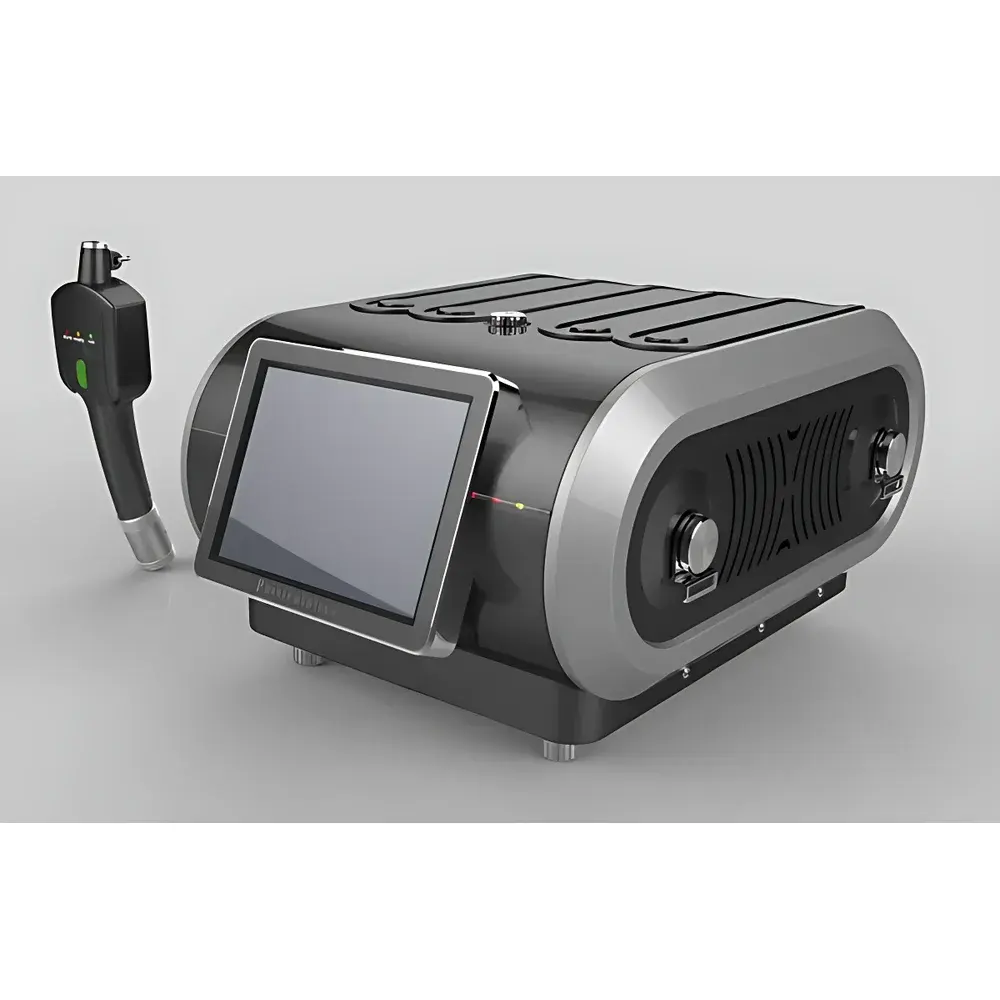
Banff QitVenture 1 Portable Gas Chromatography-Mass Spectrometry System
| Brand | Banff |
|---|---|
| Origin | Zhejiang, China |
| Manufacturer Type | Original Equipment Manufacturer (OEM) |
| Product Category | Domestic |
| Model | QitVenture 1 |
| Instrument Type | Portable |
| Weight | 18 kg |
Overview
The Banff QitVenture 1 is a field-deployable gas chromatography–mass spectrometry (GC-MS) system engineered for rapid, on-site qualitative and quantitative analysis of volatile and semi-volatile organic compounds. It integrates a capillary GC separation module with an electron ionization (EI) quadrupole mass spectrometer, operating on the principle of retention time alignment coupled with spectral matching against reference libraries. Designed for real-time decision support in dynamic environments—such as emergency response zones, industrial perimeters, or mobile military platforms—the instrument delivers laboratory-grade analytical performance without requiring fixed infrastructure. Its compact architecture supports operation under variable ambient conditions (10–35 °C, 20–80% RH), with thermal stabilization of the GC column oven and MS source to maintain retention time reproducibility and mass accuracy across deployments.
Key Features
- Integrated GC-MS platform with pre-packed fused-silica capillary column optimized for high-resolution separation of VOCs, TICs, TIMs, CWAs, and SVOCs
- Quadrupole mass analyzer with unit mass resolution (m/Δm ≥ 1,000 at m/z 69) and mass range of 10–500 Da
- Detection limits ≤ 100 ppt (v/v) for representative VOCs (e.g., benzene, toluene) using thermal desorption sampling; sub-ppb sensitivity achievable with quantitative tube injection
- Onboard 7-inch capacitive touchscreen interface with intuitive icon-driven workflow—single-button initiation for sample analysis, library search, and report generation
- Proprietary deconvolution algorithm enabling resolution of co-eluting peaks in complex matrices; compatible with NIST MS Search v2.4 and user-customizable spectral libraries
- Embedded GPS module synchronized with acquisition timestamps and spectral data for georeferenced reporting and chain-of-custody documentation
- Internal rechargeable Li-ion battery (≥ 4 h continuous operation) and integrated helium or hydrogen carrier gas cartridge (≥ 20 analyses per fill)
- Modular mechanical design supporting vehicle-mounting (19″ rack or shock-absorbing cradle), drone integration (payload-compatible mounting interface), and tripod-based field deployment
Sample Compatibility & Compliance
The QitVenture 1 accepts gaseous, headspace, and thermally desorbed solid-phase microextraction (SPME) samples via standardized inlet ports. It complies with ASTM D6348–21 (standard test method for determination of gaseous compounds by GC-MS), ISO 16000-6:2011 (indoor air—determination of VOCs), and EPA Method TO-15 (determination of VOCs in ambient air). Data integrity conforms to ALCOA+ principles (Attributable, Legible, Contemporaneous, Original, Accurate, Complete, Consistent, Enduring, Available), with audit-trail-enabled software supporting 21 CFR Part 11 compliance when configured with role-based access control and electronic signatures. All spectral acquisitions are time-stamped, GPS-tagged, and stored in vendor-neutral .CDF (NetCDF) format for third-party reprocessing.
Software & Data Management
The instrument runs Banff Analytical Suite (BAS) v3.2 firmware, featuring a browser-based remote monitoring interface (HTTPS/TLS 1.2 secured) and local offline analysis capability. Key functions include total ion current (TIC) and extracted ion chromatogram (XIC) visualization, automated background subtraction using iterative polynomial fitting, baseline correction via asymmetric least squares (AsLS), and compound identification confidence scoring (match factor ≥ 800/1000 required for tentative ID). Raw data files include full scan spectra (0.1 s dwell), retention indices (Kovats), and quantitative calibration curves (linear or quadratic, R² ≥ 0.995). Export options include CSV, PDF analytical reports, and XML metadata compliant with ISA-Tab standards for laboratory information management system (LIMS) integration.
Applications
- Environmental Emergency Response: Real-time detection of VOCs/SVOCs in air, water (via purge-and-trap derivatization), and soil headspace at spill or contamination sites
- Chemical Defense & CBRN Reconnaissance: Field identification of nerve agents (e.g., sarin, VX), blister agents (e.g., sulfur mustard), and TICs from surface wipe or air sampling
- Industrial Process Monitoring: Continuous leak detection in petrochemical facilities, refinery off-gas profiling, and catalyst bed effluent screening
- Aerospace Safety: In-cabin air quality assessment for hydrazine derivatives (UDMH, MMH), formaldehyde, and CO precursors; spacecraft environmental monitoring
- Fire & Hazmat Incident Command: Mobile deployment for post-blast residue analysis, pyrolysis product identification, and toxic combustion byproduct mapping
- Forensic Toxicology & Public Health: Screening of illicit substances in biological matrices (urine, blood headspace), food adulterant verification, and hospital indoor air VOC surveys
FAQ
What sample introduction methods does the QitVenture 1 support?
It supports direct air sampling, thermal desorption tubes (Tenax TA, Carbopack B), SPME fibers, and quantitative loop injection (1–100 µL). Optional accessories include a heated canister autosampler and a portable purge-and-trap concentrator.
Is the system compliant with regulatory reporting requirements for environmental labs?
Yes—when operated with validated methods and calibrated standards, it meets EPA, ISO, and ASTM reporting criteria. Full audit trails, electronic signatures, and raw data archiving support GLP/GMP audits.
Can the instrument operate without external power or gas supply?
Yes—integrated battery and carrier gas cartridges enable fully autonomous operation for ≥4 hours and ≥20 analyses, respectively.
How is compound identification validated?
Identification relies on dual confirmation: retention index deviation ≤ ±5 units versus certified standards, and NIST library match factor ≥ 800/1000. Deconvoluted spectra are subjected to spectral purity checks prior to reporting.
What maintenance intervals are recommended for field use?
Ion source cleaning every 50 analyses; GC column trimming every 200 runs; annual mass calibration using perfluorotributylamine (PFTBA); no routine vacuum pump oil changes due to sealed turbomolecular pump design.






