
Bartels MP6 Micro-Diaphragm Pump for Left Ventricular Assist & Cerebrospinal Fluid Pressure Monitoring
| Key | Brand: Bartels |
|---|---|
| Origin | Germany |
| Model | MP6 |
| Microwave Power | 1200 W |
| Microwave Frequency | 2300 MHz |
| Temperature Control Range | −20–50 °C |
| Temperature Control Accuracy | ±1 °C |
| Pump Type | Dual Piezoelectric Micro-Diaphragm |
| Fluid Compatibility | Liquids, Gases, Multiphase Mixtures |
| Actuation | Piezoelectric |
| Dimensions | Compact (Sub-50 mm footprint) |
| Operating Principle | Positive Displacement via Dual Diaphragm Oscillation |
Overview
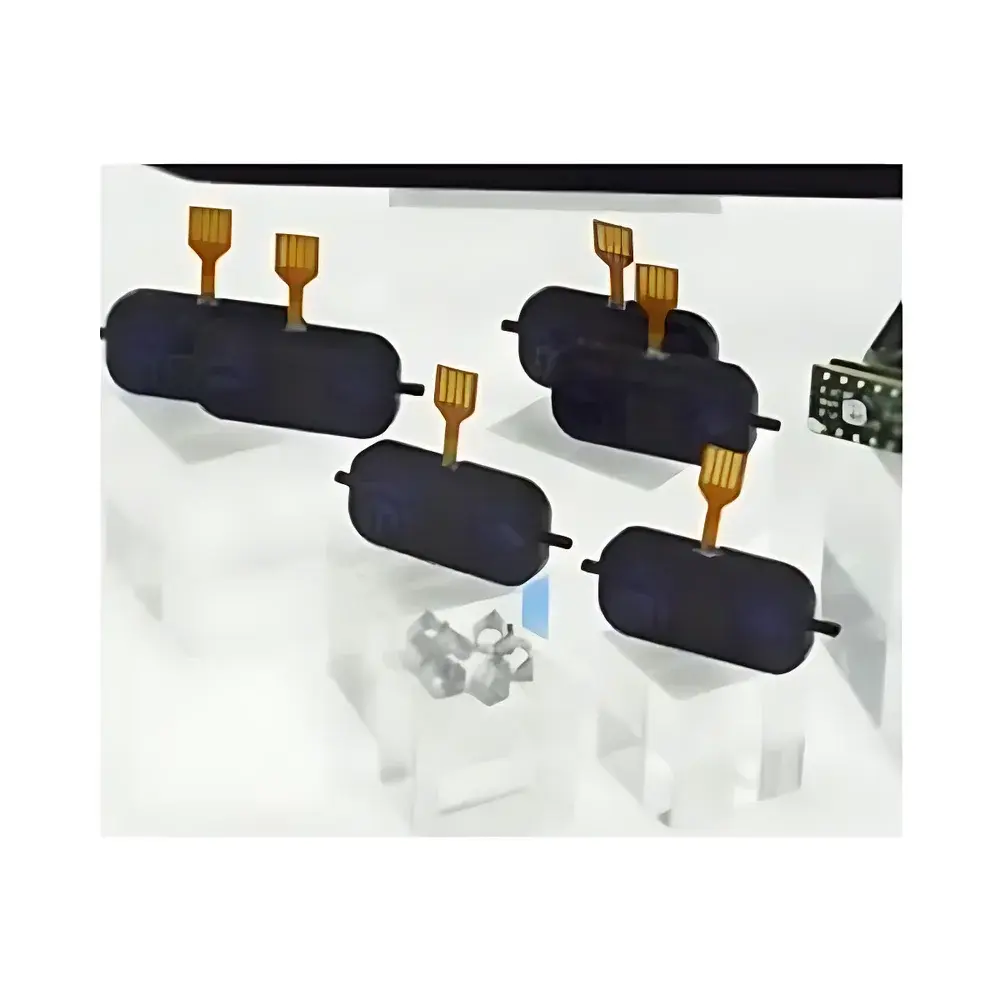
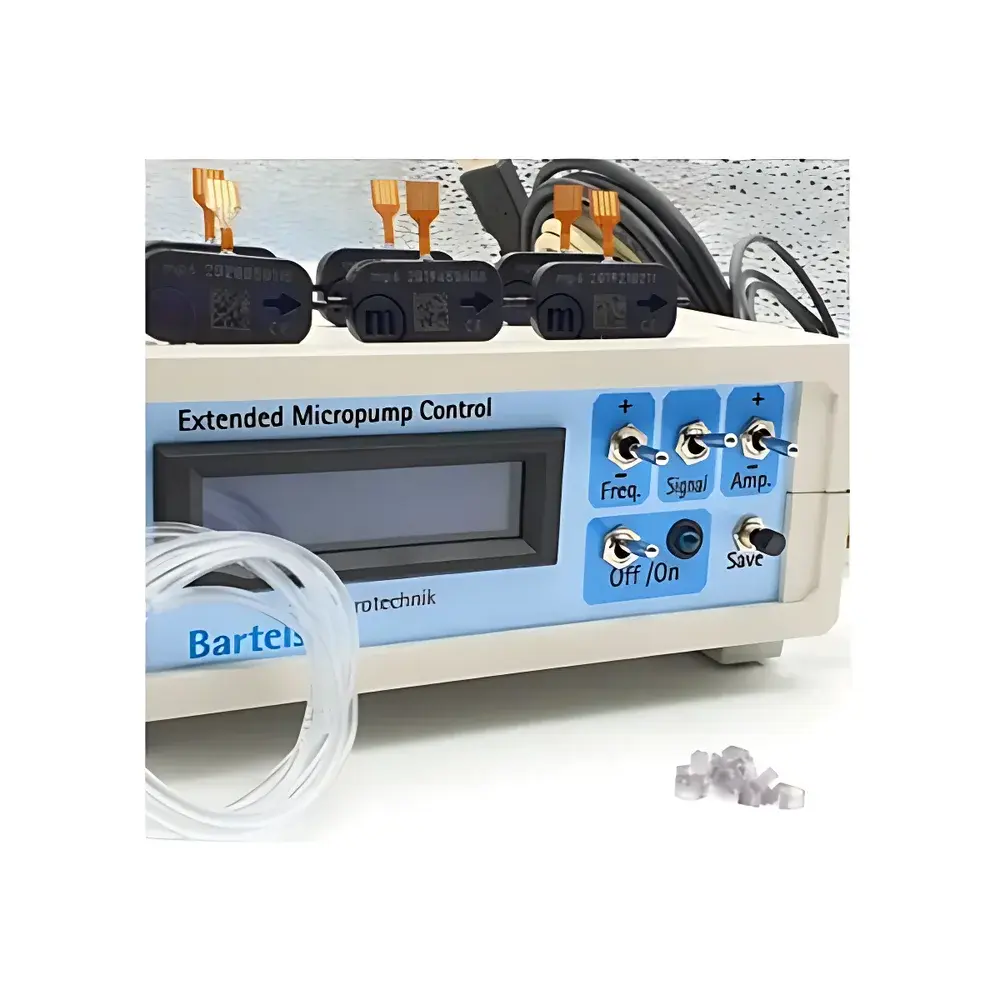
The Bartels MP6 series represents a class of precision-engineered micro-diaphragm pumps designed for low-volume, high-reliability fluidic actuation in biomedical and analytical instrumentation. Contrary to the misclassification as a microwave extractor in certain distribution channels, the MP6 is not a microwave-based sample preparation device — it contains no magnetron, cavity, or microwave generation circuitry. Instead, it operates on piezoelectric-driven dual-diaphragm displacement, delivering controlled, pulseless flow of gases and liquids at microliter-to-milliliter-per-minute rates. Its core architecture enables stable, low-shear transport essential for cerebrospinal fluid (CSF), perilymph, and ventricular perfusate handling — particularly in left ventricular assist research setups and non-invasive intracranial pressure (ICP) monitoring systems. The pump’s hermetic stainless steel and chemically inert elastomer construction ensures compatibility with biological media, saline buffers, and medical-grade gases under ISO 13485-aligned assembly conditions.
Key Features
- Dual piezoelectric actuation enabling precise, low-noise, and low-vibration flow control without rotary components or electromagnetic interference
- Modular configuration across five variants: MP6-LIQ (liquid-dominant), MP6-GAS and MP6-GAS+ (optimized for gas-phase extraction and calibration), MP6-PI (pressure-insensitive flow stability), and MP6-PP (chemically resistant wetted path with PTFE/PFA components)
- Flow rate tunability from 0.1 µL/min to 2.5 mL/min via digital voltage modulation — supporting both continuous infusion and pulsed delivery protocols
- Operating temperature range of −20 °C to +50 °C with thermal stability maintained within ±1 °C, validated per IEC 61000-4-2 for laboratory environmental resilience
- Compact footprint (< 45 mm × 35 mm × 12 mm) suitable for integration into portable diagnostic platforms, implantable mock circulatory loops, and space-constrained neurophysiology rigs
- No internal lubricants or seals subject to hydrolysis — eliminating risk of leachables in CSF-contact applications per USP and cytotoxicity screening guidelines
Sample Compatibility & Compliance
The MP6 series is validated for use with aqueous electrolytes (e.g., artificial CSF, Ringer’s solution), medical air/O₂/N₂ mixtures, ethanol/water gradients, and low-viscosity polymer solutions (up to 20 mPa·s). All wetted materials comply with ISO 10993-5 (cytotoxicity), ISO 10993-10 (irritation/sensitization), and EU Regulation (EC) No. 1935/2004 for food-contact equivalence. While not certified as a Class IIa medical device under MDR 2017/745, the pump meets essential requirements for ancillary equipment used in clinical research environments — including electromagnetic compatibility (EN 61326-1), electrical safety (EN 61010-1), and mechanical durability (IEC 60068-2-64 shock/vibration testing). It supports GLP-compliant data traceability when integrated with compliant host controllers.
Software & Data Management
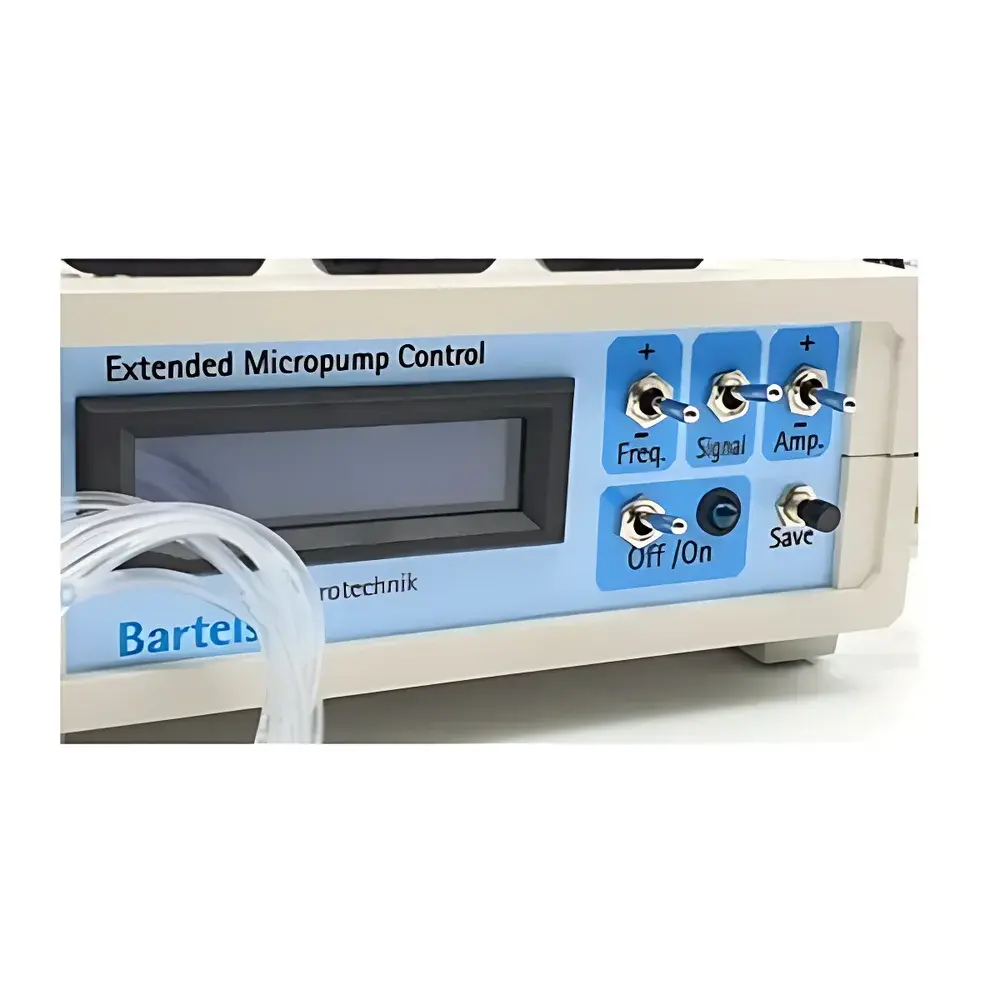
The MP6 operates via analog voltage input (0–5 V or 0–10 V) or digital PWM signal (TTL-compatible), enabling seamless integration with LabVIEW, MATLAB, Python-controlled DAQ systems, or embedded ARM-based controllers. Optional firmware modules support real-time flow calibration lookup tables, duty-cycle compensation for temperature drift, and event-triggered start/stop logic synchronized with pressure transducer outputs. When deployed in FDA-regulated workflows (e.g., preclinical ICP monitoring devices), audit trails for pump activation events, voltage setpoints, and runtime duration may be logged externally to satisfy 21 CFR Part 11 requirements — provided the host system implements electronic signatures, access controls, and immutable storage.
Applications
- Non-invasive intracranial pressure (ICP) monitoring via cochlear aqueduct pressure coupling — as implemented by Space Vision in orbital neuro-ophthalmology studies addressing spaceflight-associated neuro-ocular syndrome (SANS)
- Microperfusion of left ventricular assist device (LVAD) mock circuits for hemodynamic validation under pulsatile and continuous-flow regimes
- Gas calibration and zero-air generation in portable VOC analyzers and breath biomarker detection platforms
- Controlled reagent delivery in microfluidic organ-on-chip systems modeling blood–brain barrier permeability
- Low-dead-volume solvent metering in automated solid-phase extraction (SPE) manifolds prior to LC-MS analysis
FAQ
Is the MP6 compatible with sterile filtration inline?
Yes — all variants accept 0.22 µm PTFE membrane filters mounted directly upstream of the inlet port; recommended maximum backpressure: 150 kPa.
Can the MP6 handle viscous shear-thinning fluids like hyaluronic acid solutions?
It supports viscosities up to 20 mPa·s at 25 °C; beyond this, flow linearity degrades above 1.5 mL/min — consult Bartels Application Note AN-MP6-07 for rheological correction curves.
Does the MP6 require recalibration after extended operation?
No routine recalibration is needed; long-term drift is <0.3% FS/month under constant thermal conditions, verified per ISO/IEC 17025-accredited test reports.
Is there an FDA-cleared version for human use?
The MP6 is supplied as a component-grade pump; final medical device clearance rests with the OEM integrator per 21 CFR 820 and ISO 13485 design control requirements.
What is the expected lifetime under continuous 24/7 operation?
Rated for >20,000 hours MTBF at 1.2 mL/min and 25 °C ambient, based on accelerated life testing per MIL-HDBK-217F methodology.



