
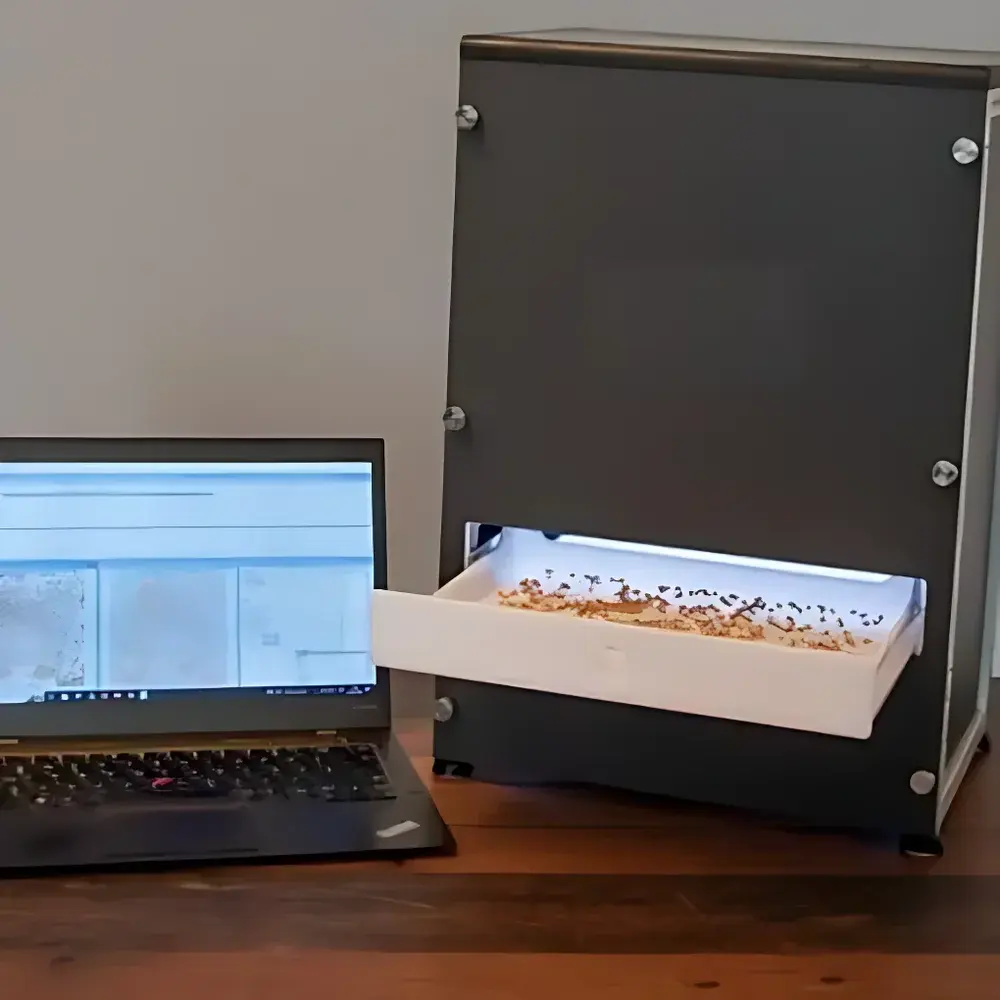
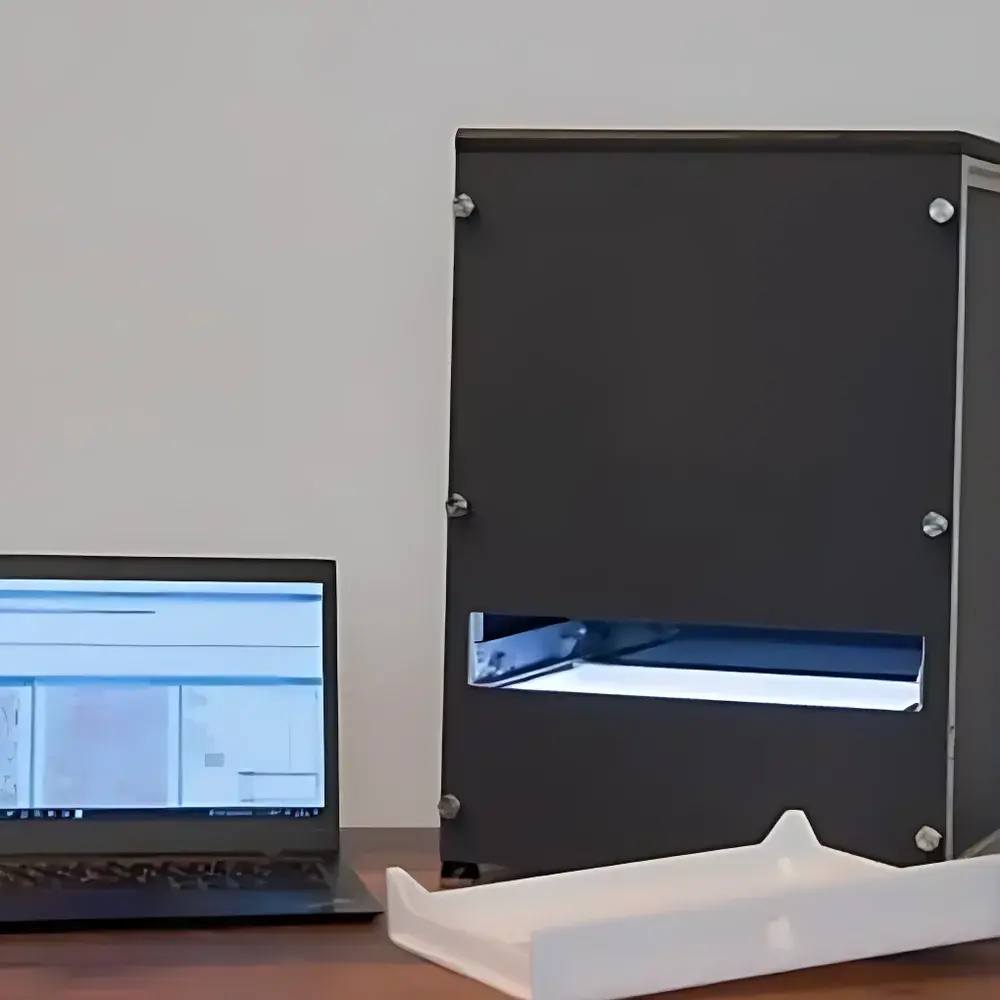
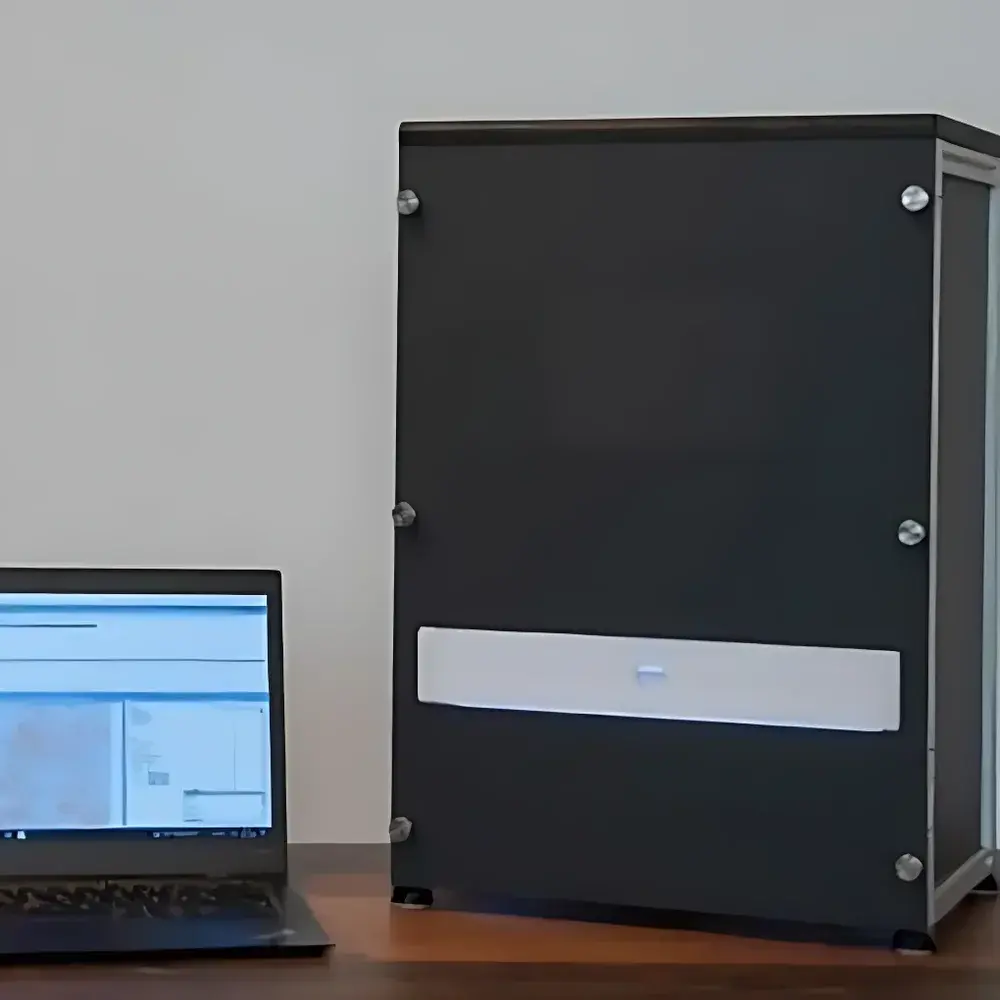
Basicmodel Automatic Seed Analyzer and Thousand-Grain Weight (TGW) System
| Brand | Anasys |
|---|---|
| Origin | USA |
| Model | Basicmodel |
| Power Supply | 100–240 V, 50–60 Hz |
| Dimensions | 54 × 36 × 27 cm |
| Weight | 12.5 kg |
| Seed Tray Capacity | up to 500 wheat seeds |
| Minimum Detectable Seed Area | >2 mm² |
| Counting Accuracy | <0.5% |
| Compatible OS | Windows 10 or later |
| Includes | Instrument unit, seed tray, software disc, optional balance interface |
Overview
The Basicmodel Automatic Seed Analyzer and Thousand-Grain Weight (TGW) System is an image-based, high-throughput seed phenotyping instrument engineered for precision, repeatability, and regulatory traceability in seed science laboratories. Utilizing high-resolution digital imaging coupled with calibrated optical geometry and pixel-to-metric calibration algorithms, the system quantifies morphometric parameters—including seed count, projected area (mm²), length, width, circularity, and aspect ratio—by analyzing top-down grayscale or color images of seeds arranged on a standardized tray. Integrated mass input from an external analytical balance (via RS-232 or USB interface) enables automatic calculation of thousand-grain weight (TGW) per ASTM D7429–22 and ISO 5651–2 guidelines. Designed for routine operation in GLP-compliant seed testing labs, breeding stations, and grain quality control facilities, the system supports objective, operator-independent assessment without manual sorting or subjective thresholding.
Key Features
- High-speed image acquisition with auto-focus and uniform LED illumination, minimizing shadow artifacts and reflectance variability across heterogeneous seed batches.
- Configurable analysis protocols: users define region-of-interest (ROI) masking, size thresholds, shape filters (e.g., elongation ≥1.8 for broken kernels), and outlier rejection criteria—enabling differentiation of shriveled, damaged, or undersized seeds per ISTA Rule 5.3.
- Sub-pixel edge detection and adaptive binarization ensure robust segmentation even for low-contrast seeds (e.g., hulled barley or immature soybeans).
- Real-time validation overlay: original image, binary mask, and measurement annotations are displayed side-by-side during analysis to support method verification and audit readiness.
- Hardware-level reproducibility: fixed optical path, temperature-stabilized sensor, and mechanical tray registration eliminate inter-run geometric drift—critical for longitudinal breeding trials.
- Modular connectivity: supports direct integration with METTLER TOLEDO, SARTORIUS, and OHAUS balances compliant with NIST-traceable calibration certificates.
Sample Compatibility & Compliance
The Basicmodel accommodates dry, non-viable, and surface-cleaned seeds with projected area exceeding 2 mm²—including cereals (wheat, rice, oats), pseudocereals (quinoa), legumes (soybean, lentil), maize kernels, and vegetable seeds (tomato, brassica). It excludes oily, mucilaginous, or highly irregular specimens requiring pre-conditioning (e.g., flax or chia). All image acquisition and measurement workflows comply with ISO 11591 (seed sampling), ISO 5651–2 (TGW determination), and ISTA Accreditation Requirements for Image-Based Analysis. Audit trails—including user ID, timestamp, instrument serial number, calibration log, and raw image hash—are embedded in exported reports to satisfy FDA 21 CFR Part 11 and EU Annex 11 data integrity requirements.
Software & Data Management
The included Windows-native application provides full version-controlled analysis workflows, supporting batch processing of up to 99 trays per session. Raw TIFF images and metadata (EXIF + custom tags) are stored locally in a structured folder hierarchy. Quantitative outputs—including mean TGW ± SD, coefficient of variation (CV%), particle count distribution histograms, and area-frequency curves—are exportable as CSV, PDF, or native Excel (.xlsx) files with embedded formulas for downstream statistical analysis (e.g., ANOVA in R or JMP). The software maintains a local SQLite database for historical comparison, enabling trend analysis across harvest years or cultivars. Optional network deployment allows centralized license management and role-based access control (RBAC) for multi-user environments.
Applications
- Seed lot certification per national phytosanitary standards (e.g., USDA APHIS, CFIA, EPPO).
- Phenotypic screening in forward and reverse genetics programs—quantifying segregation ratios in M2 populations or CRISPR-edited lines.
- Quality assurance in commercial seed coating and priming operations, where size uniformity correlates with germination synchrony.
- Grain trade compliance: verifying contractual TGW specifications prior to shipment under GAFTA or FOSFA contracts.
- Academic research on seed dormancy, stress-induced morphological plasticity, or maternal effect inheritance.
FAQ
Does the system require regular recalibration?
Yes—optical calibration using the supplied reference grid must be performed before each daily session or after any physical relocation; software enforces this via time-stamped calibration logs.
Can it process mixed-species samples?
No—trays must contain a single species or morphotype; cross-species analysis introduces classification ambiguity due to divergent size/shape distributions.
Is cloud-based data backup supported?
Not natively; however, the local SQLite database and image repository are compatible with standard enterprise backup solutions (e.g., Veeam, Acronis) configured at the OS level.
What validation documentation is provided?
Each unit ships with a Factory Calibration Certificate (traceable to NIST SRM 2036), IQ/OQ protocol templates, and a Software Verification Report confirming algorithmic conformity to ISO 5651–2 Annex B.
Can third-party balances be integrated?
Yes—if the balance provides ASCII-based serial output conforming to ANSI/NCWM Handbook 44 Appendix D, custom driver configuration is available upon request.





