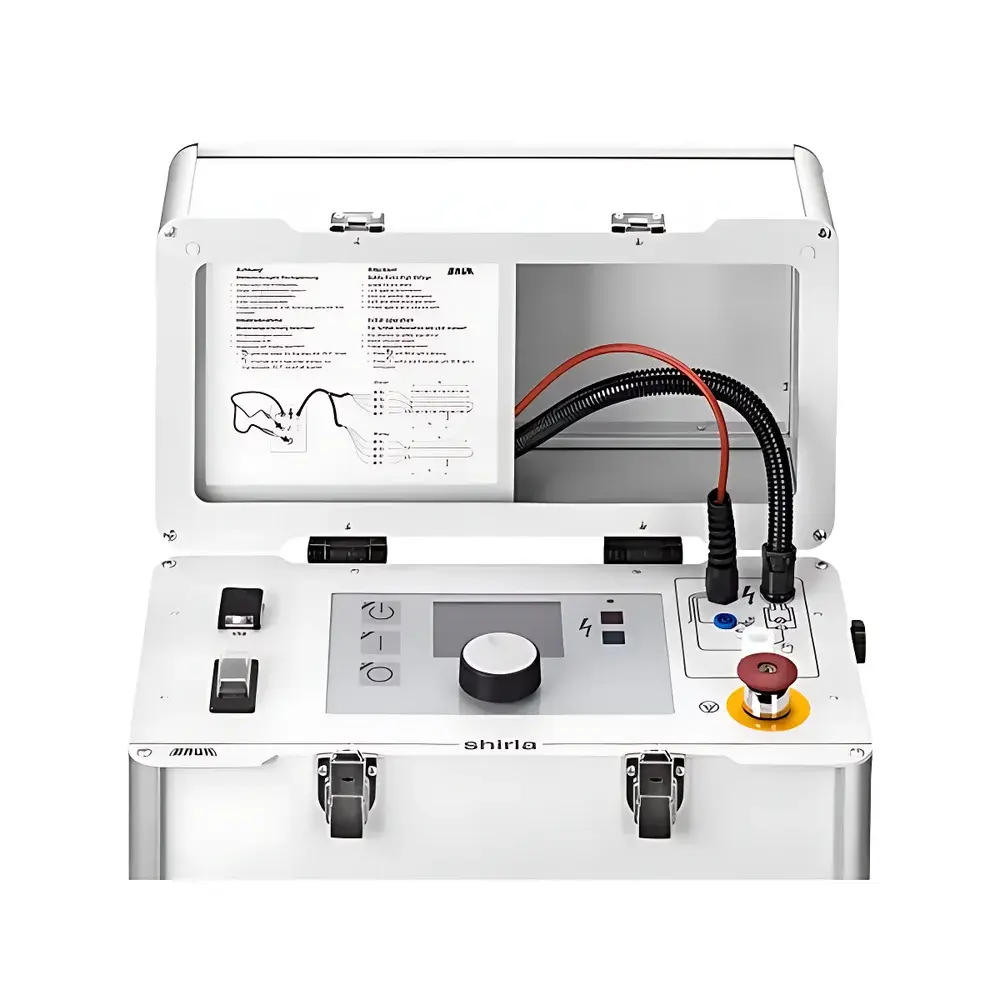
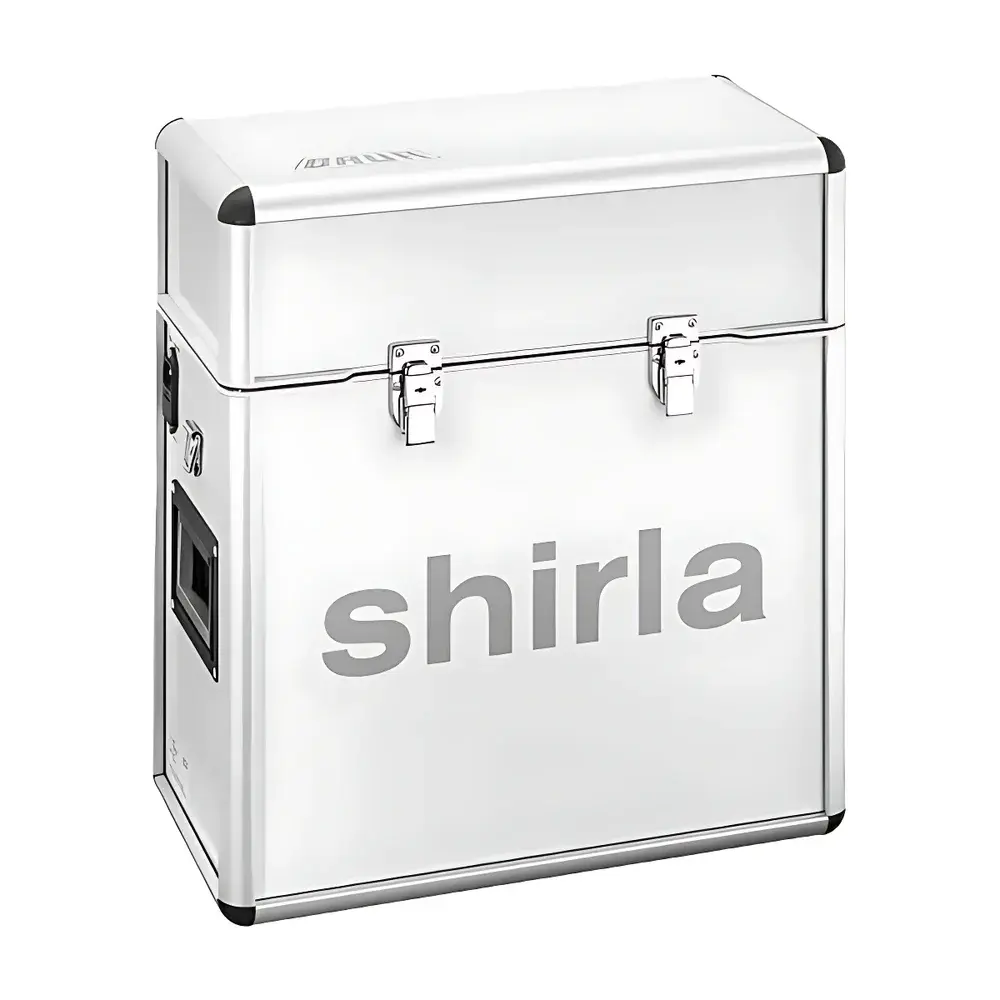
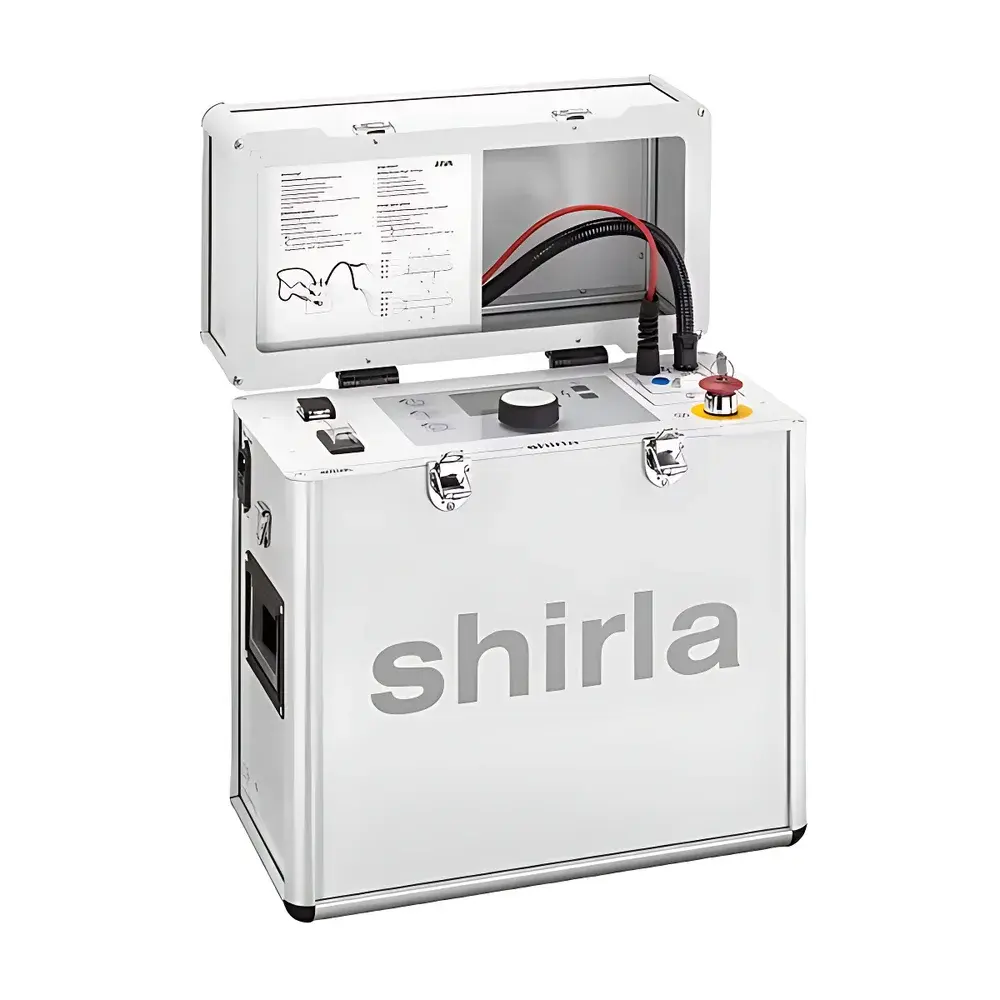
BAUR shirla Cable Sheath Integrity Tester & Fault Locator
| Brand | BAUR (Austria) |
|---|---|
| Origin | Austria |
| Model | shirla |
| Operating Principle | Automatic Murray/Glaser Bridge-Based Pre-location & Pulse Current Injection |
| Max Test Voltage | 10 kV |
| Bridge Resistance Measurement Range | 4-wire Kelvin, ±0.1% accuracy |
| Pulse Output | 100 V–10 kV, 700 mA peak, 4 selectable pulse widths |
| Battery Operation | Internal rechargeable battery, full functionality on battery |
| Environmental Rating | -20°C to +50°C operating, IP2X enclosure |
| Dimensions | 440 × 490 × 220 mm |
| Weight | <20 kg (incl. accessories) |
| Compliance | IEC 61000-4 series EMC, IEC 61010-1 Safety, EN 61326-1 |
| Reporting | Automated test report generation with USB 2.0 export |
| Cable Segment Definition | Up to 50 user-defined segments (length, conductor cross-section, material) for distance compensation |
| Leakage Compensation | Automatic detection and offset correction during tanδ and insulation resistance measurement |
| Display | Backlit 320 × 240 pixel LCD with auto-brightness adjustment |
Overview
The BAUR shirla Cable Sheath Integrity Tester & Fault Locator is a portable, fully automated diagnostic system engineered for precise pre-location and pinpointing of faults in medium- and low-voltage power cables, control cables, and lighting cables. It integrates two complementary measurement methodologies: the classical Murray and Glaser bridge principle for high-accuracy resistance-based fault distance estimation, and controlled pulse current injection for definitive fault pinpointing—including sheath breaches, moisture ingress points, and localized insulation degradation. Unlike generic cable testers, the shirla dynamically compensates for variable cable geometry by allowing up to 50 user-defined cable segments—each characterized by length, conductor cross-sectional area, and material resistivity—ensuring metrologically traceable distance calculations even across heterogeneous cable routes. Designed for field deployment in utility substations, industrial plants, and railway infrastructure maintenance, the system operates reliably across extreme ambient conditions (-20 °C to +50 °C) and meets IEC 61010-1 safety requirements for CAT III 1000 V environments.
Key Features
- Automated bridge balancing and measurement execution—no manual null adjustment required
- Integrated 4-wire Kelvin resistance measurement with ±0.1% accuracy and 1 μA resolution
- Configurable pulse output: 100 V–10 kV adjustable amplitude, 700 mA peak current, four programmable pulse widths
- Real-time leakage current detection and automatic compensation during tanδ and insulation resistance tests
- Onboard backlit LCD (320 × 240 pixels) with adaptive brightness control for daylight and low-light operation
- Internal rechargeable battery enabling full-system operation—including 10 kV DC withstand testing—without external AC supply
- Comprehensive cable modeling engine supporting multi-segment routes with copper/aluminum conductor specification and temperature coefficient application
Sample Compatibility & Compliance
The shirla is validated for use on single- and multi-core PVC, PE, XLPE, and rubber-insulated cables rated up to 35 kV system voltage. It supports both metallic and non-metallic sheaths—including corrugated aluminum, lead, and polymer barriers—and accommodates asymmetric grounding configurations common in distribution networks. All electrical safety functions—including overvoltage clamping, current limiting, and interlocked discharge circuits—conform to EN 61010-1 Edition 3. Electromagnetic compatibility adheres to IEC 61000-4-2 (ESD), -4-3 (radiated RF), and -4-4 (electrical fast transients). The device is CE-marked and suitable for use under EU Low Voltage Directive 2014/35/EU and EMC Directive 2014/30/EU. While not certified for intrinsically safe zones, its design permits operation adjacent to energized switchgear when used per BAUR’s approved field procedures.
Software & Data Management
Test execution, parameter configuration, and result interpretation are managed via an embedded real-time operating system—not reliant on external PCs or proprietary software installations. Every test sequence—including bridge pre-location, pulse reflection analysis, and sheath continuity verification—triggers automatic report generation compliant with ISO/IEC 17025 documentation requirements. Reports include timestamped measurement values, environmental metadata (temperature, humidity), operator ID, cable segment identifiers, and pass/fail status per applicable IEC 60502-2 or IEEE 400.2 criteria. Data export occurs exclusively via isolated USB 2.0 interface; no network connectivity or cloud synchronization is implemented—ensuring data sovereignty and alignment with utility cybersecurity policies (e.g., NIST SP 800-82, ENTSO-E Cybersecurity Framework). Audit trails record all parameter modifications, calibration events, and firmware updates with immutable timestamps.
Applications
- Pre-location of low-resistance faults (shorts, ground faults) in MV underground distribution cables prior to acoustic or time-domain reflectometry (TDR) pinpointing
- Detection and quantification of moisture-induced sheath degradation in buried direct-buried or duct-installed cables
- Verification of metallic sheath continuity and bonding integrity in HV cable systems per IEC 60229
- Routine acceptance testing of newly installed cable routes in rail signaling and process automation infrastructure
- Troubleshooting intermittent faults in aging control cable bundles where conventional megger testing yields ambiguous results
- Commissioning support for cable rehabilitation projects involving partial replacement or joint re-termination
FAQ
Does the shirla require external calibration equipment?
No. The system performs internal self-calibration of bridge reference resistors and pulse amplitude sensors at power-on and after each 24-hour operational cycle. Traceable calibration certificates are issued annually by BAUR-accredited service centers per ISO/IEC 17025.
Can it locate open-circuit faults?
The shirla is optimized for low-to-medium impedance faults (≤100 kΩ). Open-circuit or very high-impedance faults (>1 MΩ) require complementary TDR or surge pulse reflection methods; however, the shirla’s bridge mode can confirm continuity loss and isolate affected cable sections.
Is firmware update supported in the field?
Yes—via USB stick using BAUR-signed firmware packages. Updates preserve all stored test records and user-defined cable libraries without reset.
What protective measures prevent damage during high-voltage testing?
Hardware-enforced current limiting (10 mA @ 5 kV, 5 mA @ 10 kV), active arc detection with sub-millisecond shutdown, and redundant discharge monitoring ensure compliance with IEC 61010-1 dielectric withstand and fault energy containment requirements.