
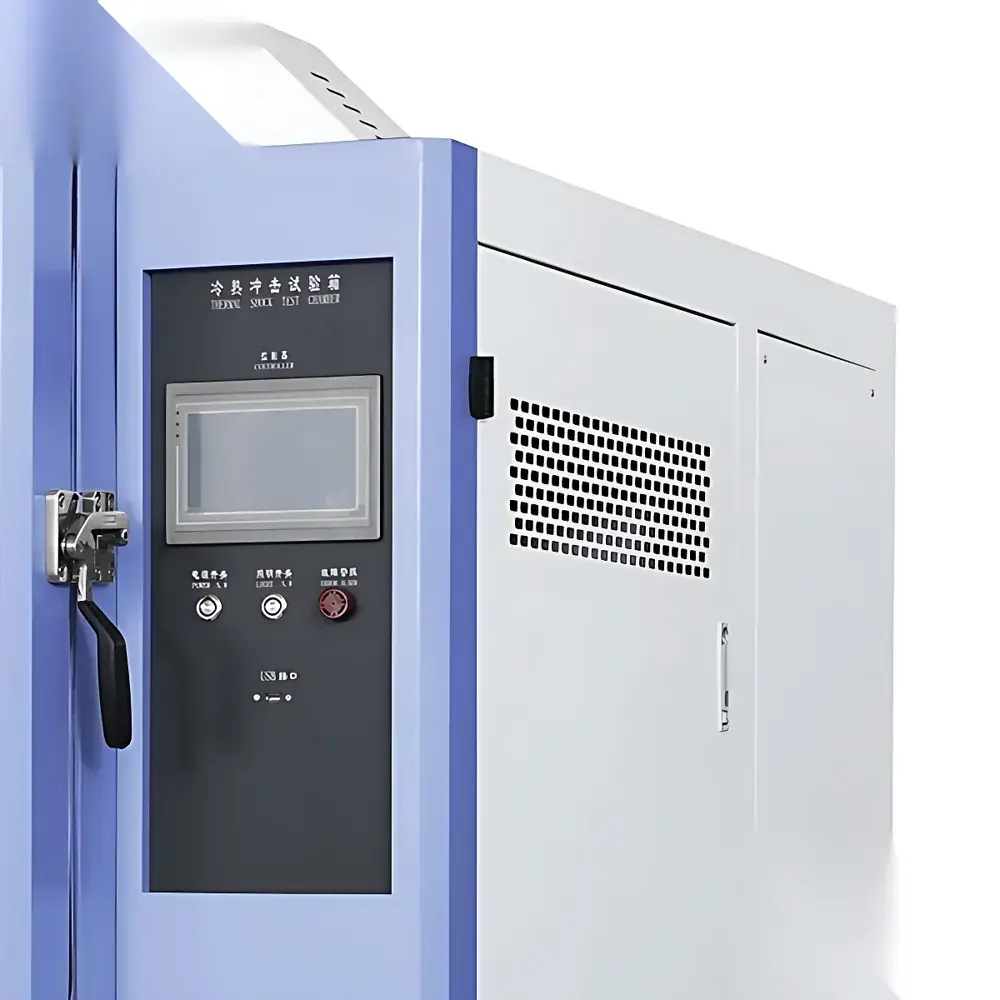
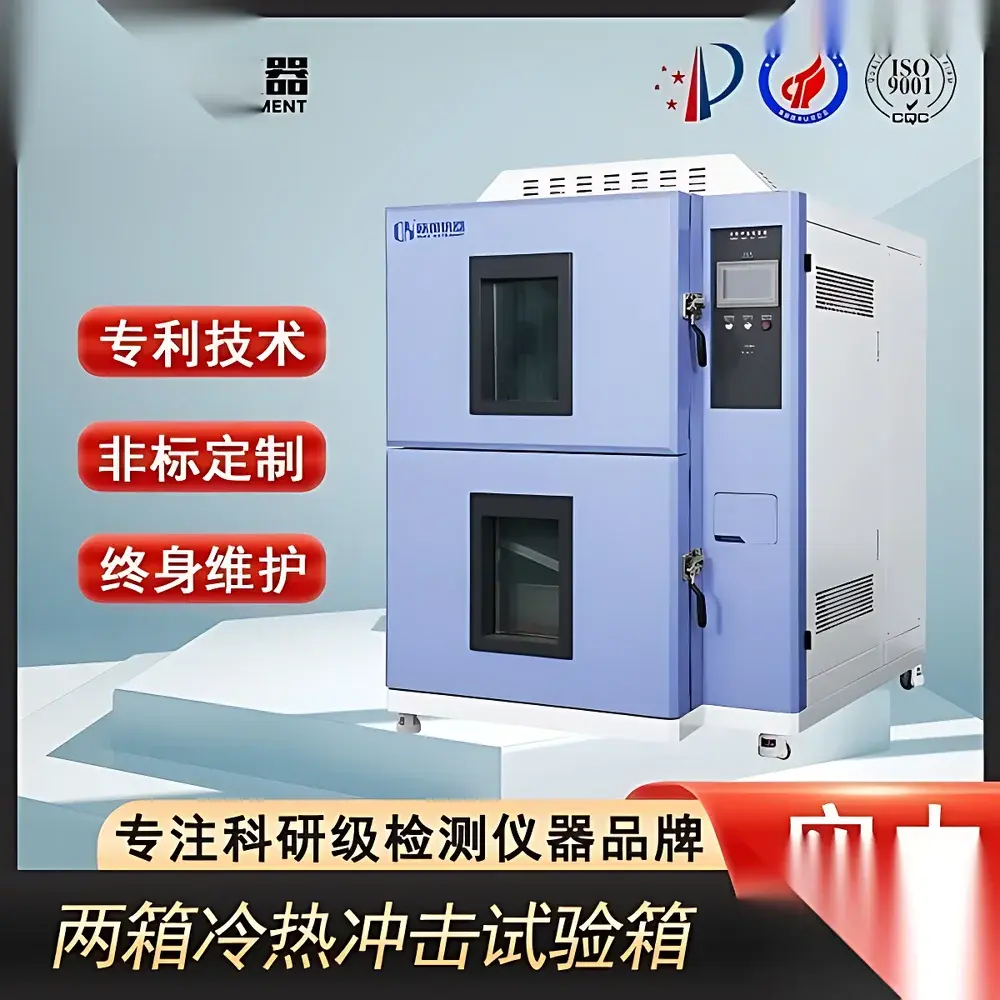
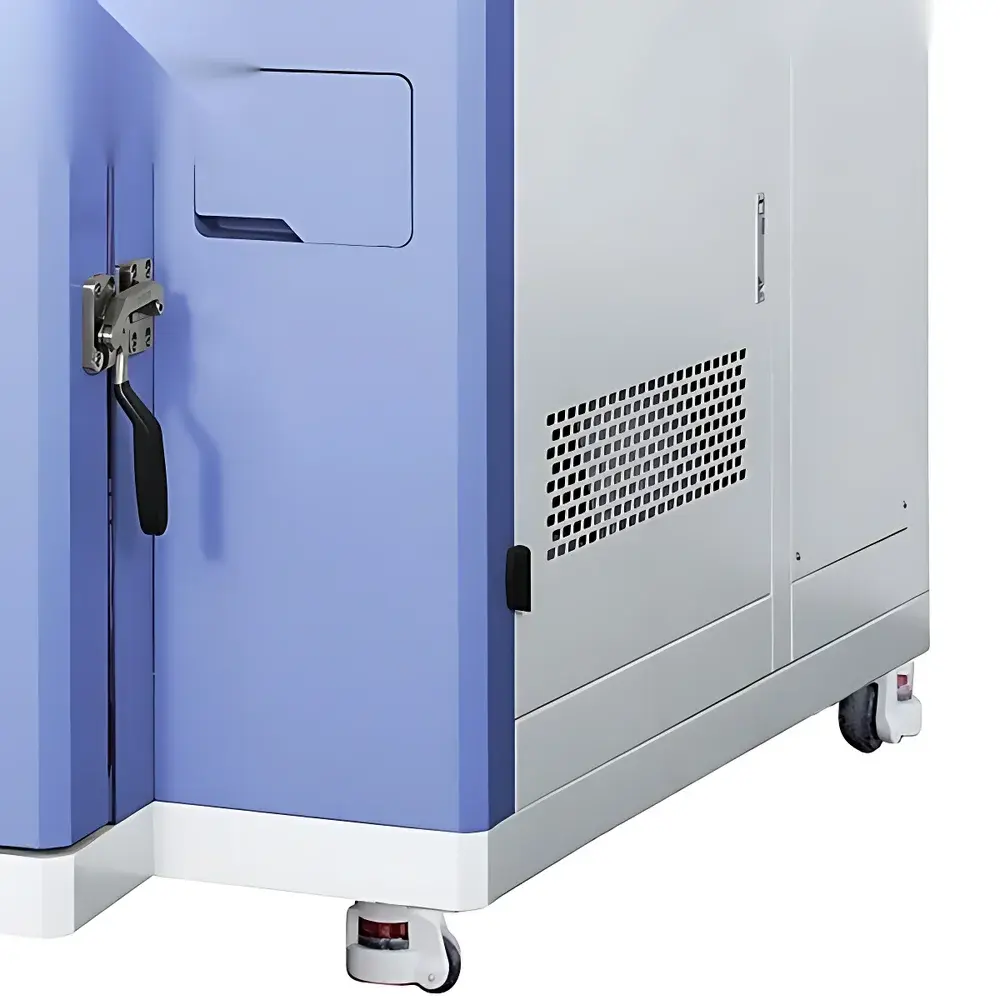
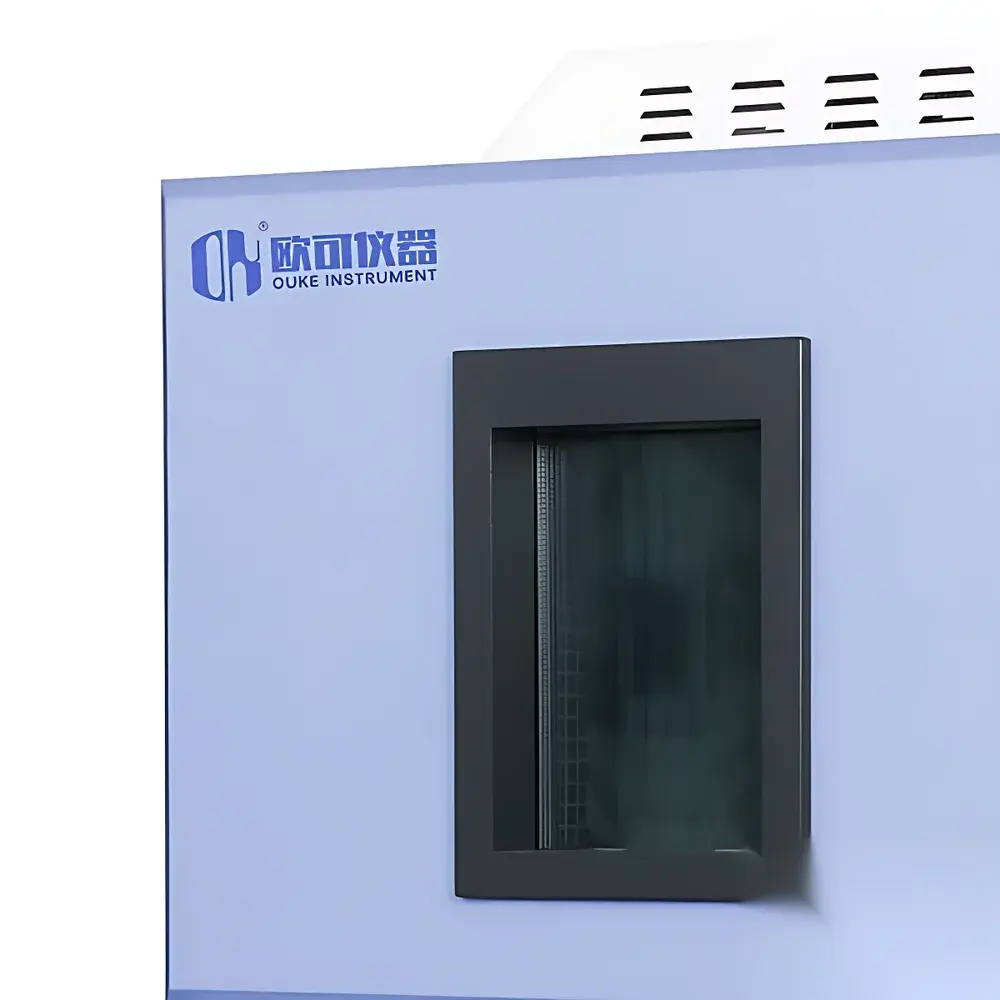
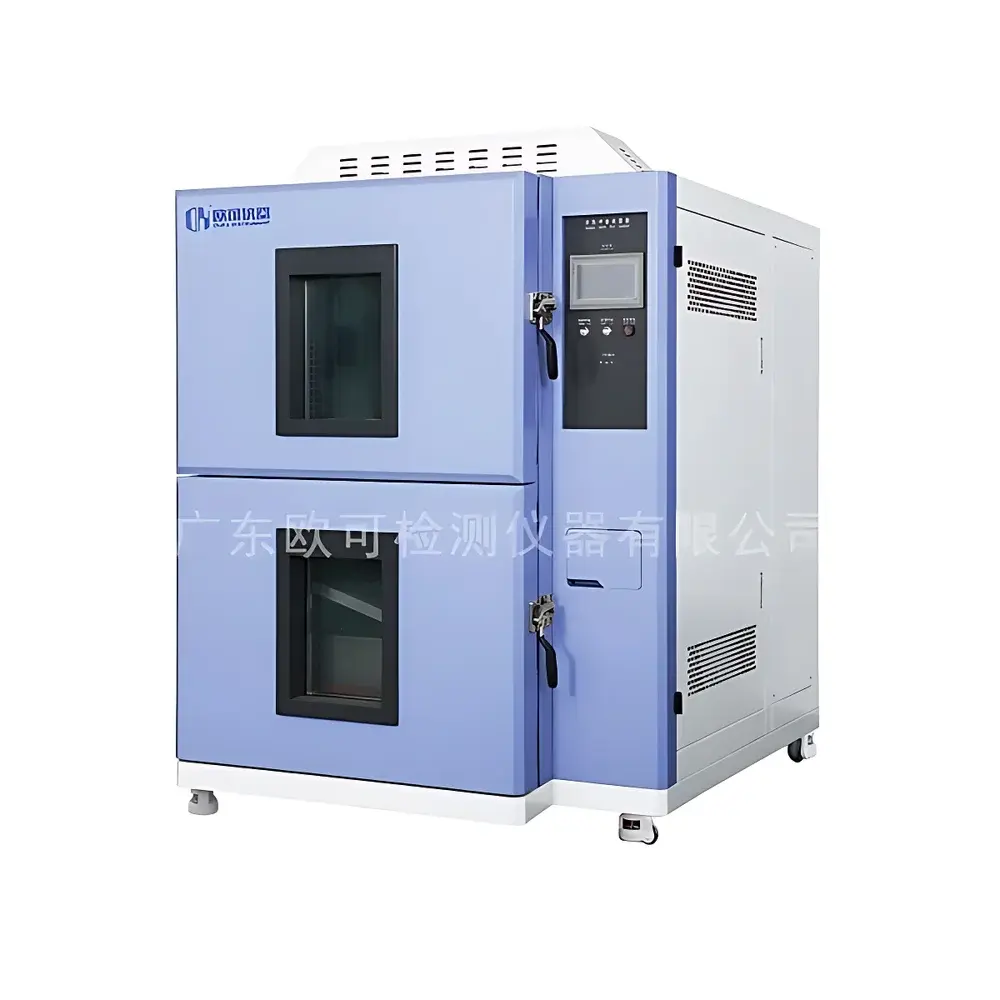
Two-Bay Thermal Shock Test Chamber
| Brand | Other Brands |
|---|---|
| Origin | Imported |
| Manufacturer Type | General Distributor |
| Price | USD 11,200 (FOB) |
Overview
The Two-Bay Thermal Shock Test Chamber is an engineered environmental stress screening system designed for rapid, high-fidelity thermal cycling between extreme temperature extremes. It operates on the dual-chamber (hot/cold) principle—separating high-temperature and low-temperature zones with a mechanical transfer mechanism—to deliver precise, repeatable thermal shock profiles without chamber cross-contamination or thermal inertia delays. This architecture enables true step-change transitions (typically ≤15 seconds transfer time), critical for evaluating material integrity under abrupt thermal gradients. The system implements the reverse Carnot refrigeration cycle in both chambers: compression → condensation (isothermal heat rejection) → expansion (adiabatic throttling) → evaporation (isothermal heat absorption). Its core application lies in accelerated reliability assessment of electronic assemblies, aerospace components, polymer encapsulants, solder joints, and composite laminates—where coefficient-of-thermal-expansion (CTE) mismatch induces interfacial delamination, microcracking, or intermetallic degradation.
Key Features
- Dual-isolated chamber design: Independent hot and cold zones maintain stable setpoints (typically −65 °C to +150 °C range) without thermal bleed or recovery lag.
- High-speed specimen transfer: Pneumatically actuated lift-and-shift mechanism achieves ≤15 s transition between chambers, meeting stringent requirements of MIL-STD-810H Method 503.5 and IEC 60068-2-14.
- Refrigeration architecture: Dual independent refrigeration circuits using environmentally compliant HFC or natural refrigerants (e.g., R513A or R1234yf), each configured as a single-stage or cascade system depending on low-temperature capability.
- Uniformity & stability: ±0.5 °C temperature uniformity across test volume (per IEC 60068-3-5), with long-term stability ≤±0.3 °C over 24 h at steady state.
- Robust chamber construction: Stainless steel inner walls (AISI 304), insulated with high-density polyurethane foam (≥150 mm thickness), and reinforced door sealing with magnetic gasketing for leak-tight operation.
- Programmable controller: Industrial-grade PLC-based interface with Ethernet/IP connectivity, supporting up to 99 programmable cycles, 999 segments per cycle, and real-time deviation alarms.
Sample Compatibility & Compliance
The chamber accommodates standard test specimens up to 500 mm × 500 mm × 500 mm (W×D×H), with optional custom baskets and fixture mounting plates for PCB arrays, wafer-level packages, or automotive ECUs. It is fully compliant with internationally recognized thermal shock testing standards, including: IEC 60068-2-14 (Test N: Change of Temperature), MIL-STD-810H Method 503.5 (Temperature Shock), GJB 150.5A–2009 (China Military Standard), GB/T 2423.22–2012 (National Standard of P.R. China), and SJ/T 10186–1991 (Two-Chamber Type Temperature Change Test Chamber). All calibration and performance verification procedures adhere to ISO/IEC 17025 requirements when executed by accredited service providers. The system supports traceable temperature mapping (per ASTM E2297) and qualifies for GLP-compliant environments where audit trails and instrument qualification (IQ/OQ/PQ) documentation are mandated.
Software & Data Management
The integrated control software provides full cycle definition, real-time monitoring, and automated report generation in PDF/CSV formats. Data logging resolution is configurable down to 1 Hz, with timestamped records for chamber air temperature, specimen surface temperature (via optional thermocouple inputs), door status, and refrigeration stage pressures. Audit trail functionality complies with FDA 21 CFR Part 11 requirements—including electronic signatures, user access levels (admin/operator/viewer), and immutable log history—making it suitable for regulated industries such as medical device manufacturing and automotive Tier-1 supply chain validation. Remote monitoring via secure HTTPS interface enables integration into enterprise MES or LIMS platforms using Modbus TCP or OPC UA protocols.
Applications
- Failure mode analysis of solder joint fatigue in surface-mount technology (SMT) assemblies under repeated thermal excursions.
- Evaluation of adhesive bond strength retention in multi-material EV battery modules exposed to urban driving thermal transients.
- Qualification testing of optical sensor housings for CTE-induced focus drift in autonomous vehicle LiDAR systems.
- Accelerated aging of conformal coatings on avionics circuit boards per DO-160 Section 4.9.
- Verification of hermetic seal integrity in MEMS pressure sensors subjected to −55 °C/+125 °C shock profiles.
- Material screening for additive-manufactured aerospace alloys where residual stress relief behavior is sensitive to thermal ramp rate.
FAQ
What distinguishes a two-bay thermal shock chamber from a single-chamber (horizontal or vertical) unit?
Two-bay systems eliminate thermal mass interference by isolating hot and cold zones—enabling faster transitions, tighter temperature stability, and higher repeatability. Single-chamber units rely on air redirection and suffer from longer recovery times and reduced thermal gradient fidelity.
Can this chamber be qualified for GMP or ISO 13485 environments?
Yes—when supplied with full IQ/OQ documentation, calibrated Class A PT100 sensors, and 21 CFR Part 11–compliant software, it meets validation requirements for medical device and pharmaceutical packaging testing.
Is nitrogen purge capability available as an option?
Optional inert gas purging (N₂ or dry air) can be integrated to suppress oxidation during high-temperature exposure, particularly for copper-based interconnects or reactive metal substrates.
What maintenance intervals are recommended for the refrigeration system?
Compressor oil analysis and refrigerant moisture testing every 12 months; condenser coil cleaning quarterly; full system performance verification annually per ISO/IEC 17025 guidelines.



