
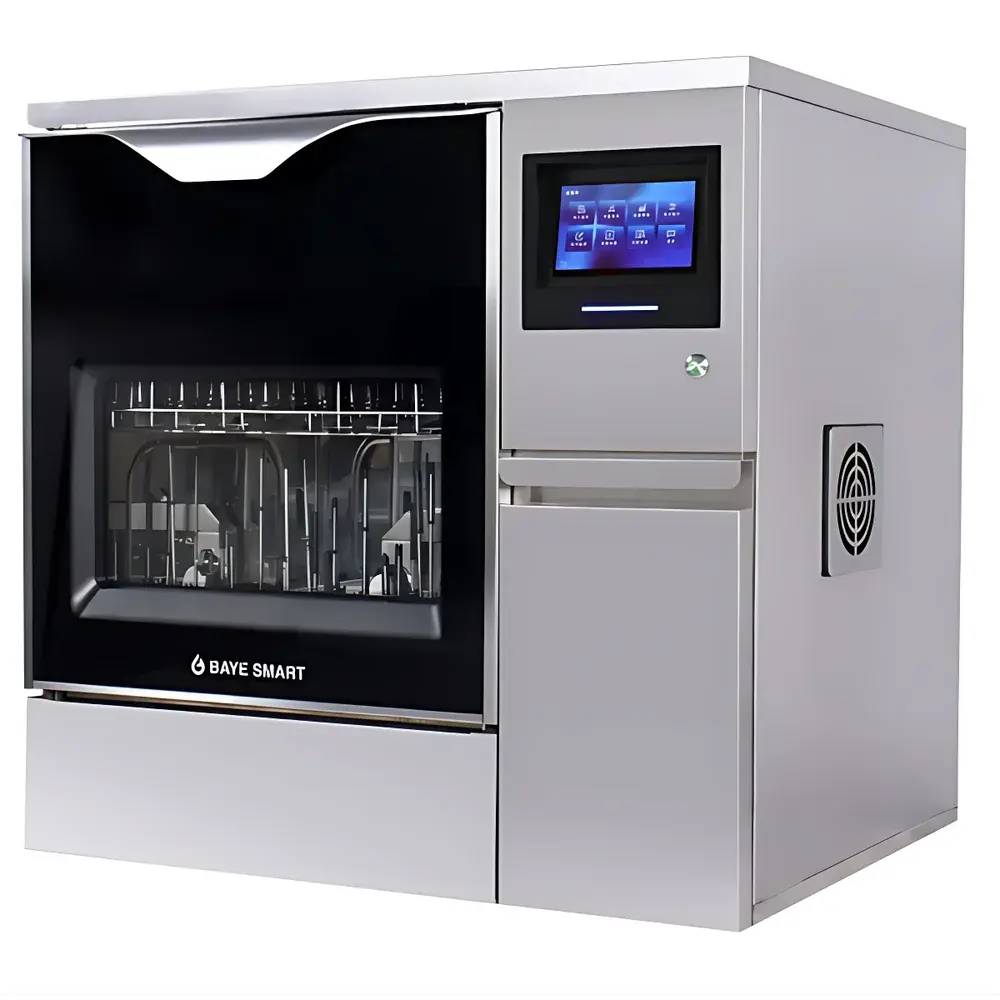
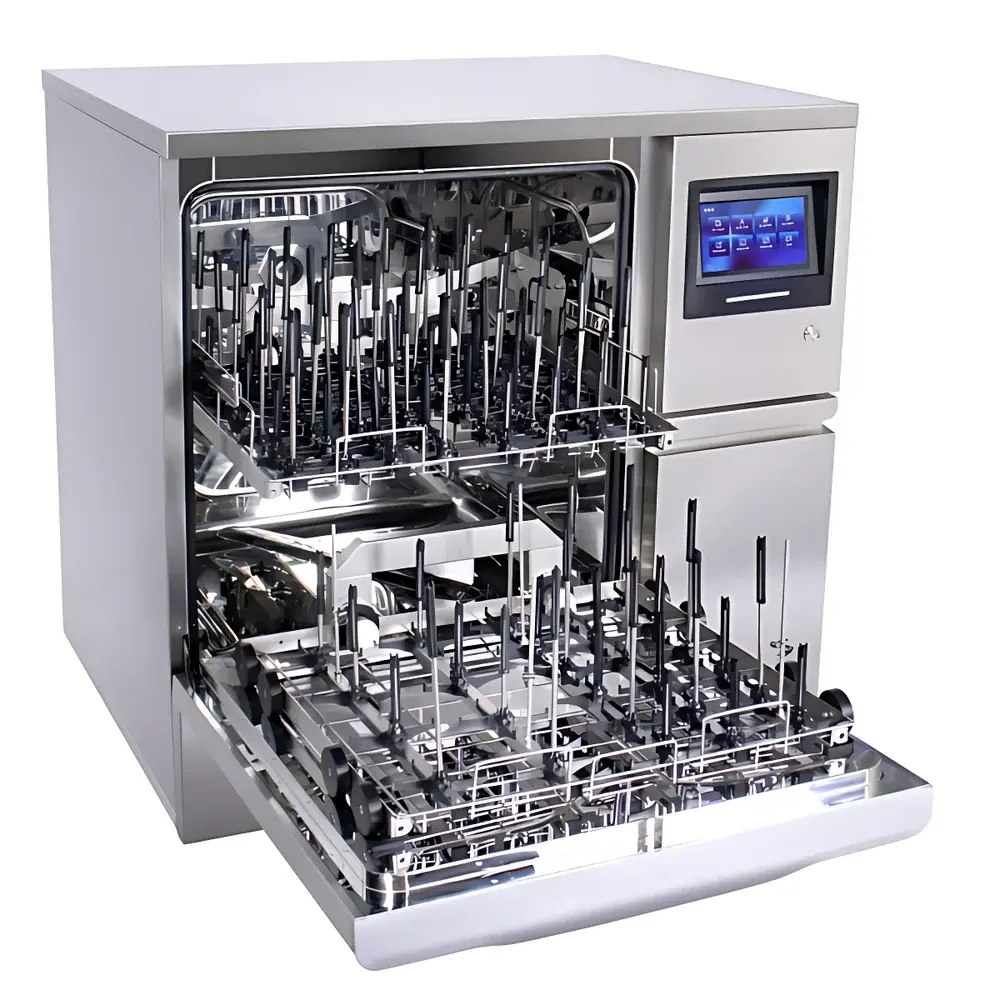
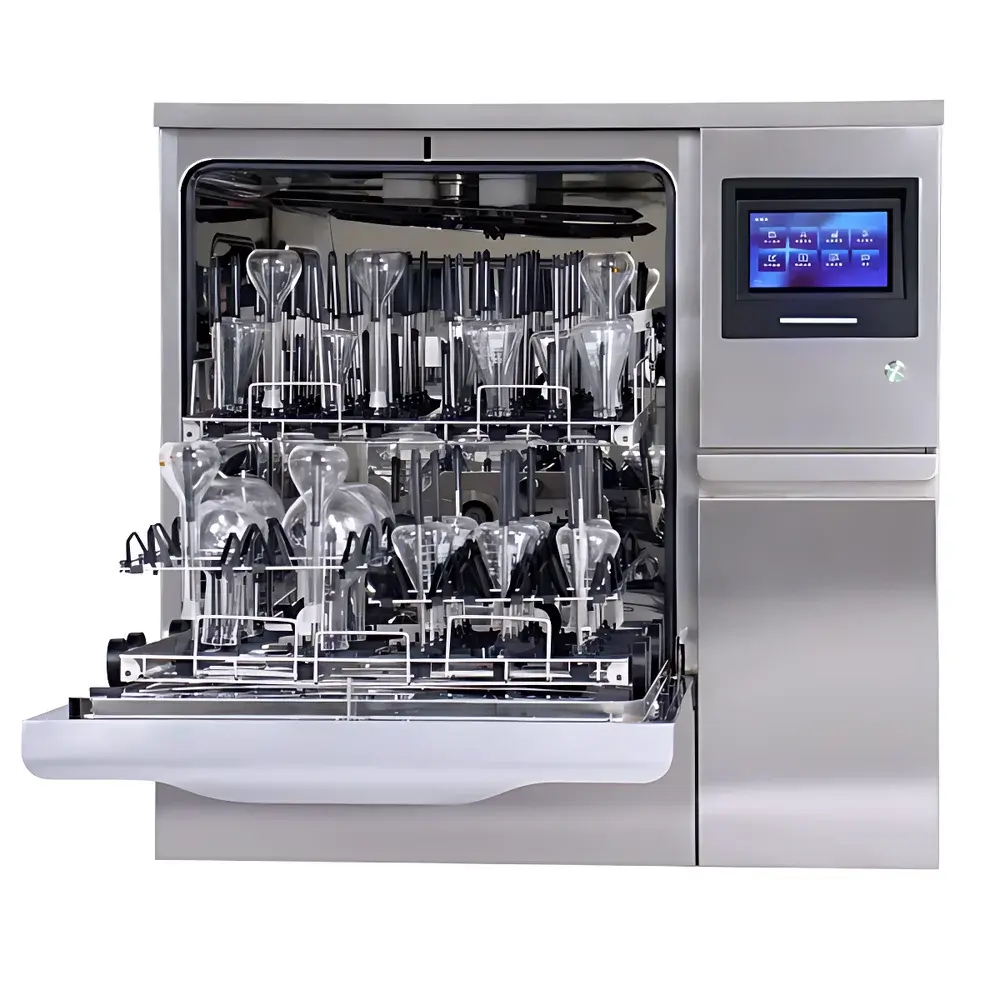
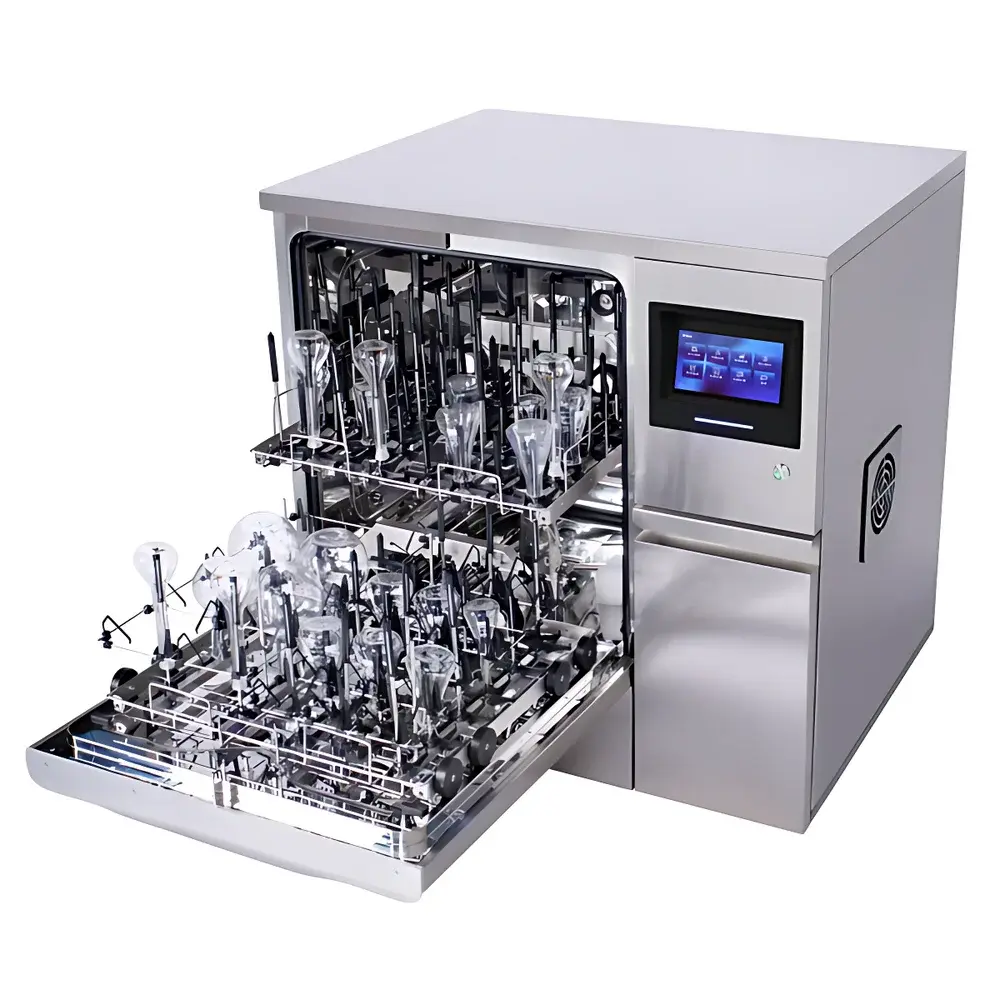
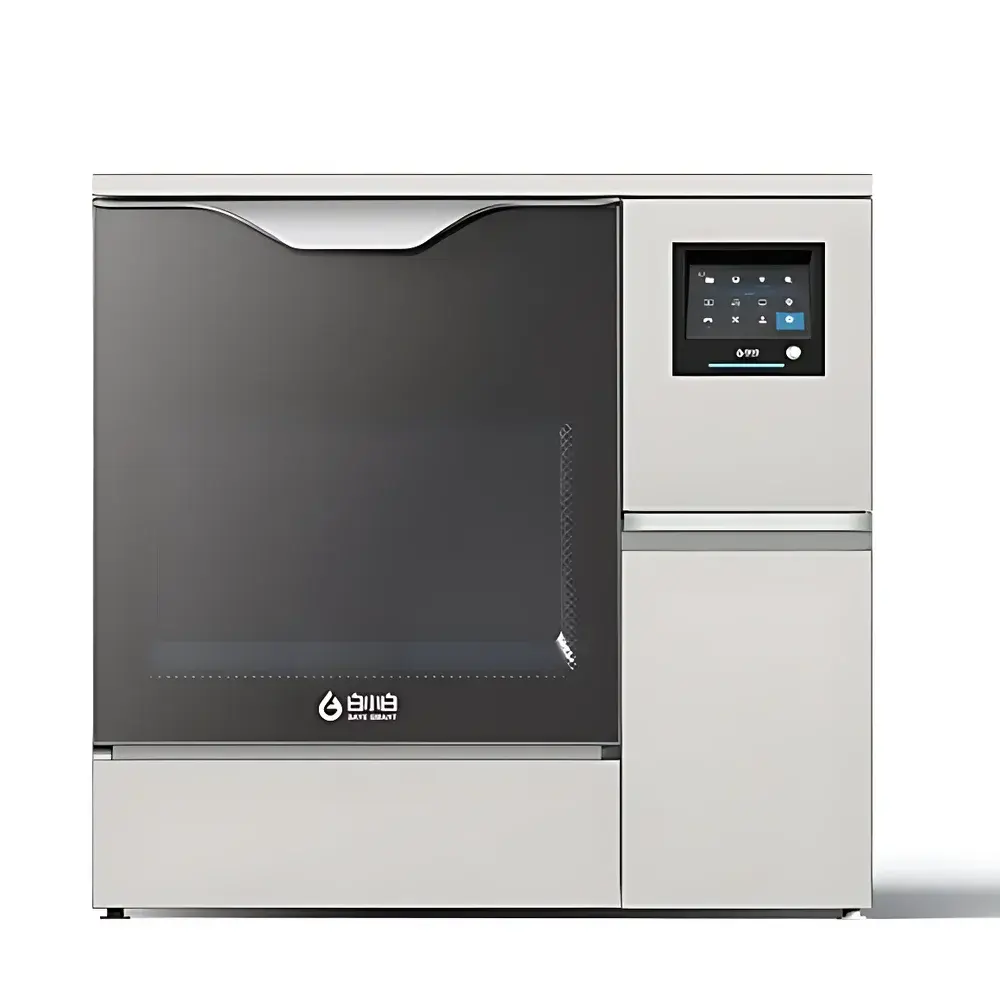
BAYE SMART BS280CD Laboratory Bottle Washer
| Brand | BAYE SMART |
|---|---|
| Origin | Beijing, China |
| Manufacturer Type | Direct Manufacturer |
| Product Origin | Domestic (China) |
| Model | BS280CD |
| Quotation | Upon Request |
| Chamber Volume | 180 L |
| Heating Power | 6 kW |
| Maximum Wash Temperature | 93 °C |
| Compatible Cleaning Agents | Acidic or Alkaline Liquid Detergents |
| External Dimensions (L×W×D) | 875 (845) × 900 × 710 mm |
Overview
The BAYE SMART BS280CD is a fully integrated, high-capacity laboratory bottle washer engineered for reproducible, residue-free cleaning of glassware, plastic containers, volumetric flasks, pipettes, and other reusable labware. It operates on the principle of controlled low-pressure, high-frequency recirculating spray—enabled by variable-frequency drive (VFD) technology—to deliver consistent mechanical action without inducing thermal or mechanical stress on sensitive vessels. Unlike conventional high-pressure washers that risk microfractures or detergent entrapment, the BS280CD employs a soft-start pump sequence: initial gentle pressure ramp-up followed by sustained low-pressure (≤0.2 MPa), high-cycle (≥120 cycles/hour) impingement across multiple fixed-position spray arms. This hydrodynamic cleaning strategy ensures uniform coverage while minimizing cavitation erosion and preserving calibration integrity of precision instruments such as burettes and class A glassware.
Key Features
- 180-liter stainless-steel chamber with full 304-grade construction, electropolished interior surfaces, and seamless welds to prevent biofilm accumulation and facilitate CIP validation.
- VFD-controlled circulation pump system enabling programmable ramp-up profiles, adjustable flow rates (15–35 L/min), and real-time pressure modulation during wash, rinse, and final hot-water rinse phases.
- Independent heating circuit delivering precise temperature control from ambient to 93 °C with ±1 °C stability—validated per ASTM E2500 and ISO 13485 Annex A for cleaning process qualification.
- Dual-detergent dosing module supporting sequential or simultaneous introduction of acidic (e.g., citric or phosphoric-based) and alkaline (e.g., sodium metasilicate or sodium carbonate) solutions—compatible with EN ISO 15883-1 requirements for medical device reprocessing.
- Integrated drain filtration system with 50-µm stainless-steel basket and self-cleaning backflush cycle to maintain long-term hydraulic efficiency and reduce maintenance intervals.
- Touchscreen HMI with password-protected user levels (Operator, Technician, Administrator), audit trail logging (GLP-compliant), and optional Ethernet/RS485 connectivity for integration into LIMS or MES platforms.
Sample Compatibility & Compliance
The BS280CD accommodates standard laboratory containers up to 1,000 mL capacity—including graduated cylinders, Nalgene® bottles, PETG carboys, borosilicate glassware (e.g., Pyrex®, Kimax®), and autoclavable polypropylene trays—without requiring custom racks. Its chamber geometry supports both vertical and horizontal loading configurations via adjustable shelf rails. The system meets essential safety and performance benchmarks: CE marking under Machinery Directive 2006/42/EC and Electromagnetic Compatibility Directive 2014/30/EU; conforms to IEC 61000-6-2/6-4 for industrial electromagnetic immunity; and supports IQ/OQ/PQ documentation packages aligned with FDA 21 CFR Part 11 data integrity requirements when paired with optional electronic signature modules.
Software & Data Management
The embedded firmware (v3.2+) provides 20 preconfigured wash programs—including “Glassware Standard,” “Plasticware Gentle,” “Residue-Sensitive,” and “Validation Cycle”—each storing full parameter sets (temperature ramps, dwell times, detergent volumes, pump speeds). All cycles generate time-stamped, tamper-evident log files (.csv exportable) containing start/end timestamps, actual vs. setpoint temperatures, pressure traces, detergent dispense confirmation, and door interlock status. Optional cloud-sync capability enables remote monitoring, predictive maintenance alerts (e.g., filter clogging index >85%), and automated report generation compliant with ISO/IEC 17025 clause 7.8.2 for testing laboratories.
Applications
This washer serves quality control laboratories in pharmaceutical manufacturing (supporting USP analytical instrument qualification), clinical diagnostics facilities performing CLIA-waived or moderate-complexity testing, academic research cores handling trace-metal analysis (where silicate leaching must be avoided), and contract development and manufacturing organizations (CDMOs) requiring validated cleaning processes per PDA Technical Report No. 29. Typical use cases include preparation of sample vials prior to ICP-MS analysis, decontamination of HPLC autosampler trays between batches, and routine cleaning of volumetric glassware used in titration standardization per ISO 6497.
FAQ
Does the BS280CD support validation documentation for GMP environments?
Yes—it includes built-in cycle verification tools, electronic signatures, and full audit trails meeting FDA 21 CFR Part 11 and EU Annex 11 requirements.
Can it handle heat-sensitive plasticware without deformation?
Yes—the low-pressure, high-frequency spray mechanism combined with programmable max temperature limits (down to 40 °C) prevents thermal distortion of polypropylene, polycarbonate, and PETG components.
Is detergent residue testing supported out-of-the-box?
While not an analytical instrument, the BS280CD’s repeatable rinse cycles (≥3 hot-water rinses at 85 °C) are designed to meet residual limits defined in USP for non-volatile residue, and its rinse water conductivity can be monitored externally using inline sensors.
What maintenance intervals are recommended?
Daily drain filter inspection; quarterly descaling of heating elements (using certified chelating agents); annual VFD calibration and spray arm alignment verification per manufacturer’s PQ protocol.
Is remote diagnostics available?
With optional Ethernet module enabled, authorized service engineers can perform secure remote firmware updates, parameter diagnostics, and fault-code interpretation without onsite visitation.



