
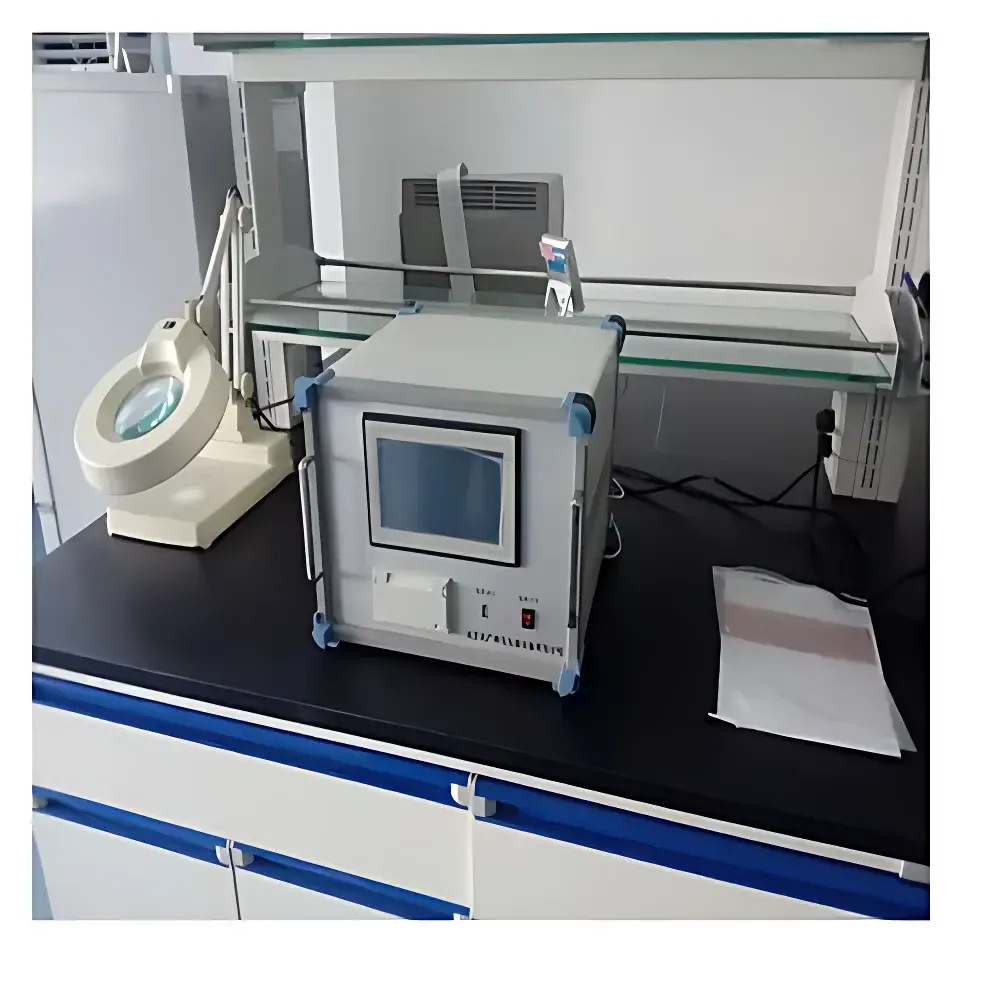
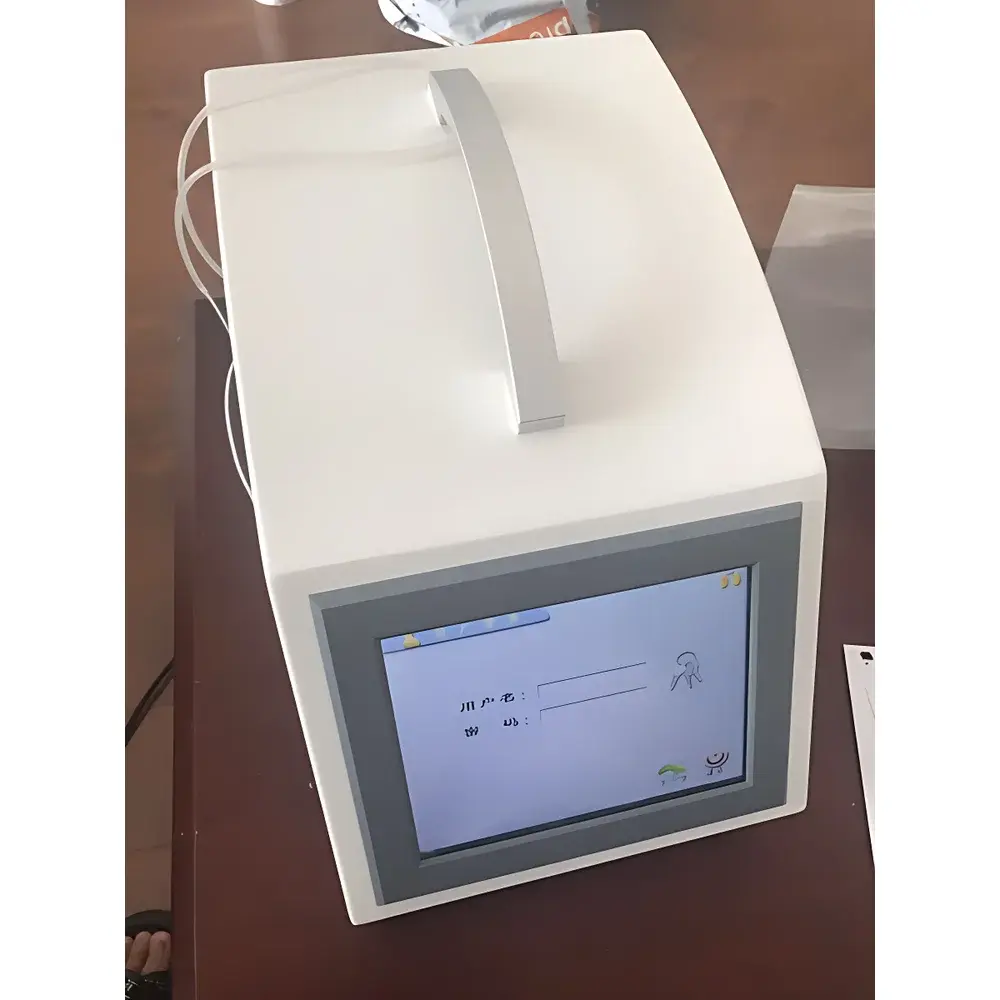
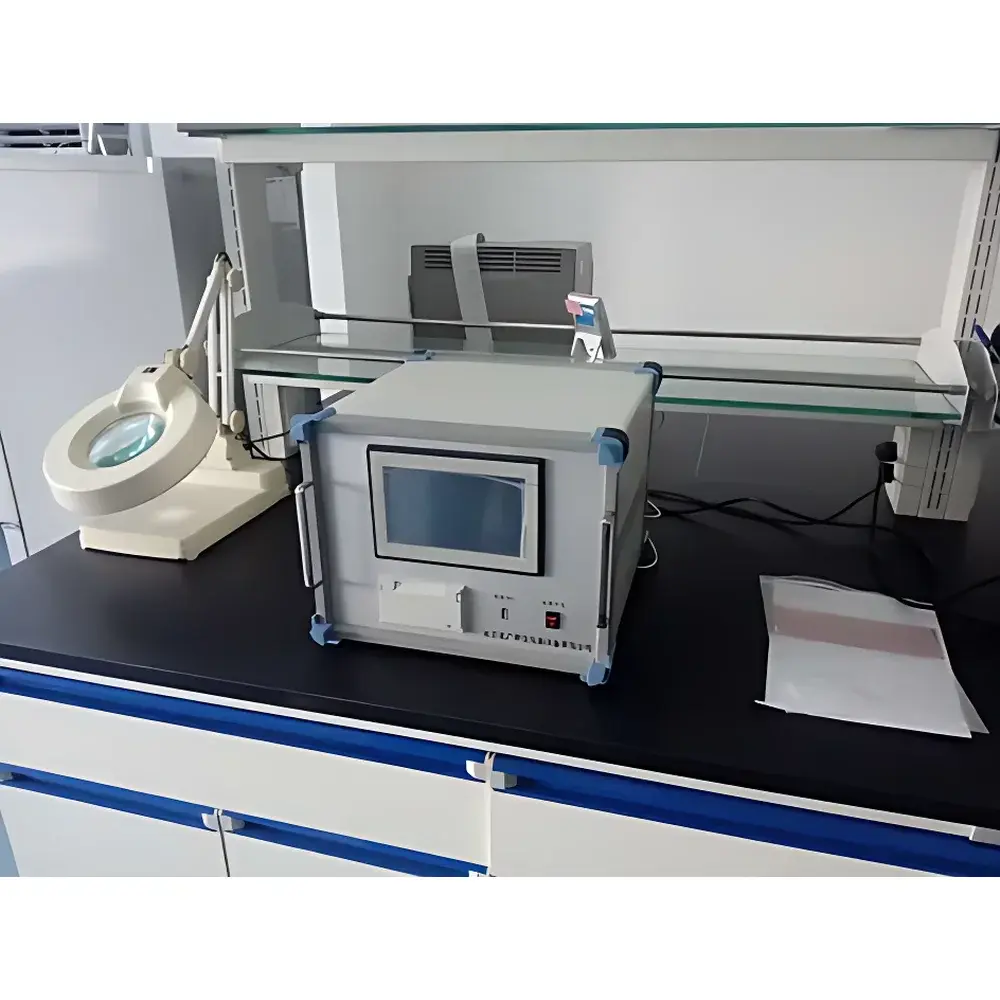
BC-50A Offline Total Organic Carbon (TOC) Analyzer by All Precision Instrument
| Brand | All Precision Instrument |
|---|---|
| Origin | Beijing, China |
| Manufacturer Type | Direct Manufacturer |
| Instrument Type | Laboratory-Scale Offline TOC Analyzer |
| Detection Principle | Membrane Conductivity Detection |
| Oxidation Method | UV/Persulfate Oxidation |
| Measurement Range | 0.001–1.000 mg/L |
| Accuracy | ±5% |
| Resolution | 0.001 mg/L |
| Detection Limit | 0.001 mg/L |
| Repeatability | ≤3% RSD |
| Analysis Time | 4 min |
| Response Time | ≤15 min |
| Sample Temperature Range | 1–95 °C |
| Ambient Operating Temperature | 10–40 °C (±5 °C/day max) |
| Internal Flow Rate | 0.5 mL/min |
| Relative Humidity | ≤85% |
| Zero Drift | ±5% FS |
| Span Drift | ±5% FS |
| Power Supply | 220 V ±22 V, 50 Hz ±1 Hz, 100 W |
| Dimensions | 44 × 18 × 26 cm |
Overview
The BC-50A Offline Total Organic Carbon (TOC) Analyzer is a dedicated laboratory instrument engineered for precise, regulatory-compliant quantification of organic carbon in purified water (PW) and water for injection (WFI) used in pharmaceutical manufacturing. It operates on the fundamental principle of differential conductivity measurement following selective oxidation—specifically, ultraviolet (UV) radiation at dual wavelengths (185 nm and 254 nm) combined with persulfate catalysis to fully mineralize non-volatile organic compounds into CO₂. The resulting CO₂ is dissolved in deionized water and measured via high-stability membrane-conductivity detection. Total carbon (TC) is determined from oxidized sample effluent, while total inorganic carbon (TIC) is measured directly from unoxidized split-stream flow through a delay coil. TOC is calculated as the arithmetic difference: TOC = TC − TIC. This methodology satisfies the stoichiometric equivalence requirement defined in USP , EP 2.2.44, and Chinese Pharmacopoeia (ChP) 2010 Edition Appendix VIII R, ensuring traceable, interference-resistant quantification down to 0.001 mg/L (1 ppb).
Key Features
- Regulatory-ready architecture compliant with ChP 2010, USP , and EP 2.2.44 system suitability and sensitivity requirements.
- Dual-wavelength UV oxidation (185/254 nm) coupled with persulfate enhancement ensures complete oxidation of recalcitrant organics—including low-molecular-weight acids and neutral compounds—without requiring carrier gas or consumable reagents.
- Membrane-based conductivity detection eliminates electrode fouling and drift; integrated temperature compensation and auto-calibration maintain long-term baseline stability.
- Embedded touchscreen interface with full Chinese-language UI supports intuitive offline operation, method selection, and real-time parameter monitoring.
- No moving mechanical parts in the fluidic path except for a single peristaltic pump—reducing maintenance frequency and enhancing operational reliability.
- Onboard data storage retains up to 12 months of test records, including raw TC/TIC values, analysis timestamps, operator IDs, environmental conditions, and system diagnostic logs.
- Configurable data retention: automatic save post-analysis or manual confirmation via tactile prompt—supporting ALCOA+ data integrity principles.
- Front-access UV lamp and pump tubing design enables field replacement without chassis disassembly, minimizing downtime and service dependency.
Sample Compatibility & Compliance
The BC-50A is validated for use with PW and WFI matrices meeting pharmacopeial conductivity specifications (USP ). It accommodates samples within 1–95 °C and tolerates inlet particulate load only when paired with an external 0.45 µm inline filter—preventing capillary blockage in the quartz oxidation reactor and conductivity cell. Its 0.001 mg/L detection limit and ≤3% repeatability meet the minimum performance criteria for routine QC release testing under GMP environments. The analyzer supports IQ/OQ/PQ documentation packages aligned with FDA 21 CFR Part 11 Annex 11 expectations, including electronic signature capability, audit trail generation, and role-based access control (via optional firmware upgrade). System suitability testing—per ChP VIII R Section 3.2—can be executed using sucrose and 1,4-benzoquinone challenge solutions to verify oxidation efficiency (>85%) and recovery accuracy (90–110%).
Software & Data Management
Data acquisition and reporting are managed through a deterministic embedded Linux OS with deterministic real-time scheduling. All measurements are timestamped with millisecond precision and tagged with ambient temperature, sample temperature, and internal pressure diagnostics. Historical datasets are stored in encrypted SQLite format with SHA-256 hash integrity verification. Export options include CSV and PDF reports featuring customizable headers, calibration history, and pass/fail flags against user-defined specification limits. Audit trails record every critical event—including method edits, calibration actions, user logins, and data deletions—with immutable timestamps and operator identifiers. Optional USB-host connectivity allows direct transfer to LIMS or ELN systems without network exposure.
Applications
- Final release testing of PW and WFI in pharmaceutical manufacturing facilities seeking FDA, EMA, or NMPA approval.
- Periodic verification of distribution loop integrity during routine system qualification (e.g., post-sanitization TOC spikes).
- Investigation of organic contamination sources in purified water generation systems (e.g., RO membrane degradation, storage tank biofilm shedding).
- Supporting root cause analysis during deviation investigations involving endotoxin or microbial excursions—where elevated TOC may indicate precursor organic loading.
- Environmental monitoring of cleanroom humidification water and process rinse solutions where organic residue could impact product quality.
- Educational and method development use in university and contract research laboratories validating TOC-based water quality protocols.
FAQ
What regulatory standards does the BC-50A satisfy for pharmaceutical water testing?
It meets the core technical requirements of USP , EP 2.2.44, and ChP 2010 Appendix VIII R—including mandatory system suitability testing, 0.001 mg/L detection limit, and the TC–TIC calculation algorithm.
Is the BC-50A suitable for online installation?
No—it is designed exclusively for offline (grab-sample) analysis. For continuous monitoring, a dedicated online TOC platform with flow-cell integration and 4–20 mA output is required.
How often must the UV lamp and pump tubing be replaced?
Per manufacturer recommendations: UV lamp every 12 months; peristaltic tubing every 12 months under typical lab usage (≤20 analyses/day).
Does the instrument support electronic records compliance per 21 CFR Part 11?
Yes—when configured with password-protected user roles, electronic signatures, and enabled audit trail logging, it fulfills predicate rule requirements for computerized system validation.
Can the BC-50A measure samples with suspended solids?
Only after pre-filtration through a 0.45 µm membrane filter; unfiltered particulates risk clogging the 0.8 mm ID quartz oxidation coil and conductivity sensor membrane.







