
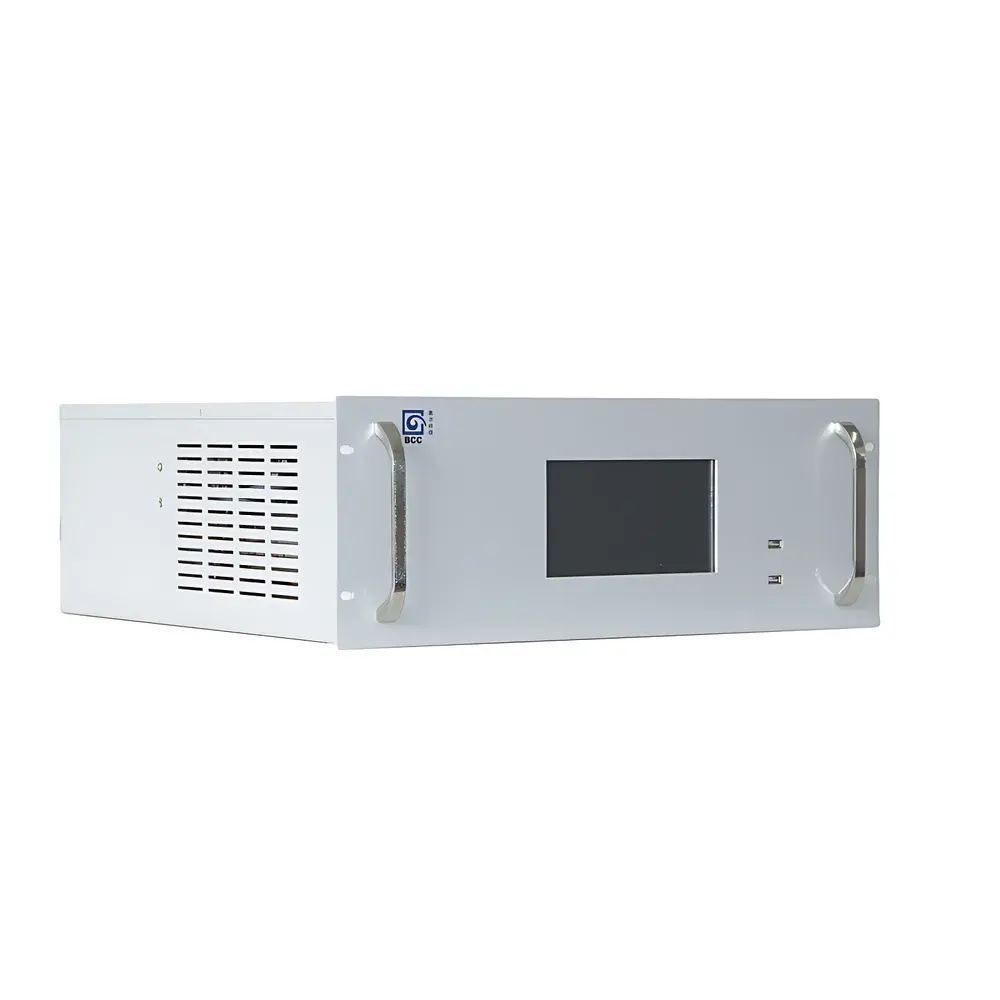
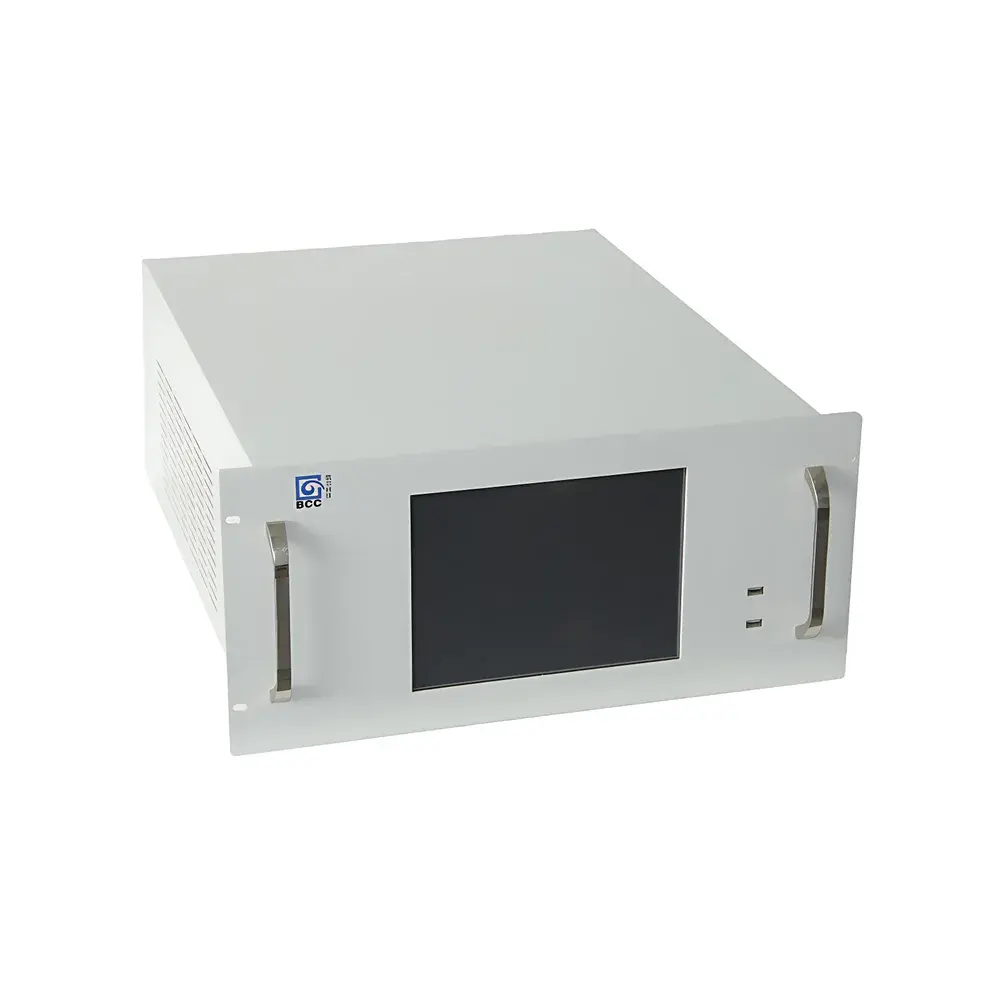
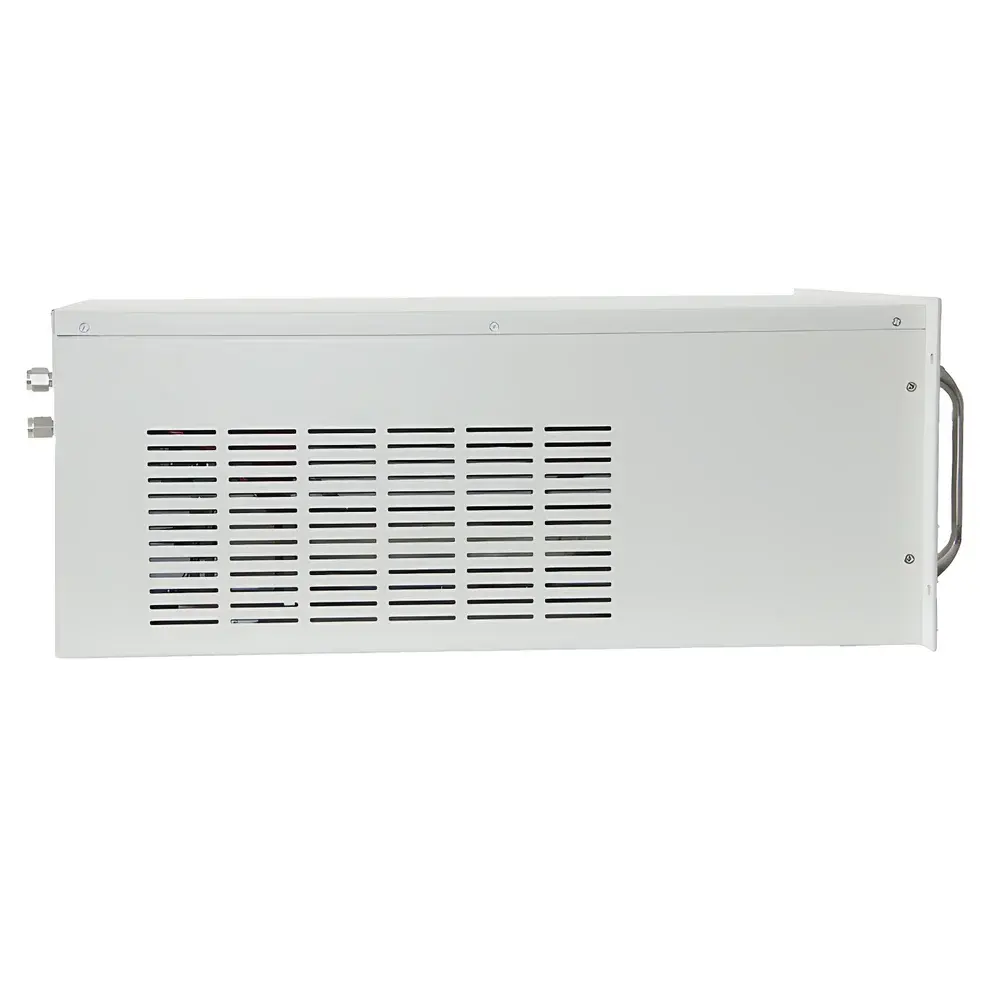
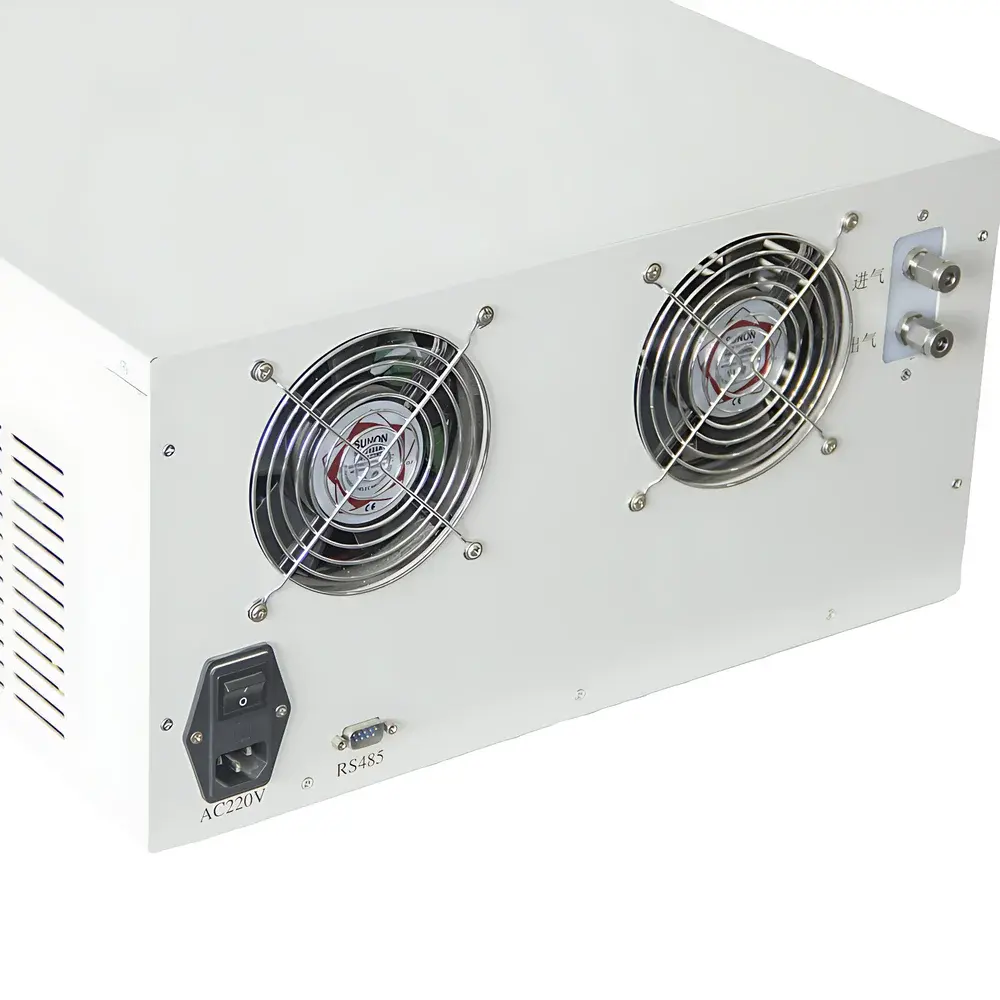
BCC MGA-6000 Multicomponent Gas Analyzer
| Brand | BCC |
|---|---|
| Model | MGA-6000 |
| Measurement Principle | Tunable Diode Laser Absorption Spectroscopy (TDLAS) |
| Detection Range | 0–1 ppm to 0–100% (selectable, multi-range auto-switching) |
| Sensitivity | 1 ppb (gas-dependent) |
| Response Time | T90 ≤ 20 s |
| Repeatability | ≤ ±1% FS |
| Zero/Scale Drift | ≤ ±1% FS / 24 h |
| Operating Temperature Stability | Active thermal control with proprietary temperature management |
| Enclosure Options | 19" rack-mount, benchtop, and portable configurations |
| Data Interfaces | 4–20 mA analog output, RS232 / RS485 serial, USB, Ethernet (TCP/IP) |
Overview
The BCC MGA-6000 Multicomponent Gas Analyzer is an industrial-grade, real-time gas monitoring system engineered for high-precision, multi-species quantification in continuous emission monitoring (CEM), process safety, ambient air quality assessment, and laboratory research environments. It employs Tunable Diode Laser Absorption Spectroscopy (TDLAS)—a physics-based, non-dispersive optical technique that exploits the unique near-infrared absorption fingerprints of target gas molecules. Unlike broadband methods such as NDIR or electrochemical sensors, TDLAS delivers inherent selectivity, immunity to cross-interference, and long-term stability without consumables or frequent recalibration. The MGA-6000 simultaneously measures up to six pre-configured gas components—including CO, CO₂, CH₄, NH₃, H₂S, NO, SO₂, O₂, HCl, HF, and H₂O—within a single optical path, leveraging wavelength-scanned laser diodes and high-finesse detection optics. Its modular architecture supports field-upgradable gas channel expansion and spectral library updates, ensuring adaptability across evolving regulatory and operational requirements.
Key Features
- Real-time dual-range auto-switching: Seamlessly transitions between low-concentration (ppb–ppm) and high-concentration (%-level) measurement modes without manual intervention, preserving signal integrity across five decades of dynamic range.
- Proprietary active thermal stabilization: Integrated microprocessor-controlled thermoelectric coolers (TECs) maintain optical path temperature within ±0.05 °C, minimizing thermal drift and enabling ≤ ±1% FS repeatability over 24-hour operation.
- Self-calibrating optical engine: Built-in reference cell and zero-gas purge sequence enable automated baseline validation and span verification at user-defined intervals—fully compliant with EPA Method 205 and EN 15267-3 calibration traceability protocols.
- Robust mechanical design: IP54-rated enclosure options (19″ rack-mount, benchtop, and portable variants) support deployment in harsh industrial settings, including boiler houses, biogas upgrading units, and landfill gas collection stations.
- Low maintenance operation: Solid-state laser sources with >20,000-hour lifetime eliminate lamp replacement; no moving parts in the optical module ensure high MTBF (>12,000 hours).
Sample Compatibility & Compliance
The MGA-6000 accepts conditioned sample gas streams with dew point < 5 °C and particulate loading < 1 mg/m³. Optional heated sample lines (up to 180 °C), Nafion dryers, and particulate filters are available for wet, corrosive, or high-dust applications. All firmware and data handling routines comply with ISO/IEC 17025:2017 requirements for testing laboratories, while audit trail functionality satisfies FDA 21 CFR Part 11 and EU Annex 11 electronic record integrity mandates. Certifications include CE marking per EMC Directive 2014/30/EU and RoHS 2011/65/EU; optional ATEX Zone 2 / IECEx certification kits available for hazardous area installation.
Software & Data Management
The embedded Linux-based firmware runs BCC GasView™ v4.2, providing local touchscreen operation, real-time spectral visualization, and configurable alarm thresholds (high/low, rate-of-change, deviation from trend). Data export supports CSV, XML, and Modbus TCP formats. Remote access is enabled via secure HTTPS and SSH, with TLS 1.2 encryption. Full audit logging captures all configuration changes, calibration events, and user logins with timestamps and operator IDs—essential for GLP/GMP environments. Integration with SCADA systems (e.g., Siemens Desigo, Honeywell Experion) and cloud platforms (AWS IoT Core, Microsoft Azure IoT Hub) is supported through native OPC UA and MQTT clients.
Applications
- Continuous Emission Monitoring Systems (CEMS) for thermal power plants, cement kilns, and waste incinerators—meeting EU IED, US EPA 40 CFR Part 60, and China GB 13223 standards.
- Biogas quality control in anaerobic digestion facilities: simultaneous CH₄/CO₂/H₂S/O₂ analysis for upgrading and grid injection compliance.
- Industrial hygiene monitoring in semiconductor fabs, chemical synthesis labs, and pharmaceutical cleanrooms—supporting OSHA PEL and ACGIH TLV exposure assessments.
- Research-grade atmospheric chemistry studies requiring sub-ppb detection limits and multi-hour stability for flux chamber or eddy covariance deployments.
- Leak detection and repair (LDAR) programs in petrochemical refineries, utilizing fast-response capability for transient plume characterization.
FAQ
What gases can the MGA-6000 measure out of the box?
The standard configuration includes CO, CO₂, CH₄, NH₃, and O₂. Additional analytes (e.g., NO, SO₂, H₂S, HCl, HF) require factory pre-alignment and spectral library loading—lead time typically 4–6 weeks.
Is external calibration gas required for routine operation?
No. The system performs automatic zero and span checks using internal reference cells and optional integrated permeation tubes; certified calibration gas is only needed for annual verification or audit purposes.
Can the MGA-6000 be integrated into an existing DCS or PLC network?
Yes. It supports Modbus RTU/ASCII/TCP, Profibus DP (via gateway), and native OPC UA—fully compatible with Emerson DeltaV, Yokogawa CENTUM VP, and Rockwell ControlLogix platforms.
How is measurement uncertainty validated?
Each unit ships with a NIST-traceable calibration certificate referencing SRM 1650b (dilute methane in nitrogen) and SRM 1964 (carbon monoxide in nitrogen); uncertainty budgets are provided per ISO 5725-2 and GUM (JCGM 100:2008).
What is the recommended maintenance schedule?
Optical alignment verification every 12 months; laser source lifetime monitoring via built-in diagnostics; filter replacement every 6 months in high-particulate environments.
Related Products







