
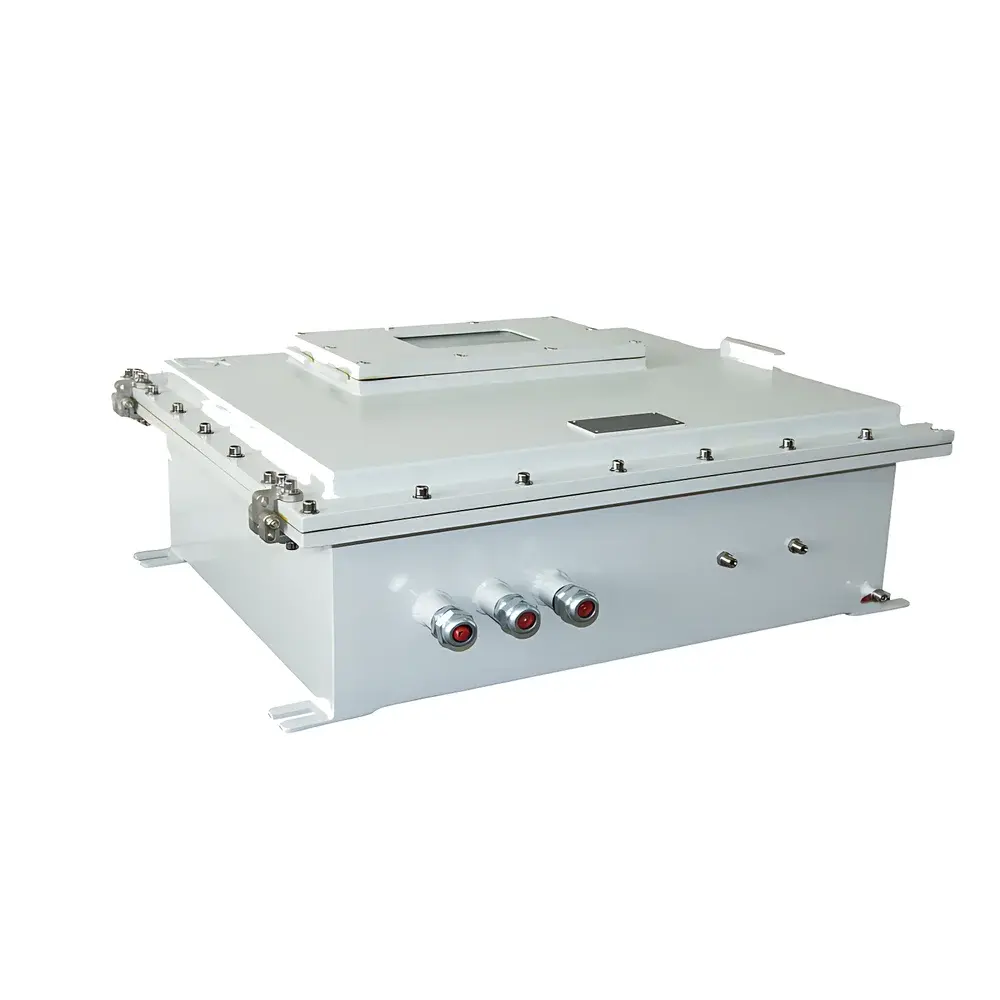
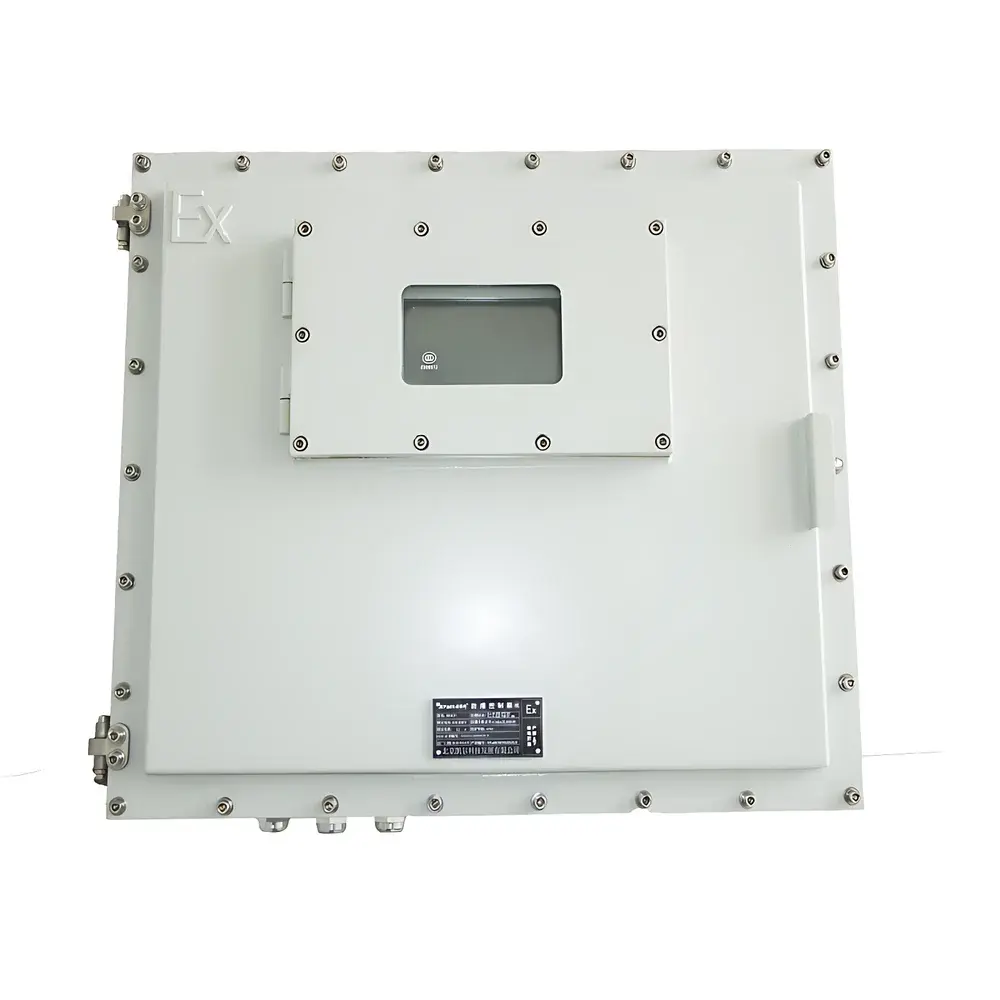
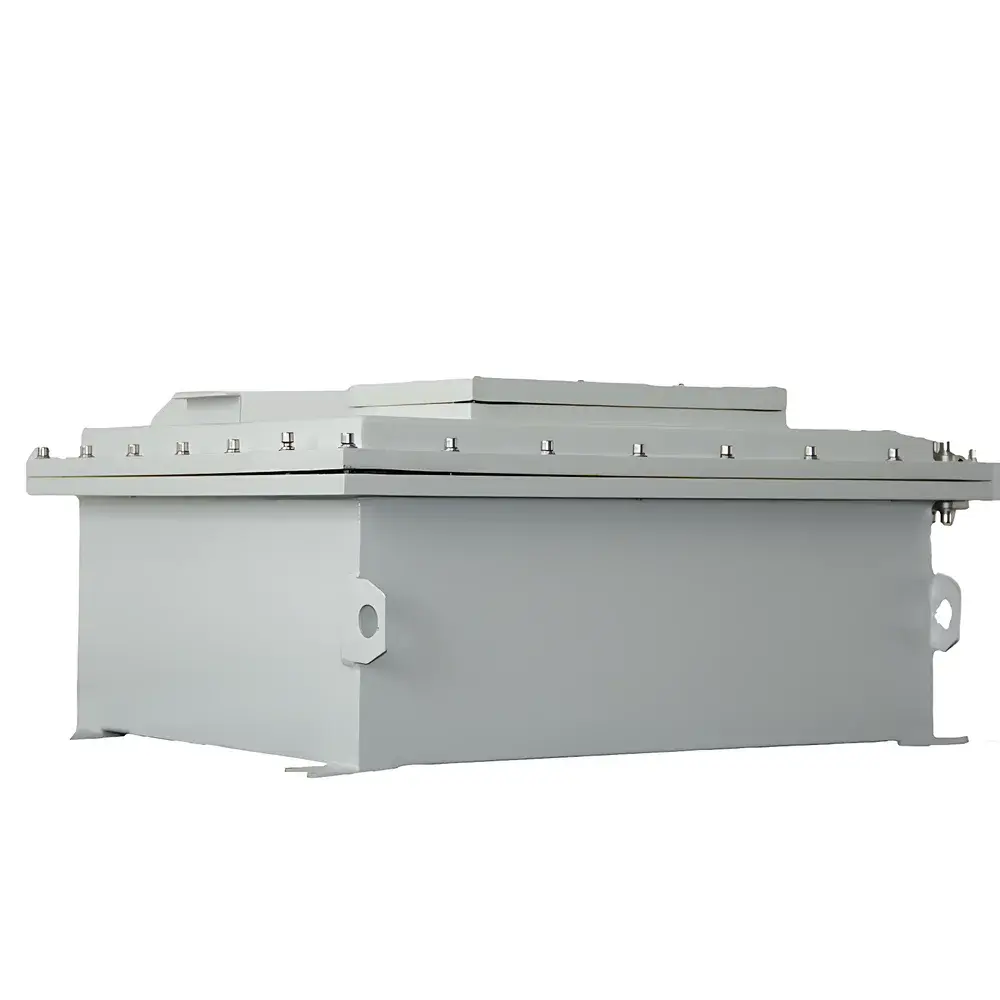
BCC MGA-6000Ex Intrinsically Safe Multicomponent Gas Analyzer
| Brand | BCC |
|---|---|
| Origin | Hebei, China |
| Model | MGA-6000Ex |
| Principle | Tunable Diode Laser Absorption Spectroscopy (TDLAS) |
| Type | Fixed-mount |
| Detection Range | ppb to 100% vol |
| Sensitivity | 1 ppb |
| Response Time | T90 ≤ 20 s |
| Repeatability | ≤ ±1% FS |
| Accuracy | 0.1–2% FS |
| Drift | ≤ ±1% FS / 24 h |
| Output Interfaces | 4–20 mA, RS232/RS485, USB, Ethernet (TCP/IP) |
| Auto-Calibration | Zero & Span |
| Certified Protection | Ex d IIB T4 Gb / Ex tb IIIC T130°C Db (IEC 60079-0, -1, -7, -31) |
Overview
The BCC MGA-6000Ex is an intrinsically safe, fixed-mount multicomponent gas analyzer engineered for continuous, real-time monitoring of hazardous industrial environments—including chemical processing plants, refineries, biogas facilities, semiconductor cleanrooms, and landfill gas recovery sites. Built upon tunable diode laser absorption spectroscopy (TDLAS), the system delivers selective, interference-free quantification of up to 17 target gases—including CO, CO₂, CH₄, NO, N₂O, NH₃, HF, HCl, H₂S, SO₂, ¹³CO₂, H₂O, O₂, C₂H₂, C₃H₈, CF₄, and C₂F₆—within a single optical path. Unlike broadband NDIR or electrochemical sensors, TDLAS enables species-specific detection by scanning narrow-linewidth laser wavelengths across fundamental vibrational-rotational absorption lines, ensuring high spectral resolution and immunity to cross-sensitivity from background matrix gases. The analyzer’s explosion-proof enclosure complies with IEC 60079-0, -1, -7, and -31 standards, certified as Ex d IIB T4 Gb and Ex tb IIIC T130°C Db for use in Zone 1 and Zone 21 hazardous areas.
Key Features
- Intrinsically safe and flameproof design certified for Group IIB (gas) and IIIC (dust) environments, enabling deployment directly in classified zones without remote sampling systems.
- Simultaneous multi-gas analysis via multiplexed TDLAS channels—each laser independently tuned to a unique molecular absorption line, eliminating optical crosstalk and calibration drift between analytes.
- Ultra-low detection limit of 1 ppb for key trace species (e.g., NH₃, HF, HCl), supported by thermoelectrically cooled detectors and high-finesse optical cells achieving effective path lengths >20 m via multipass configuration.
- Fast dynamic response with T90 ≤ 20 seconds across all measured components—critical for process control loops and emission event detection per EU BREF and US EPA Method 320 compliance frameworks.
- Integrated auto-calibration system featuring motorized zero-gas valve and span-gas manifold; supports scheduled or event-triggered zero/span verification without manual intervention.
- Modular mechanical architecture: available in both 19-inch rack-mount (2U height) and benchtop configurations to accommodate space-constrained control rooms or field-mounted analyzer shelters.
- Stability performance validated at ≤ ±1% FS drift over 24 hours under ambient temperature fluctuations (15–35°C) and humidity variations (20–80% RH non-condensing).
Sample Compatibility & Compliance
The MGA-6000Ex accepts raw, unconditioned sample gas streams within operating pressure ranges of 70–110 kPa (abs) and temperatures up to 60°C. Optional heated sample lines (up to 180°C) and particulate filtration (0.3 µm) are available for high-moisture or corrosive applications. All wetted materials—including sample cell windows, flow paths, and valves—are constructed from 316L stainless steel, fused silica, and Kalrez® seals to ensure long-term chemical resistance. The instrument meets electromagnetic compatibility requirements per IEC 61326-1 (industrial environment) and carries CE marking under the ATEX and UKCA directives. Data integrity protocols align with FDA 21 CFR Part 11 expectations through secure user authentication, electronic audit trails, and tamper-evident calibration logs.
Software & Data Management
Embedded firmware runs on a Linux-based real-time OS with dual-core ARM processor, supporting local data storage (≥16 GB internal eMMC) and synchronized timestamping (NTP-enabled). The web-based interface (HTTPS) provides full remote configuration, live spectrum visualization, alarm management (configurable thresholds, latching/non-latching), and export of CSV/JSON datasets. OPC UA and Modbus TCP drivers enable seamless integration into DCS/SCADA platforms (e.g., Siemens PCS7, Emerson DeltaV, Rockwell FactoryTalk). All calibration events, maintenance logs, and diagnostic alerts are retained with ISO 8601 timestamps and user ID attribution—fully auditable for GLP/GMP and ISO 17025 laboratory quality systems.
Applications
- Continuous emissions monitoring (CEMS) for regulated pollutants (SO₂, NOₓ, NH₃ slip) in thermal power plants and waste incinerators per EN 15267 and EPA PS-18.
- Process gas purity verification in hydrogen production (H₂S, CO, H₂O), ammonia synthesis (H₂, N₂, NH₃), and fluorinated gas manufacturing (CF₄, C₂F₆).
- Biogas upgrading control: real-time tracking of CH₄, CO₂, H₂S, and siloxanes to optimize membrane separation and amine scrubbing efficiency.
- Occupational health and safety monitoring in confined spaces where explosive atmospheres coexist with toxic gas hazards (e.g., petrochemical maintenance, tunnel ventilation).
- Research-grade isotopic ratio measurement (e.g., ¹³CO₂/¹²CO₂) for carbon flux studies in environmental science laboratories requiring sub-ppb precision and long-term baseline stability.
FAQ
What certification standards does the MGA-6000Ex meet for hazardous area installation?
It holds dual certification to IEC 60079-1 (flameproof “d”) and IEC 60079-31 (dust ignition protection “tb”), rated Ex d IIB T4 Gb and Ex tb IIIC T130°C Db—suitable for Zone 1 (gas) and Zone 21 (combustible dust) locations.
Can the analyzer operate without external calibration gases?
Yes—it supports zero-air auto-calibration using built-in catalytic scrubbers; however, span calibration requires certified reference gases traceable to NIST or equivalent national metrology institutes.
Is remote firmware update supported?
Yes, secure over-the-air (OTA) updates are enabled via HTTPS with digital signature verification to maintain integrity and regulatory compliance.
How is moisture interference mitigated in high-humidity samples?
The optical cavity employs temperature-controlled windows and anti-condensation heating; optional Nafion™ dryers or chilled mirror dew-point regulators can be integrated upstream.
Does the system support third-party data acquisition software?
Yes—through standardized protocols including Modbus TCP, OPC UA, and RESTful API endpoints for custom integration with LIMS or enterprise analytics platforms.
Related Products







