
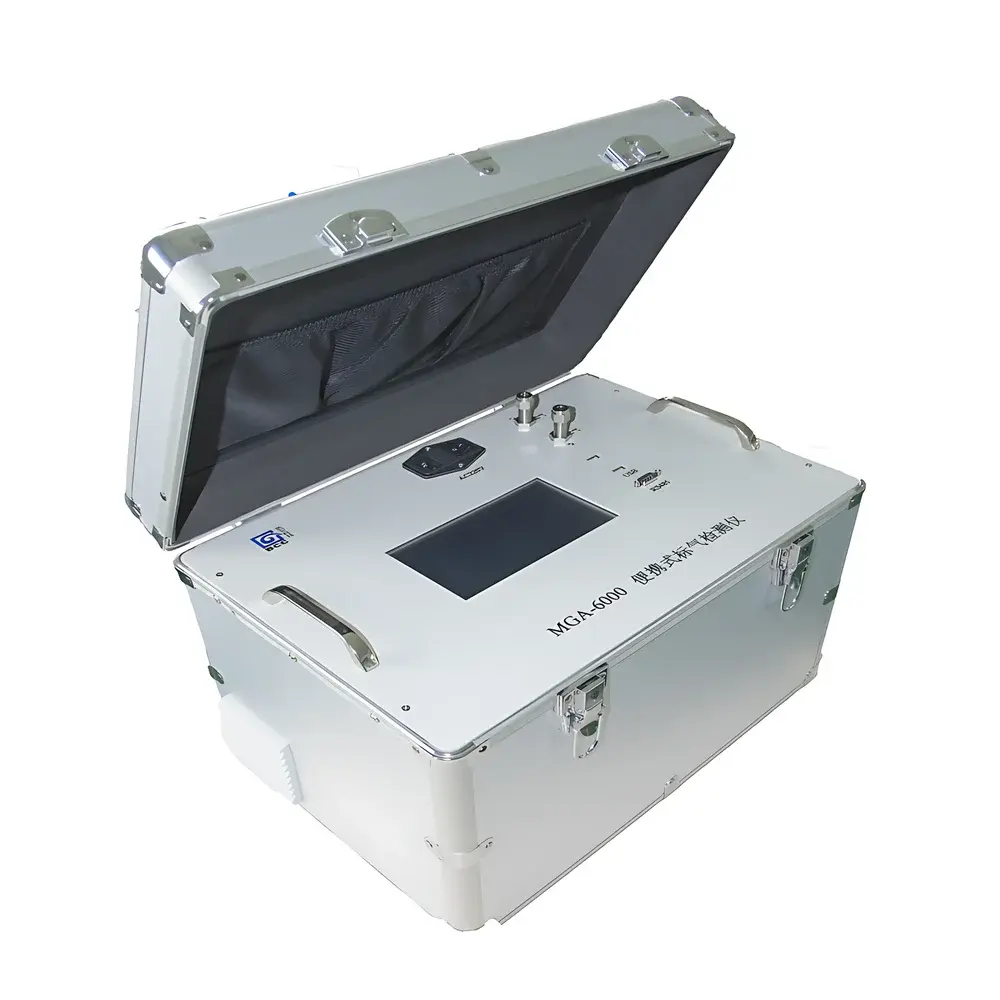
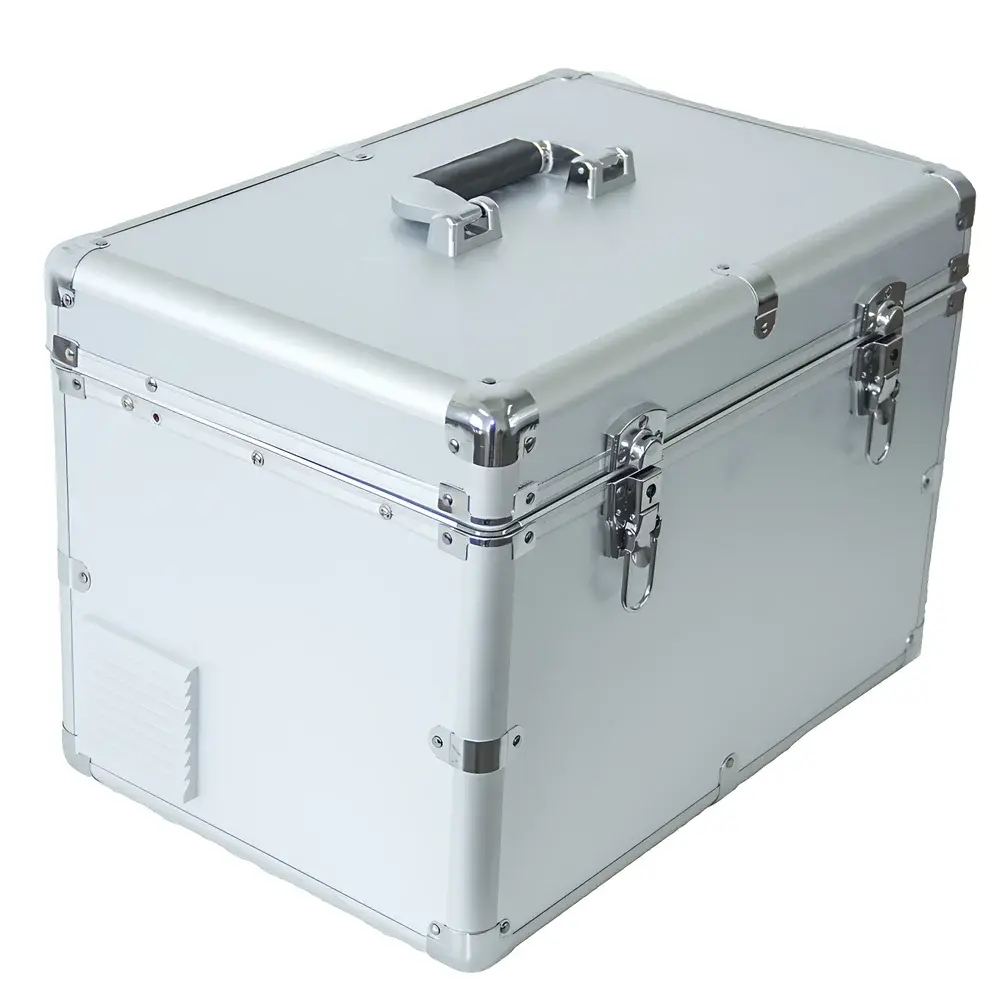
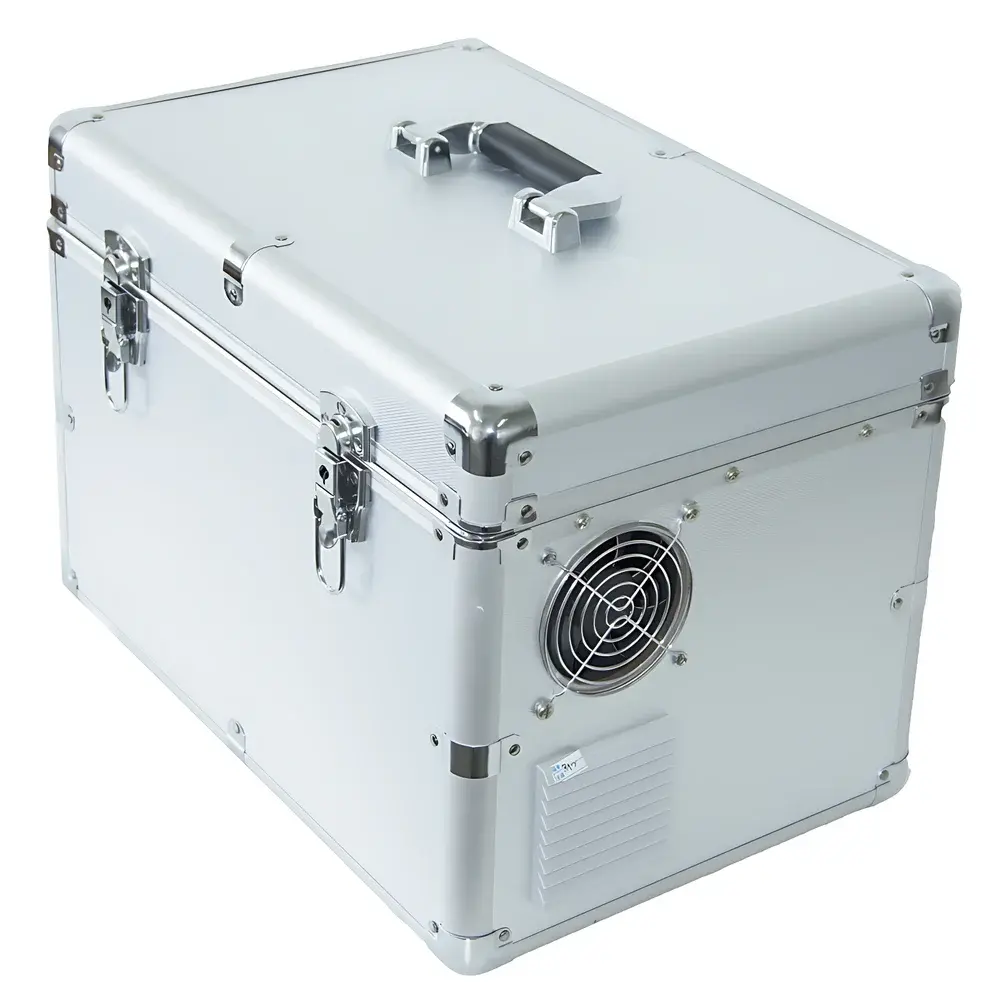
BCC MGA-6000P Portable Multicomponent Gas Analyzer
| Brand | BCC |
|---|---|
| Origin | Hebei, China |
| Model | MGA-6000P |
| Principle | Tunable Diode Laser Absorption Spectroscopy (TDLAS) |
| Type | Portable |
| Detection Range | ppb to 100% (gas-dependent) |
| Sensitivity | 1 ppb |
| Response Time (T90) | ≤20 s |
| Repeatability | 1–2% FS |
| Drift | ≤±1% / 24 h |
| Power Consumption | <100 W |
| Detection Limits | 1 ppb – 1 ppm (varies by target gas) |
| Data Interfaces | 4–20 mA, RS232/RS485, USB, Ethernet |
Overview
The BCC MGA-6000P Portable Multicomponent Gas Analyzer is an engineered field-deployable instrument designed for real-time, quantitative measurement of up to seven gaseous species simultaneously in ambient air, stack emissions, or process streams. It employs Tunable Diode Laser Absorption Spectroscopy (TDLAS), a well-established optical absorption technique that leverages narrow-linewidth semiconductor lasers tuned to specific rovibrational absorption lines of target molecules. This principle ensures high spectral selectivity, minimal cross-sensitivity, and immunity to particulate scattering—critical advantages in complex, variable matrices encountered during environmental monitoring, industrial leak detection, and emission compliance verification. Unlike broadband spectroscopic methods, TDLAS delivers inherent calibration stability, low maintenance requirements, and direct traceability to fundamental molecular absorption cross-sections. The MGA-6000P integrates dual-range auto-switching optics and gas-correlation filtering algorithms to maintain sub-ppb sensitivity across wide dynamic concentration spans—from ultra-trace atmospheric pollutants (e.g., NH₃, H₂S, CH₄, CO, NO, SO₂, HF) to high-percentage process gases—without manual range adjustment or hardware reconfiguration.
Key Features
- Simultaneous quantification of up to seven pre-configured gas components using independent, wavelength-multiplexed TDLAS channels
- Gas-correlation filtering architecture minimizes interferences from overlapping spectral features of background gases (e.g., H₂O, CO₂) and improves selectivity in humid or multi-component environments
- Dual-range automatic switching enables seamless operation from sub-ppb detection limits to full-scale 100% volume concentrations—optimized for both ambient monitoring and high-concentration industrial applications
- Flexible sampling configuration: supports both cold-dry extraction (with integrated Nafion® or membrane dryer) and hot-wet in-situ measurement modes, compliant with EPA Method 320 and ISO 14956 for stack gas analysis
- Robust portable chassis rated IP54, battery-operated capability (optional external Li-ion pack), and shock-mounted optical bench for reliable performance in mobile labs, roadside surveys, and remote site deployments
- Real-time data acquisition at 1 Hz update rate with on-board temperature/pressure compensation and embedded NIST-traceable calibration verification routines
Sample Compatibility & Compliance
The MGA-6000P accommodates gaseous samples with moisture content up to 40% RH (hot-wet mode) or fully dried streams (<5 ppmv H₂O, cold-dry mode). It meets mechanical and electromagnetic compatibility requirements per IEC 61326-1 (industrial environment) and conforms to CE marking directives. For regulatory reporting, its measurement uncertainty budget aligns with ISO 17025–accredited laboratory practices when operated under documented SOPs. Data integrity features—including audit-trail-enabled configuration logging, user-access controls, and time-stamped raw absorbance spectra—support GLP/GMP and EPA 40 CFR Part 60 PS-18 compliance workflows. Optional firmware modules enable automated QA/QC flagging per ASTM D6522 (ambient air) or EN 15267 (CEM systems).
Software & Data Management
The analyzer ships with BCC GasView™ v4.x PC software, providing intuitive instrument control, spectral visualization, multi-gas calibration management, and real-time trend plotting. All acquired data are stored locally in CSV and HDF5 formats with embedded metadata (timestamp, ambient T/P, laser current/voltage, path length). Remote connectivity is supported via built-in Ethernet port and optional LTE/WiFi module, enabling secure MQTT or Modbus TCP transmission to SCADA platforms, cloud-based dashboards (e.g., AWS IoT Core, Azure IoT Hub), or enterprise LIMS. Data interfaces include isolated 4–20 mA analog outputs (per gas channel), RS485 Modbus RTU, USB-C for firmware updates, and RESTful API access for integration into custom middleware. Audit logs record all parameter changes, calibration events, and user logins—fully compliant with FDA 21 CFR Part 11 requirements when deployed in regulated environments.
Applications
- Ambient air quality monitoring networks (AQMS) for regulatory-grade NH₃, NO₂, O₃, and VOC precursors
- Fugitive emission detection and quantification (FEDQ) at refineries, chemical plants, and landfills
- Continuous emission monitoring (CEM) of combustion stacks per EU BREF and US EPA Performance Specification 18
- Process gas purity verification in semiconductor fabrication, hydrogen production, and biogas upgrading
- Mobile source emissions testing (e.g., vehicle exhaust plume mapping, drone-mounted deployment)
- Indoor air quality assessment in laboratories, cleanrooms, and agricultural facilities
FAQ
What gases can the MGA-6000P measure out-of-the-box?
Standard configurations include NH₃, CO, CO₂, CH₄, NO, SO₂, and H₂S. Custom gas sets (e.g., HF, HCl, C₂H₂, O₂) are available upon request and subject to laser availability and spectral line validation.
Is factory calibration sufficient for regulatory reporting?
Yes—each unit undergoes multi-point NIST-traceable calibration prior to shipment. However, field verification using certified reference materials (CRM) per ISO 13528 is recommended before critical measurements and at intervals defined by local regulatory authority guidelines.
Can the instrument operate unattended for extended periods?
With external power and optional telemetry, the MGA-6000P supports continuous operation for >30 days. Internal memory retains 30 days of 1-second resolution data; remote retrieval prevents data loss during network outages.
Does it support hot-wet measurement without sample conditioning?
Yes—the heated sample cell and optical path maintain temperatures above dew point (typically 180°C), eliminating condensation and enabling direct in-stack analysis per EN 15267-3 Annex A.
How is measurement drift managed over time?
Automatic zero/span checks occur every 24 hours using internal reference cells or user-defined calibration gas pulses. Drift compensation algorithms apply real-time corrections based on laser wavelength stability and detector responsivity tracking.







