
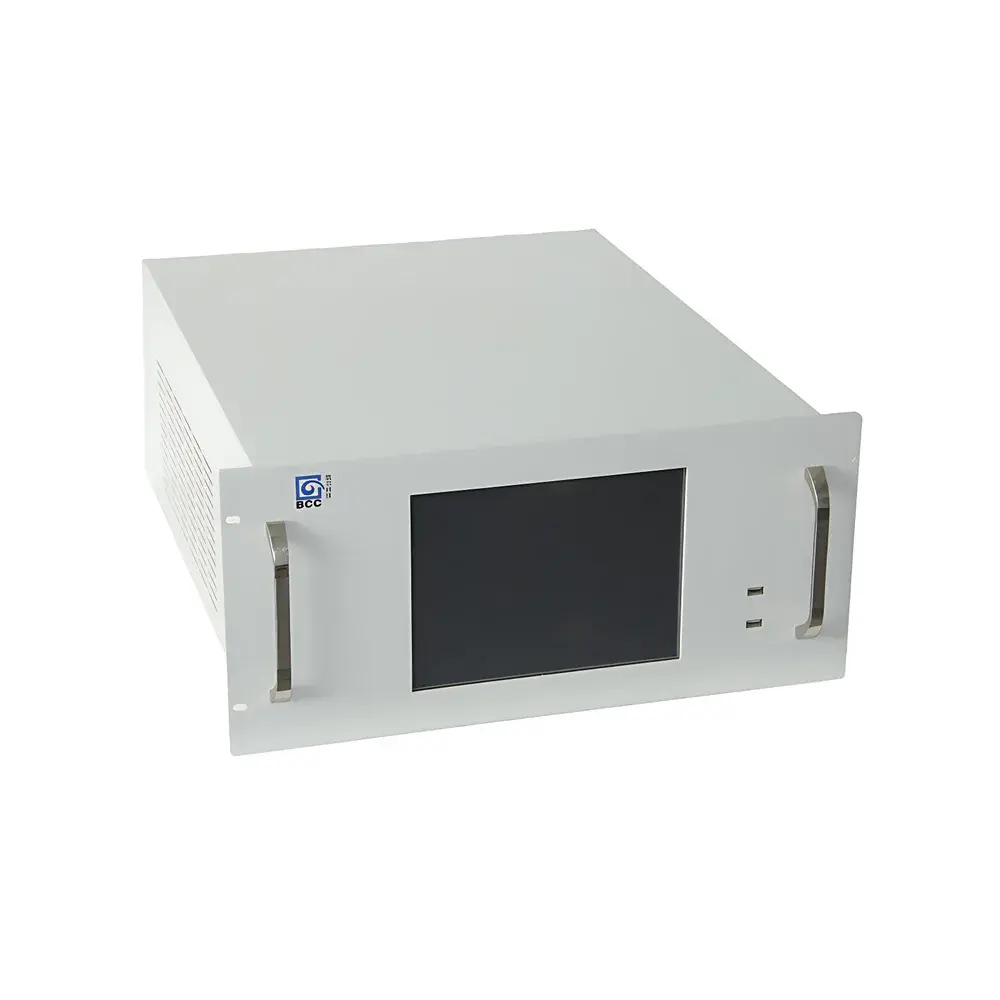
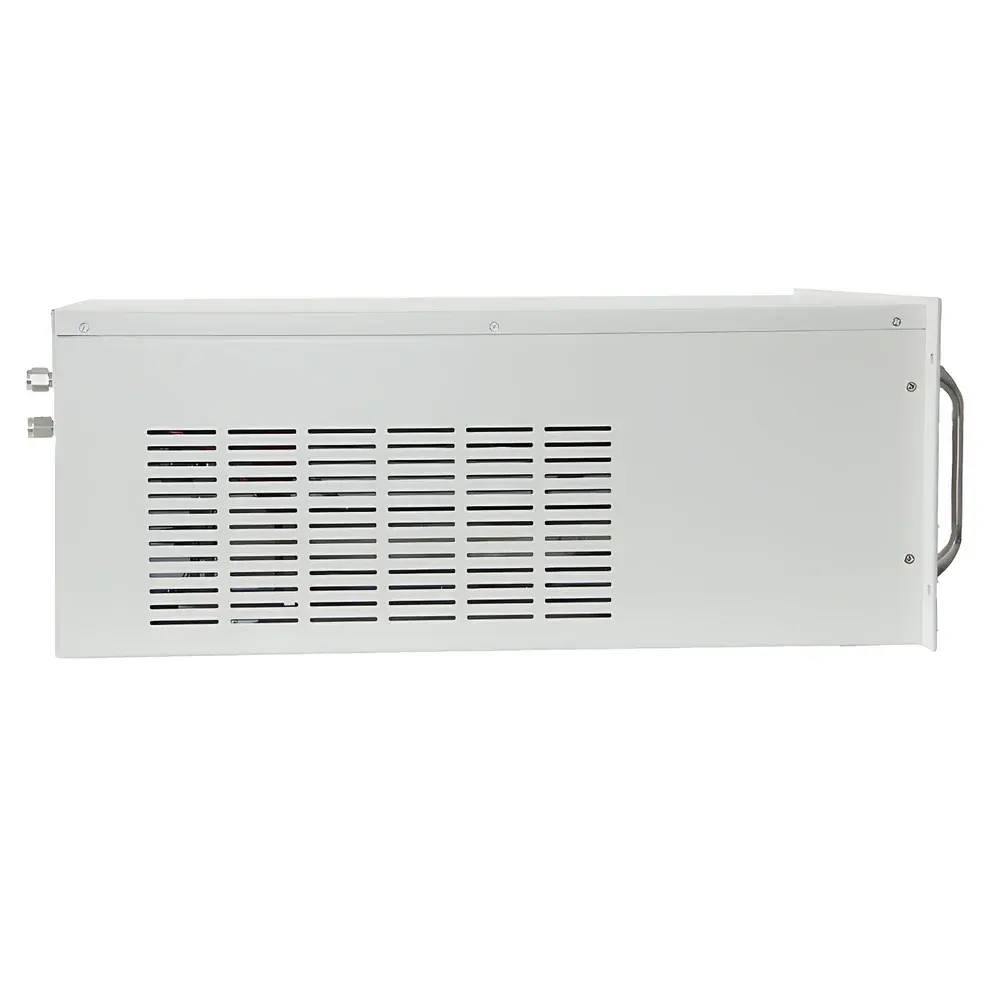
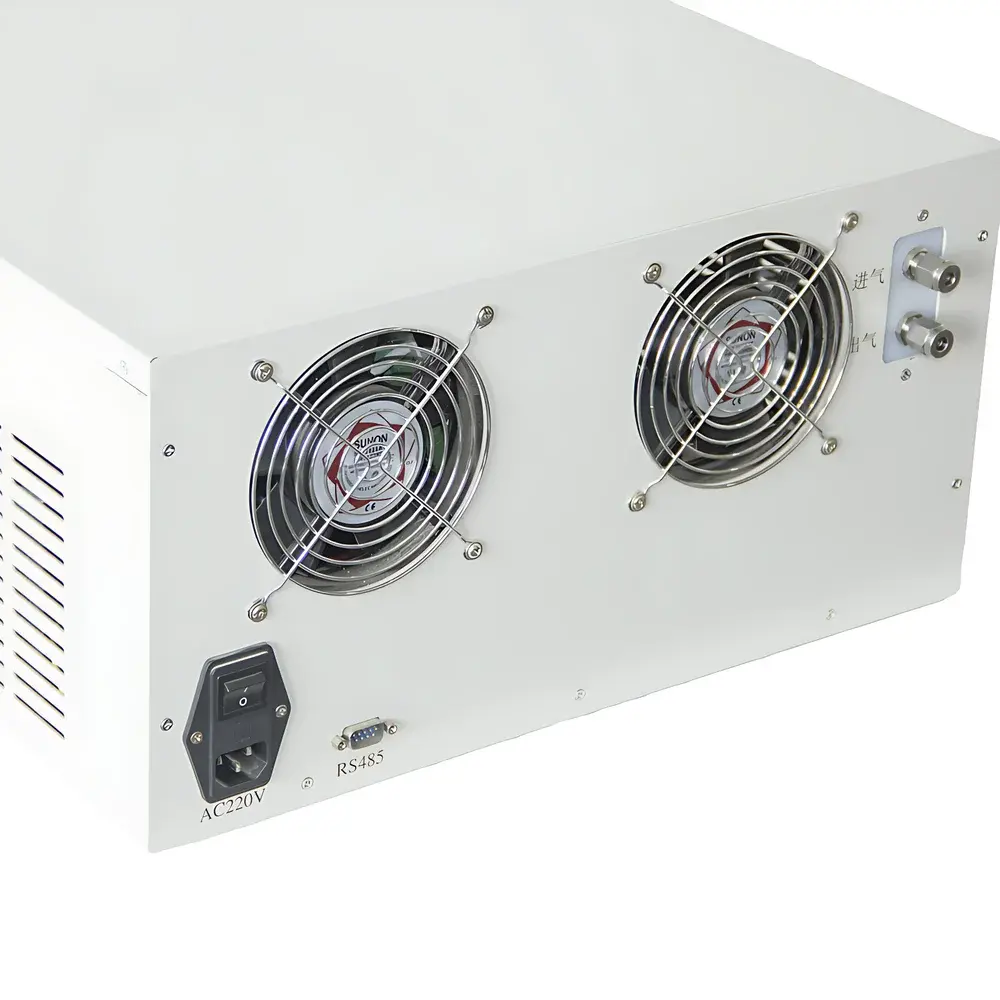
BCC MGA6000 Trace Moisture Analyzer (TDLAS-based)
| Brand | BCC |
|---|---|
| Origin | Hebei, China |
| Model | MGA6000 |
| Principle | Tunable Diode Laser Absorption Spectroscopy (TDLAS) |
| Type | Fixed-mount analyzer |
| Measurement Range | 0–1000 ppm H₂O |
| Limit of Detection (LOD) | 10 ppb H₂O |
| Response Time (T90) | ≤20 s |
| Repeatability | ≤±1% FS |
| Output Interfaces | RS-485, Ethernet (TCP/IP) |
| Data Storage | Embedded SSD (5-year capacity) |
| Design | Modular, maintenance-free architecture |
| Compliance | Designed for continuous industrial process monitoring per ISO 8573-3 and ASTM D7217 |
Overview
The BCC MGA6000 Trace Moisture Analyzer is an industrial-grade, fixed-mount gas analyzer engineered for continuous, real-time quantification of trace water vapor (H₂O) in process and ambient gas streams. It employs Tunable Diode Laser Absorption Spectroscopy (TDLAS)—a first-principle optical technique that measures the absorption of near-infrared laser light at a precisely selected water vapor rotational-vibrational transition line (typically around 1368 nm or 1877 nm). Unlike electrochemical or capacitive sensors, TDLAS provides absolute, calibration-stable measurement without drift, cross-sensitivity, or consumables. The MGA6000 is optimized for applications demanding high specificity, long-term stability, and rapid response in aggressive or variable gas matrices—including natural gas transmission, semiconductor purge lines, SF₆ insulation gas, hydrogen fuel purity verification, and cryogenic air separation units.
Key Features
- Sub-ppb detection capability: Achieves a proven limit of detection (LOD) of 10 ppb H₂O under standard conditions, enabled by high-stability distributed feedback (DFB) laser diodes and wavelength modulation spectroscopy (WMS) with second-harmonic detection.
- Wide dynamic range: Measures linearly from 0 to 1000 ppm H₂O—spanning ultra-trace (ppb), trace (ppm), and low-part-per-million concentrations within a single optical path and detector configuration.
- Gas matrix immunity: Selective excitation at a narrow water-specific absorption line eliminates interference from CO₂, CH₄, H₂, O₂, N₂, hydrocarbons, and other common background gases—eliminating the need for sample dilution, conditioning, or scrubbing.
- Robust baseline stabilization: Integrated peak-locking algorithm continuously tracks and re-centers the laser’s wavelength to the exact water absorption line center, compensating for thermal drift and mechanical perturbation—ensuring repeatable baselines over months of unattended operation.
- Modular field-serviceable architecture: Optical head, electronics module, and flow cell are independently replaceable without recalibration; no alignment tools or factory return required.
- Zero-consumables design: No desiccants, filters, membranes, or electrochemical cells—reducing lifecycle cost and eliminating scheduled replacement downtime.
Sample Compatibility & Compliance
The MGA6000 is validated for use with dry, clean, non-corrosive gas streams operating at pressures from 0.1 to 10 bar (abs) and temperatures from −20 °C to +60 °C. Optional heated sample lines and pressure-regulated flow modules extend compatibility to saturated or condensing environments. The analyzer meets electromagnetic compatibility (EMC) requirements per IEC 61326-1 and carries CE marking for industrial use. Its measurement methodology aligns with ISO 8573-3 (compressed air purity—moisture content), ASTM D7217 (standard test method for moisture in gaseous fuels by laser absorption), and supports audit-ready data integrity per FDA 21 CFR Part 11 when deployed with compliant SCADA/DCS integration.
Software & Data Management
Embedded firmware enables local configuration via front-panel keypad and LCD display, as well as remote access via TCP/IP Ethernet or RS-485 Modbus RTU. All raw spectral data, processed concentration values, diagnostic logs (laser current, temperature, signal-to-noise ratio), and alarm events are timestamped and stored on an industrial-grade solid-state drive (SSD) with ≥5 years of continuous logging capacity (configurable retention policy). Data export is supported in CSV and XML formats. Optional OPC UA server integration allows seamless connection to enterprise MES, LIMS, or cloud-based IIoT platforms for predictive maintenance analytics and regulatory reporting.
Applications
- Natural gas pipeline custody transfer and dehydration system monitoring (per GPA 2172)
- Hydrogen quality assurance for PEM fuel cells (ISO 8573-8 Class 1–3 compliance)
- SF₆ gas purity verification in high-voltage switchgear (IEC 60480)
- Moisture control in semiconductor process tool purge gases (N₂, Ar, He)
- Real-time validation of dryer performance in pharmaceutical lyophilization and inert gas blanketing
- Monitoring of moisture ingress in vacuum-insulated cryogenic storage systems
FAQ
Does the MGA6000 require periodic calibration with certified gas standards?
No—TDLAS is a fundamental spectroscopic method. While initial factory calibration establishes traceability to NIST-traceable water standards, the instrument maintains accuracy via internal wavelength referencing and peak-locking. Annual verification with span gas is recommended but not mandatory for most industrial applications.
Can it operate in explosive atmospheres?
The base MGA6000 is rated for Zone 2 / Class I Div 2 environments. AATEX/IECEx-certified variants with intrinsic safety barriers (e.g., Ex ia IIC T4 Ga) are available upon request.
What is the minimum required sample flow rate and pressure drop?
Optimal performance is achieved at 0.5–2.0 L/min with <1 kPa pressure drop across the flow cell. An integrated mass flow controller option ensures stable velocity regardless of upstream pressure fluctuations.
Is remote diagnostics and firmware update supported?
Yes—via secure SSH/TLS-enabled Ethernet connection. Firmware updates retain all user configurations and historical data.
How is mirror contamination handled in long-term in-situ installation?
The optical path uses gold-coated mirrors with >98% reflectivity and hydrophobic coating. Built-in spectral health monitoring detects gradual signal attenuation and triggers maintenance alerts before measurement uncertainty exceeds ±1% FS.
Related Products







