
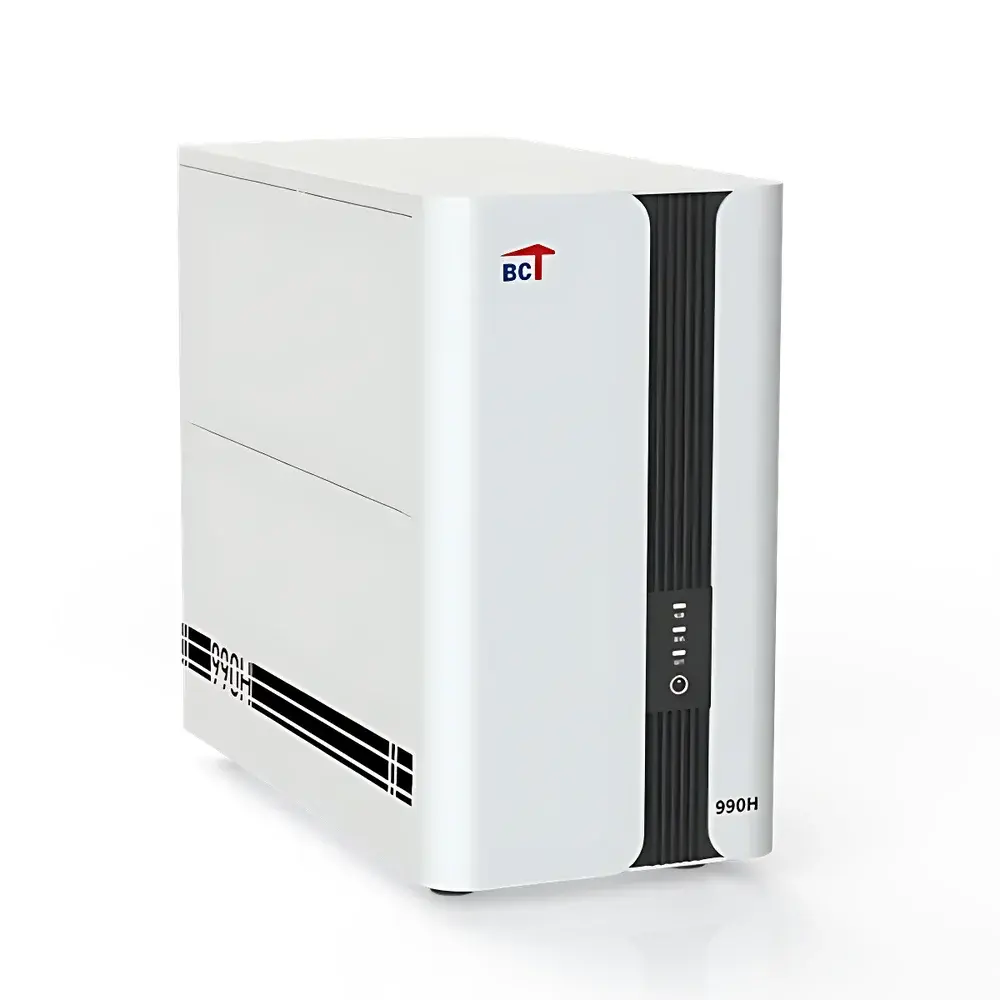
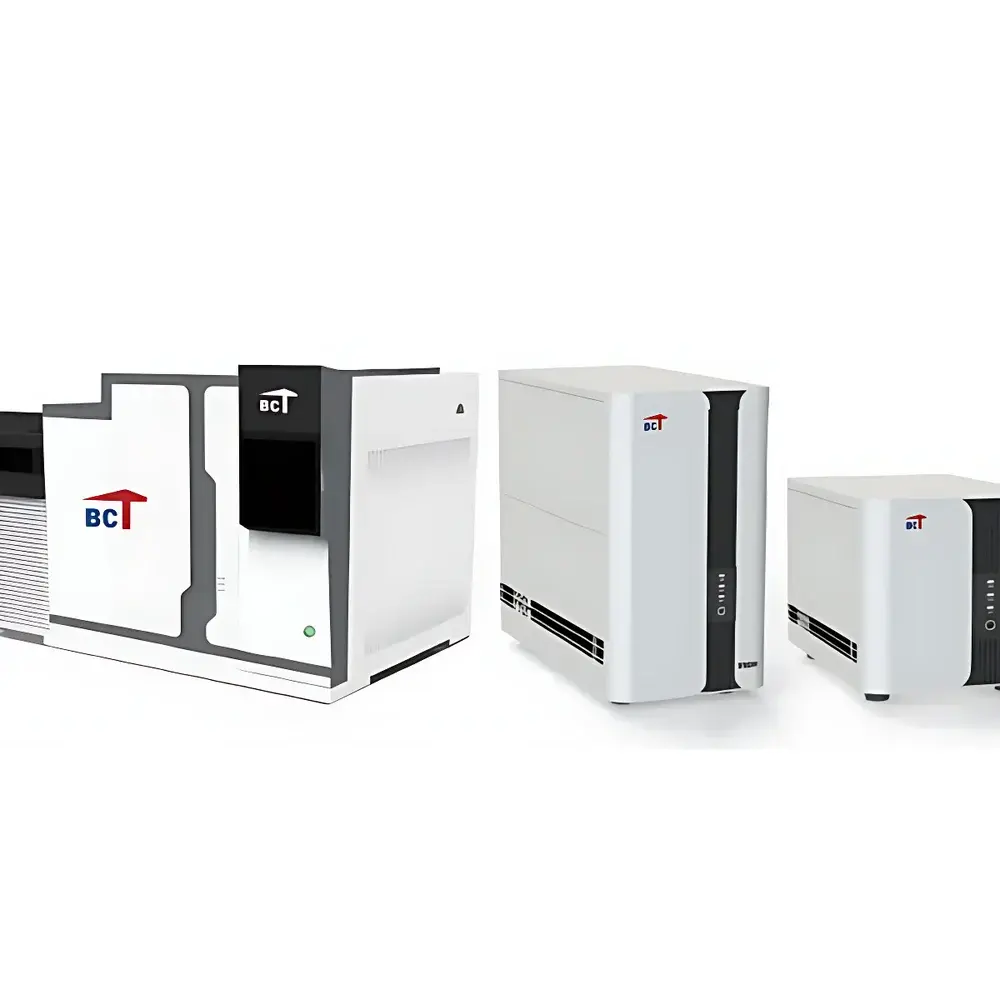
BCT 990H Fuel Hydrogen Impurity Pre-concentrator
| Brand | BCT |
|---|---|
| Origin | Beijing, China |
| Manufacturer Type | Original Equipment Manufacturer (OEM) |
| Product Category | Domestic |
| Model | 990H |
| Pricing | Available Upon Request |
Overview
The BCT 990H Fuel Hydrogen Impurity Pre-concentrator is a purpose-built analytical front-end system engineered for ultra-trace impurity analysis in high-purity hydrogen fuel streams—specifically designed to meet the stringent requirements of proton exchange membrane fuel cell (PEMFC) applications. It operates on the principle of cryogenic trapping and thermal desorption, optimized for polar, reactive, and adsorption-prone contaminants—including hydrogen sulfide (H₂S), carbonyl sulfide (COS), methyl mercaptan, formaldehyde, formic acid, and organic halides—that are notoriously difficult to quantify at sub-ppb levels using conventional gas chromatography (GC) systems. Unlike generic atmospheric pre-concentrators, the 990H integrates material science–driven inertness, dynamic pressure management, and zero-loss dilution architecture to preserve analyte integrity from sampling through injection. Its design directly supports compliance with emerging national standards for hydrogen fuel quality assurance, including GB/T 44243–2024 (GC-based determination of sulfur compounds, formaldehyde, and organic halides) and GB/T 44242–2024 (IC-based quantification of inorganic halides and formic acid).
Key Features
- Inert flow path throughout: All internal tubing and valves are coated with fused-silica inert surface treatment, minimizing adsorption and memory effects for sulfur-containing species, aldehydes, and carboxylic acids.
- Zero-loss dynamic dilution: Integrated dedicated dilution module enables precise, mass-flow-meter-free dilution—critical for maintaining stoichiometric integrity when reducing 1 ppm H₂S to sub-0.5 ppb without analyte degradation or wall loss.
- High-ratio dilution capability: Standard configuration achieves >5000× dilution factor; extendable to support calibration ranges spanning 5 orders of magnitude (ppm to low-ppt).
- Integrated sample pressurization and purging: Automated cylinder saturation protocol eliminates residual ambient gas interference during sampling—ensuring representative capture of target impurities without matrix bias.
- Dual-stage focusing trap with independent flow control: A dedicated cryo-focusing trap coupled with precision split-valve regulation ensures complete desorption and quantitative transfer to the GC or IC interface, eliminating breakthrough or carryover.
- Storage-free operation: Eliminates reliance on intermediate storage cylinders, thereby removing a major source of adsorptive loss—particularly critical for formaldehyde, H₂S, and formic acid, which exhibit strong affinity for stainless steel and polymer surfaces.
Sample Compatibility & Compliance
The 990H is validated for direct interfacing with both gas chromatographic (GC-FID, GC-PDHID, GC-SCD) and ion chromatographic (IC-CD) detection platforms. It supports full method alignment with GB/T 44243–2024 and GB/T 44242–2024, including required calibration protocols, spike recovery validation, and blank assessment procedures. The system’s hardware and operational workflow are structured to satisfy GLP-compliant laboratory practices, with traceable pressure/temperature logging, audit-ready event timestamps, and configurable user access controls. While not certified to ISO/IEC 17025 out-of-the-box, its architecture supports integration into accredited testing environments requiring documented uncertainty budgets and instrument qualification (IQ/OQ/PQ).
Software & Data Management
The 990H is operated via a Windows-based control interface supporting programmable sequence definition, real-time pressure/temperature monitoring, and automated fault diagnostics. All system events—including trap cooldown cycles, dilution ratio selection, purge durations, and desorption profiles—are logged with ISO 8601 timestamps and stored in CSV-compatible format for LIMS integration. The software includes built-in method templates aligned with GB/T 44243–2024 Annex B and GB/T 44242–2024 Annex C, enabling rapid deployment of standardized workflows. Audit trail functionality records operator ID, parameter changes, and run completion status—supporting regulatory readiness under FDA 21 CFR Part 11 when deployed in GMP-aligned hydrogen certification labs.
Applications
- Ultra-trace sulfur speciation (H₂S, COS, CH₃SH, CS₂) in PEMFC-grade hydrogen per SAE J2719 and ISO 14687–2:2019.
- Formaldehyde and acetaldehyde quantification in hydrogen refueling station supply lines.
- Organic and inorganic halide profiling (e.g., Cl⁻, Br⁻, CH₃Cl, CH₂Cl₂) for corrosion risk assessment in fuel cell stack components.
- Formic acid monitoring in electrolyzer-derived hydrogen to assess anion-exchange membrane degradation pathways.
- Method development and validation for emerging impurity markers such as ammonia, siloxanes, and phosphine in green hydrogen production chains.
FAQ
Does the 990H require external mass flow controllers for dilution?
No—the system uses pressure-driven, laminar-flow dilution with calibrated orifices and inert-coated manifolds, eliminating dependency on MFCs and associated calibration drift.
Can it interface with third-party GC or IC systems?
Yes—standard 1/8″ VCR fittings and TTL/RS-232 trigger compatibility enable seamless integration with Agilent, Thermo Fisher, Shimadzu, and Metrohm platforms.
What is the lowest detectable concentration achievable with this system?
When paired with a GC-SCD or IC-CD detector, typical method detection limits (MDLs) are ≤0.05 ppb for H₂S and ≤0.1 ppb for formaldehyde—subject to detector sensitivity and column efficiency.
Is the system compliant with international hydrogen fuel standards beyond Chinese GB/T?
Its technical architecture aligns with ISO 14687–2:2019 Annex C (pre-concentration requirements) and ASTM D7622–19 (hydrogen purity test methods), facilitating cross-border method equivalency assessments.
How is system performance verified between analyses?
Built-in leak-check routines, blank-run diagnostics, and periodic standard spike recovery checks (using certified H₂S/formaldehyde permeation tubes) are supported via the control software’s QC module.
Related Products



