
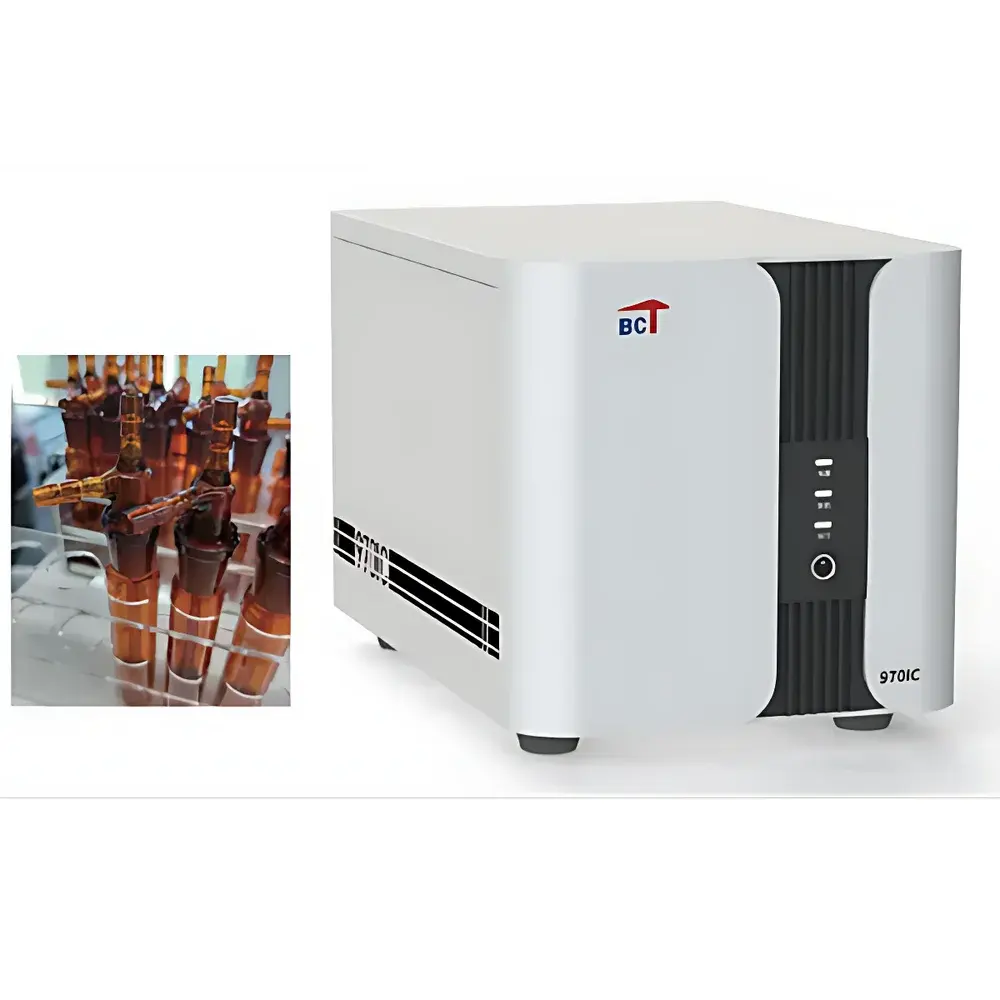
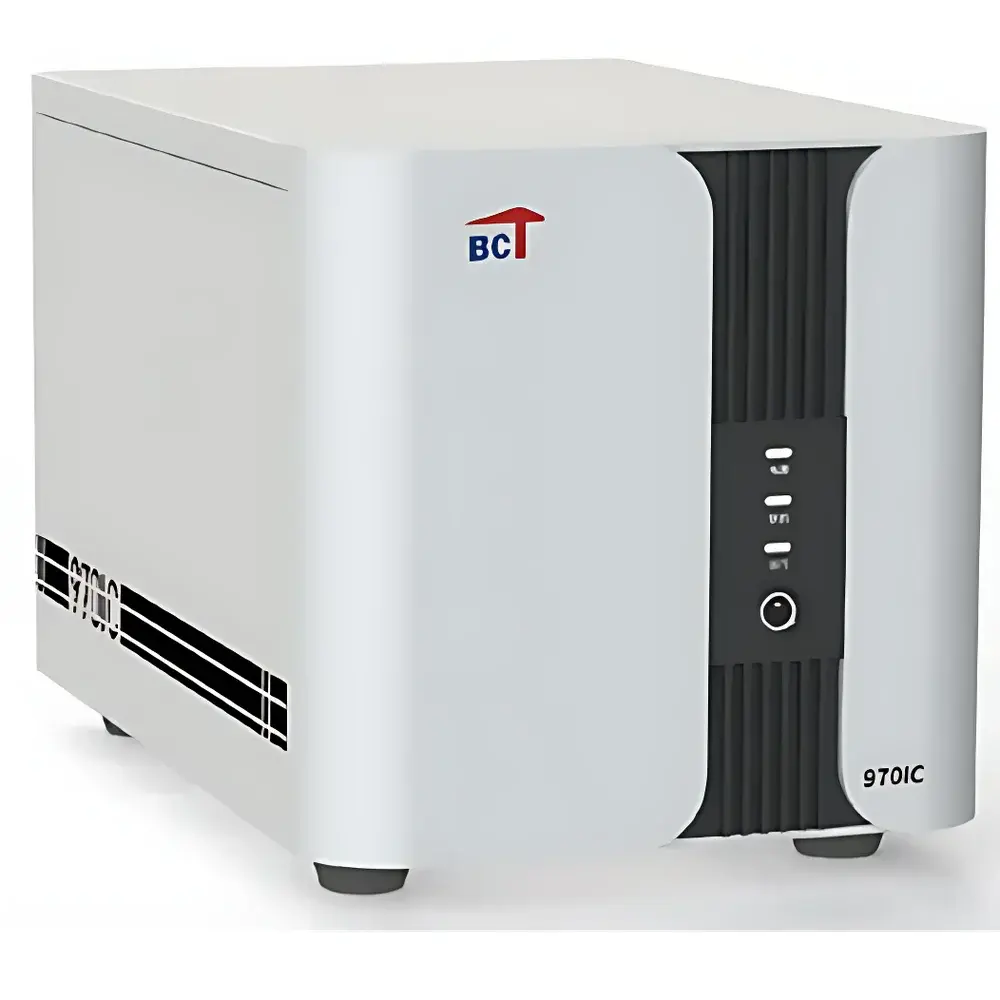
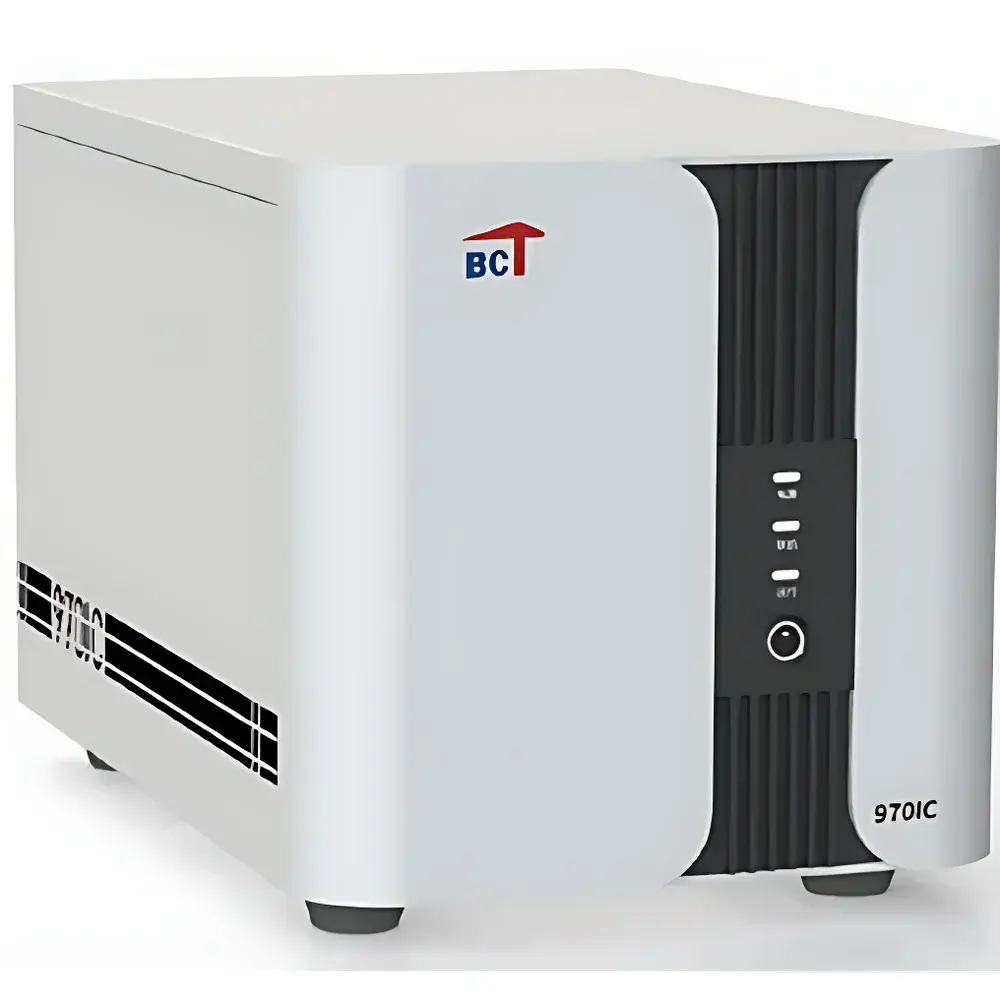
BCT BCT 970IC High-Precision Dynamic Gas Dilutor
| Brand | BCT |
|---|---|
| Origin | Beijing, China |
| Manufacturer Type | Original Equipment Manufacturer (OEM) |
| Country of Origin | China |
| Model | BCT 970IC |
| Pricing | Available Upon Request |
Overview
The BCT BCT 970IC High-Precision Dynamic Gas Dilutor is an engineered solution for trace-level gas standard generation in analytical laboratories supporting hydrogen purity certification for proton exchange membrane fuel cell (PEMFC) applications. It operates on the principle of dynamic dilution via critical-flow orifice (CFO) technology—leveraging calibrated sonic nozzles and high-stability pressure transducers—to deliver continuous, real-time gas mixtures with certified uncertainty below ±1.5% (k=2) across dilution ratios from 1:10 to 1:10,000. Unlike static cylinder-based standards or permeation tube systems, the 970IC eliminates storage-related adsorption artifacts and long equilibration delays by generating diluted standards on-demand, directly upstream of ion chromatography (IC) or gas-phase detection systems. Its design prioritizes chemical inertness, thermal stability, and metrological traceability—making it suitable for quantifying ppb-level inorganic halides (e.g., Cl⁻, F⁻, Br⁻), formic acid (HCOOH), and other reactive impurities specified in GB/T 44242–2024.
Key Features
- Fused-silica inertized fluidic path: Entire gas pathway—including valves, fittings, tubing, and dilution chamber—is surface-treated with fused-silica coating to minimize adsorption, catalytic decomposition, and memory effects for polar, acidic, or condensable analytes.
- Sonic nozzle–based flow control: Utilizes NIST-traceable critical-flow orifices operating under choked-flow conditions; flow rate determined solely by upstream absolute pressure, temperature, and nozzle geometry—eliminating reliance on mass flow controllers (MFCs) that cannot be fully inertized.
- High-accuracy pressure sensing: Integrated dual-range piezoresistive pressure transducers (0–100 kPa and 0–1 MPa), calibrated to ISO/IEC 17025-accredited standards, enable sub-0.05% full-scale repeatability in differential pressure measurement.
- Rapid dynamic equilibrium: Achieves stable output concentration within 5–30 minutes after system start-up—contrasting with permeation tube methods requiring >12–72 hours for thermal and diffusion equilibrium.
- Integrated alkaline scrubber module: Factory-configured NaOH or KOH solution absorption trap removes CO₂, SO₂, NOₓ, and acidic interferents upstream of dilution, ensuring matrix compatibility with IC detection of anions.
- No compressed gas cylinder dependency: Operates using primary standard gas (e.g., 100 ppm HCl in N₂) and ultra-high-purity diluent (N₂ or He ≥99.9995%), eliminating cylinder storage, aging, and wall adsorption issues.
Sample Compatibility & Compliance
The BCT 970IC is validated for use with reactive, low-volatility, and adsorptive gaseous standards including hydrogen chloride (HCl), hydrogen fluoride (HF), bromomethane (CH₃Br), formic acid vapor, and chlorine gas. It complies with the methodological requirements of GB/T 44242–2024 for hydrogen fuel quality testing and supports alignment with international frameworks including ISO 14687–2:2019 (hydrogen fuel specifications) and ASTM D7892–22 (standard practice for calibration of gas analyzers). All wetted materials meet USP Class VI biocompatibility criteria, and system architecture supports audit-ready documentation per GLP and GMP environments. Optional 21 CFR Part 11-compliant software modules are available for electronic signature, user access control, and immutable audit trails.
Software & Data Management
The instrument interfaces via Ethernet or RS-485 to BCT’s proprietary DiluControl™ software (Windows-based), which provides real-time monitoring of inlet pressure, diluent flow, nozzle temperature, and calculated concentration output. Software features include automated dilution ratio scheduling, calibration certificate generation (with uncertainty budgeting), and export of time-stamped CSV logs compliant with LIMS integration protocols. All configuration changes, operator logins, and calibration events are recorded with timestamps and user IDs—enabling full traceability required under ISO/IEC 17025 and CNAS accreditation scopes.
Applications
- Primary standard generation for ion chromatographic analysis of halide anions and carboxylates in PEMFC-grade hydrogen.
- Calibration verification of FTIR, CRDS, and cavity-enhanced UV-Vis gas analyzers targeting trace impurities.
- Method development and validation studies for ISO/IEC 17025-accredited hydrogen testing laboratories.
- Reference material production for interlaboratory comparison programs (e.g., CCQM key comparisons).
- Research into adsorption kinetics and surface reactivity of impurity gases on fuel cell catalyst components.
FAQ
What dilution ratios can the BCT 970IC achieve?
The system supports dynamic dilution ratios from 1:10 to 1:10,000 with certified accuracy; extended ranges up to 1:100,000 are achievable using cascaded configurations.
Is the instrument compatible with helium as a diluent gas?
Yes—fully compatible with He, N₂, Ar, and synthetic air; all fluidic components are rated for helium service and low-permeability fused-silica coating prevents He-induced embrittlement.
Does the 970IC require periodic recalibration?
Annual calibration of pressure sensors and nozzle coefficients is recommended; calibration certificates include expanded uncertainty statements traceable to NIM (National Institute of Metrology, China).
Can the alkaline scrubber be bypassed for non-acidic analytes?
Yes—the scrubber module is modular and field-removable; optional inert bypass manifolds are available for applications involving non-reactive standards such as CO, CH₄, or O₂.
What maintenance intervals are specified for routine operation?
Fused-silica surfaces require no routine recoating; recommended preventive maintenance includes quarterly leak checks, biannual filter replacement (0.01 µm PTFE), and annual sensor verification per manufacturer SOP-DM-009.
Related Products







