
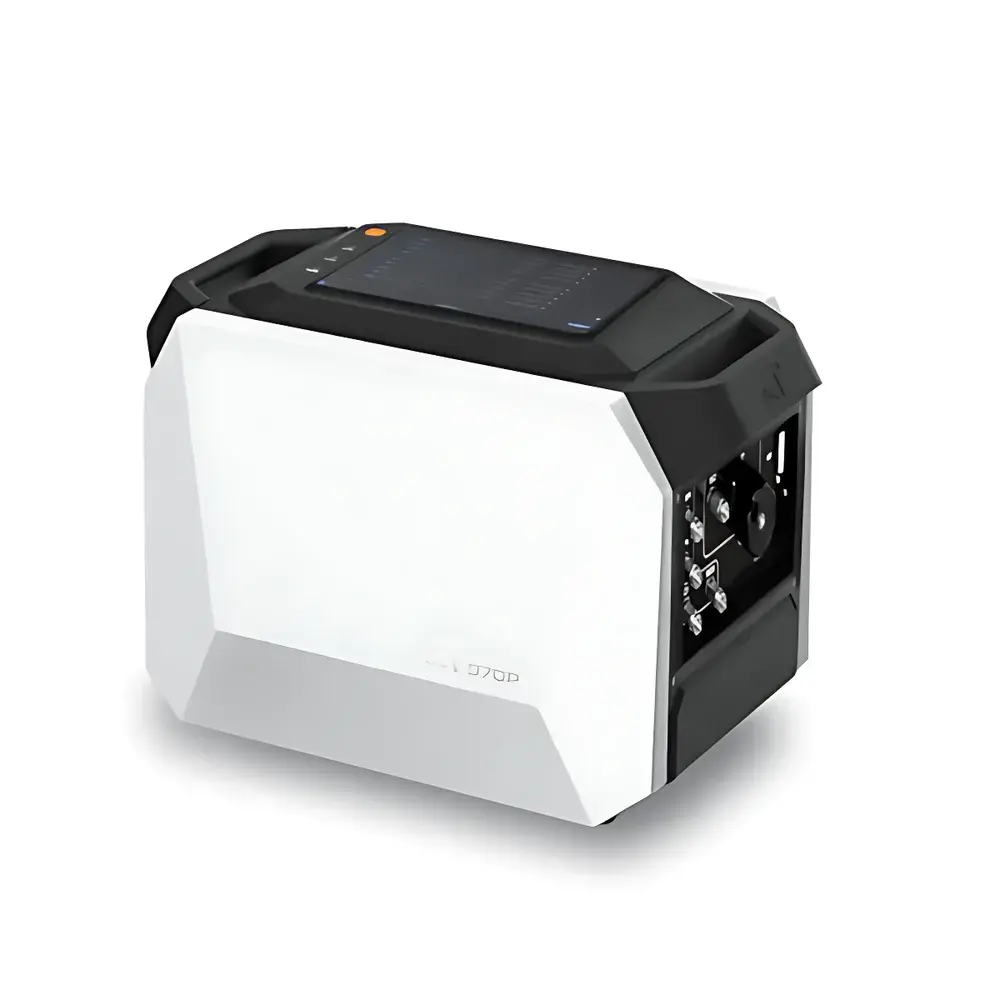
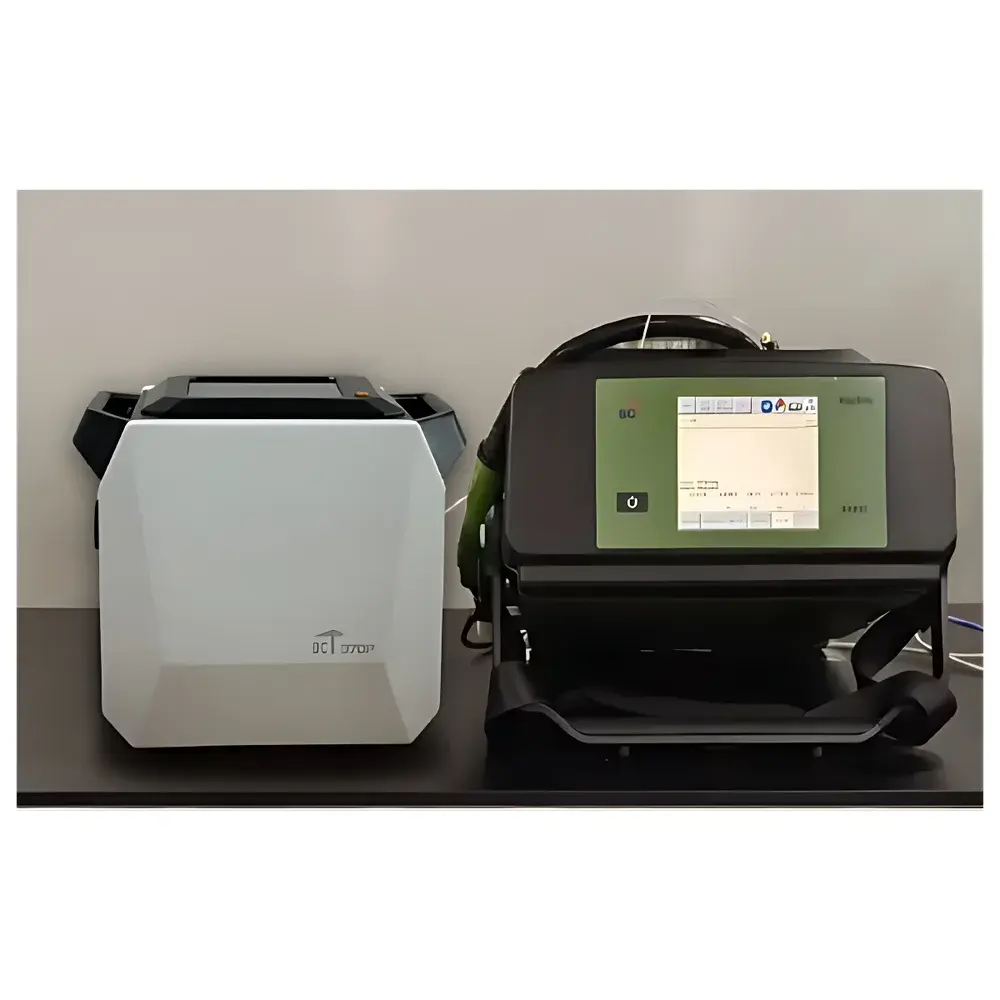
BCT BCT-970P Portable Dynamic Gas Dilution System
| Brand | BCT |
|---|---|
| Origin | Beijing, China |
| Manufacturer Type | Original Equipment Manufacturer (OEM) |
| Product Origin | Domestic (China) |
| Model | BCT-970P |
| Pricing | Available Upon Request |
Overview
The BCT BCT-970P Portable Dynamic Gas Dilution System is an engineered solution for precise, real-time dilution of calibration gases and environmental air samples in field-deployable or laboratory-based volatile organic compound (VOC) monitoring workflows. It operates on the principle of dynamic (continuous-flow) dilution—where a primary gas stream (e.g., certified standard or enriched sample) is metered into a high-purity carrier gas stream under precisely regulated pressure-driven flow conditions. Unlike static dilution methods involving collection cylinders or bag storage, the BCT-970P delivers diluted gas directly to downstream analytical instruments—such as portable GC-MS, pre-concentrators, or PID/FID detectors—eliminating intermediate storage and minimizing analyte loss via adsorption, surface reaction, or wall depletion. Its design aligns with the operational requirements specified in HJ 1223–2021 (“Emergency Determination of Volatile Organic Compounds in Ambient Air—Portable Gas Chromatography–Mass Spectrometry Method”), ensuring method-compliant gas delivery for regulatory-grade field analysis.
Key Features
- Dynamic pressure-controlled dilution architecture: Utilizes calibrated restrictors combined with high-stability pressure regulation modules—no mass flow controllers (MFCs) employed—to eliminate MFC-related cross-contamination, zero drift, and gas-specific calibration dependencies.
- Inertized gas pathway: All wetted surfaces—including capillary restrictors, mixing junctions, and output lines—are coated with fused-silica inert film, reducing adsorption of polar, reactive, or sulfur-containing VOCs (e.g., formaldehyde, acetaldehyde, H₂S, mercaptans).
- Integrated thermal management: Built-in heating element and closed-loop temperature controller maintain system temperature within ±0.5 °C across ambient conditions from 5 °C to 40 °C, ensuring consistent viscosity-driven flow behavior and minimizing density-induced dilution ratio drift.
- Wide dilution range: Standard configuration supports dilution factors from 2× to 2000× (v/v); custom configurations extend up to 10,000× upon request—enabling quantification across multi-decade concentration spans without manual reconfiguration.
- Field-optimized portability: Weighing <4.2 kg with integrated rechargeable Li-ion battery (8+ hours continuous operation), ruggedized enclosure (IP54-rated), and intuitive 7-inch capacitive touchscreen interface with offline method storage.
- Modular output interface: Optional push-to-connect (Swagelok®-compatible) outlet fitting enables rapid coupling to GC-MS transfer lines, sorbent tube desorption systems, or canister purging manifolds.
Sample Compatibility & Compliance
The BCT-970P is validated for use with compressed gas standards (NIST-traceable or ISO 6141-certified), whole-air canisters (SUMMA®-treated), and active-sampled sorbent tubes (e.g., Tenax®, Carbopack™). It meets functional equivalency requirements for dynamic dilution systems referenced in ASTM D6196–22 (Standard Practice for Selection of Sorbents, Sampling, and Thermal Desorption Analysis of Volatile Organic Compounds in Air), ISO 16000-6:2011 (Indoor air—Part 6: Determination of volatile organic compounds), and US EPA Compendium Method TO-15A. Its pressure-based flow control architecture avoids the calibration traceability gaps associated with thermal MFCs, supporting GLP-compliant audit trails when paired with time-stamped dilution logs.
Software & Data Management
The embedded Linux-based firmware provides full local control via the touchscreen UI, including preset method recall, real-time dilution factor verification, pressure/temperature diagnostics, and battery status monitoring. All operational parameters—including setpoint dilution ratio, inlet pressure, carrier gas type (N₂, He, synthetic air), and session timestamps—are logged internally (≥10,000 entries) and exportable via USB-C to CSV. Audit-ready data files include instrument serial number, firmware version, and user-defined batch IDs—supporting alignment with FDA 21 CFR Part 11 requirements when deployed in regulated environmental testing laboratories.
Applications
- On-site calibration verification of portable GC-MS, FTIR, and laser-based gas analyzers during emergency response (e.g., chemical spill, landfill leak, industrial fugitive emission surveys).
- Generation of multi-level calibration curves for EPA Method TO-15 and ASTM D5466 analyses without cylinder switching or manual blending.
- Matrix-matched dilution of humid or reactive stack emissions prior to cryo-focusing or thermal desorption.
- Low-concentration spike recovery studies in ambient air monitoring networks requiring sub-ppbv precision.
- Method development for emerging contaminants (e.g., PFAS precursors, oxygenated VOCs) where adsorptive losses dominate uncertainty budgets.
FAQ
Does the BCT-970P require external power in the field?
No—it operates autonomously on its internal rechargeable battery for ≥8 hours under typical dilution conditions (20–200×, 100 mL/min total flow). AC adapter included for benchtop charging.
Can it be used with corrosive or highly reactive gases (e.g., Cl₂, NO₂, NH₃)?
Yes—the fused-silica inert coating resists chemical interaction; however, exposure duration and concentration should be limited per material compatibility guidelines. Consult technical documentation for maximum recommended partial pressures.
Is firmware update supported remotely?
Firmware updates are performed locally via USB drive; no cloud connectivity or remote access is implemented to ensure data integrity and network security compliance.
What carrier gases are compatible?
Nitrogen, helium, argon, and synthetic air (≤5 ppm H₂O, ≤0.1 ppm hydrocarbons) are supported. Gas purity must meet ISO 8573-1 Class 1 for particulates and Class 2 for moisture.
How is dilution accuracy verified?
Accuracy is verified using upstream and downstream calibrated pressure transducers (±0.05% FS), validated restrictor K-factors, and NIST-traceable reference standards. Certificate of Conformance includes as-tested dilution uncertainty (k=2) per ISO/IEC 17025.
Related Products







