
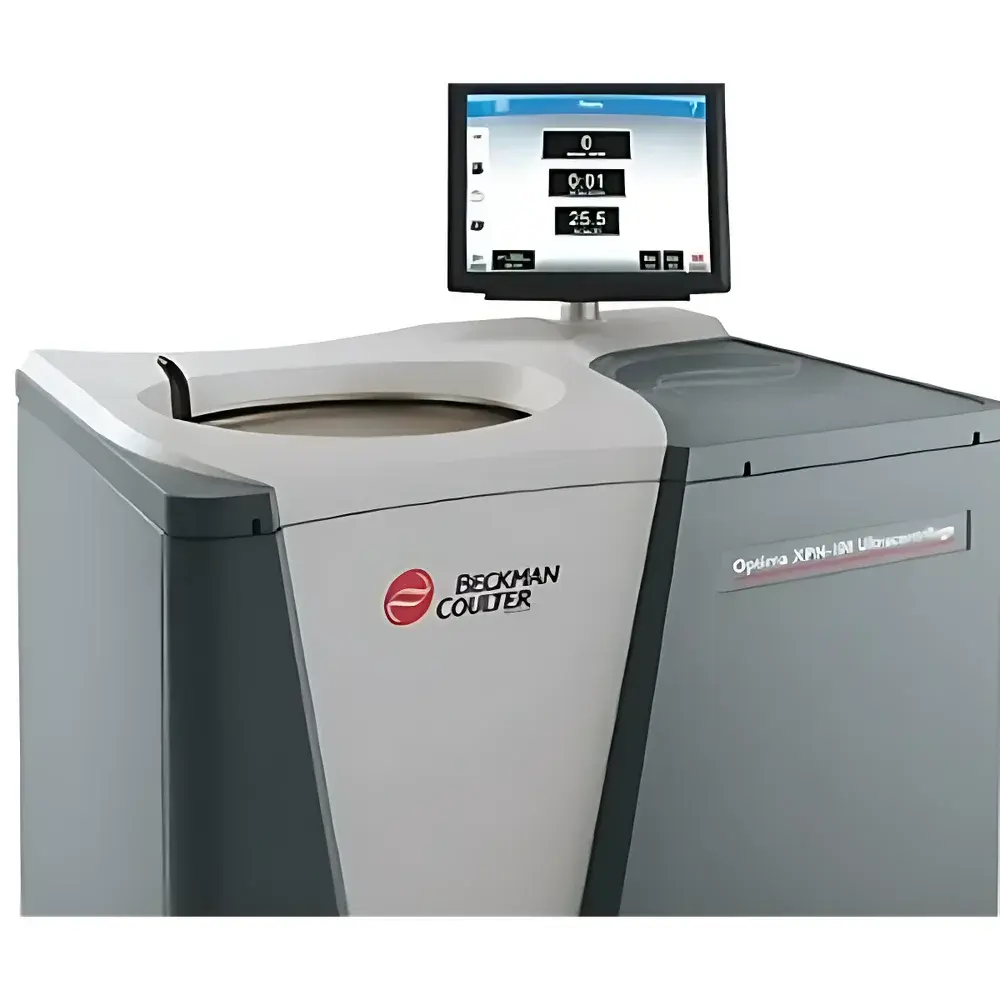
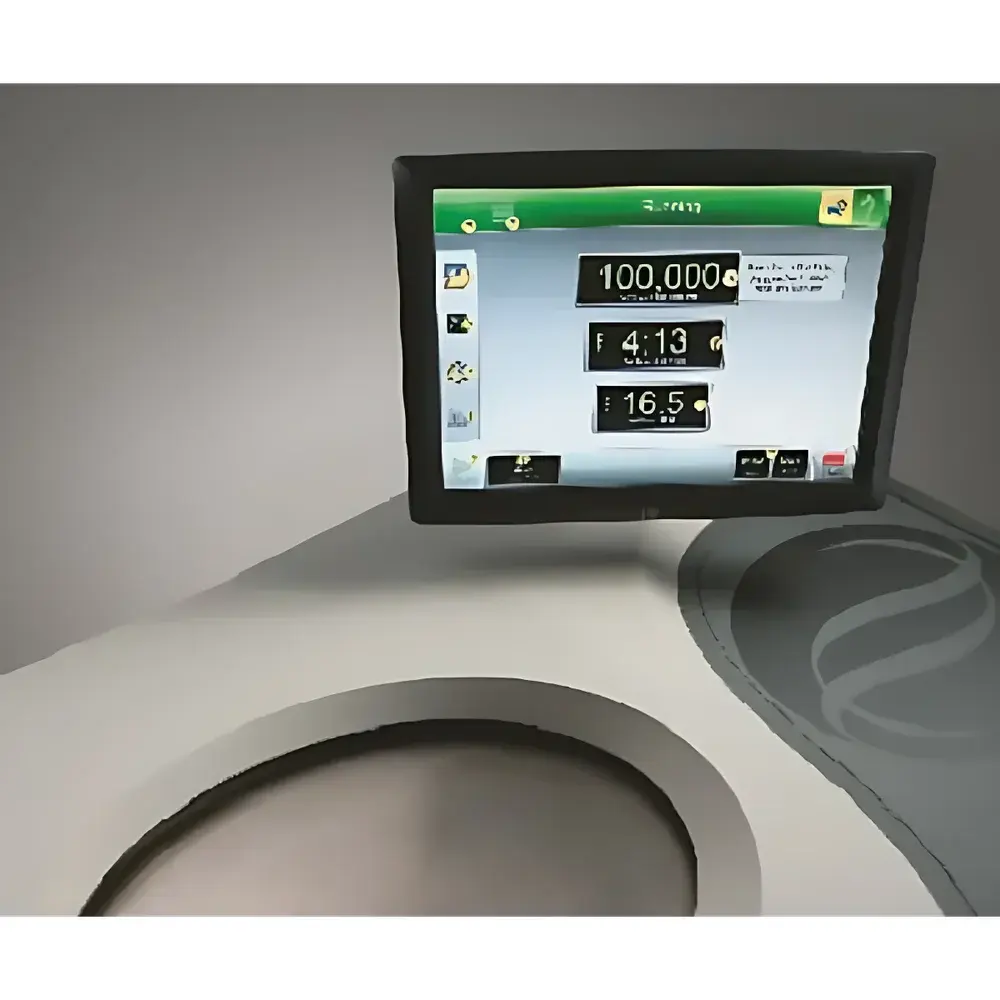
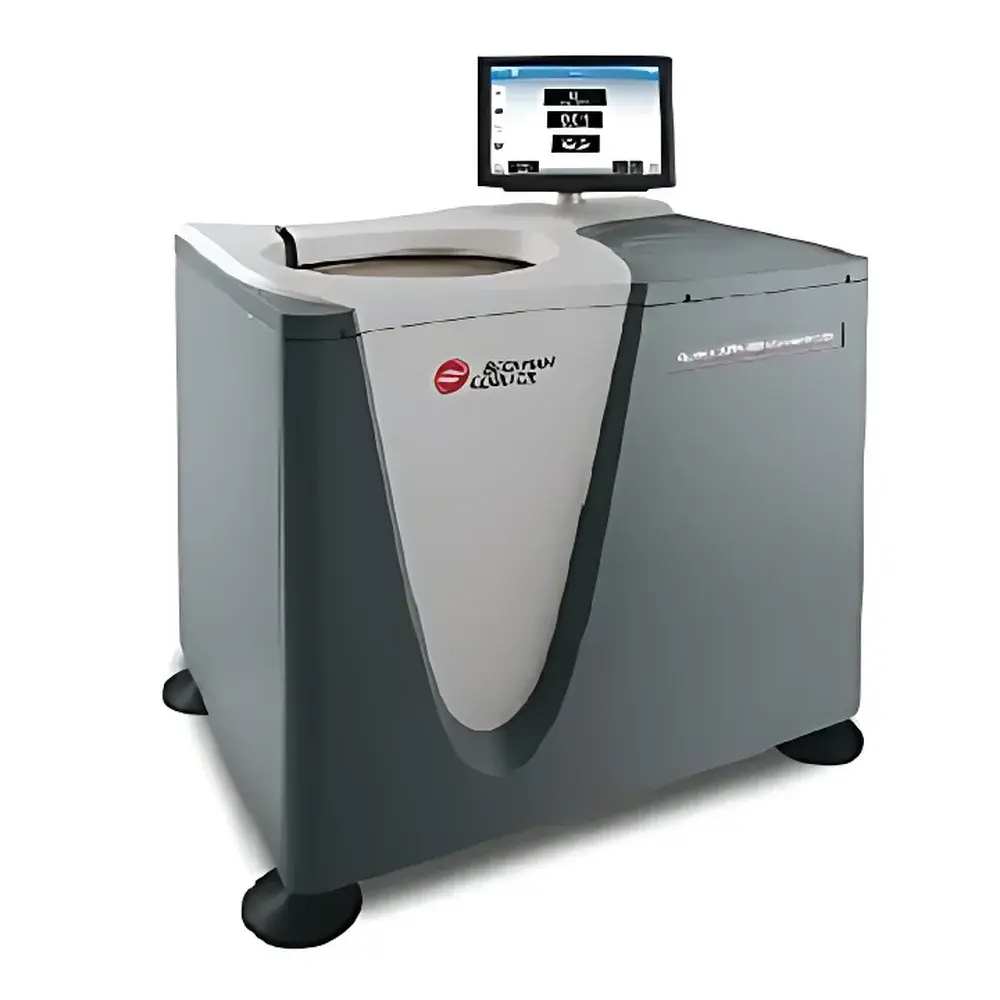
Beckman Coulter Optima XPN Series Ultracentrifuge
| Brand | Beckman Coulter |
|---|---|
| Origin | USA |
| Manufacturer | Beckman Coulter, Inc. |
| Product Type | Floor-standing ultracentrifuge |
| Speed Range | 100,000 / 90,000 / 80,000 rpm |
| Maximum RCF | 802,000 / 694,000 / 548,300 × g |
| Maximum Capacity | 1.5 L |
| Rotor Compatibility | Fixed-angle, swinging-bucket, vertical, near-vertical, and zonal rotors |
| Dimensions (W × D × H) | 94 × 68.1 × 125.7 cm |
| Safety Compliance | Meets IEC 61010-1, UL 61010-1, and FDA 21 CFR Part 11 requirements for electronic records and signatures |
Overview
The Beckman Coulter Optima XPN Series Ultracentrifuge is a high-performance, floor-standing analytical and preparative ultracentrifuge engineered for demanding applications in molecular biology, virology, structural biochemistry, and nanomaterial characterization. Operating on the principle of sedimentation velocity and equilibrium centrifugation, the system achieves ultra-high angular velocities—up to 100,000 rpm—to generate centrifugal forces exceeding 800,000 × g. This enables precise separation and purification of subcellular components—including ribosomes, membrane vesicles, exosomes, viruses, lipoproteins, and macromolecular complexes—based on differences in buoyant density, size, and shape. Designed and manufactured in the United States, the Optima XPN series integrates precision engineering with regulatory-grade software architecture to support GLP/GMP-compliant laboratories requiring audit-ready documentation, traceable rotor lifecycle management, and secure user access control.
Key Features
- Three configurable speed platforms: 100k, 90k, and 80k rpm models—each optimized for specific resolution, throughput, and thermal stability requirements
- Dynamic Rotor Inertia Check (DRIC) technology continuously monitors rotor mass distribution during acceleration and deceleration to prevent imbalance-related failures
- Electromechanical interlock system with solenoid-actuated stainless-steel chamber door ensures physical isolation from rotating assemblies during operation
- Integrated rotor identification via RFID and serial-number-based tracking, enabling automated history logging and compliance with ISO 17025 and CLIA standards
- Dual-stage vacuum system with oil-free turbomolecular pump maintains operational pressure below 10⁻⁵ Torr for minimal aerodynamic drag and thermal drift
- Real-time temperature monitoring and active refrigeration (range: 0–40 °C) with ±0.3 °C accuracy across all rotor types
- Comprehensive safety validation suite including simulated overspeed tests, mechanical stress modeling, and certified rotor fatigue life estimation
Sample Compatibility & Compliance
The Optima XPN platform supports a full range of Beckman Coulter-certified rotors—including Type 70 Ti, Type 90 Ti, SW 60 Ti, SW 55 Ti, and VTi 65.1—enabling compatibility with standard ultracentrifuge tubes (e.g., polyallomer, thick-wall polycarbonate, and quartz), as well as custom sample cells for analytical ultracentrifugation (AUC). All rotor-tube combinations undergo rigorous validation per ASTM F2119 and ISO 15197 protocols. The instrument meets IEC 61010-1 for electrical safety, complies with FDA 21 CFR Part 11 for electronic records and signatures, and supports ALCOA+ data integrity principles through time-stamped, password-protected, and electronically signed audit trails. Rotor usage history—including run count, cumulative hours, and maximum speed achieved—is automatically archived and exportable in CSV or PDF format for internal quality review or regulatory inspection.
Software & Data Management
Controlled exclusively via Beckman Coulter’s eXpert Centrifuge Software, the Optima XPN provides a validated, role-based interface supporting method creation, protocol validation, and remote diagnostics. The software includes built-in calculators for sedimentation coefficient (S-value), diffusion coefficient (D), partial specific volume (v̅), and buoyant density—accelerating experimental design without external computation tools. Diagnostic alerts are delivered via SMTP email to designated users; remote troubleshooting is enabled via encrypted VNC sessions compliant with TLS 1.2. All method files, run logs, and electronic signatures are stored in an embedded SQLite database with SHA-256 hashing and automatic daily backups. Audit trail configuration adheres to Annex 11 and USP guidelines for analytical instrument qualification.
Applications
- Isolation and purification of extracellular vesicles (exosomes, microvesicles) for biomarker discovery and therapeutic development
- Preparative separation of viral particles (e.g., AAV, lentivirus, influenza) for vaccine research and gene therapy vector production
- Analytical ultracentrifugation (AUC) studies of protein–ligand interactions, conformational changes, and oligomeric state analysis
- Lipoprotein subclass fractionation (HDL, LDL, VLDL) in cardiovascular disease research
- Nanoparticle characterization—including size distribution profiling and aggregation kinetics—under native buffer conditions
- Subcellular organelle isolation (mitochondria, lysosomes, Golgi) for functional proteomics and metabolomics workflows
FAQ
What regulatory standards does the Optima XPN comply with?
The system conforms to IEC 61010-1, UL 61010-1, FDA 21 CFR Part 11, and supports compliance with ISO/IEC 17025, GLP, and GMP requirements through its electronic signature, audit trail, and rotor lifecycle tracking capabilities.
Can the Optima XPN be integrated into a laboratory information management system (LIMS)?
Yes—via standardized CSV and XML export formats, and optional API integration (available under Beckman Coulter’s Enterprise Connect program), enabling bidirectional data exchange with major LIMS platforms.
How is rotor calibration and certification managed?
Each rotor carries a unique serialized RFID tag. Calibration data, maintenance logs, and fatigue life estimates are stored locally and synchronized with Beckman Coulter’s Global Rotor Registry upon network connection.
Is remote monitoring supported without vendor-hosted cloud services?
Yes—the instrument operates on local network infrastructure only. VNC access, email alerts, and file exports require no external cloud dependency or subscription service.
What is the recommended maintenance schedule?
Preventive maintenance is advised every 12 months or after 1,000 operating hours, whichever occurs first. Vacuum pump oil replacement and bearing performance verification are included in the service protocol.



