
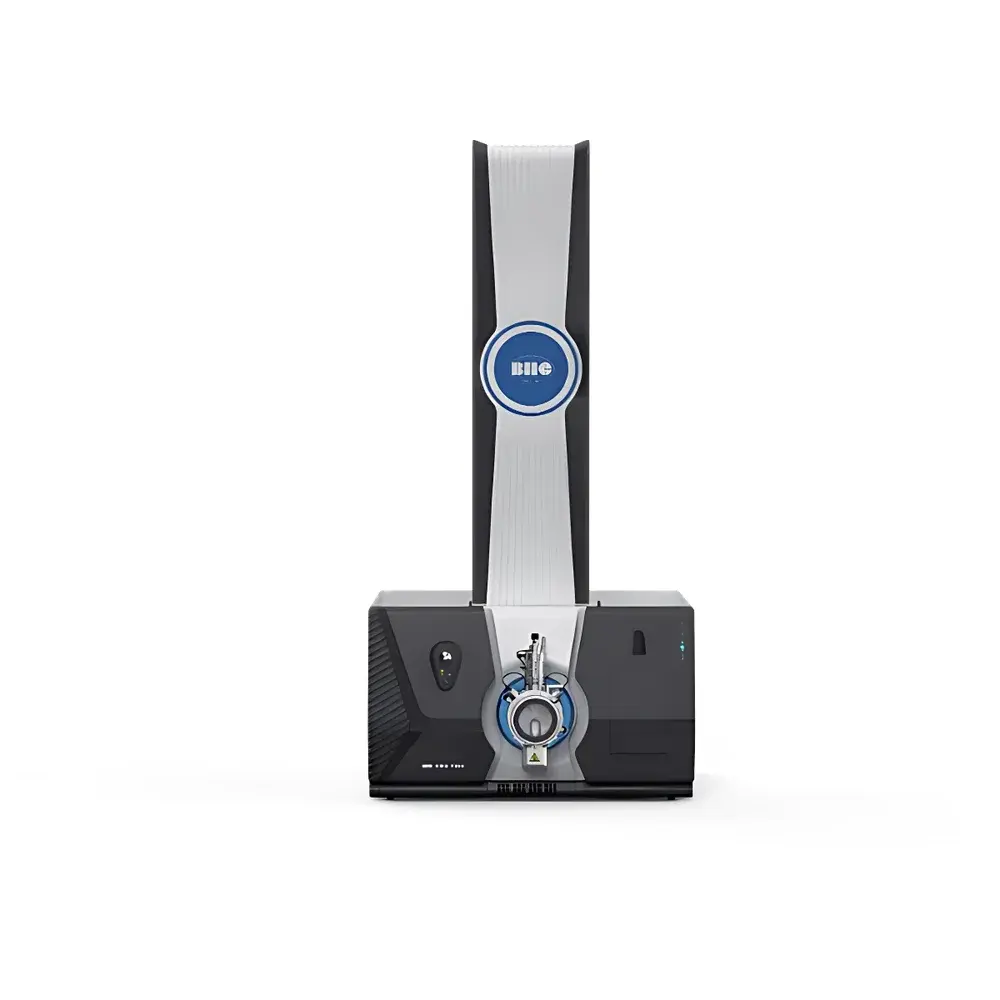
Beifen Ruili HMS7680 Ion Mobility–Quadrupole–High-Resolution Time-of-Flight Tandem Mass Spectrometer
| Brand | Beifen Ruili |
|---|---|
| Origin | Beijing, China |
| Model | HMS7680 |
| Instrument Type | Ion Mobility Mass Spectrometer |
| Application Scope | General-Purpose |
| Ionization Sources | ESI and APCI |
| IM Resolution Modes | 3 Adjustable Settings |
| Mass Analyzer Configuration | Quadrupole + Orthogonal TOF |
| Collision Cell | Axial DC Voltage Gradient CID with Tunable Collision Gas |
| Temperature Control | Water-Cooled, Thermally Stabilized Flight Tube with Intelligent Compensation |
| Acquisition Mode | 4D Full-Spectrum Simultaneous Detection |
| Software Features | Automated Tuning, Real-Time Mass Calibration, Method Optimization, and Integrated Data Processing & Reporting |
Overview
The Beifen Ruili HMS7680 is a high-performance ion mobility–quadrupole–high-resolution time-of-flight (IM-Q-TOF) tandem mass spectrometer engineered for comprehensive molecular characterization in complex matrices. It integrates orthogonal ion mobility separation—based on the differential drift time of ions in an electric field under controlled buffer gas conditions—with quadrupole precursor selection and high-mass-accuracy time-of-flight detection. This multi-dimensional separation architecture enables enhanced peak capacity, improved signal-to-noise ratios, and increased confidence in compound identification by adding collision cross-section (CCS) as an orthogonal physicochemical descriptor alongside m/z, retention time, and intensity. Designed for non-targeted and semi-targeted workflows, the HMS7680 supports robust qualitative and quantitative analysis across proteomics, metabolomics, synthetic biology, environmental monitoring, and food safety applications—where sample complexity, low-abundance analyte detection, and structural isomer differentiation are critical.
Key Features
- Dual electrospray ionization (ESI) and atmospheric pressure chemical ionization (APCI) sources, enabling broad polarity coverage—from highly polar small molecules to moderately non-polar lipids and peptides.
- Adjustable ion mobility resolution with three discrete operational modes, allowing users to balance separation power, sensitivity, and duty cycle according to analytical requirements.
- Quadrupole mass filter capable of isolating monoisotopic precursor ions with high mass selectivity, facilitating clean MS/MS spectra and reducing chimeric fragmentation.
- CID collision cell featuring axial DC voltage gradient design and tunable nitrogen or argon collision gas flow, supporting consistent and reproducible fragmentation across wide m/z ranges (up to 20,000 Da).
- Water-cooled, thermally stabilized flight tube equipped with real-time temperature compensation algorithms, ensuring sub-3 ppm mass accuracy stability over 24-hour acquisition sessions in both MS and MS/MS modes.
- 4D data acquisition architecture—retention time, m/z, drift time, and intensity—enabling simultaneous full-spectrum detection without duty cycle loss, essential for unbiased discovery workflows.
- Embedded intelligent calibration and tuning routines that auto-optimize lens voltages, detector gain, and TOF extraction parameters based on internal or external calibrants.
Sample Compatibility & Compliance
The HMS7680 interfaces seamlessly with standard UHPLC systems (including Waters, Thermo, Agilent, and Shimadzu platforms) via industry-standard nanoflow, microflow, and analytical flow configurations. It accommodates liquid samples introduced via direct infusion, autosampler, or online LC coupling. The instrument meets fundamental electromagnetic compatibility (EMC) and electrical safety requirements per GB/T 18268.1–2010 (equivalent to IEC 61326-1). While not pre-certified for regulated environments, its software architecture supports audit-trail-enabled operation, electronic signature capability, and raw data immutability—aligning with GLP and GMP principles. Data files adhere to open mzML format, ensuring interoperability with third-party processing tools compliant with ISO/IEC 17025 and ASTM E2579 standards.
Software & Data Management
The HMS7680 is operated through a native Windows-based platform offering integrated method development, real-time spectral visualization, and automated post-acquisition processing. Key modules include CCS calibration using reference standards (e.g., tune mix ions), batch-aligned retention time correction, feature detection with isotopic pattern recognition, and library matching against public (HMDB, METLIN, MassBank) and custom spectral/CCS databases. All processing steps are logged with timestamps, user IDs, and parameter versions. Raw and processed data are stored in vendor-neutral formats compatible with downstream statistical analysis (e.g., R/Bioconductor, Python/Pandas) and submission to repositories such as MetaboLights or PRIDE. The system supports 21 CFR Part 11-compliant configuration when deployed with validated IT infrastructure and administrative controls.
Applications
The HMS7680 delivers analytical depth in multiple life science and industrial domains: In proteomics, it enables deep phosphoproteome profiling with CCS-filtered peptide identification; in untargeted metabolomics, it resolves co-eluting isomers (e.g., glucose vs. fructose derivatives) via drift time separation; in environmental analysis, it detects trace-level PFAS compounds with high mass accuracy and retention time–drift time correlation; in food authenticity testing, it differentiates adulterated botanical extracts using multivariate CCS–m/z fingerprints. Its versatility extends to polymer additive screening, reaction mixture monitoring in biocatalysis, and impurity profiling in pharmaceutical intermediates.
FAQ
What ion mobility resolution settings are available on the HMS7680?
The instrument offers three factory-calibrated ion mobility resolution modes: Standard (RIM ≈ 50), High (RIM ≈ 80), and Ultra-High (RIM ≈ 120), selectable per acquisition method.
Does the HMS7680 support scheduled MRM or parallel reaction monitoring (PRM)?
No—it is optimized for high-resolution, full-spectrum acquisition and data-independent acquisition (DIA) with ion mobility dimensionality; targeted quantitation is performed post-acquisition via extracted ion chromatograms and CCS-filtered peak integration.
Can the system be upgraded for higher mass range or additional ion sources?
The base platform supports optional AP-MALDI source integration and firmware-upgradable TOF reflectron configurations for extended upper mass limit (up to 30,000 Da) in research-grade setups.
Is remote operation supported?
Yes—the software includes secure client-server architecture enabling remote method setup, instrument status monitoring, and data retrieval via authenticated TLS-encrypted connections.
What level of mass accuracy can be achieved during long-duration runs?
With internal lock-mass correction and thermal stabilization, the HMS7680 maintains ≤2.5 ppm RMS mass error over 12-hour continuous acquisition in positive-ion mode using standard calibrants.
Related Products






