
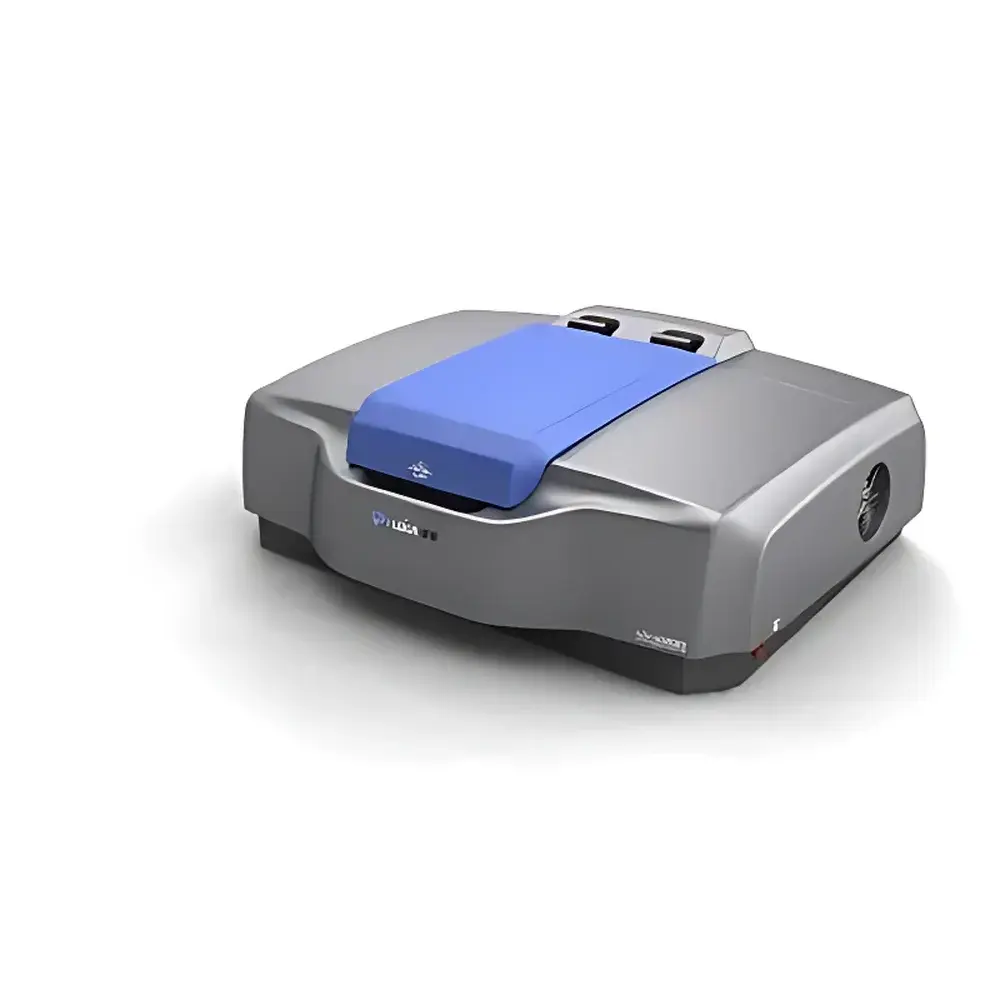
Beifen Ruili UV-2200 Dual-Monochromator Double-Beam Ultraviolet-Visible Spectrophotometer
| Brand | Beifen Ruili |
|---|---|
| Origin | Beijing, China |
| Model | UV-2200 |
| Optical Design | Double-beam |
| Detector | Photodiode Array (PDA) |
| Wavelength Range | 190–1100 nm |
| Wavelength Accuracy | ±0.25 nm |
| Spectral Bandwidth | 0.1 / 0.2 / 0.5 / 1.0 / 2.0 / 5.0 nm (6-step selectable) |
| Stray Light | ≤0.001% T (at 220 nm using NaI solution |
| Wavelength Scanning Resolution | 0.02 nm minimum sampling interval |
| Power Supply | AC 220 V / 50 Hz |
| Power Consumption | 400 W |
| Dimensions (W×D×H) | 730 × 530 × 230 mm |
| Net Weight | 40 kg |
Overview
The Beifen Ruili UV-2200 is a high-performance, scanning dual-monochromator double-beam ultraviolet-visible (UV-Vis) spectrophotometer engineered for precision quantitative and qualitative analysis across research laboratories, quality control environments, and regulatory-compliant production facilities. Its optical architecture employs two independent monochromators in series — a design that significantly enhances spectral purity and suppresses stray radiation without compromising throughput. The instrument operates on the fundamental principle of Beer-Lambert law-based absorbance measurement, where sample and reference beams are simultaneously directed through matched optical paths to eliminate source intensity drift and detector response variability. This configuration ensures exceptional baseline stability, photometric accuracy, and long-term repeatability — critical for trace-level quantitation, kinetic studies, and high-concentration sample analysis without dilution.
Key Features
- Dual-monochromator optical system with patented stray-light suppression technology, achieving ≤0.001% T stray light at key validation wavelengths (220 nm NaI, 360 nm NaNO₂), enabling direct measurement of highly concentrated samples.
- Double-beam optics with real-time beam splitting and synchronous detection, minimizing photometric drift during extended scans or temperature-sensitive measurements.
- Six-step variable spectral bandwidth selection (0.1, 0.2, 0.5, 1.0, 2.0, 5.0 nm), allowing optimization of resolution versus signal-to-noise ratio per application requirement — from narrow-band identification of overlapping peaks to broad-band quantitation in turbid matrices.
- High-resolution wavelength scanning capability across 190–1100 nm with 0.02 nm minimum sampling interval, supporting fine structural analysis of absorption edges, vibronic transitions, and solvent effects.
- Imported deuterium and tungsten-halogen lamps ensure stable UV and visible output over extended operational lifetimes; lamp auto-switching and peak-search mechanism guarantees seamless spectral continuity across the full range.
- Photodiode array (PDA) detector provides rapid acquisition, high dynamic range, and excellent linearity (typically >99.99% over 0–3.0 A), essential for kinetic profiling and multi-wavelength data capture.
Sample Compatibility & Compliance
The UV-2200 accommodates standard quartz, glass, or plastic cuvettes ranging from 5 mm to 100 mm pathlengths, supporting both microvolume and macro-scale applications. Its spacious sample compartment allows integration of optional accessories including temperature-controlled holders, solid-sample reflectance attachments, and flow cells for HPLC coupling. From a regulatory standpoint, the instrument’s hardware architecture and software functionality align with core requirements for GLP and GMP environments: full audit trail capability (user log, method versioning, parameter change history), electronic signature support, and data integrity safeguards compliant with FDA 21 CFR Part 11 principles. While not pre-certified to ISO/IEC 17025 or ASTM E275, its performance specifications meet or exceed the metrological criteria defined in ISO 6425, ASTM E387, and USP for UV-Vis spectrophotometers used in pharmaceutical and chemical testing.
Software & Data Management
Controlled via Windows-compatible software (Windows 2000 through Windows 10), the UV-2200 platform offers bilingual interface (English/Chinese) and modular workflow design. Core functionalities include full-spectrum scanning, fixed-wavelength kinetics, multi-component quantitation, derivative spectroscopy, spectral overlay, smoothing, peak detection, and arithmetic transformation of datasets. Quantitative modules support single-, dual-, and triple-wavelength calibration, as well as user-defined mathematical expressions for custom calculations (e.g., ratio metrics, molar absorptivity normalization). The built-in nucleic acid and protein analysis module implements standard extinction coefficient methods (e.g., A260/A280 ratios, ε280 = 1.0 for BSA) with configurable default parameters and editable assay templates. All raw and processed data are stored in vendor-neutral formats (CSV, TXT, XML) alongside metadata-rich .spc files, facilitating third-party import into LIMS or statistical analysis platforms.
Applications
- Pharmaceutical QC: Assay of active pharmaceutical ingredients (APIs), excipient compatibility screening, dissolution testing, and stability-indicating method development.
- Environmental analysis: Nitrate/nitrite determination in water, COD estimation, heavy metal complexation studies, and pesticide residue screening.
- Biochemical research: DNA/RNA quantification, protein concentration and purity assessment, enzyme kinetics (e.g., NADH/NADPH monitoring), and ligand-binding assays.
- Materials science: Bandgap estimation of semiconductors, characterization of dye-sensitized solar cell components, and optical density profiling of thin films.
- Food & beverage: Colorimetric evaluation (e.g., anthocyanin content), preservative quantitation (e.g., sulfites), and authenticity verification via spectral fingerprinting.
FAQ
What is the significance of the dual-monochromator design in the UV-2200?
It reduces stray light by two orders of magnitude compared to single-monochromator systems, enabling accurate measurement of samples with absorbance values exceeding 3.0 AU without dilution or signal distortion.
Does the instrument support compliance with FDA 21 CFR Part 11?
Yes — the software includes role-based access control, electronic signatures, immutable audit trails, and method locking features required for regulated environments.
Can the UV-2200 perform time-resolved kinetic measurements?
Yes — users can define custom time intervals, dwell times, and wavelength sets for automated sequential acquisition, with post-acquisition curve fitting and rate constant calculation.
Is the photodiode array detector cooled?
No — the PDA operates at ambient temperature; however, multi-stage analog filtering, programmable gain amplification, and 16-bit ADC conversion ensure low-noise performance suitable for routine and research-grade applications.
What validation documentation is supplied with the instrument?
Factory calibration certificates for wavelength accuracy and photometric linearity are included; IQ/OQ protocols and user-specific PQ templates are available upon request for GxP implementation.
Related Products





