
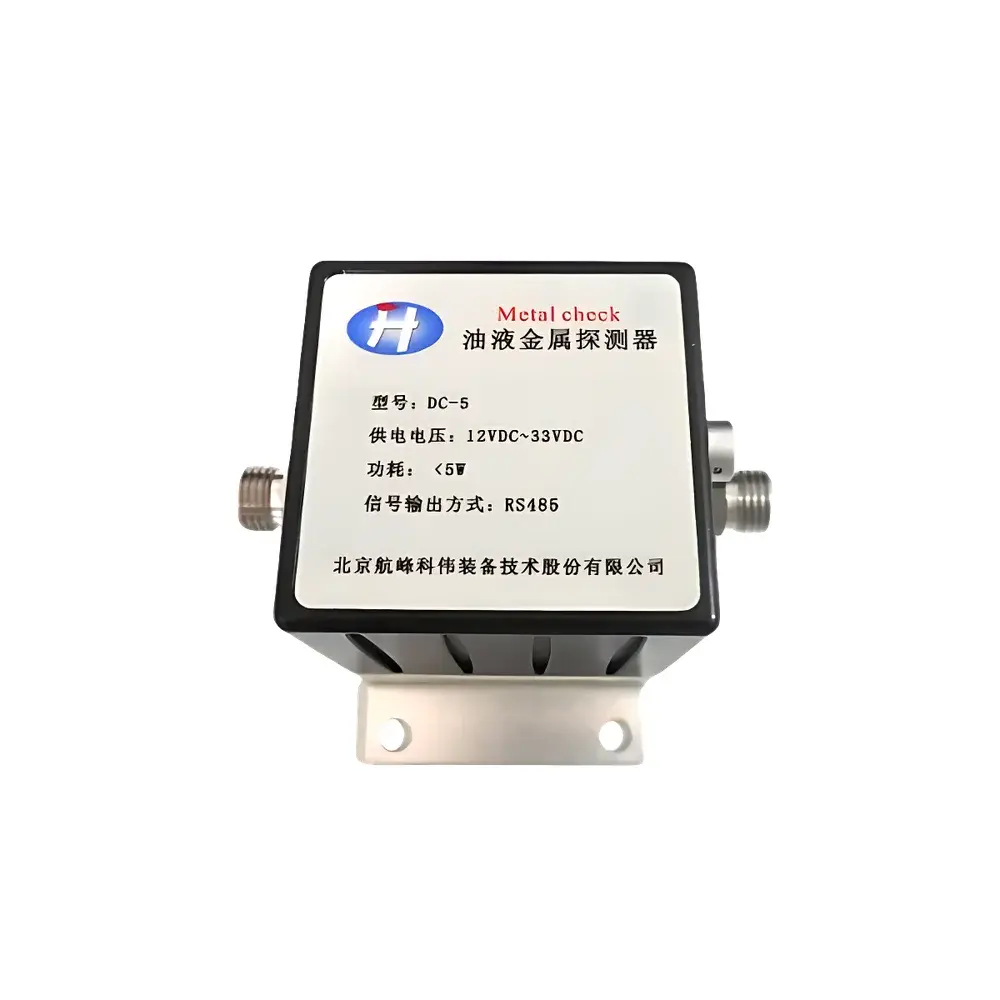
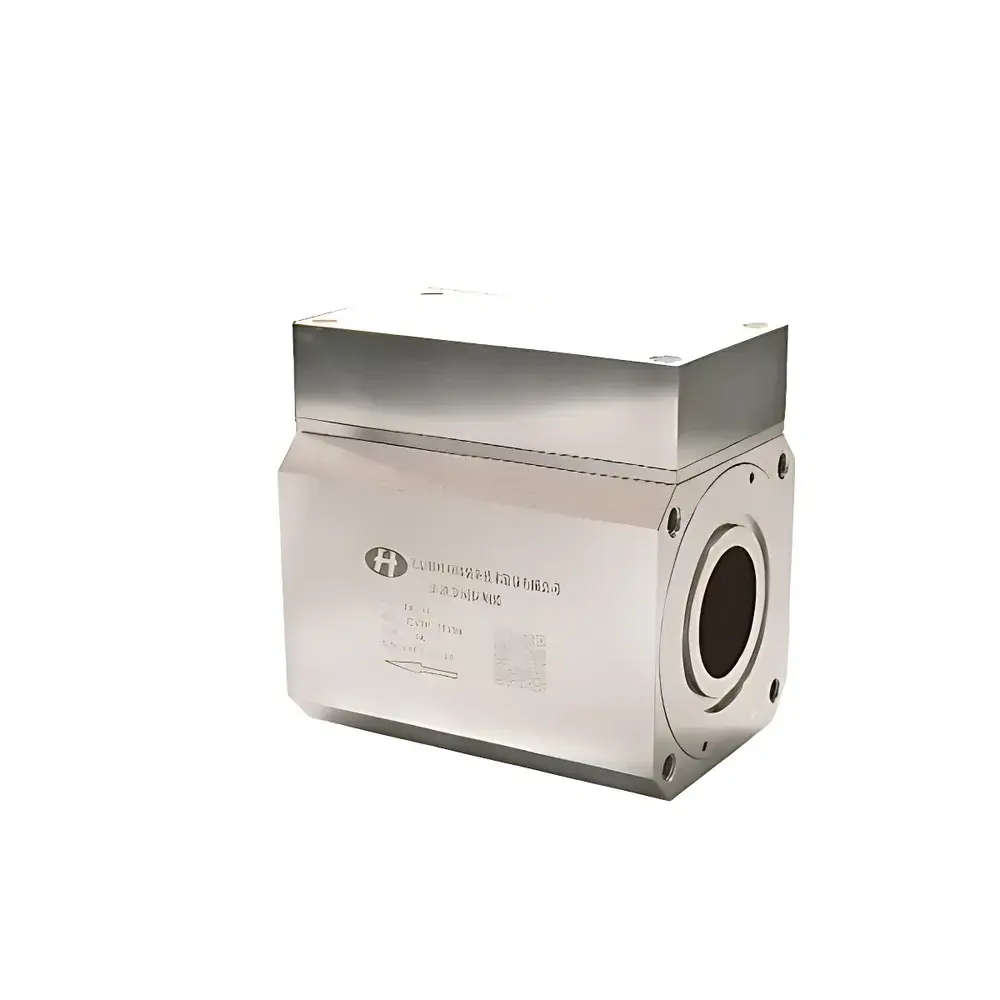
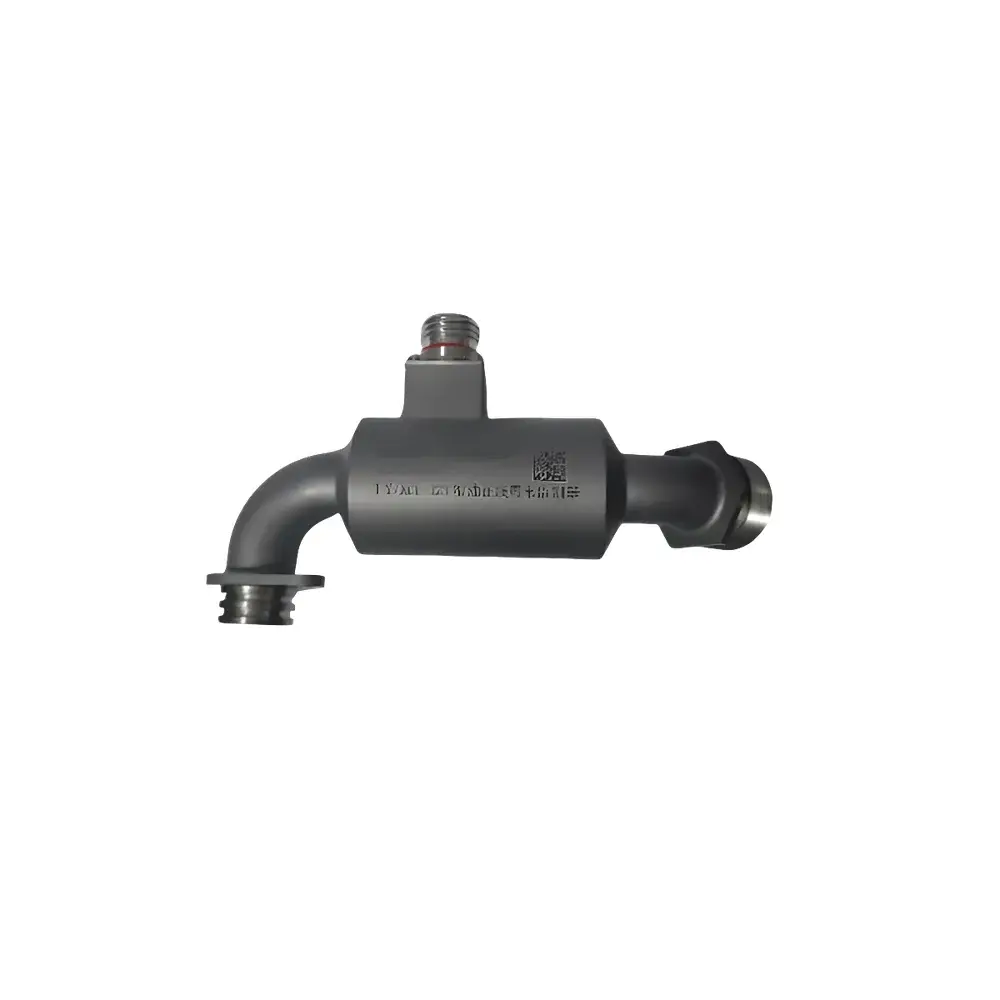
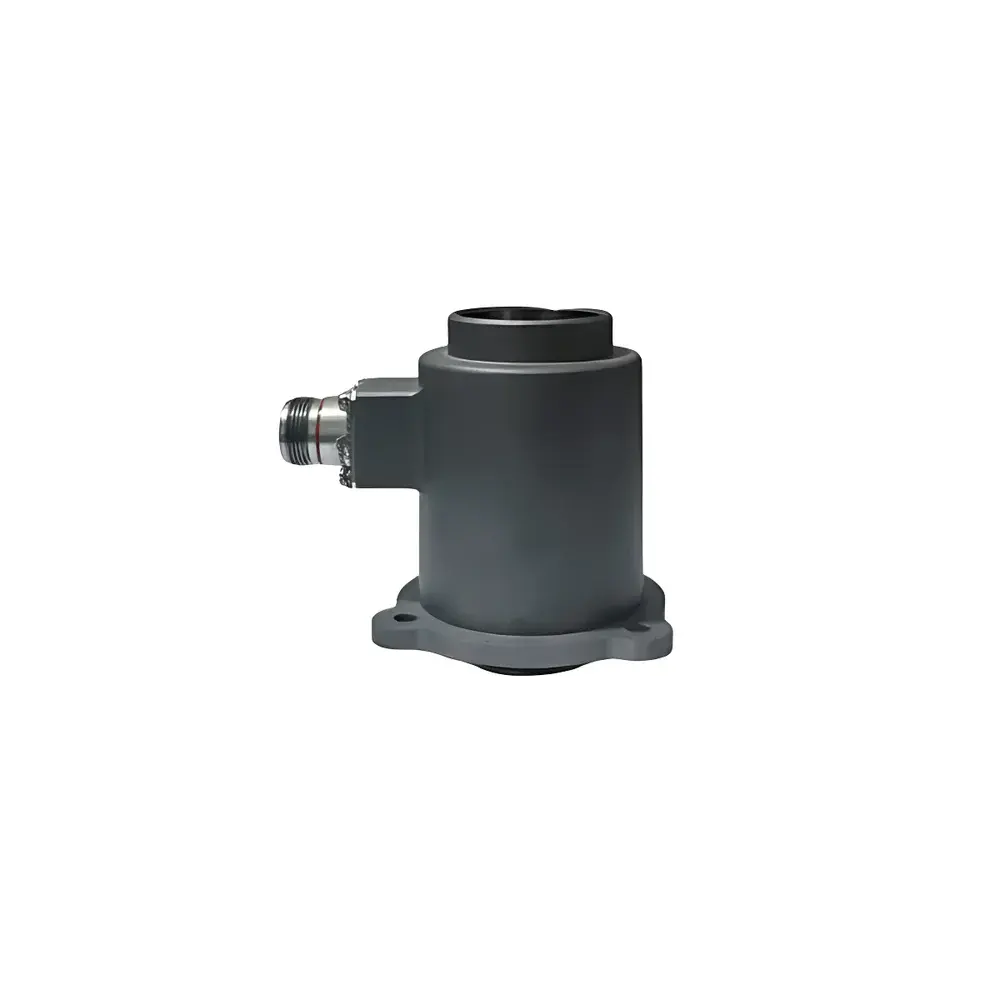
Beijing Hangfeng DC Series Online Metal Debris Monitor for Lubricating Oil
| Brand | Beijing Hangfeng |
|---|---|
| Origin | Beijing, China |
| Manufacturer Type | Authorized Distributor |
| Regional Classification | Domestic (China) |
| Model | DC |
| Instrument Type | Optical Particle Counter |
| Channel Diameter Options | 5 mm / 8 mm / 12 mm / 14 mm / 19 mm / 38 mm |
| Ferrous Particle Detection Ranges | 30–200 µm (micro), 200–300 µm (medium), >300 µm (large) |
| Non-Ferrous Particle Detection Ranges | 150–400 µm (micro), >400 µm (large) |
| Flow Rate Range | 1–10 L/min (DC-5) to 68–680 L/min (DC-38) |
| Operating Temperature | −40 °C to +75 °C (standard) |
| Max Oil Temperature | ≤85 °C (standard) |
| Max System Pressure | <2 MPa (standard) |
| Humidity | <95% RH |
| Power Supply | 18–36 V DC |
| Communication Protocols | CAN 2.0, RS-485, RS-422 |
| Communication Isolation Voltage | 2500 V DC |
| Electrical Isolation Voltage | 1500 V DC |
| Bus Node Capacity | 32 nodes |
| Standby Current | <0.25 A |
| Inrush Current | <1 A |
Overview
The Beijing Hangfeng DC Series Online Metal Debris Monitor is an industrial-grade optical particle counter engineered for continuous, real-time monitoring of ferrous and non-ferrous metallic wear debris in circulating lubricating oil systems. It operates on the principle of high-sensitivity optical scattering detection combined with magnetic field-assisted separation—enabling discrimination between magnetic (e.g., iron, steel) and non-magnetic (e.g., copper, aluminum, chromium) particles within defined size bands. Unlike offline laboratory particle counters, the DC Series integrates directly into pressurized lube oil circuits without flow interruption or sample extraction, delivering quantitative particle count data per unit time (particles/second) and size-resolved classification across six calibrated detection channels. Its primary engineering objective is early-stage mechanical fault detection—specifically targeting progressive wear in gearboxes, rolling-element bearings, journal bearings, hydraulic pumps, and gas turbine engine lubrication systems—thereby supporting condition-based maintenance (CBM) and reducing unplanned downtime.
Key Features
- Multi-channel optical detection architecture with six standardized bore diameters (5 mm to 38 mm), each optimized for distinct flow rate and debris concentration regimes;
- Ferrous particle sizing across three tiers: micro (30–200 µm), medium (200–300 µm), and large (>300 µm); non-ferrous sizing includes micro (150–400 µm) and large (>400 µm) bands—enabling material-specific wear trend analysis;
- DCH-reinforced variant rated for extreme thermal and pressure environments: operational oil temperature up to 260 °C and system pressure up to 3 MPa;
- Hermetically sealed aluminum or titanium alloy housing providing IP67 ingress protection, shock resistance up to 50 g, and vibration tolerance compliant with MIL-STD-810G;
- Zero-maintenance optical path design—no consumables, no periodic cleaning, no recalibration drift under stable operating conditions;
- Embedded dual-protocol communication interface supporting CAN 2.0 (up to 1 Mbps) and isolated RS-485/RS-422 (up to 115.2 kbps), with 2500 VDC communication isolation and 1500 VDC power bus isolation;
- Scalable network topology supporting up to 32 distributed sensors on a single bus—enabling multi-point monitoring across complex machinery trains.
Sample Compatibility & Compliance
The DC Series is validated for use with mineral-based, synthetic, and semi-synthetic lubricants meeting ISO VG 10–680 viscosity grades, including aviation turbine oils (MIL-PRF-23699, MIL-PRF-6081), industrial gear oils (ISO 8573-1 Class 2), and hydraulic fluids (ASTM D6158). It complies with electromagnetic compatibility requirements per EN 61000-6-2 (immunity) and EN 61000-6-4 (emissions), and meets functional safety considerations aligned with IEC 61508 SIL 2 for monitoring subsystems. While not certified to ISO 4406 or ISO 11171 as a standalone calibration reference, its output data is traceable to NIST-traceable particle standards via factory-applied channel-specific transfer functions. The device supports integration into FDA 21 CFR Part 11-compliant environments when deployed with validated SCADA or CMMS platforms featuring audit trail and electronic signature capabilities.
Software & Data Management
Data from the DC Series is delivered as time-stamped, size-binned particle counts (per second) alongside auxiliary parameters: instantaneous flow rate, oil temperature (via optional integrated RTD), and system pressure (when interfaced with external transducers). Raw outputs are protocol-native—requiring no proprietary drivers—and integrate seamlessly with industry-standard platforms including OSIsoft PI System, Emerson DeltaV, Siemens Desigo CC, and custom LabVIEW or Python-based analytics stacks. Firmware supports over-the-air (OTA) updates via CAN bootloader. All communication payloads include CRC-16 error checking; configuration parameters (e.g., alarm thresholds, reporting intervals) are stored in non-volatile memory with write-cycle endurance exceeding 100,000 cycles. Event-triggered logging (e.g., sustained >50 particles/sec in large-ferrous band) enables storage of pre-event buffer data for root-cause forensic analysis.
Applications
- Gas turbine and aero-engine oil system health monitoring (FADEC-integrated alerting);
- Wind turbine gearbox wear progression tracking under variable load and pitch conditions;
- Railway traction motor bearing degradation assessment in high-vibration environments;
- Marine propulsion reduction gear train surveillance with salt-contaminated lube oil;
- Nuclear power plant main coolant pump bearing monitoring under extended maintenance intervals;
- Heavy-duty mining equipment hydraulics where abrasive contamination coexists with metallic wear debris.
FAQ
Does the DC Series require periodic optical calibration?
No. The optical detection system is factory-calibrated using NIST-traceable polystyrene latex (PSL) standards and sealed against contamination. No field recalibration is specified under normal operating conditions.
Can it distinguish stainless steel particles from aluminum or copper?
Yes—through combined magnetic susceptibility analysis and size-dependent scattering intensity profiling. Non-ferrous identification is confirmed by absence of magnetic response above threshold field strength (≥120 mT), coupled with characteristic scattering cross-section behavior.
Is the sensor compatible with high-viscosity oils such as ISO VG 460 gear oil?
Yes—provided minimum flow velocity (≥0.3 m/s) is maintained at the sensor inlet. For VG ≥220 oils, DCH-reinforced models with heated housings are recommended to ensure laminar flow profile stability.
What is the maximum allowable air entrainment level for reliable operation?
The sensor maintains accuracy up to 0.5% v/v dissolved air content. Free air bubbles >500 µm diameter must be removed upstream via degassing loops or coalescing filters.
How is alarm logic implemented?
Configurable dual-threshold alarms (rate-of-change + absolute count) are programmable per size band and material type. Alarms generate discrete digital outputs and CAN/RS-485 event frames with timestamp and severity code (Level 1–3).



