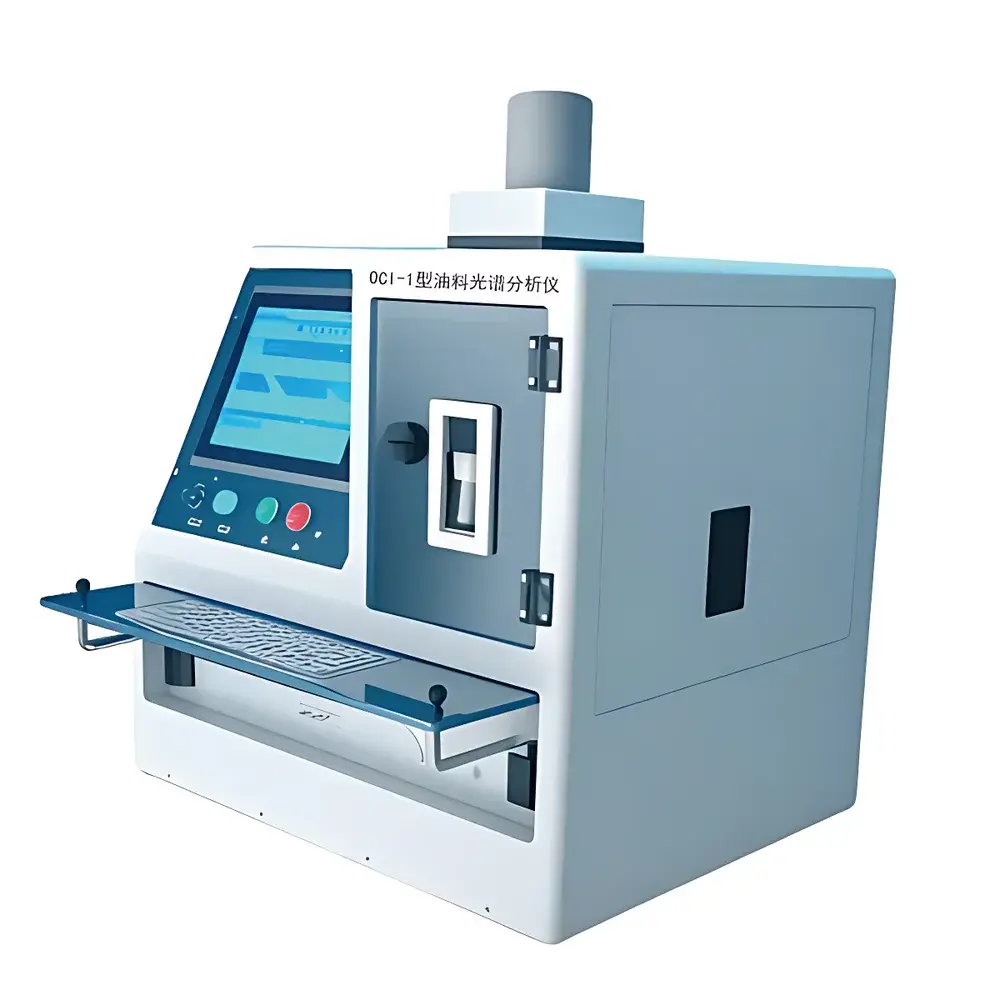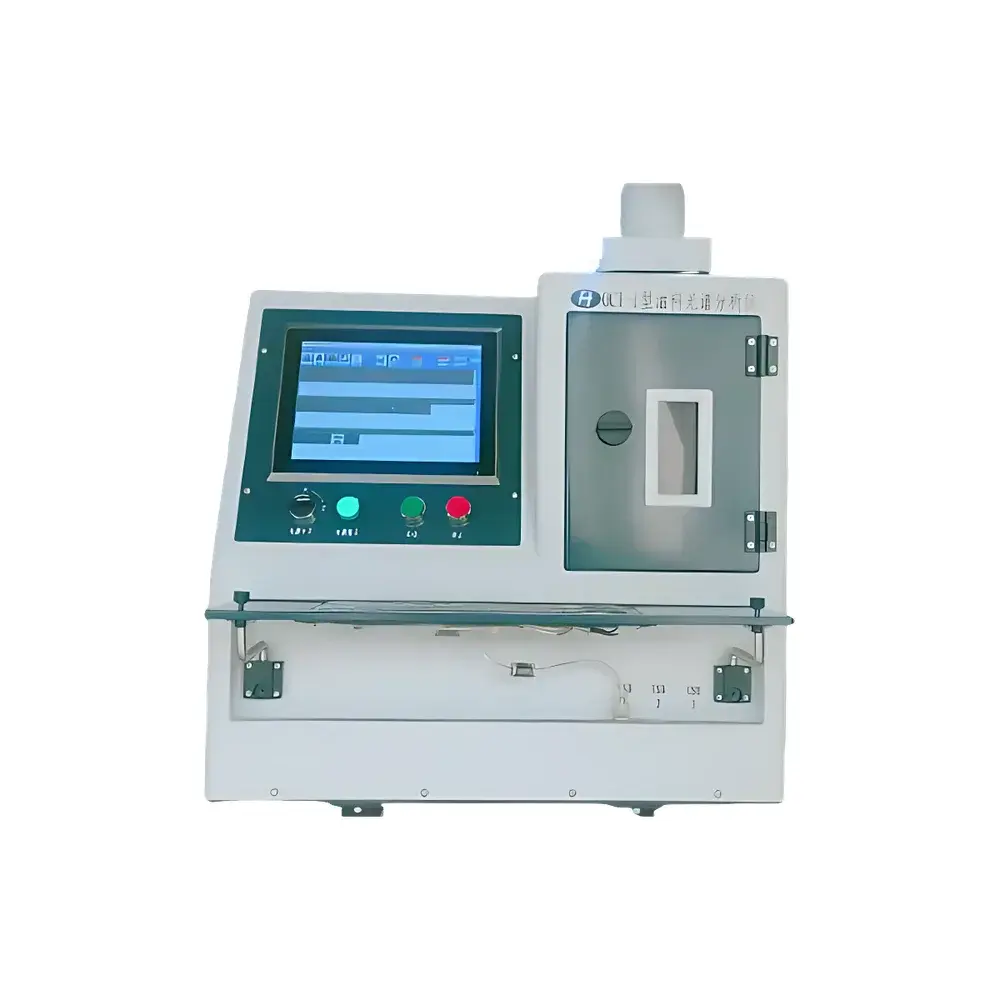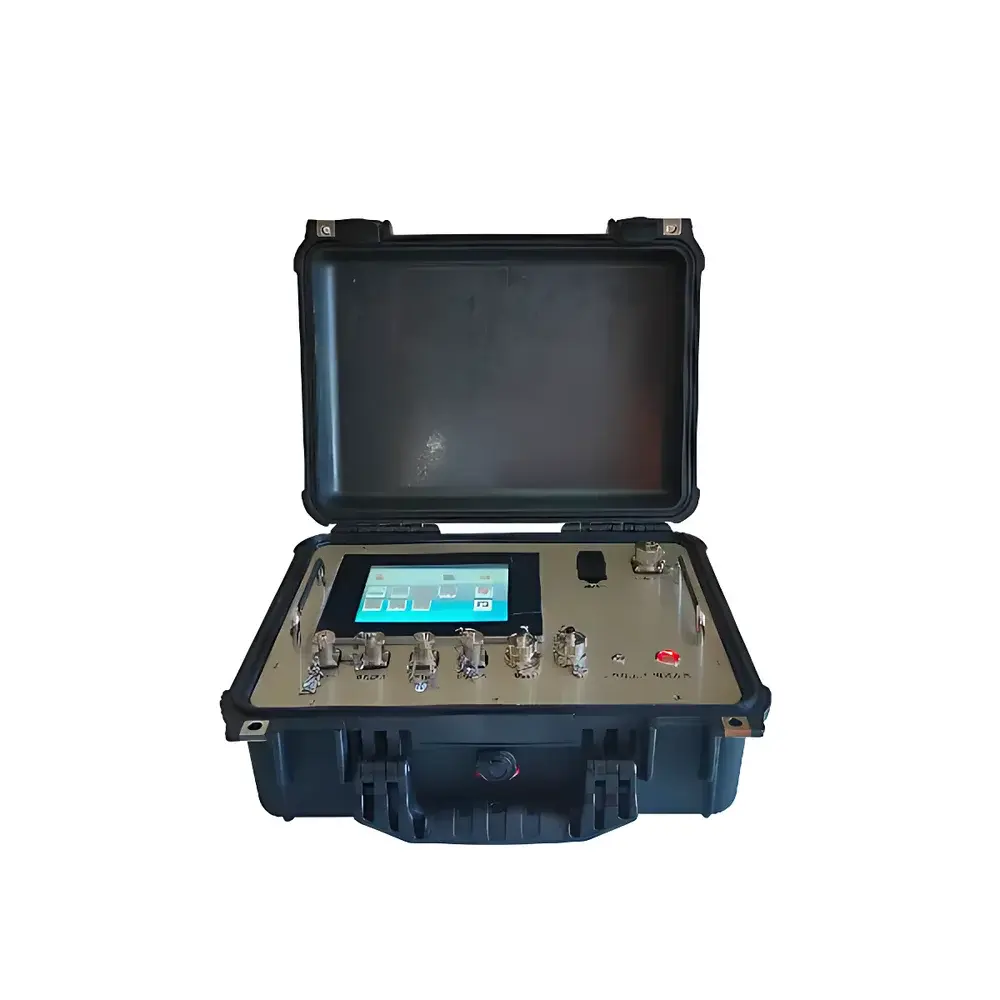
Beijing Hangfeng HF Portable Near-Infrared Fuel Oil Analyzer
| Brand | Beijing Hangfeng |
|---|---|
| Origin | Beijing, China |
| Manufacturer Type | Authorized Distributor |
| Country of Origin | China |
| Model | HF |
| Pricing | Available Upon Request |
| Measurement Principle | Transmission/Reflectance Near-Infrared Spectroscopy (NIRS) with PLS Regression Models |
| Sample Throughput | ≤3 min per sample |
| Sample Preparation | None required |
| Compliance Standards | GB/T 265, GB/T 1884, GB/T 261, GB/T 2430, GB/T 510, GB/T 6536 |
| Calibration Flexibility | User-definable PLS and MLR models for gasoline, diesel, jet fuel (Jet A-1), and blended fuels |
| Optical Range | 900–1700 nm (InGaAs detector) |
| Spectral Resolution | ≤8 nm |
| Repeatability | RSD < 1.2% for key parameters (e.g., density, distillation T50, flash point) |
| Environmental Rating | IP54, operating range −10 °C to +50 °C |
| Power Supply | Integrated Li-ion battery (≥6 h continuous operation) or 12 V DC input |
Overview
The Beijing Hangfeng HF Portable Near-Infrared Fuel Oil Analyzer is a field-deployable, non-destructive analytical instrument engineered for rapid, real-time assessment of petroleum-based liquid fuels—including gasoline, diesel, aviation turbine fuel (Jet A-1), and biodiesel blends. It operates on the physical principle of near-infrared (NIR) spectroscopy in the 900–1700 nm spectral region, where C–H, O–H, and C=O vibrational overtones and combination bands produce characteristic absorption features. Quantitative prediction of fuel properties is achieved via chemometric calibration models—primarily Partial Least Squares (PLS) regression—trained against reference methods compliant with national standards (GB/T series). Unlike conventional wet-chemistry or distillation-based analyzers, the HF delivers laboratory-grade reproducibility without solvent consumption, thermal degradation, or operator-dependent procedural variability. Its ruggedized enclosure, integrated InGaAs detector, and temperature-stabilized optical path ensure consistent performance under variable ambient conditions—from refinery perimeters to remote airfield tarmacs.
Key Features
- Field-ready portability: Weighs <3.2 kg with integrated battery; designed for handheld or tripod-mounted operation in unconditioned environments.
- Zero-sample-prep workflow: Direct measurement of neat fuel samples in standard 10-mm quartz cuvettes or via immersion probe (optional).
- Multi-parameter output per analysis cycle: Simultaneous prediction of density (kg/m³), kinematic viscosity (mm²/s at 20 °C), flash point (°C), freeze point (°C), cloud point (°C), distillation temperatures (T10, T50, T90 per GB/T 6536), and aromatic content (% v/v).
- Self-diagnostic optical system: Automated wavelength verification, dark-current correction, and signal-to-noise ratio monitoring before each measurement.
- Modular chemometric architecture: Supports import/export of PLS, MLR, and PCA-based models; enables local model retraining using user-collected reference data aligned to ASTM D7467, ASTM D86, or ISO 3405 protocols.
- Regulatory-aligned data integrity: Audit-trail-enabled firmware compliant with GLP principles; timestamped spectra and prediction logs stored in encrypted SQLite database with SHA-256 hash verification.
Sample Compatibility & Compliance
The HF analyzer accommodates transparent to mildly turbid hydrocarbon liquids with minimal particulate load (<5 mg/L solids). It is validated for use with unleaded gasoline (GB 17930), ultra-low-sulfur diesel (GB 19147), Jet A-1 (GB 6537), and FAME-blended fuels up to B20. All predictive calibrations are traceable to certified reference materials (CRMs) from CNAS-accredited providers and cross-validated against primary methods per GB/T 265 (viscosity), GB/T 1884 (density), GB/T 261 (flash point), GB/T 2430 (freeze point), GB/T 510 (cloud point), and GB/T 6536 (distillation). Instrument-level compliance includes electromagnetic compatibility (GB/T 18268.1), safety (GB 4793.1), and environmental stress testing (GB/T 2423.1, GB/T 2423.2, GB/T 2423.10).
Software & Data Management
Bundled HF-Analyze Suite (v3.2+) provides full control via Windows-based desktop application or Android tablet interface. Key capabilities include spectral preprocessing (Savitzky-Golay smoothing, multiplicative scatter correction), outlier detection (Hotelling’s T² and Q-residuals), model validation reports (RMSEC, RMSEP, bias, slope), and export to CSV, PDF, or LIMS-compatible XML formats. All raw interferograms and processed spectra are retained with metadata (operator ID, GPS coordinates, ambient temperature/humidity). Firmware supports optional 21 CFR Part 11 mode with electronic signatures, role-based access control, and immutable audit logs—suitable for quality control laboratories operating under GMP or ISO/IEC 17025 frameworks.
Applications
- On-site fuel quality screening at logistics terminals, marine bunkering facilities, and military forward operating bases.
- Real-time blending verification during production handover between refinery units and pipeline operators.
- Field troubleshooting of off-spec fuel batches prior to distribution—reducing costly reprocessing or rejection.
- Supporting ASTM D975/D396/D1655 specification conformance checks without reliance on centralized lab turnaround.
- Longitudinal stability monitoring of stored fuels (e.g., jet fuel in hangar tanks) via periodic NIR fingerprinting.
FAQ
Does the HF analyzer require annual factory recalibration?
No. The instrument employs internal reference standards and automated optical diagnostics; users perform routine performance qualification (PQ) using certified check standards (e.g., NIST SRM 2723c) per documented SOP. Full calibration transfer between instruments is supported via model file exchange.
Can it analyze ethanol-gasoline blends (E10, E85)?
Yes—provided the chemometric model is trained on representative E-series reference sets meeting GB 18351 specifications. Default factory models cover E0–E15; extended models for high-ethanol blends are available upon request.
Is spectral data export compatible with third-party chemometrics platforms?
Yes. Raw absorbance spectra (.csv) and model files (.hfmdl, based on open HDF5 schema) can be imported into Unscrambler X, MATLAB, or Python (scikit-learn, PyMCA) for advanced model development or meta-analysis.