
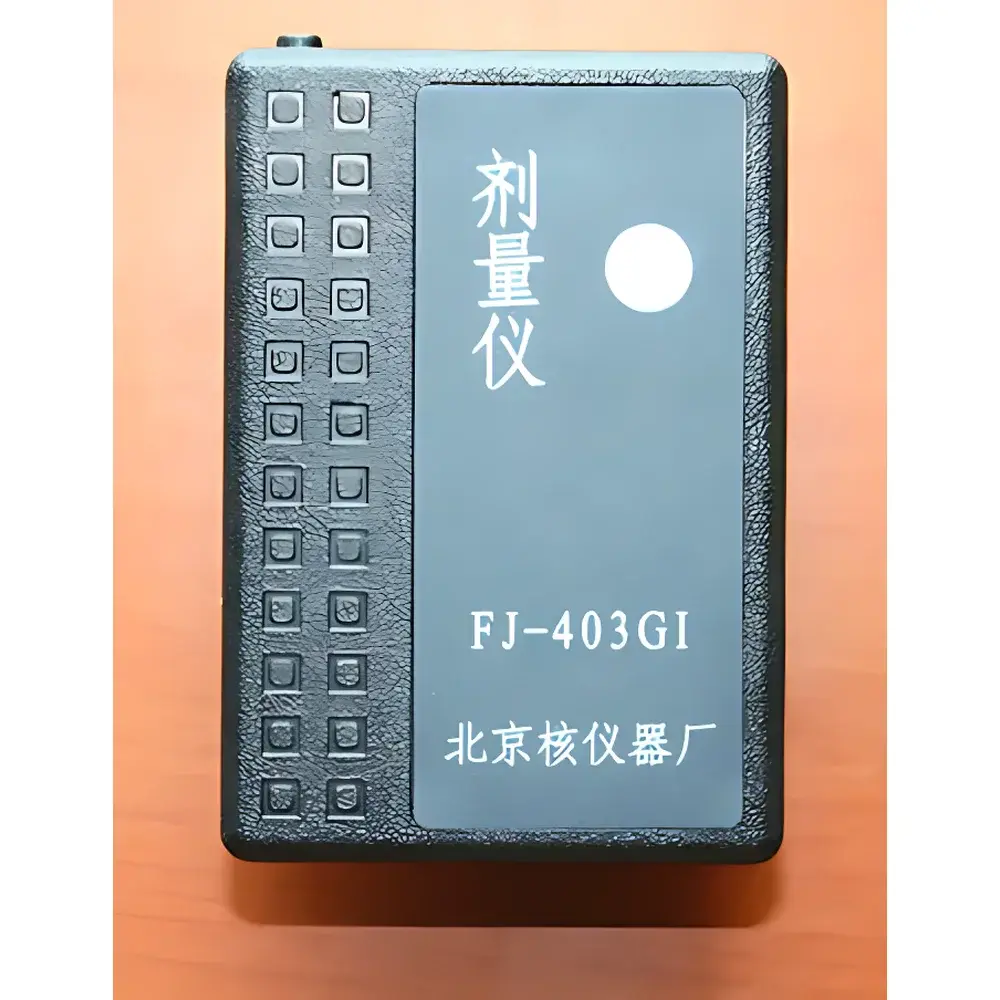
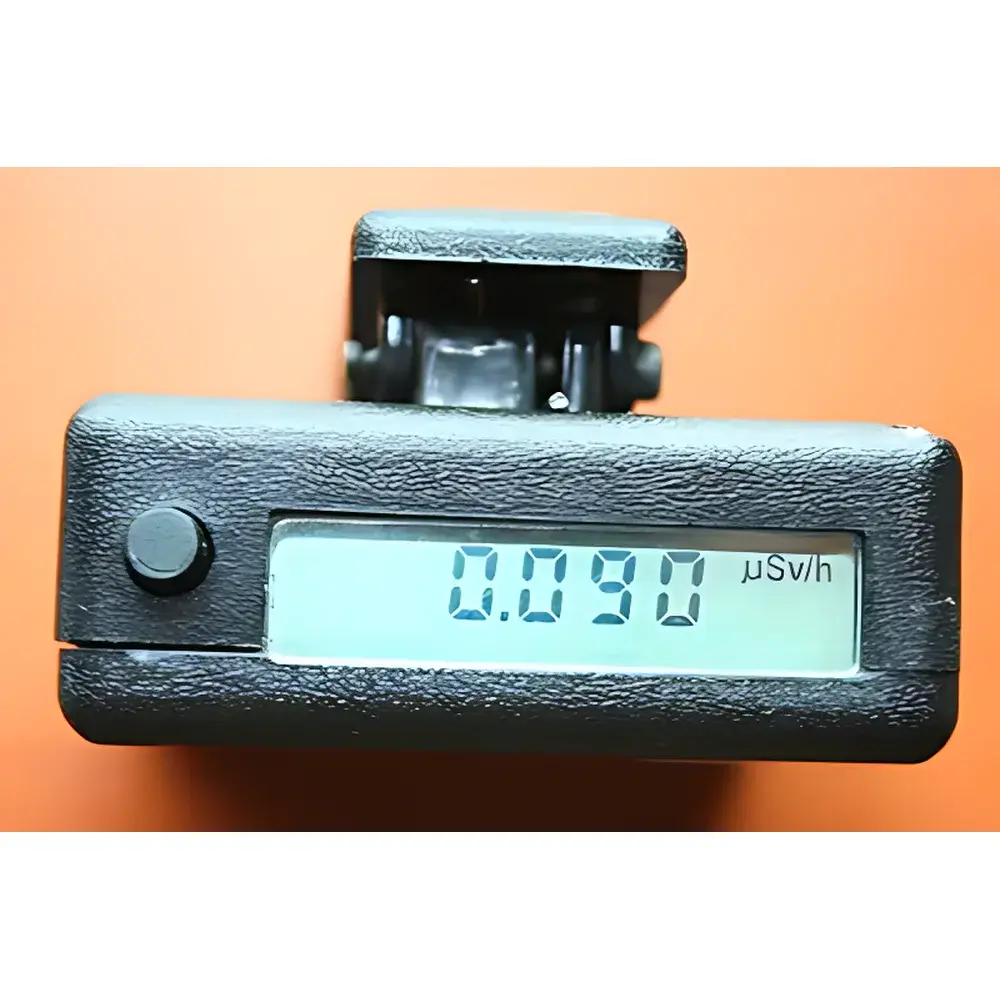
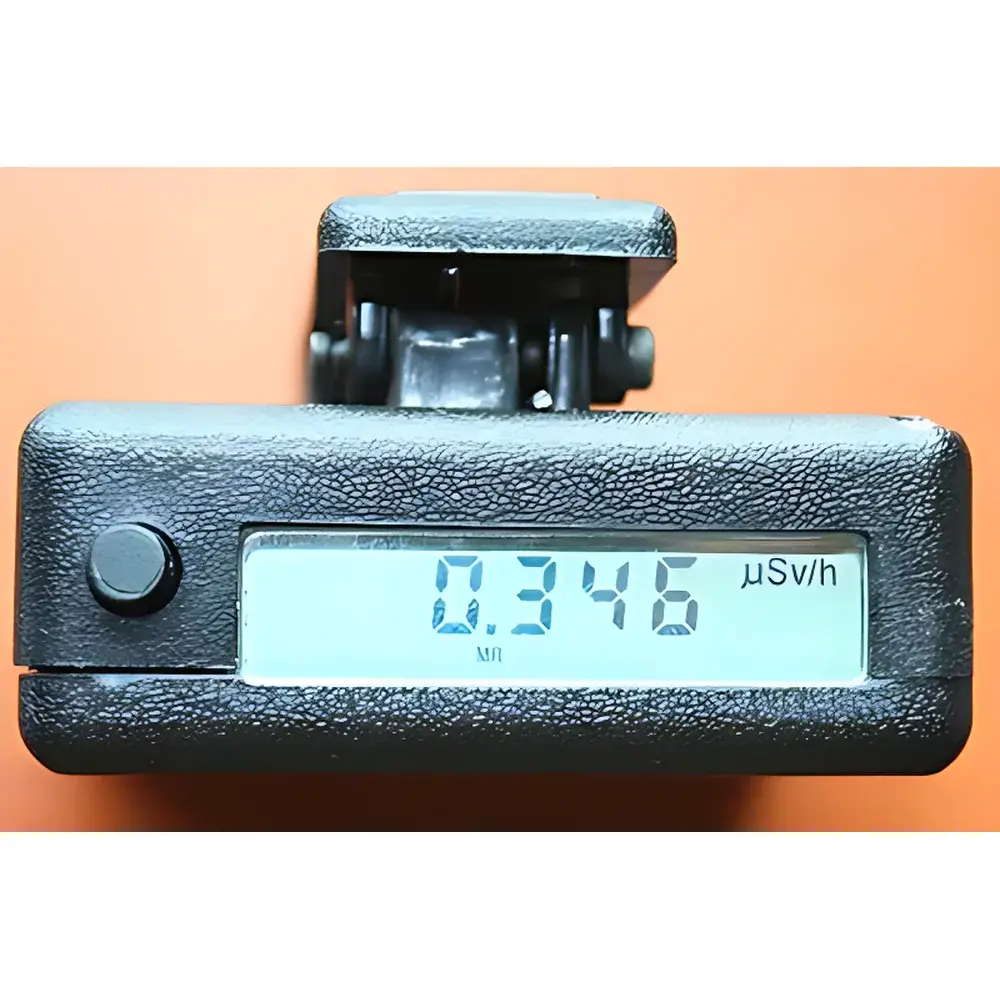
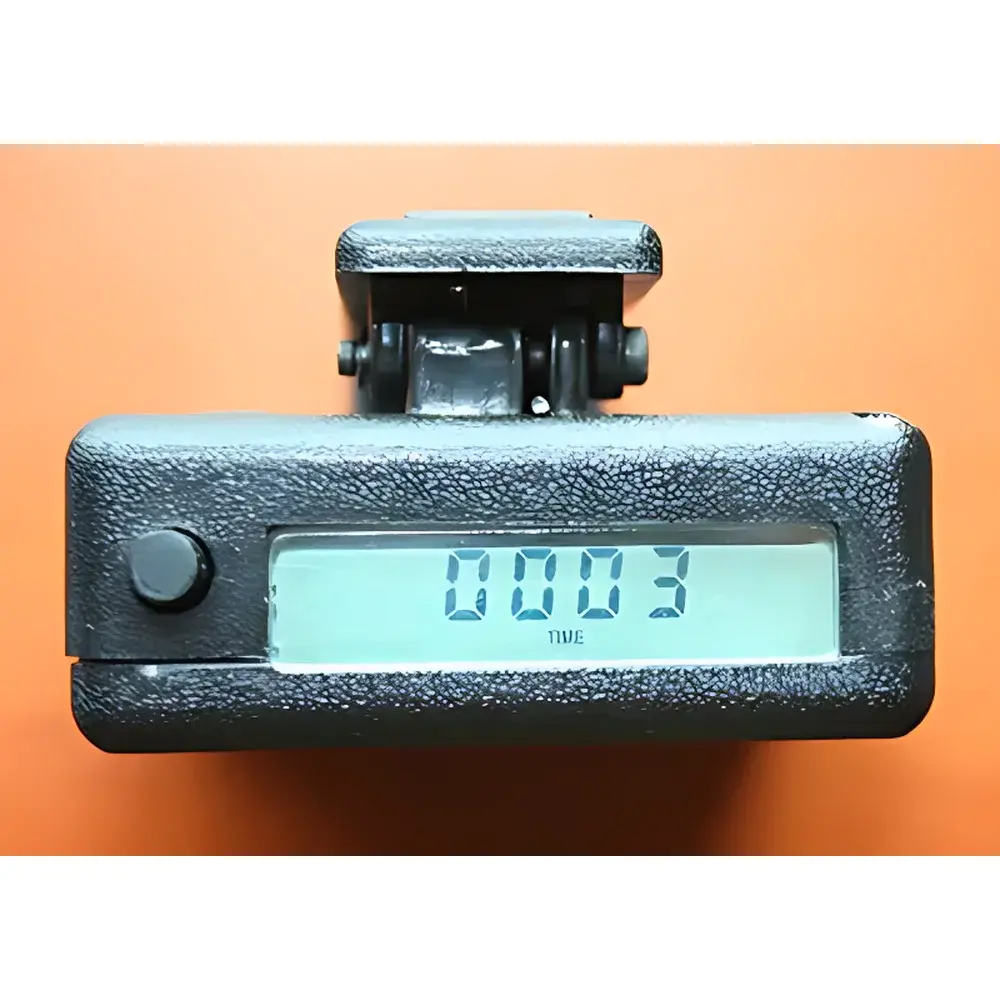
Beijing Institute of Nuclear Engineering FJ-403GI Personal Dose Alarm Meter
| Origin | Beijing, China |
|---|---|
| Manufacturer Type | Authorized Distributor |
| Domestic Product Classification | Domestic (PRC) |
| Model | FJ-403GI |
| Pricing | Upon Request |
| Measurement Quantity | Personal Dose Equivalent Hp(10) |
| Dose Range | 0.01 µSv – 9999 mSv |
| Dose Rate Range | 0.1 µSv/h – 200 mSv/h |
| Communication Interface | Infrared (IR) Data Transfer |
| Power Supply | Two AA 1.5 V alkaline batteries or one 3.6 V high-energy lithium battery |
| Battery Life | Up to 1000 hours (at background radiation, 1.5 V) |
| Data Storage Capacity | 160 dose history records (time-stamped, auto-logged) |
| Alarm Functions | Configurable dose rate threshold, cumulative dose threshold, and incremental dose audio alert |
| Compliance | Calibrated to ICRP-defined Hp(10) |
Overview
The Beijing Institute of Nuclear Engineering FJ-403GI Personal Dose Alarm Meter is a compact, microprocessor-controlled solid-state dosimeter engineered for real-time monitoring of personal dose equivalent Hp(10) in occupational radiation environments. Designed per ICRP Publication 60 recommendations and aligned with national standards for radiation protection instrumentation (GB/T 10284–2017, GBZ 128–2019), the device employs a high-sensitivity energy-compensated GM tube detector optimized for photon fields (X- and gamma radiation, 30 keV–3 MeV). Its measurement principle relies on pulse counting of ionization events within the detector volume, converted via factory-established calibration coefficients into Hp(10) values traceable to national primary standards. Unlike passive dosimeters (e.g., TLDs or OSL badges), the FJ-403GI provides immediate readout, continuous logging, and configurable audible/visual alarms—making it suitable for routine personnel monitoring in nuclear power plants, radiopharmaceutical facilities, industrial radiography, and emergency response teams. It is explicitly not designed for pulsed radiation fields (e.g., LINACs or flash X-ray systems) due to inherent dead-time limitations in GM-based detection.
Key Features
- Wide dynamic range: Hp(10) from 0.01 µSv to 9999 mSv; dose rate from 0.1 µSv/h to 200 mSv/h
- Infrared (IR) bidirectional communication interface for secure, cable-free data exchange with PC-based dose management software
- Configurable dual-threshold alarm system: independent settings for dose rate (0.001–99.99 mSv/h) and cumulative dose (0.001–99.99 mSv)
- Incremental dose audio alert (F7 mode): five selectable thresholds (0, 0.01, 0.1, 1, or 10 µSv) for real-time auditory feedback during variable-exposure tasks
- Time-stamped dose history logging: up to 160 sequential records, programmable at intervals of 0.5, 1, 3, 5, 10, or 30 minutes—covering total recording durations from 80 minutes to 80 hours
- Low-battery indication (“LOB”) and over-range saturation alert (“BLOK”) with distinct acoustic signatures for rapid operator recognition
- Extended operational life: >1000 hours on standard AA alkaline cells under typical background conditions (≤0.1 µSv/h)
- Robust firmware architecture supporting GLP-compliant timestamping, non-volatile memory retention, and fail-safe initialization routines
Sample Compatibility & Compliance
The FJ-403GI is calibrated and type-tested for use in photon radiation fields conforming to ISO 4037-1 (X- and gamma reference radiation fields) and meets requirements of IEC 61526 Ed. 4.0 (2013) for portable dosemeters. Its Hp(10) response is validated across energies from 30 keV (soft X-rays) to 3 MeV (Co-60 gamma), with energy dependence ≤±25% relative to Cs-137 reference field. For applications requiring air kerma (Ka) or ambient dose equivalent H*(10), linear correction factors are provided (Ka = 0.9 × Hp(10); H*(10) = 1.1 × Hp(10)). The instrument complies with Chinese national regulations for occupational dose monitoring (GBZ 128–2019) and supports documentation workflows compatible with ISO/IEC 17025-accredited laboratories. It is not intended for neutron, beta, or alpha radiation measurement. Users must perform functional verification prior to deployment—e.g., confirming stable background reading (<0.25 µSv/h) within 5 minutes of battery insertion.
Software & Data Management
The配套 dose management software (Windows-compatible) enables full traceability and regulatory reporting. Each instrument is assigned a unique hardware ID automatically transmitted during IR handshake; user-specific identification (up to 10 alphanumeric characters) is mandatory for data ingestion—preventing misattribution in multi-user deployments. Collected datasets include timestamped dose rate, cumulative dose, max dose rate, and logged history entries. Software features include: chronological listing, statistical summaries (mean, SD, min/max), temporal trend plotting (dose vs. time), department- or individual-level aggregation, and export to CSV/PDF for audit submission. All data transfers adhere to serial communication protocols compliant with RS-232 or USB-to-serial adapters (FTDI chipset). While the software does not implement FDA 21 CFR Part 11 electronic signature controls, its audit trail logs—date/time of transmission, operator ID, and file checksum—support GLP/GMP-aligned recordkeeping when deployed within validated IT infrastructure.
Applications
- Occupational dose monitoring for nuclear reactor operators, fuel handling technicians, and decommissioning crews
- Real-time exposure tracking during radiopharmaceutical synthesis and PET/CT facility operations
- Field surveys of contaminated sites, NORM/TENORM environments, and legacy uranium processing facilities
- Emergency response dosimetry in radiological incident scenarios (e.g., transportation accidents, lost source recovery)
- Calibration laboratory support: reference instrument for secondary standard verification and intercomparison exercises
- Research applications requiring high-temporal-resolution dose accumulation data (e.g., shielding effectiveness studies, beam profile mapping)
FAQ
What radiation types can the FJ-403GI measure?
It measures X- and gamma-ray photon radiation only. It is not sensitive to neutrons, beta particles, or alpha radiation.
Does the device meet international radiation protection standards?
Yes—it is calibrated to ICRP-defined Hp(10), conforms to IEC 61526 Ed. 4.0, and satisfies Chinese national standards GBZ 128–2019 and GB/T 10284–2017.
Can dose history data be recovered if the battery is replaced?
No. All stored dose history is volatile and erased upon battery replacement. Data must be downloaded via IR before battery change.
Is the infrared interface compatible with modern laptops lacking RS-232 ports?
Yes—USB-to-serial adapters with FTDI drivers are fully supported. Ensure adapter firmware matches Windows/macOS/Linux OS requirements.
What happens when the dose rate exceeds 200 mSv/h?
The display shows “BLOK” and emits a triple-tone alarm. Dose rate is clamped at 200 mSv/h; cumulative dose continues incrementing at that saturated rate—requiring post-hoc correction based on exposure duration and spectral assumptions.
How often should functional verification be performed?
Prior to each shift or task involving potential radiation exposure. A stable background reading (<0.25 µSv/h) within 5 minutes confirms detector integrity and electronics functionality.







