
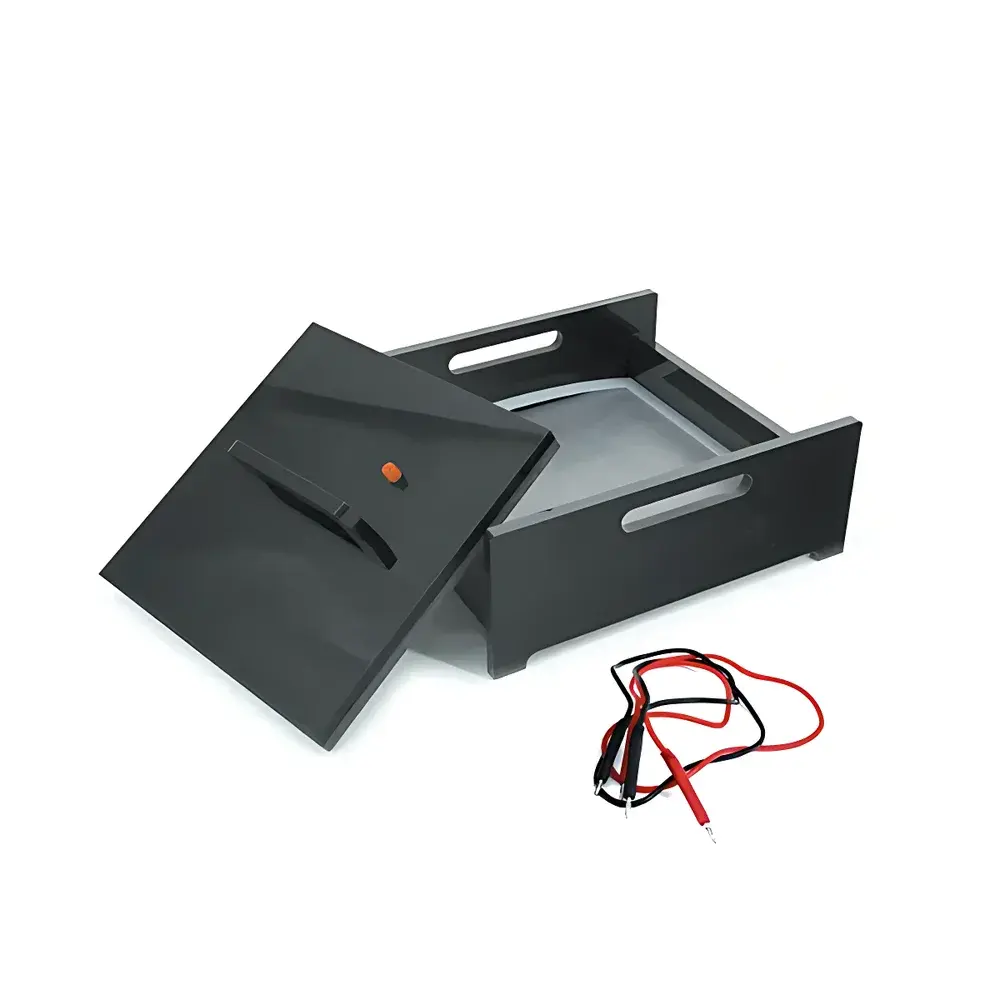
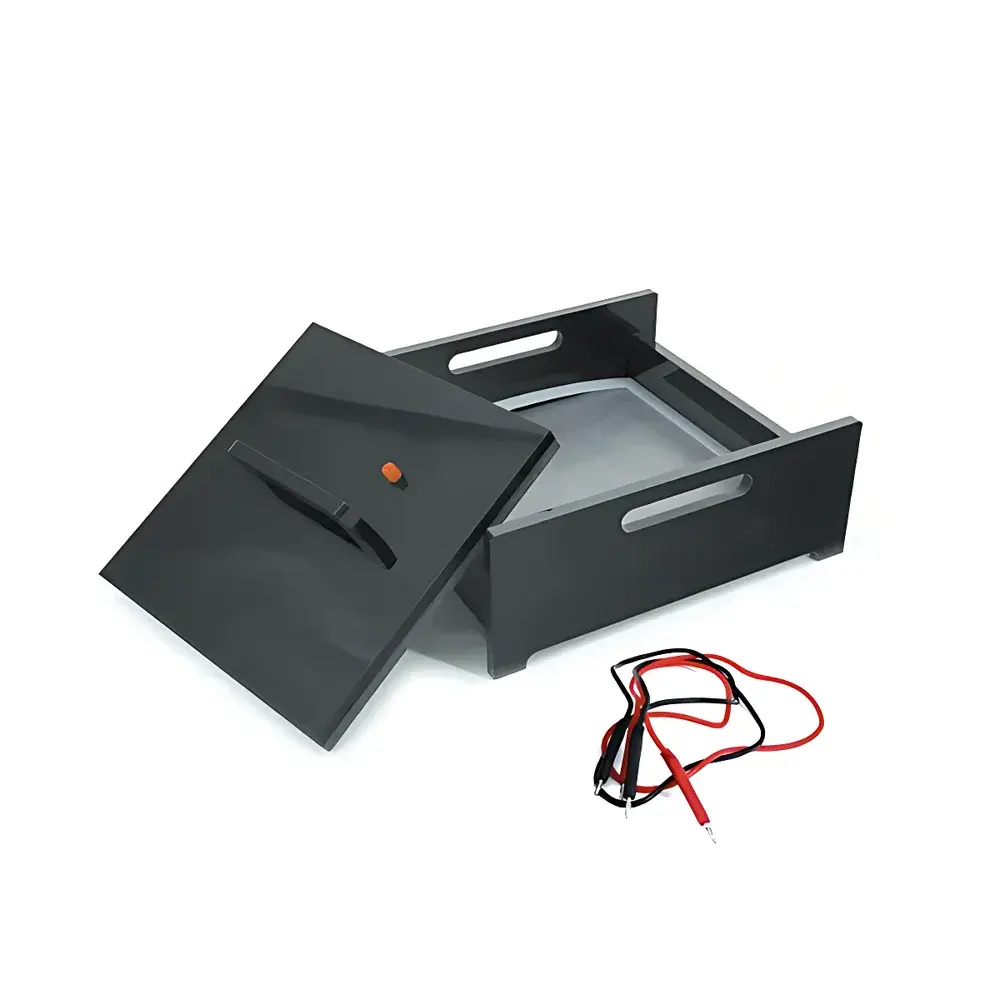
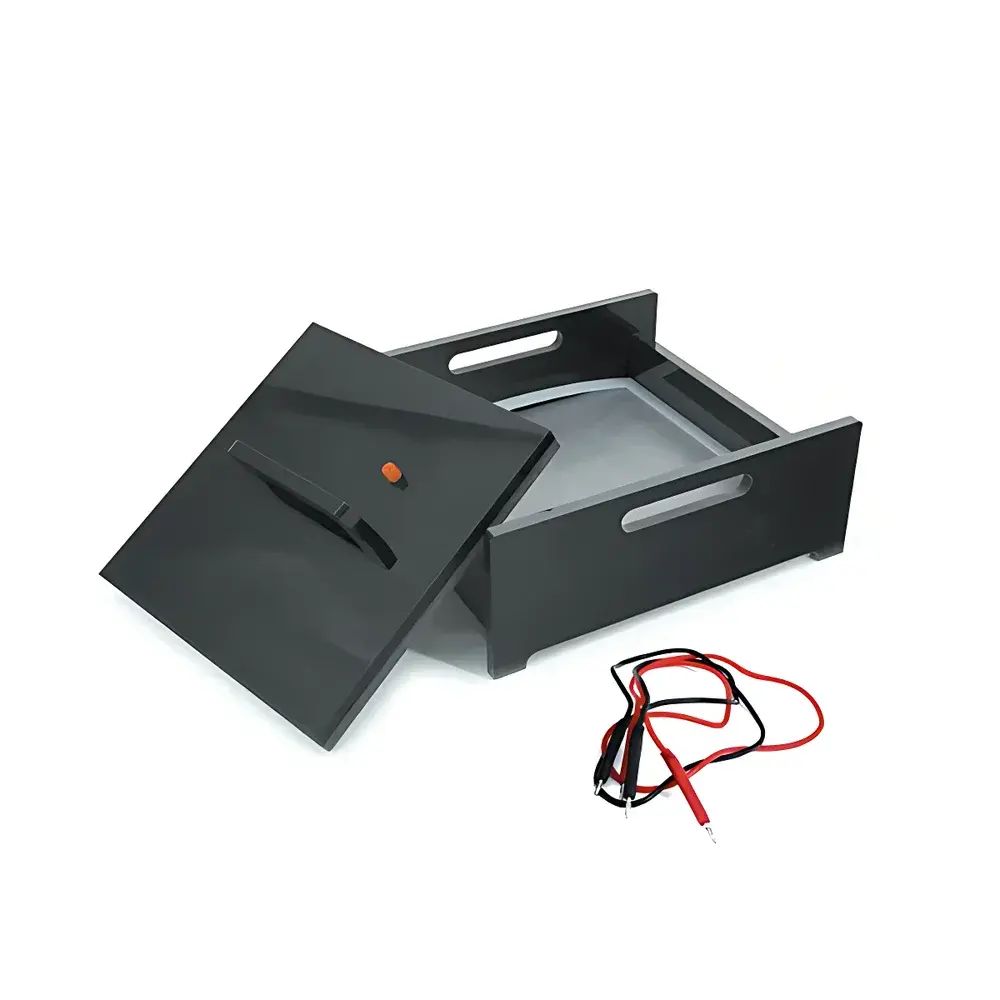
Beijing Liuyi DYCP-40C Semi-Dry Carbon-Plate Electrophoretic Transfer Apparatus
| Brand | Beijing Liuyi (LY) |
|---|---|
| Origin | Beijing, China |
| Model | DYCP-40C |
| Instrument Type | Semi-Dry Electrophoretic Transfer System |
| Gel/Transfer Plate Dimensions | 150 × 150 mm |
| External Dimensions (L×W×H) | 210 × 186 × 100 mm |
| Weight | 3 kg |
| Electrode Material | Conductive Carbon Plates |
| Insulation | Integrated Non-Conductive Spacer Gaskets |
| Buffer Requirement | Minimal-volume buffer system (no bulk tank required) |
Overview
The Beijing Liuyi DYCP-40C Semi-Dry Carbon-Plate Electrophoretic Transfer Apparatus is an engineered solution for rapid, high-efficiency protein transfer from polyacrylamide gels to solid-phase membranes—primarily nitrocellulose (NC) or polyvinylidene difluoride (PVDF)—in Western blotting workflows. Unlike traditional wet-transfer systems that rely on large-volume buffer tanks and extended run times, the DYCP-40C employs a semi-dry configuration where the gel-membrane sandwich is placed directly between two parallel carbon plate electrodes separated by thin, pre-wetted filter papers and minimal electrolyte. This architecture establishes a uniform electric field across the entire transfer surface with minimal resistive heating, enabling efficient electrophoretic migration of proteins at moderate voltages (typically 15–25 V DC) over 10–60 minutes. The system operates on the principle of electroblotting: under applied direct current, negatively charged proteins migrate out of the gel matrix and are immobilized onto the positively charged or hydrophobic surface of the membrane. Its compact footprint, absence of circulating buffer reservoirs, and passive thermal dissipation make it suitable for routine use in academic, clinical, and QC laboratories performing daily immunoblot analysis.
Key Features
- Conductive carbon plate electrodes: Provide homogeneous current distribution across the full 150 × 150 mm active area, minimizing edge effects and ensuring consistent transfer efficiency across the entire gel.
- Semi-dry architecture: Eliminates need for large-volume buffer tanks; requires only ~10–20 mL total electrolyte volume per run—reducing reagent consumption, waste generation, and setup time.
- Integrated non-conductive spacer gaskets: Prevent electrode short-circuiting during assembly and maintain precise inter-electrode spacing for reproducible field strength.
- Modular, tool-free assembly: Gel–membrane–filter paper sandwich is inserted between plates without clamps or screws; top cover secures alignment and ensures uniform contact pressure.
- Compact benchtop design: Occupies <0.04 m² footprint (210 × 186 mm base), ideal for space-constrained labs; weighs only 3 kg for easy relocation.
- Chemically resistant housing: Constructed from impact-modified ABS plastic, compatible with common transfer buffers (e.g., Tris-glycine-methanol, CAPS, or low-pH SDS-free formulations).
Sample Compatibility & Compliance
The DYCP-40C supports standard slab gels up to 150 × 150 mm, including SDS-PAGE, native PAGE, and gradient gels. It is validated for transfer of proteins ranging from 10 kDa to >200 kDa, with optimal performance observed for mid-range molecular weights (25–100 kDa) under standardized conditions. Compatible membranes include nitrocellulose (0.2 or 0.45 µm pore size), PVDF (activated with methanol), and supported nylon variants. While not certified to ISO/IEC 17025 or FDA 21 CFR Part 11 out-of-the-box, the instrument’s mechanical repeatability and lack of embedded software render it inherently suitable for GLP-compliant environments when used within documented SOPs. Buffer composition and voltage/time parameters must be validated per application per laboratory quality system requirements (e.g., ISO 15195, CLSI EP17-A2).
Software & Data Management
The DYCP-40C is a standalone hardware-only system with no integrated microcontroller, display, or digital interface. All operational parameters—including voltage, current, and run duration—are controlled externally via a programmable DC power supply (not included). Users record settings manually or log them into laboratory information management systems (LIMS) or electronic lab notebooks (ELN) as part of assay documentation. No firmware updates, audit trails, or user access controls are applicable. This analog design simplifies validation, avoids cybersecurity concerns associated with connected instruments, and aligns with regulatory expectations for “dumb” electrophoresis hardware in regulated bioanalytical labs.
Applications
- Routine Western blotting for qualitative and semi-quantitative protein detection in cell lysates, tissue homogenates, and purified fractions.
- High-throughput screening of antibody specificity and binding kinetics using replicate transfers.
- Validation of protein expression levels across multiple experimental conditions (e.g., knockdown/knockout models, drug treatment time courses).
- Preparative transfer for downstream mass spectrometry analysis of excised membrane-bound bands.
- Educational training in molecular biology core facilities due to intuitive assembly and visual feedback during transfer (e.g., buffer wicking, slight warming).
FAQ
What types of power supplies are compatible with the DYCP-40C?
A constant-voltage DC power supply capable of delivering 10–30 V and 0.1–1.5 A is recommended. Current-limiting functionality is advised to prevent arcing during initial contact.
Can the carbon plates be cleaned and reused indefinitely?
Yes—carbon plates are chemically inert and mechanically robust. Rinse thoroughly with deionized water after each use; avoid abrasive scrubbing or organic solvents that may degrade conductive coatings.
Is pre-wetting of the transfer membrane mandatory?
Yes. NC membranes require methanol activation followed by equilibration in transfer buffer; PVDF membranes require methanol soaking prior to buffer equilibration to ensure uniform wetting and binding capacity.
Why does the system specify “semi-dry” instead of “dry”?
Because minimal buffer-saturated filter papers are essential to complete the electrical circuit and prevent localized overheating—true dry transfer (zero liquid) is not feasible with standard electrophoretic blotting principles.
Does this apparatus support bidirectional or reverse transfer modes?
No. The DYCP-40C is configured exclusively for unidirectional anode-to-cathode transfer (gel-to-membrane), consistent with standard Western blot protocols.




