
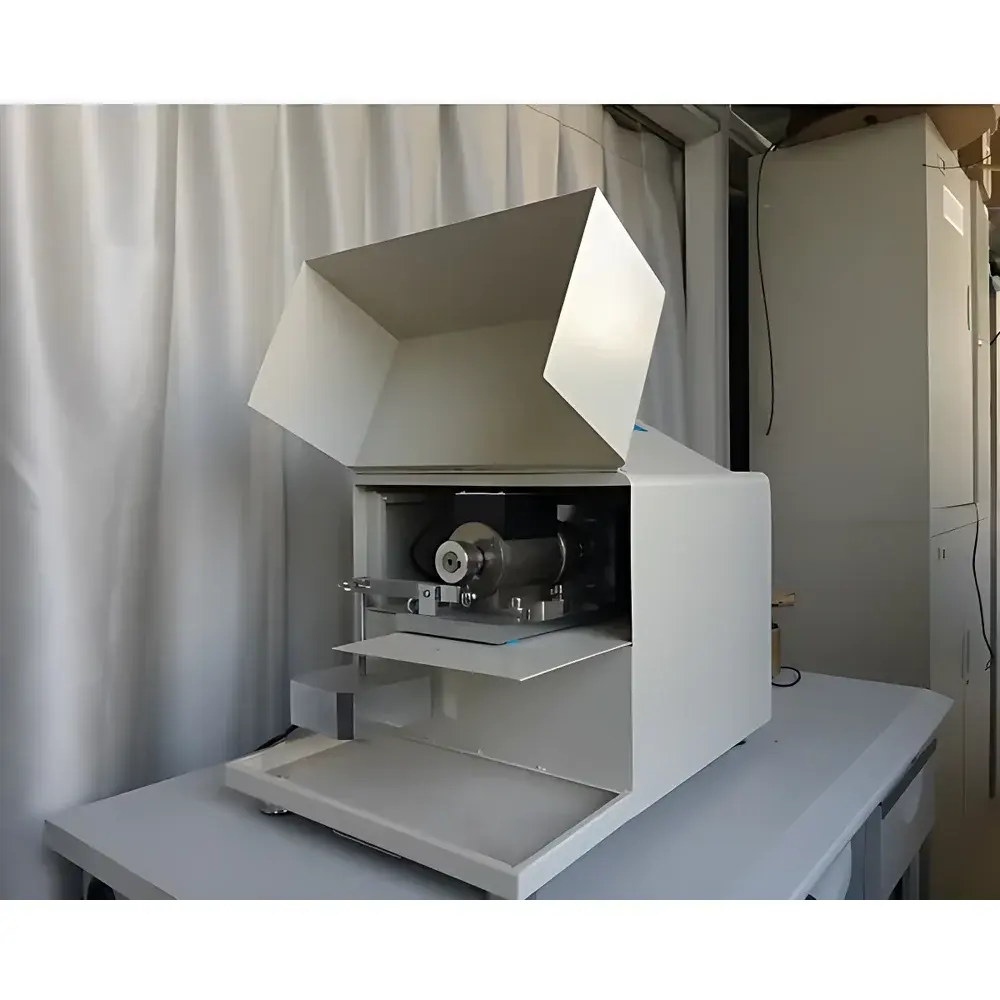
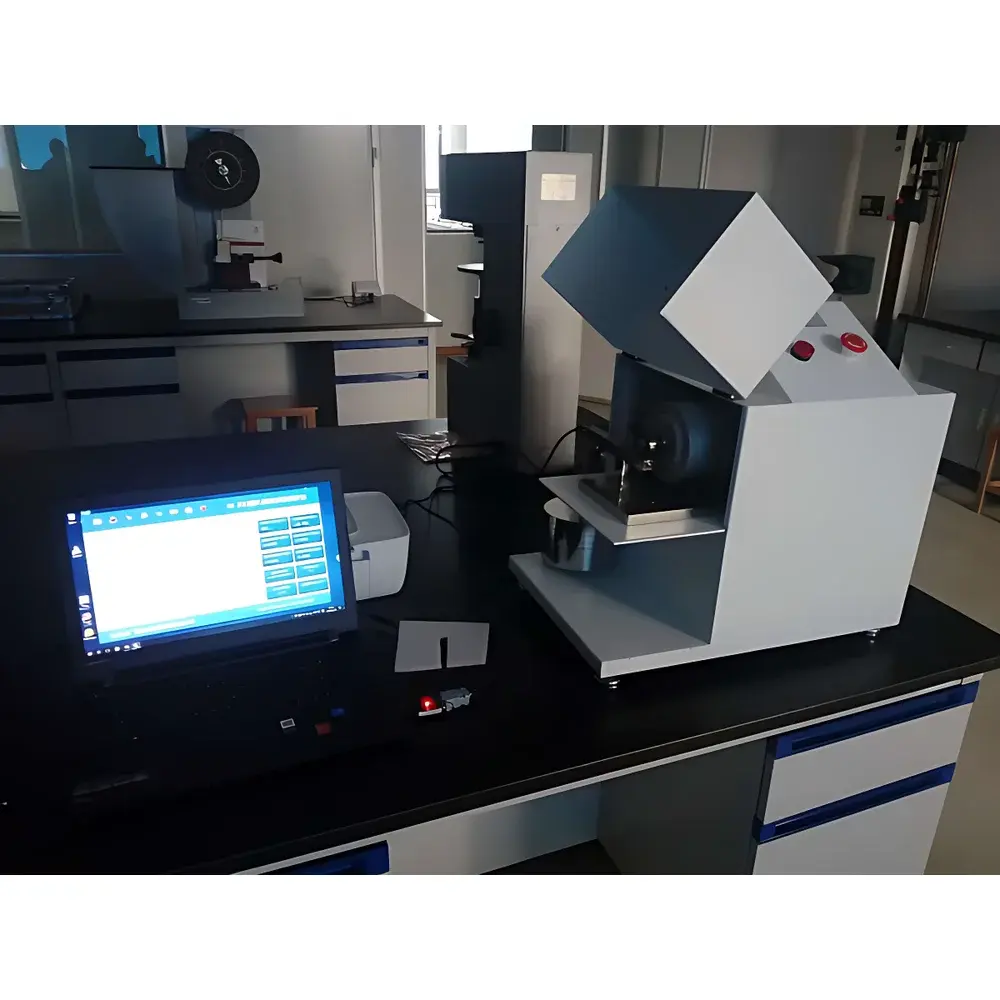
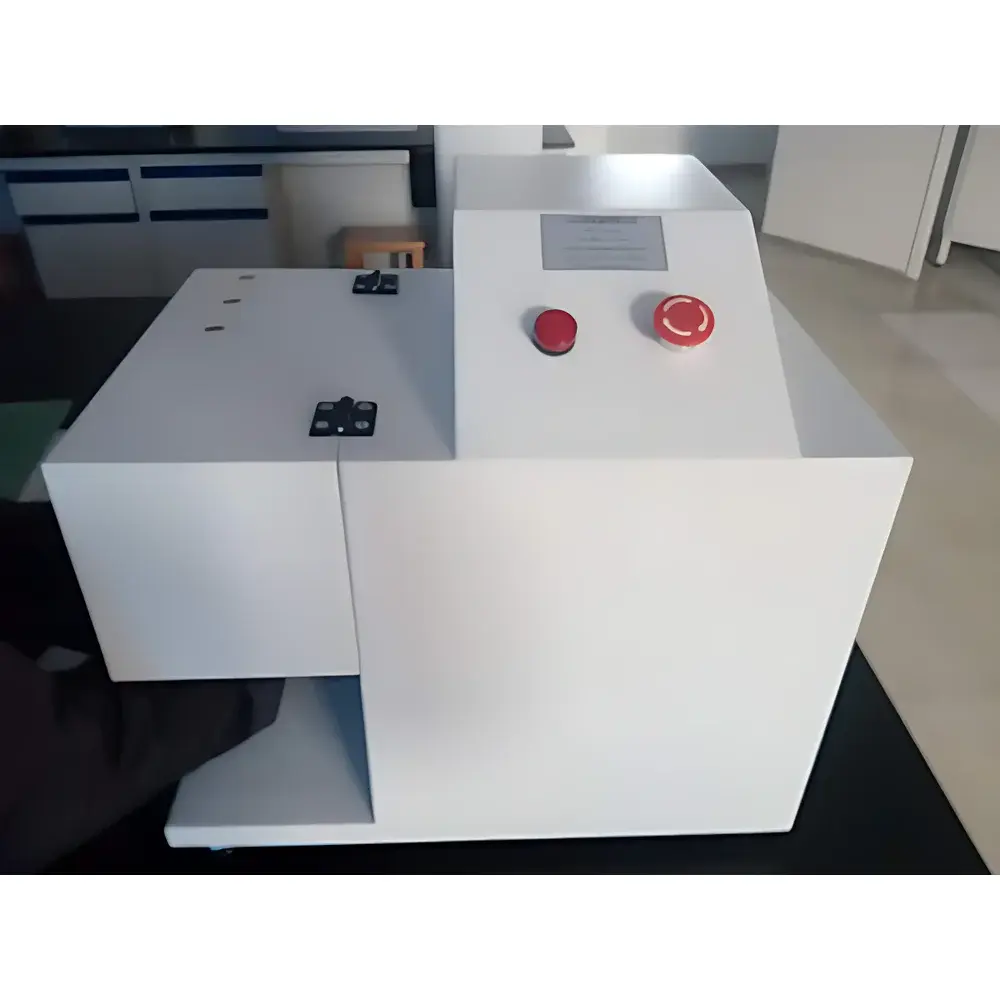
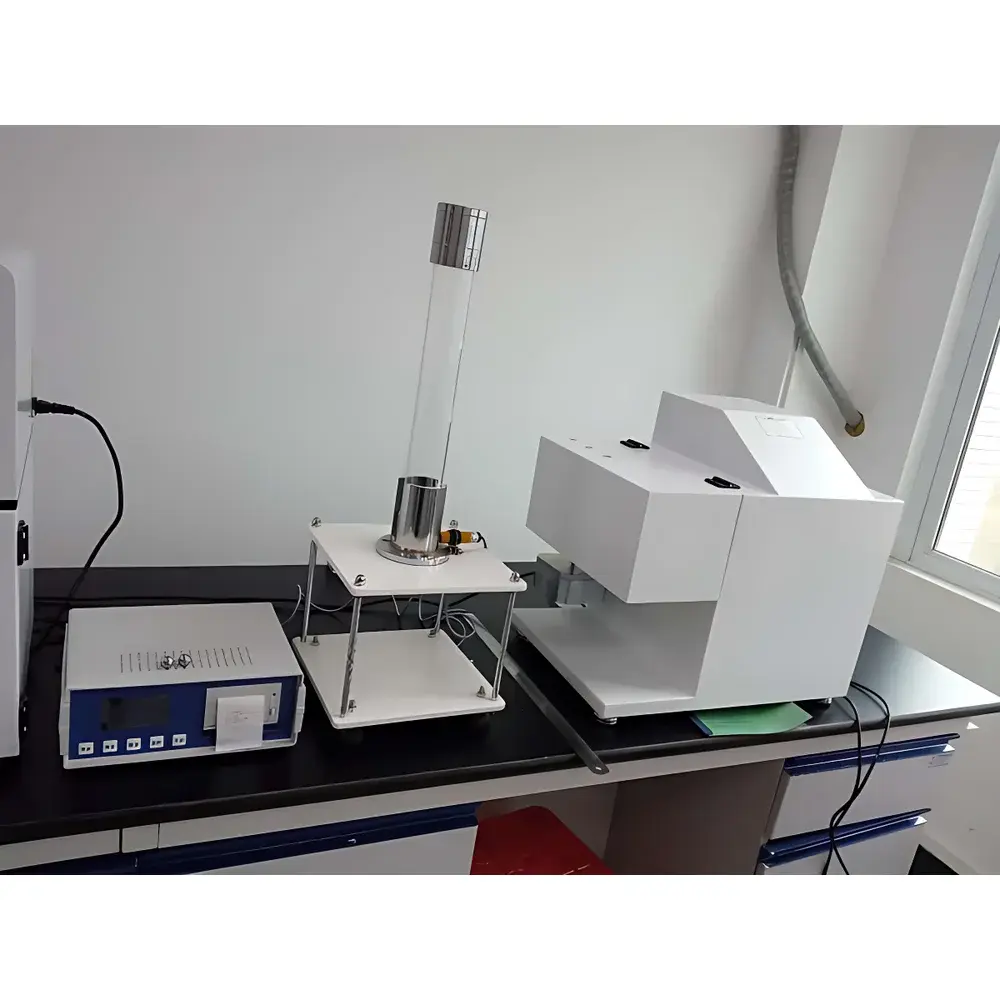
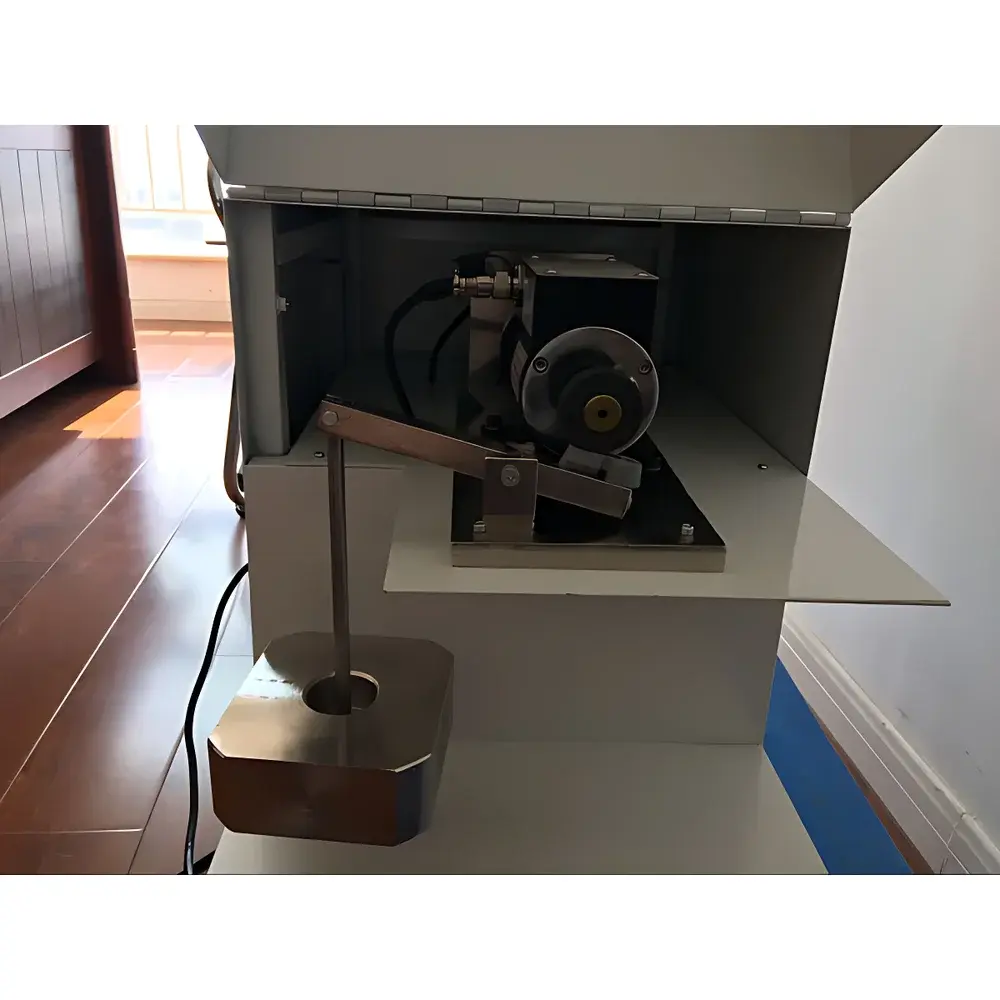
Beijing North Guang Precision Instruments M-200 Sliding Friction and Wear Tester for Rubber and Plastics
| Brand | Beijing North Guang Precision Instruments |
|---|---|
| Origin | Beijing, China |
| Manufacturer Type | OEM Manufacturer |
| Country of Origin | China |
| Model | M-200 |
| Price | USD 4,950 (FOB Beijing) |
Overview
The Beijing North Guang Precision Instruments M-200 Sliding Friction and Wear Tester is an ASTM- and ISO-aligned tribological testing system engineered for precision evaluation of sliding friction behavior, coefficient of friction (COF), and wear volume under controlled mechanical loading. Designed in strict compliance with GB/T 3960–1983 (equivalent to ISO 8295 and ASTM D1894 for coefficient of friction; aligned with ASTM G99 and ISO 7148-1 for wear quantification), the M-200 implements a standardized pin-on-ring configuration using a rotating steel ring (Ø40 × 10 mm) and a stationary rectangular specimen (30 × 7 × 6 mm). The system operates on the principle of constant-load, rotational sliding contact, enabling quantitative measurement of friction torque (0–4 N·m ±0.5% FS), normal load (196 N ±0.2%, expandable to 392 N), and real-time kinematic response across speeds from 0 to 200 rpm (±1% accuracy). Its architecture integrates a 16-bit microcontroller-based control unit with dual-channel analog signal conditioning, supporting reproducible tribological assessment in dry, humid, or abrasive-laden environments—critical for R&D validation and QC release testing in packaging, automotive polymer components, and medical device material qualification.
Key Features
- Pin-on-ring tribometer configuration compliant with GB/T 3960, ISO 8295, and ASTM D1894 for static/dynamic COF determination
- Adjustable rotational speed (0–200 rpm, continuous, ±1% repeatability) and calibrated normal load (196 N standard, upgradable to 392 N)
- High-fidelity torque sensing via precision strain-gauge transducer (0–4 N·m, ±0.5% full-scale accuracy)
- Dual-mode operation: pure sliding, rolling-sliding composite, and third-body abrasion simulation using standardized abrasive media
- Real-time data acquisition at 100 kHz sampling rate, with timestamped storage of friction force, COF, temperature, and rotation count
- Automated test sequencing: single-parameter setup, unattended execution, auto-shutdown upon cycle completion or fault detection
- Integrated hardware and software safety interlocks—including over-torque cutoff, thermal runaway monitoring, and power-loss data retention
Sample Compatibility & Compliance
The M-200 accommodates rigid and semi-crystalline polymeric specimens (e.g., HDPE, PP, PET, PVC, nylon 6/6, PTFE), elastomeric materials (NR, SBR, EPDM), and fiber-reinforced composites per standardized specimen geometry (30 × 7 × 6 mm ±0.1 mm). It supports both ambient and conditioned environmental testing (humidity-controlled chambers optional). Regulatory alignment includes GB/T 3960–1983, ISO 8295:2004 (Plastics — Determination of coefficient of friction), ASTM D1894–22 (Standard Test Method for Static and Kinetic Coefficients of Friction of Plastic Film and Sheeting), and foundational principles of ISO 7148-1 (Friction and wear — Vocabulary — Part 1: Basic terms). While not intrinsically 21 CFR Part 11 compliant, audit-ready data export (CSV, PDF) and full traceability logs support GLP/GMP documentation workflows when deployed with validated SOPs.
Software & Data Management
The embedded control system features a color LCD interface with intuitive menu navigation and local parameter configuration. All test data—including raw torque vs. time, calculated COF vs. rotation count, wear depth trends, and thermal profiles—are streamed to the onboard controller and exported via USB to Windows-compatible analysis software. The software enables curve interpolation, segment-specific zoom (with coordinate readout), statistical summary (mean, SD, CV%), and customizable report generation—including header metadata (operator ID, calibration date, environmental conditions). Export formats include CSV (for Excel/Python analysis) and printer-ready PDF with embedded calibration certificate references. Data integrity is preserved through non-volatile memory backup during mains interruption, ensuring zero loss of active-session records.
Applications
- Quality control of plastic films and laminates used in food, pharmaceutical, and industrial packaging (slip performance verification)
- Development of low-friction polymer bearings, seals, and bushings for automotive and aerospace applications
- Comparative wear resistance screening of thermoplastic elastomers (TPEs) and filled composites under accelerated aging protocols
- Validation of surface modification efficacy (e.g., plasma treatment, fluorination, lubricant coating) on polymer substrates
- Academic research in polymer tribology, including temperature-dependent COF mapping and third-body wear mechanism studies
- Regulatory submission support for ISO 10993-6 biocompatibility assessments requiring surface wear debris characterization
FAQ
Does the M-200 comply with international standards beyond GB/T 3960?
Yes—the mechanical configuration and test methodology align with ISO 8295:2004 and ASTM D1894–22 for coefficient of friction, and its wear quantification framework follows ASTM G99 and ISO 7148-1 principles.
Can the system be calibrated traceably to national metrology institutes?
All torque and load sensors are supplied with factory calibration certificates traceable to CNAS-accredited laboratories (equivalent to ILAC-MRA signatories); user-performed periodic verification kits are available.
Is third-party software integration supported (e.g., LabVIEW or MATLAB)?
Yes—raw serial output (RS232/USB CDC) provides ASCII-formatted time-stamped data streams compatible with custom scripting environments.
What maintenance intervals are recommended for long-term reliability?
Lubrication of the main shaft bearing every 500 operational hours and annual recalibration of torque and load channels are advised per the maintenance log included in the operator manual.
Are alternative specimen fixtures available for non-standard geometries?
Custom fixture sets—including disk-on-disk, block-on-ring, and high-temperature ceramic holders—are offered as optional accessories under OEM engineering support.






