
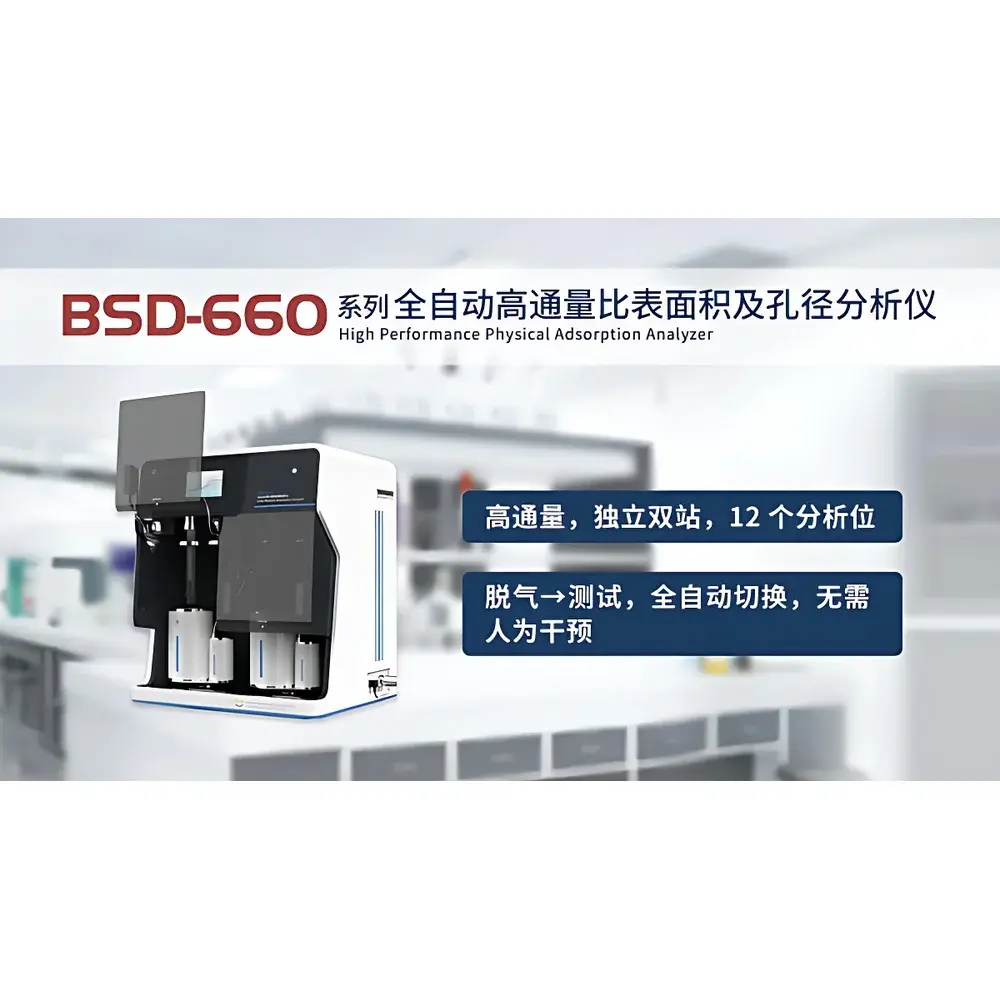
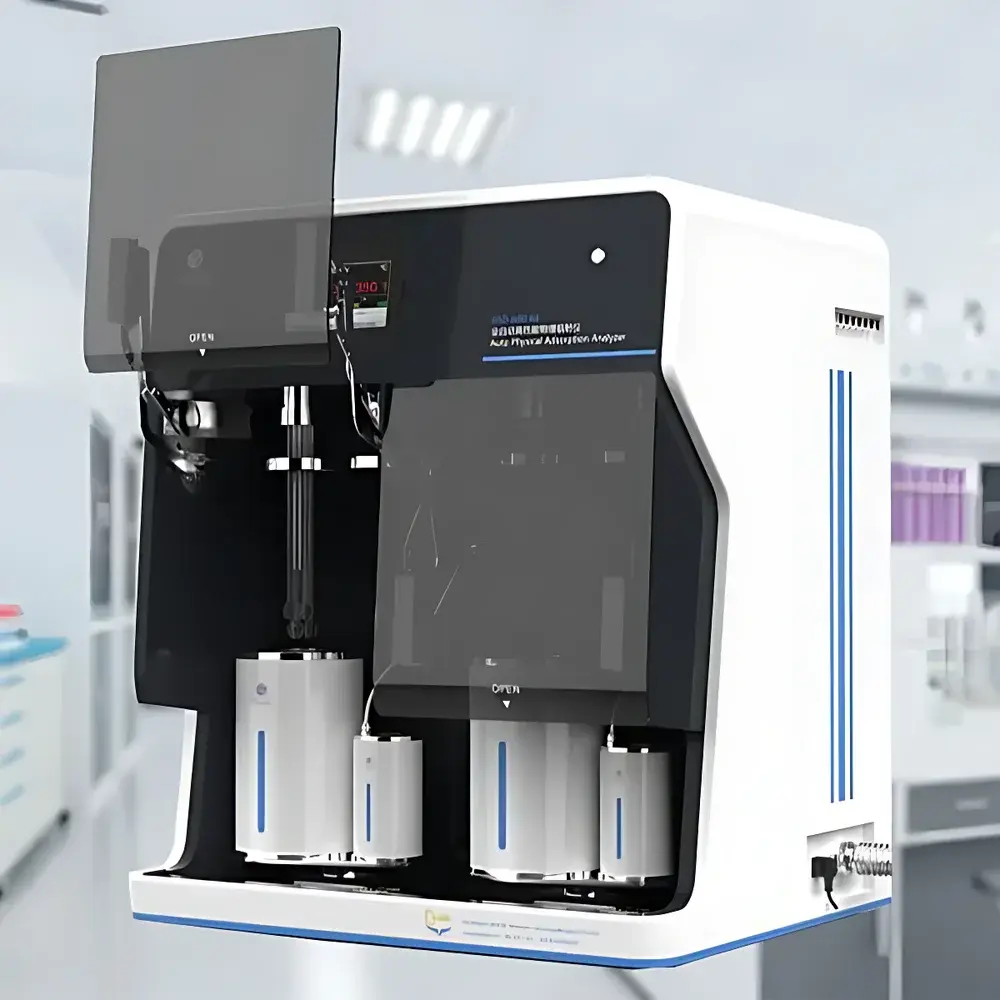
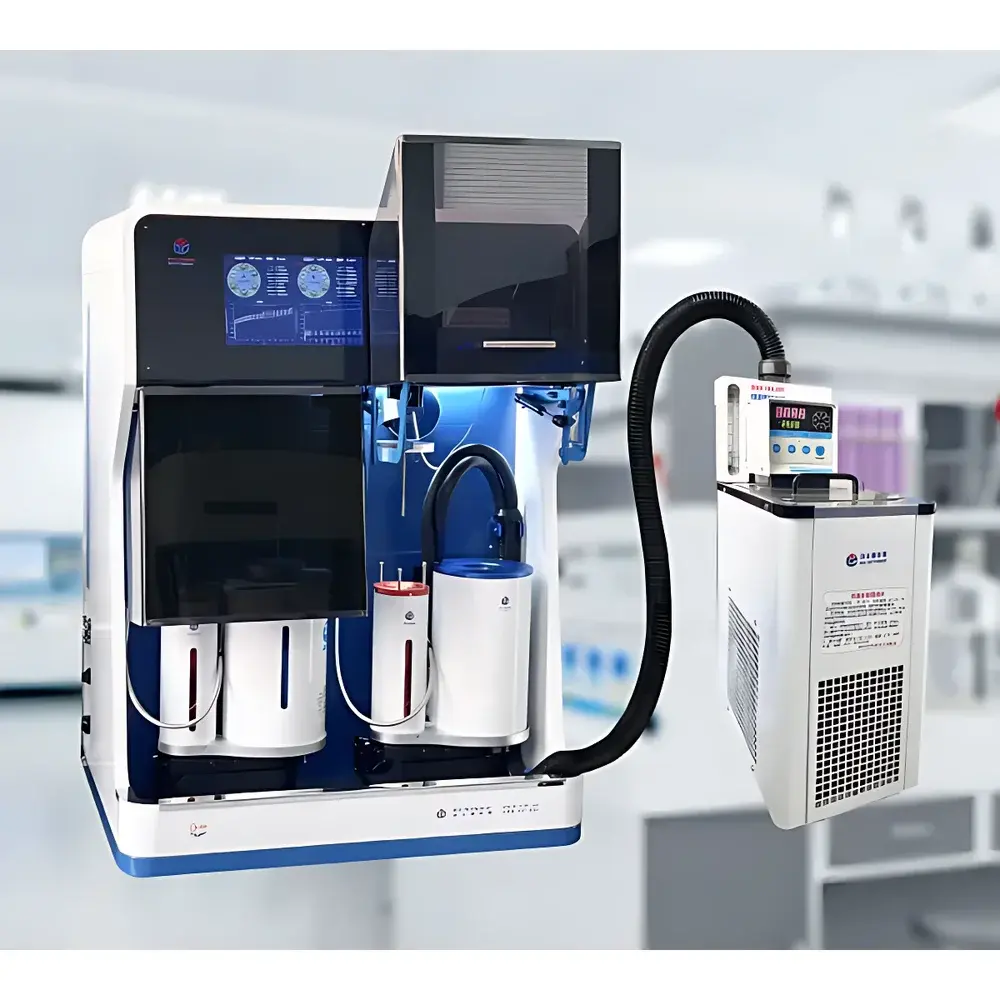
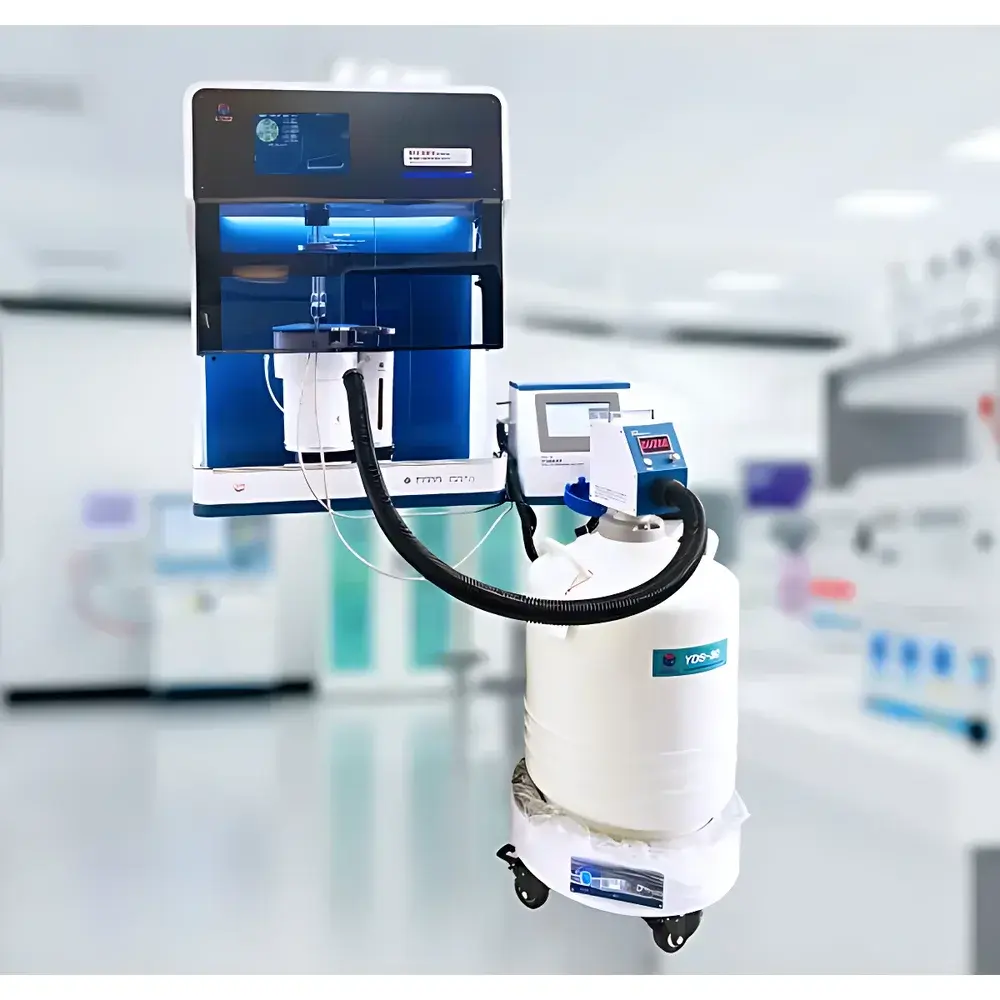
Beishide BSD-660A3M Specific Surface Area and Pore Size Analyzer (Static Volumetric Method)
| Brand | Beishide Instrument |
|---|---|
| Origin | Beijing, China |
| Manufacturer Type | OEM Manufacturer |
| Instrument Type | Specific Surface Area and Pore Size Analyzer |
| Model | BSD-660A3M |
| Analysis Stations | 3 / 6 / 9 / 12 |
| Surface Area Range | ≥0.0005 m²/g |
| Pore Diameter Range | 0.35–500 nm |
| Vacuum Level | ≤1×10⁻² Pa (standard), optional turbomolecular pump for ≤1×10⁻⁸ Pa |
| Measurement Principle | Static Volumetric Gas Adsorption |
| Repeatability | <0.5% RSD for surface area, pore size, pore volume, and adsorbed quantity (certified reference materials) |
Overview
The Beishide BSD-660A3M is a high-precision, fully automated specific surface area and pore size analyzer engineered for rigorous physical characterization of porous solids using the static volumetric gas adsorption method. It operates on the fundamental principles of gas adsorption isotherm measurement—primarily nitrogen (N₂), argon (Ar), carbon dioxide (CO₂), oxygen (O₂), carbon monoxide (CO), hydrogen (H₂), methane (CH₄), and ethane (C₂H₆)—to determine Brunauer–Emmett–Teller (BET) surface area, t-plot and αs-plot external surface area, micropore volume (via DA or HK methods), mesopore distribution (via BJH, DH, or NLDFT kernel models), and total pore volume. Designed for laboratories requiring regulatory-compliant, high-throughput material evaluation—including catalysts, MOFs, activated carbons, battery electrode materials, pharmaceutical excipients, and ceramic powders—the BSD-660A3M integrates thermodynamic control, vacuum integrity, and structural stability to deliver metrologically traceable results aligned with ISO 9277:2010, GB/T 19587–2017, ISO 15901-1/2/3, and ASTM D3663.
Key Features
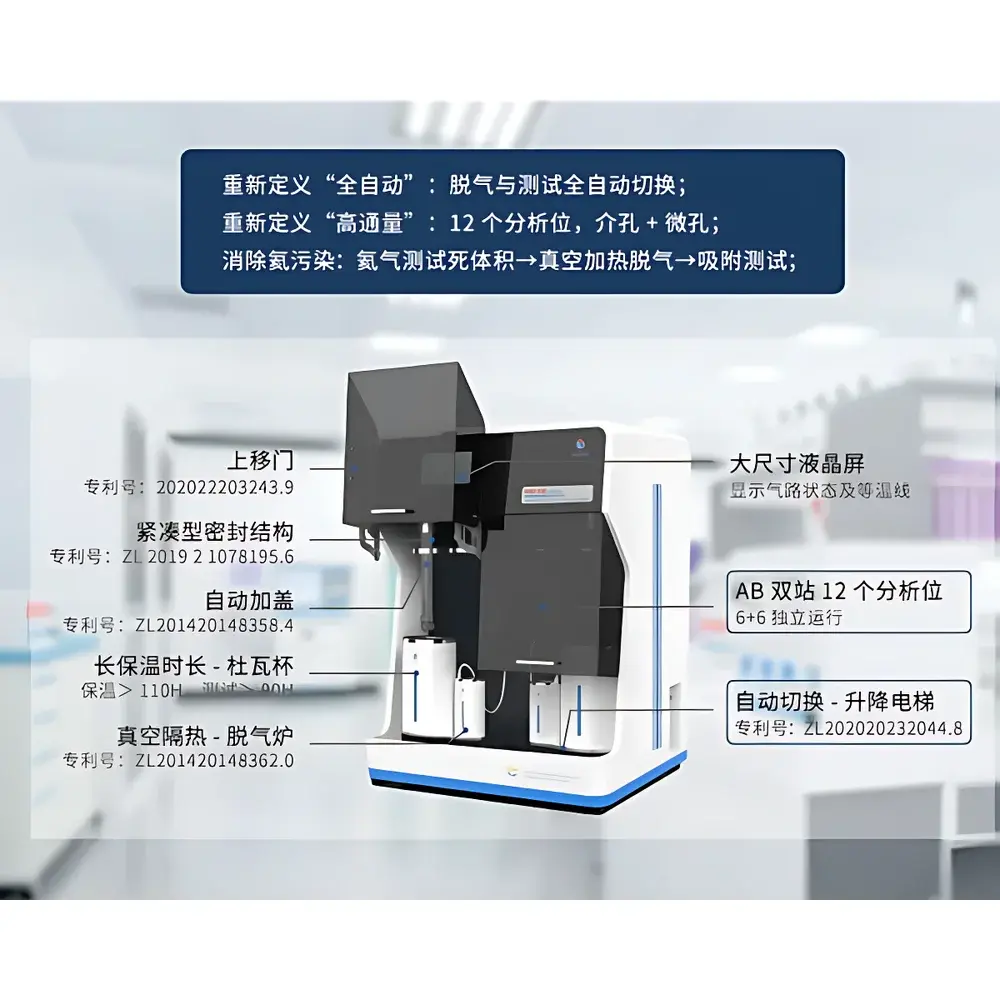
- Fully automated sample handling: Integrated dual-motion system enables automatic switching between degassing furnace and cryostat Dewar cups—eliminating manual tube transfer and enabling unattended overnight operation.
- Multi-station scalability: Configurable analysis stations (3, 6, 9, or 12) support parallel processing without cross-contamination or throughput compromise.
- Helium-free dead-volume calibration: Pre-adsorption helium pycnometry at constant temperature ensures accurate void volume determination prior to thermal degassing—resolving helium residue interference in micropore analysis.
- Pressure-controlled ramped degassing (PCRD): Real-time pressure feedback modulates heating rate and furnace position to suppress sample fluidization during volatile removal—critical for fragile zeolites, MOFs, and nanoscale metal oxides.
- Thermally stabilized architecture: Entire gas manifold maintained at 40 °C ±0.01 °C; adsorption chamber temperature zone actively servo-regulated to maintain <0.10% 24-hour drift in equivalent dead volume.
- Electric turbo liquid nitrogen pump: Contactless, variable-speed LN₂ delivery with sealed impeller design—ensuring contamination-free cryogen handling and operator safety.
- Modular vacuum system: Standard dual-stage rotary vane pump + optional dual turbomolecular pump configuration achieves ultimate vacuum ≤1×10⁻⁸ Pa for ultra-microporous (<0.7 nm) characterization.
Sample Compatibility & Compliance
The BSD-660A3M accommodates diverse solid-state samples—from hygroscopic pharmaceutical powders and air-sensitive battery cathodes to high-surface-area carbons and catalytic supports—across a broad thermal and chemical spectrum. Degassing protocols support programmable ramping from ambient to 400 °C (±0.1 °C accuracy) under controlled pressure profiles. Non-corrosive gas options include N₂, Ar, CO₂, Kr, and H₂; flammable gases (e.g., CH₄, C₂H₆) are supported with certified explosion-proof hardware modules. All operational parameters comply with GLP and GMP data integrity requirements: full electronic audit trail, user-access controls, 21 CFR Part 11–ready software logging, and seamless LIMS integration via open API. Test reports conform to ISO/IEC 17025 documentation standards and reference national standards including GB/T 21650.2–2008 (mesopores), GB/T 21650.3–2011 (micropores), and GB/T 13390–2008 (metal powders).
Software & Data Management
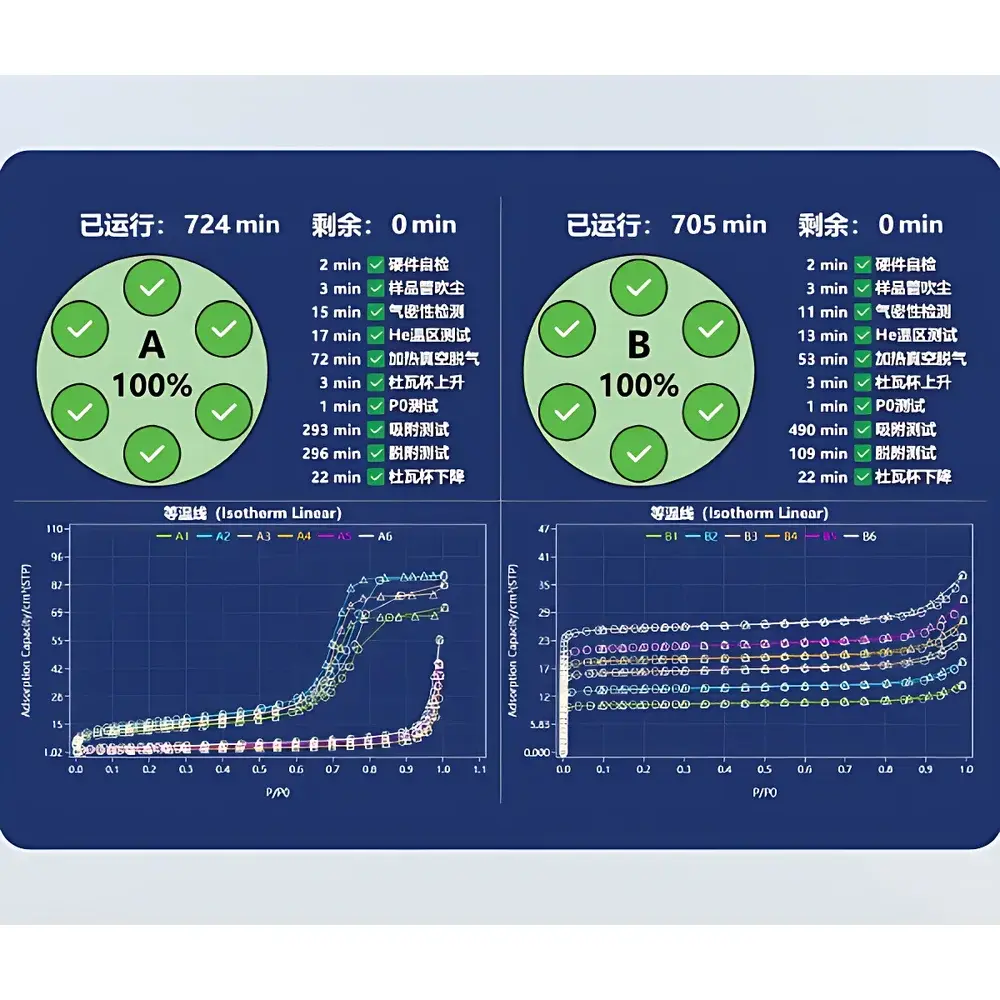
The proprietary Beishide ADS-660 software provides intuitive workflow management—from method setup and real-time instrument diagnostics to multi-model isotherm fitting (BET, Langmuir, DFT/NLDFT, BJH, HK, DA). Raw isotherm data are stored in vendor-neutral ASCII format with metadata tags (sample ID, operator, timestamp, calibration history). Quantitative outputs include surface area (m²/g), pore volume (cm³/g), pore size distribution (dV/dlogD), cumulative pore volume, and hysteresis loop classification per IUPAC. All calculations adhere to ISO-defined smoothing and outlier rejection criteria. Software supports automated report generation in PDF/Excel formats with embedded uncertainty estimates and validation against NIST-traceable reference materials (e.g., SA-1, SA-2). Data export modules enable direct upload to enterprise LIMS platforms with configurable field mapping and digital signature enforcement.
Applications
This analyzer serves core R&D and QC functions across advanced materials science and industrial manufacturing. In energy storage, it quantifies electrode-specific surface area and pore tortuosity critical for Li-ion and solid-state battery optimization. For catalysis, it validates active site dispersion and support porosity in Pt/Al₂O₃, Ni/MgO, or Fe-ZSM-5 systems. In pharmaceutical development, it assesses excipient surface heterogeneity affecting drug dissolution kinetics per USP . Environmental labs apply it to quantify adsorption capacity of activated biochar for heavy metal sequestration. Nanomaterial producers rely on its sub-nanometer resolution to verify MOF-5, UiO-66, or ZIF-8 synthesis fidelity. Its validated repeatability (<0.5% RSD) makes it suitable for inter-laboratory round-robin studies and regulatory submissions requiring statistical robustness.
FAQ
What gases can be used for adsorption analysis?
N₂, Ar, CO₂, O₂, CO, Kr, H₂, CH₄, and C₂H₆ are supported; flammable gases require optional explosion-proof configuration.
Is helium pycnometry integrated for skeletal density measurement?
Yes—fully automated He pycnometry precedes adsorption to determine geometric dead volume without operator intervention.
How does the system prevent sample loss during high-temperature degassing?
The Pressure-Controlled Ramped Degassing (PCRD) algorithm dynamically adjusts furnace lift height and heating rate based on real-time pressure transients to suppress particle entrainment.
Can the instrument perform cyclic adsorption-desorption testing?
Yes—programmable multi-cycle sequences evaluate adsorbent stability, regeneration efficiency, and fatigue resistance over repeated exposure cycles.
Does the software support NLDFT and QSDFT model libraries?
Yes—pre-loaded kernels for carbon, silica, alumina, and zeolite surfaces; custom kernel import is supported via standardized XML format.



