
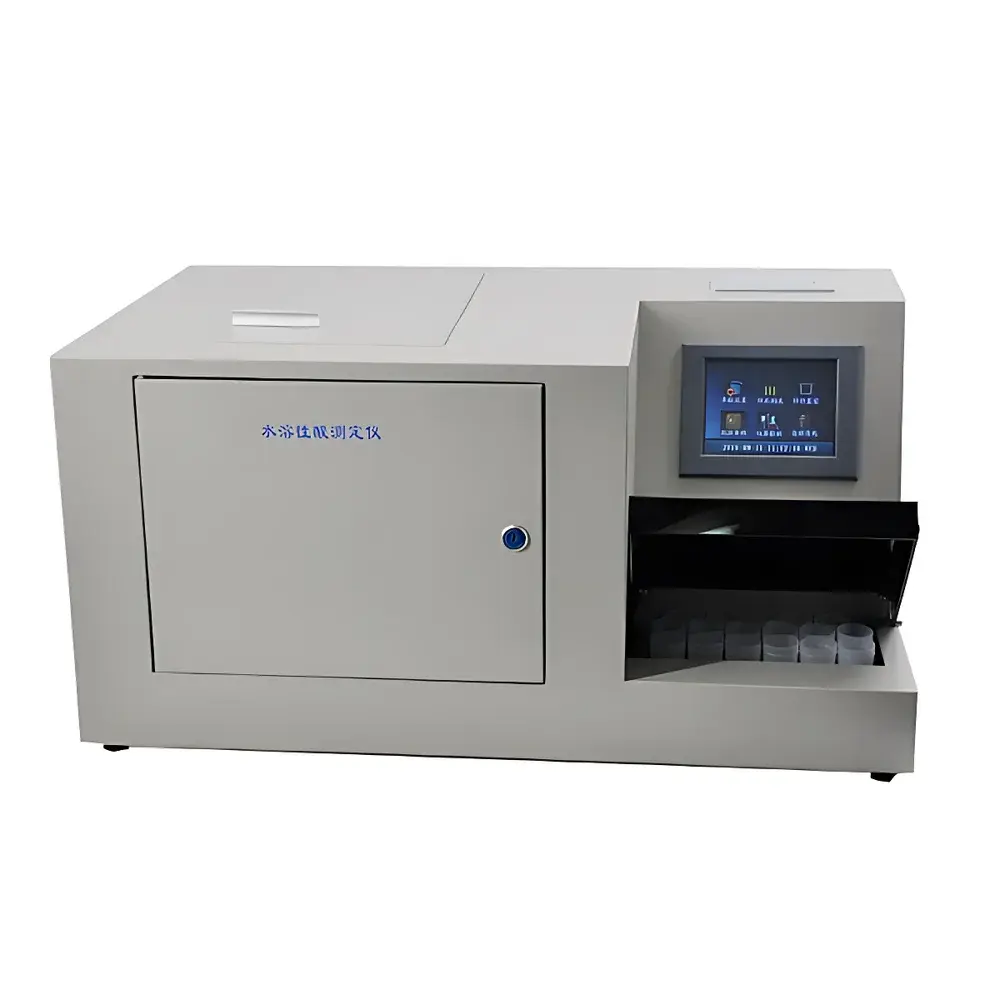
Benteng BT-1181 Transformer Oil & Turbine Oil Water-Soluble Acid Analyzer (Colorimetric Method)
| Brand | Benteng |
|---|---|
| Origin | Jilin, China |
| Manufacturer Type | Manufacturer |
| Country of Origin | Domestic (China) |
| Model | BT-1181 |
| Pricing | Upon Request |
| pH Measurement Range | 0.00–14.00 |
| pH Accuracy | ±0.02 pH |
| Resolution | 0.01 pH |
| Repeatability | ≤1% |
| Stability | ±1% F.S. / 4 h |
| Response Time (T90) | <1 min at 25 °C |
| Temperature Control Range | Ambient to 100 °C |
| Temperature Compensation Range | 0.1–60.0 °C |
| Sample Temperature Range | 5–60 °C |
| Operating Ambient Temperature | 5–40 °C |
| Relative Humidity | ≤85% |
Overview
The Benteng BT-1181 Transformer Oil & Turbine Oil Water-Soluble Acid Analyzer is a dedicated benchtop instrument engineered for the quantitative assessment of water-soluble acidic components in insulating oils—primarily mineral-based transformer oils and steam turbine lubricants. It operates on a standardized extraction–potentiometric principle: water-soluble acids (e.g., low-molecular-weight organic acids such as formic, acetic, and naphthenic acids) are extracted from the oil phase using distilled water or ethanol–water mixtures under controlled thermal and mechanical agitation. The resulting aqueous extract is then analyzed using a calibrated high-precision pH meter to determine hydrogen ion activity, yielding a direct metric of acid accumulation. This method aligns with internationally recognized test protocols—including GB/T 259 (Petroleum Products — Determination of Water-Soluble Acids and Bases) and DL/T 429.3 (Methods for Testing Water-Soluble Acids in Electrical Insulating Oils)—and serves as a critical early-warning indicator of oil oxidation degradation, sludge formation potential, and corrosive risk to copper windings and steel components in power transformers and turbine systems.
Key Features
- Integrated tri-functional platform combining magnetic stirring, mechanical agitation, and precise temperature-controlled heating—all operable simultaneously to ensure reproducible extraction kinetics.
- Embedded high-resolution pH measurement system featuring 24-bit A/D conversion, delivering resolution of 0.01 pH and accuracy within ±0.02 pH across the full 0.00–14.00 range.
- Programmable temperature control from ambient up to 100 °C, with automatic temperature compensation (0.1–60.0 °C) and real-time monitoring of sample bath temperature (5–60 °C).
- Intuitive Chinese-language graphical user interface with hierarchical menu navigation, enabling rapid method selection, parameter setting, and result review without external software dependency.
- Rugged industrial-grade enclosure designed for continuous operation in laboratory and field service environments, compliant with IEC 61010-1 safety standards for electrical equipment for measurement, control, and laboratory use.
Sample Compatibility & Compliance
The BT-1181 is validated for use with mineral insulating oils meeting ASTM D3487, IEC 60296, and GB 2536 specifications. It supports both new and in-service oils, including inhibited and uninhibited formulations. Extraction efficiency has been verified per GB/T 259 Annex A and DL/T 429.3 Section 5, ensuring quantitative recovery of weak organic acids under defined agitation intensity (≥200 rpm), extraction time (5–10 min), and phase separation conditions. Instrument calibration and verification procedures adhere to ISO/IEC 17025 requirements for testing laboratories; routine operation supports traceability through documented electrode calibration logs, temperature sensor verification, and system performance checks. While not inherently 21 CFR Part 11 compliant, audit trails and data export capabilities (via USB or RS-232) facilitate integration into GLP/GMP-aligned quality management systems when paired with validated third-party LIMS platforms.
Software & Data Management
The BT-1181 operates autonomously via its onboard microcontroller firmware and does not require PC connectivity for core analysis. All measurement data—including pH value, temperature reading, test timestamp, and operator ID (if enabled)—are stored in non-volatile memory with capacity for ≥500 test records. Data export is supported via standard USB 2.0 interface in CSV format, compatible with Microsoft Excel, LabArchives, and industry-standard statistical process control (SPC) tools. Firmware updates are delivered via secure encrypted firmware image files, ensuring integrity and version control. Optional password-protected administrator mode enables configuration lockout, calibration history review, and audit log access—supporting internal QA/QC workflows and regulatory readiness.
Applications
- Condition monitoring of transformer oil in substation maintenance programs, supporting IEEE C57.106 and IEC 60429 diagnostic guidelines.
- Acceptance testing of new turbine oils prior to commissioning, verifying compliance with OEM acid number limits (e.g., ≤0.03 mg KOH/g equivalent acidity).
- Root-cause analysis of copper corrosion in generator step-up (GSU) transformers where elevated water-soluble acid levels correlate with accelerated aging of paper insulation.
- Quality assurance in oil reclamation facilities performing clay filtration or vacuum dehydration, where acid neutralization efficacy must be quantified pre- and post-treatment.
- Research applications investigating oxidation kinetics in synthetic ester-based dielectric fluids under accelerated aging protocols (e.g., IEC 61125).
FAQ
What extraction solvent is recommended for routine testing?
Distilled water is specified in GB/T 259 and DL/T 429.3 for general screening; 50% (v/v) ethanol–water solution may be used for oils with low water solubility or suspected presence of weakly ionized acids.
Can the BT-1181 measure total acid number (TAN)?
No—this instrument measures only water-soluble acid content via potentiometric pH. TAN requires titration per ASTM D974 or D664 and is not interchangeable with water-soluble acid results.
Is electrode calibration required before each test?
Yes—two-point calibration (pH 4.01 and 7.00 buffers at measured temperature) is mandatory prior to any batch of analyses to ensure metrological traceability and minimize drift-related uncertainty.
How often should the magnetic stir bar and extraction vial be cleaned?
After every sample, using solvent-rinsed lint-free wipes and air-drying; residual oil film compromises extraction efficiency and introduces cross-contamination risk.
Does the instrument support automated reporting to enterprise LIMS?
Not natively—but exported CSV files can be ingested by most LIMS via scheduled import scripts or middleware gateways configured per ISO/IEC 17025 data integrity requirements.




