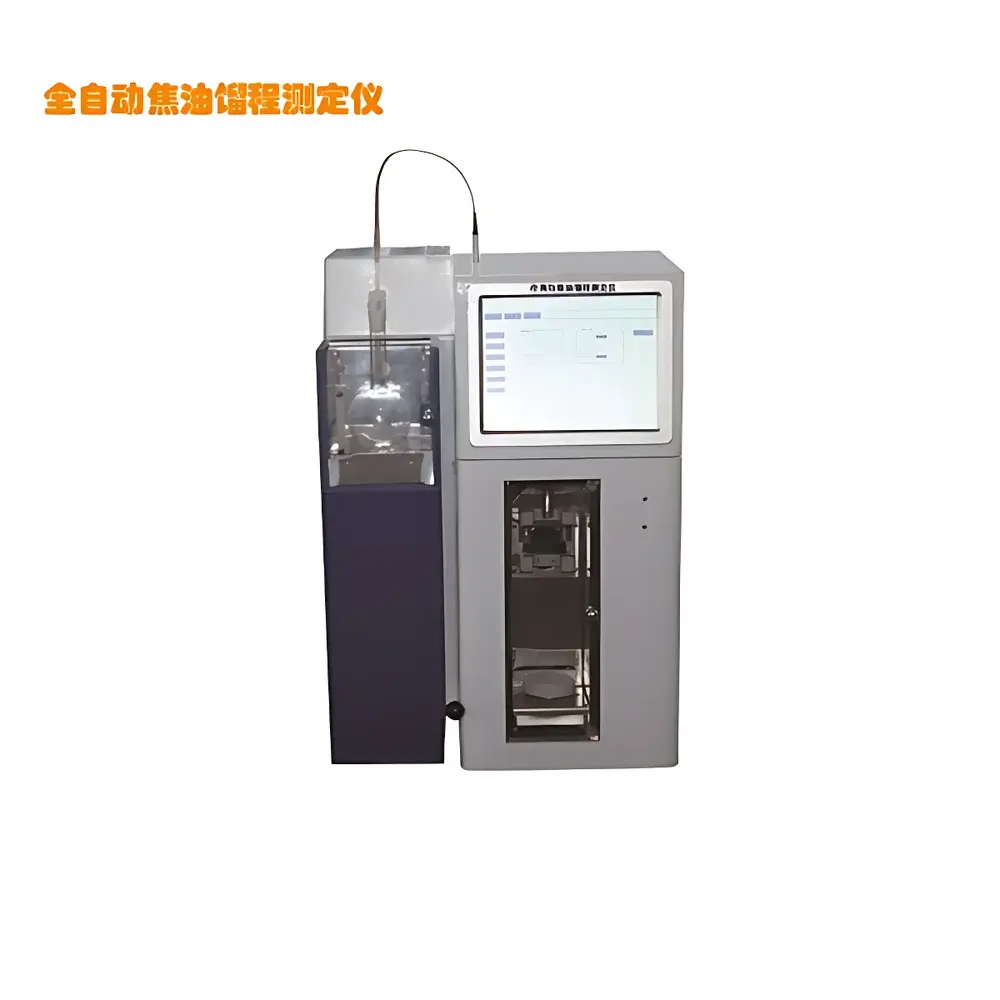
Benteng BT-2001 Fully Automatic Tar Distillation Analyzer
| Brand | Benteng |
|---|---|
| Origin | Jilin, China |
| Manufacturer Type | Direct Manufacturer |
| Country of Origin | China |
| Model | BT-2001 |
| Price Range | USD 7,000–14,000 (FOB) |
| Operating Pressure | Atmospheric |
| Temperature Measurement Range | 0–450 °C |
| Temperature Accuracy | ±0.2 °C |
| Cold Bath Temperature Range | 0–80 °C |
| Distillation Rate | 2–10 mL/min (programmable & auto-regulated) |
| Volume Detection Range | 0–101 mL |
| Volume Resolution | 0.1 mL |
| Atmospheric Pressure Sensing Range | 300–1100 hPa |
| Pressure Accuracy | ±3 hPa |
| Cold Trap Temperature Range | 0–60 °C |
| Cold Trap Control Accuracy | ±0.3 °C |
Overview
The Benteng BT-2001 Fully Automatic Tar Distillation Analyzer is a precision-engineered atmospheric distillation system designed specifically for the quantitative fractional boiling point analysis of coal tar, wash oil, and other heavy aromatic hydrocarbon mixtures in coking and coal chemical laboratories. It operates on the principle of standardized ASTM D86- and GB/T 18255-2000-compliant atmospheric distillation, integrating automated dehydration, programmable heating ramping, real-time volume tracking, and multi-zone thermal management to replicate—and improve upon—the manual distillation workflow. Unlike conventional batch distillers, the BT-2001 initiates with an integrated dehydration stage: water is selectively removed below 150 °C using controlled low-energy heating and vapor separation, eliminating bumping and superheating risks before transitioning seamlessly into the main distillation phase. This staged thermal protocol ensures reproducible cut-point identification across the full 0–450 °C range, critical for quality control of tar fractions used in pitch production, carbon black feedstock, or solvent recovery.
Key Features
- Automated two-stage thermal protocol: dedicated dehydration cycle (<150 °C) followed by fully programmable distillation ramping, minimizing operator intervention and inter-run variability.
- Low-voltage (36 V) digital pulse-controlled heating system with infrared radiation emitters and reflective thermal shielding—enhancing energy efficiency by up to 40% while reducing thermal stress on mechanical components.
- Manually adjustable furnace lift mechanism with automatic post-run descent to isolate residual heat; coupled with forced-air cooling fans for rapid cooldown between analyses.
- Dual independent thermal zones: precision cold bath (0–80 °C, ±0.2 °C) and sealed cold trap (0–60 °C, ±0.3 °C), both supporting segmented temperature programming to ensure consistent condensation efficiency across volatile and semi-volatile cuts.
- Integrated atmospheric pressure sensor (300–1100 hPa, ±3 hPa) enabling real-time barometric correction of observed temperatures per ASTM E100 and ISO 9199 requirements.
- 10.4-inch high-resolution color touchscreen interface with embedded thermal printer for immediate hardcopy output of distillation curves, cut volumes, and metadata.
- Fail-safe flame detection system with automatic inert gas (N₂ or CO₂) purge activation—compliant with OSHA 1910.106 and IEC 61000-6-2 electromagnetic compatibility standards.
Sample Compatibility & Compliance
The BT-2001 is validated for use with coal tar, medium-temperature tar, wash oil, creosote, and related viscous, thermally sensitive aromatic streams containing suspended particulates and entrained moisture. It strictly adheres to GB/T 18255-2000 “Determination of Distillation Range for Coking Medium Oils”, and its operational methodology aligns with the technical basis of ASTM D2892 (low-pressure) and ASTM D5250 (atmospheric) for heavy hydrocarbon fractionation. All thermal and volumetric measurements are traceable to NIST-certified reference standards. The system supports GLP-compliant data integrity through time-stamped, non-erasable run logs stored internally and exportable via USB; audit trails meet FDA 21 CFR Part 11 requirements when paired with validated laboratory information management systems (LIMS).
Software & Data Management
The embedded Linux-based controller runs proprietary distillation firmware featuring dual-mode operation: guided wizard mode for routine QC testing and advanced method editor mode for custom ramp profiles, hold times, and cut-point thresholds. Real-time distillation curves display temperature vs. recovered volume with dynamic derivative calculation (dT/dV) to identify inflection points corresponding to ASTM-defined cut endpoints (IBP, FBP, 10/30/50/70/90 vol%). Data exports support CSV and PDF formats; all measurement timestamps include UTC synchronization and instrument ID tagging. Internal memory retains ≥1,000 complete test records with full parameter traceability—including ambient pressure, cold bath setpoints, actual heating power, and volume detection events at 0.1 mL increments.
Applications
- Quality assurance of coal tar feedstock prior to centrifugal separation or vacuum distillation units.
- Specification verification of wash oil for benzene recovery plants (e.g., meeting ≤0.5% water content and defined 200–300 °C cut yields).
- Batch release testing of industrial creosote per EN 13377-1 and EPA Method 8270D surrogate validation.
- R&D studies on thermal stability and composition shifts during tar aging or storage under ambient conditions.
- Supporting process optimization in carbon material manufacturing—correlating 360–450 °C residue yield with final pitch softening point (ASTM D36).
FAQ
Does the BT-2001 comply with international distillation standards beyond GB/T 18255-2000?
Yes—it implements core physical principles and procedural logic aligned with ASTM D86, ISO 3405, and IP 123 for atmospheric distillation, including barometric correction, thermometer calibration protocols, and receiver volume measurement tolerances.
Can the cold bath and cold trap operate at different setpoints simultaneously?
Yes—the two systems are independently controlled; users may configure distinct temperature ramps (e.g., cold bath at 20 °C for light ends, cold trap at 5 °C for heavy aromatics) to maximize condensation selectivity.
Is remote monitoring or LIMS integration supported?
The device provides RS-232 and USB host interfaces; Ethernet connectivity is available as an optional module for SCADA or LIMS integration using Modbus RTU or TCP protocols.
What maintenance is required for long-term accuracy?
Annual recalibration of PT100 sensors and volumetric encoder against certified standards is recommended; ceramic heating elements require no replacement under normal operation (rated >10,000 cycles).
How does the system handle samples with high water content (>5 wt%)?
The dehydration stage automatically extends dwell time below 100 °C until condensate collection ceases, verified by optical droplet detection—preventing steam carryover into the main distillation column.
Related Products