
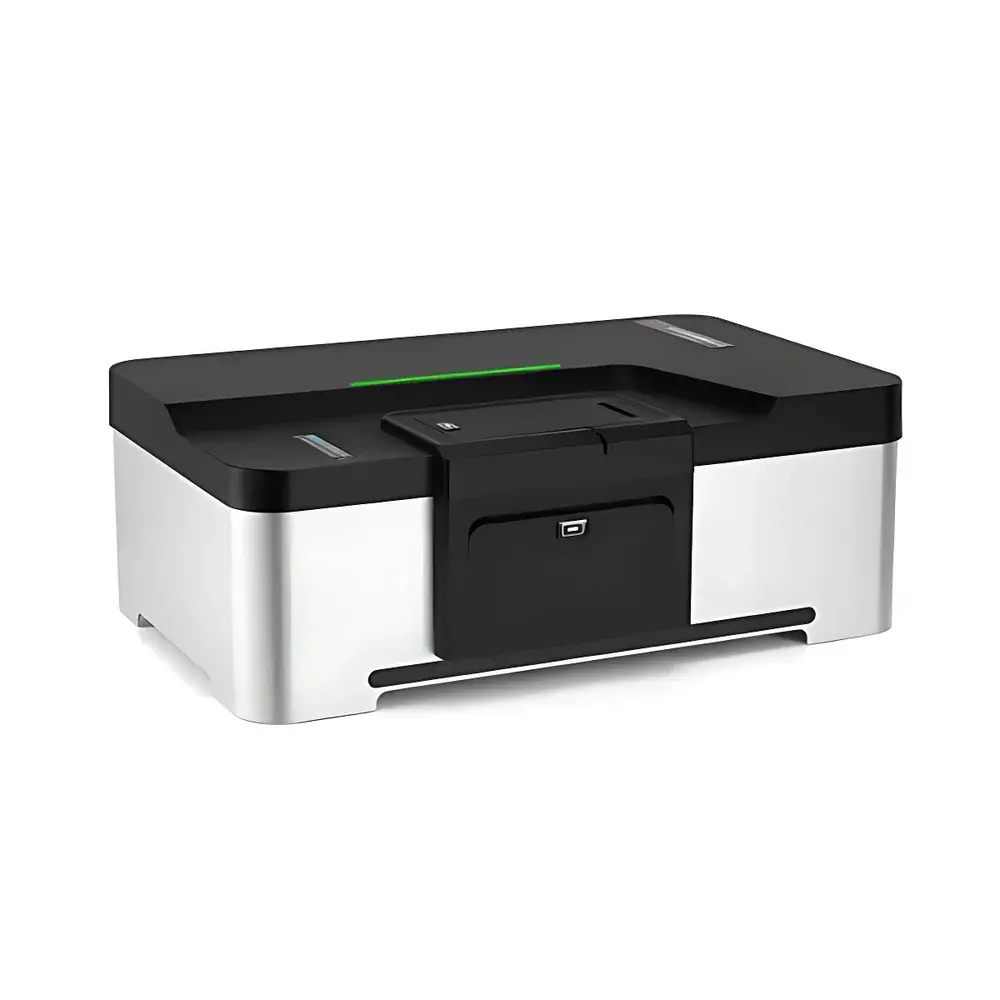
Bettersize BeNano 180 Zeta Max Nanoparticle Size and Zeta Potential Analyzer
| Brand | Bettersize |
|---|---|
| Origin | Liaoning, China |
| Manufacturer Type | Direct Manufacturer |
| Region of Origin | Domestic (China) |
| Model | BeNano 180 Zeta Max |
| Price | Upon Request |
| Particle Size Range | 0.3 nm – 15 μm |
| Temperature Control Range | −15°C to 120°C |
| Temperature Stability | ±0.1°C |
| Sample Volume | 3 μL – 1 mL |
| Zeta Potential Measurement Range | No Practical Limit |
Overview
The Bettersize BeNano 180 Zeta Max is a high-precision, multi-technique optical characterization platform engineered for comprehensive analysis of colloidal and macromolecular systems at the nanoscale. It integrates four core light-scattering methodologies—Dynamic Light Scattering (DLS), Electrophoretic Light Scattering (ELS) with Phase Analysis Light Scattering (PALS), Static Light Scattering (SLS), and Transmittance Detection—within a single, thermally stabilized optical bench. This architecture enables concurrent measurement of hydrodynamic diameter (Dh), polydispersity index (PDI), zeta potential distribution, absolute molecular weight (Mn, Mw, Mz), second virial coefficient (A2), particle concentration (by volume fraction and number density), refractive index (1.2–1.6, accuracy <0.1%), and micro-rheological parameters (G*, G′, G″, η*, J). The system employs a 671 nm solid-state laser with adjustable intensity (0.0001%–100%), a triple-detector configuration (APD + PD + CMOS), and a 4000-channel digital correlator offering 1011 dynamic linearity and 25 ns minimum sampling resolution. Its modular design supports seamless integration with separation techniques—including FFF, SEC/GPC—via optional flow-mode coupling, enabling model-independent size and molecular weight distributions.
Key Features
- Triple-angle DLS detection at 173° (backscatter), 90° (side scatter), and 11.2° (low-angle) to accommodate samples across wide concentration ranges (up to 40% w/v) and minimize multiple scattering artifacts.
- PALS-based zeta potential measurement with no practical lower or upper limit; validated for electrophoretic mobility > ±20 μm·cm/V·s and conductivity up to ≥270 mS/cm.
- Integrated temperature control from −15°C to 120°C with ±0.1°C stability, supported by dry air or nitrogen purge to prevent condensation during sub-ambient operation.
- Multi-modal particle sizing algorithms: Cumulants, General Purpose, CONTIN, and NNLS—each selectable based on sample heterogeneity and signal-to-noise requirements.
- LED-based Light Extinction Detection (LEDLS) for rapid, calibration-free particle concentration quantification in both volume and number basis.
- Wedge-cell refractometry (0° detection) requiring no tracer particles; 380 μL–1 mL sample volume, optimized for low-volume, high-value biological and pharmaceutical formulations.
- Automated trend analysis modules for real-time monitoring of size and zeta potential vs. temperature (Tm identification), time (stability profiling), and pH (titration kinetics).
Sample Compatibility & Compliance
The BeNano 180 Zeta Max accommodates aqueous and organic dispersions, protein solutions, polymer melts, liposomes, exosomes, metallic nanoparticles, and industrial emulsions. Sample volume flexibility—from 3 μL for precious biologics to 1 mL for routine QC—supports both R&D and regulated environments. The instrument’s firmware and data acquisition protocols are designed to support audit trails, electronic signatures, and user access controls aligned with FDA 21 CFR Part 11 expectations. While not pre-certified as a GMP-compliant device, its architecture meets foundational GLP/GMP readiness criteria: full metadata logging (temperature, laser power, correlation function, detector gain), timestamped raw data export (ASC/CSV), and traceable calibration records. All optical and thermal subsystems comply with IEC 61000-6-3 (EMC) and IEC 61010-1 (safety) standards.
Software & Data Management
The proprietary BeNano Analysis Suite provides a unified interface for instrument control, real-time visualization, and advanced data modeling. Raw autocorrelation functions, electropherograms, and scattering intensities are stored in vendor-neutral formats. Software modules include: (i) SLS module with Debye plot fitting for Mw and A2; (ii) Micro-rheology toolkit calculating mean-squared displacement (MSD), complex modulus (G*), storage/loss moduli (G′, G″), and creep compliance (J); (iii) pH/temperature/time trend engine with automated inflection point detection (e.g., Tm, pI); and (iv) Flow Mode interface for synchronized detection with RI/UV detectors from external chromatographic systems. Data export supports ASTM E2412-compliant reporting templates and ISO 13321:2020 DLS validation workflows.
Applications
This system serves critical analytical roles across multiple regulated and research-intensive domains: formulation development of monoclonal antibodies and mRNA-LNPs (zeta-pH titration, thermal stability mapping); QC of nanocarriers in generic drug submissions (size distribution reproducibility per USP <729>); colloid stability assessment in coatings and catalyst slurries (kd, A2, IUS correlation); characterization of synthetic polymers (MWD, branching ratio via A2); and fundamental studies of protein aggregation kinetics (time-resolved DLS + PALS). Its ability to quantify both size and surface charge under physiologically relevant conditions makes it particularly suited for preclinical nanomedicine evaluation and biosimilar comparability studies.
FAQ
What is the smallest detectable particle size using DLS on this instrument?
The theoretical lower limit is 0.3 nm, contingent upon sufficient scattering contrast, low background noise, and optimal signal averaging—typically achievable with high-refractive-index nanoparticles in low-viscosity solvents.
Can the system measure zeta potential in highly conductive media such as saline buffers?
Yes—the PALS detection scheme and high-voltage electrophoresis cell enable robust measurements up to ≥270 mS/cm conductivity without signal saturation or electrode polarization artifacts.
Is third-party software integration supported for LIMS or ELN environments?
Raw data export (ASCII, CSV, HDF5) and command-line API access allow integration with LabWare, STARLIMS, and Benchling via custom middleware; no proprietary binary lock-in is enforced.
How does the wedge-cell refractometer differ from conventional Abbe refractometers?
It operates on transmitted light at 0° incidence using a CMOS detector array, eliminating the need for index-matching fluids or manual calibration—ideal for small-volume, temperature-sensitive liquid samples.
Does the system support GMP-compliant audit trails out-of-the-box?
Full audit trail functionality—including user login history, parameter change logs, and electronic signature fields—is available via optional 21 CFR Part 11 mode activation and requires administrator-level configuration and periodic review per internal SOPs.



