
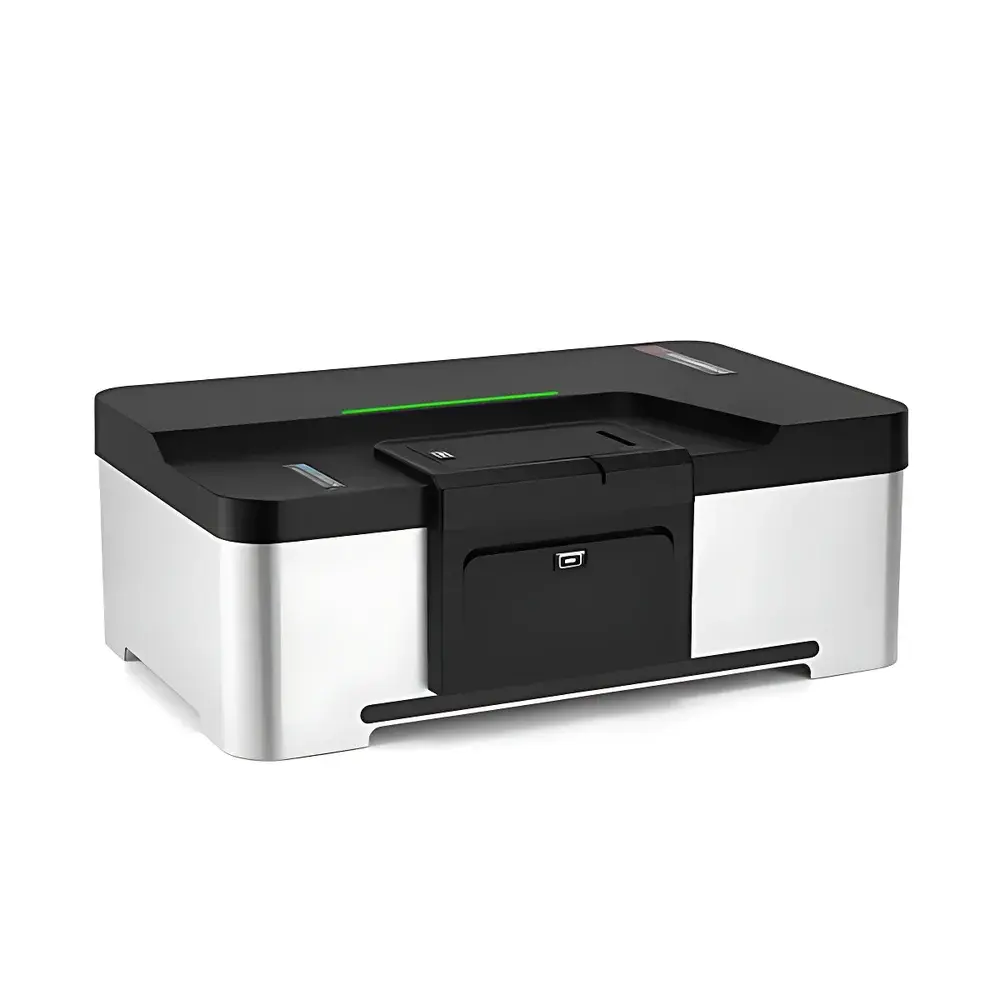
Bettersize BeNano 180 Zeta Nanoparticle Size and Zeta Potential Analyzer
| Brand | Bettersize |
|---|---|
| Origin | Liaoning, China |
| Manufacturer | Bettersize Instruments Co., Ltd. |
| Model | BeNano 180 Zeta |
| Particle Size Range | 0.3 nm – 10 μm |
| Temperature Control Range | −15°C to 120°C |
| Temperature Stability | ±0.1°C |
| Zeta Potential Range | No practical limit |
| Minimum Sample Volume | 40 μL (customizable) |
| Detection Angles | 173° + 11.2° |
| Max. Sample Concentration | ≤40% w/v |
| Zeta Measurement Principle | Phase Analysis Light Scattering (PALS) |
| Electrophoretic Mobility Range | > ±20 μm·cm/V·s |
| Conductivity Range | 0 – ≥270 mS/cm |
| Molecular Weight Range | 342 Da – 2 × 10⁷ Da |
| Laser Wavelength | 671 nm (solid-state), optional wavelengths available |
| Correlator | Multi-speed mode, 25 ns minimum sampling interval, 4000 channels, 10¹¹ dynamic linear range |
| Detector | APD |
| Intensity Control | 0.0001% – 100%, auto/manual |
Overview
The Bettersize BeNano 180 Zeta is an integrated optical characterization platform engineered for high-precision, multi-parameter analysis of colloidal and macromolecular systems. It combines three fundamental light-scattering techniques—Dynamic Light Scattering (DLS), Electrophoretic Light Scattering (ELS), and Static Light Scattering (SLS)—within a single, thermally stabilized optical bench. The system operates on the principle of backscattering detection at dual angles (173° for standard DLS/ELS and 11.2° for high-concentration or turbid samples), enabling robust measurements across a broad dynamic range without dilution artifacts. Its core measurement capabilities include hydrodynamic diameter (Dh), polydispersity index (PdI), zeta potential distribution, electrophoretic mobility, absolute molecular weight (Mn, Mw, Mz), second virial coefficient (A2), and micro-rheological parameters such as complex modulus (G*), storage modulus (G′), loss modulus (G″), and creep compliance (J). Designed for rigorous laboratory environments, the BeNano 180 Zeta supports ISO 22412, ISO 13321, ASTM E2490, and USP compliant workflows, with full audit trail support for GLP/GMP-regulated applications.
Key Features
- Dual-angle detection geometry (173° + 11.2°) optimized for both low- and high-concentration dispersions, eliminating the need for empirical dilution corrections.
- Phase Analysis Light Scattering (PALS) implementation for high-sensitivity zeta potential measurement, delivering reproducible results even in high-conductivity media (up to ≥270 mS/cm).
- Integrated temperature control from −15°C to 120°C with ±0.1°C stability, enabling precise thermal transition profiling (e.g., Tm determination for protein unfolding or polymer phase behavior).
- Multi-algorithm particle size analysis engine supporting Cumulants, General Purpose, CONTIN, and NNLS methods—each validated against NIST-traceable standards.
- High-dynamic-range correlator (10¹¹ linear range, 25 ns minimum lag time) coupled with avalanche photodiode (APD) detection for superior signal-to-noise performance in sub-nanometer regimes.
- Modular architecture supporting seamless integration with external separation systems (e.g., FFF, SEC/GPC) via BeNano Flow Mode for orthogonal, model-free size and molecular weight distributions.
Sample Compatibility & Compliance
The BeNano 180 Zeta accommodates aqueous and organic dispersions, biological macromolecules (proteins, antibodies, nucleic acids), synthetic polymers, lipid nanoparticles, inorganic colloids (metal oxides, quantum dots), and emulsions. Its wide conductivity tolerance (0–270+ mS/cm) allows direct analysis of physiological buffers, cell culture media, and industrial process streams without desalting. All measurements comply with ISO/IEC 17025 calibration traceability requirements. For regulated environments, the system supports 21 CFR Part 11-compliant electronic signatures, role-based user access, and tamper-evident audit logs. Optional accessories—including the BAT-1 automated titrator (for pH-dependent zeta and size mapping), BeScan stability analyzer (for accelerated shelf-life prediction), and 0° PD+CMOS module (for refractive index and sedimentation-based concentration analysis)—extend method validation scope across formulation development, QC release testing, and stability-indicating studies.
Software & Data Management
BeNano Control Software v5.x provides a unified interface for instrument control, real-time data acquisition, and advanced post-processing. It includes embedded modules for trend analysis (temperature-, time-, and pH-dependent parameter tracking), batch processing of multi-sample datasets, and export of raw correlation functions and intensity traces in ASCII or HDF5 format. Data integrity is ensured through automatic metadata tagging (operator ID, timestamp, environmental conditions, calibration status), version-controlled method templates, and encrypted database storage. Raw files are compatible with third-party analysis tools including MATLAB, OriginLab, and commercial DLS/SLS modeling suites. For enterprise deployment, the software supports networked instrument monitoring, centralized license management, and integration with LIMS via RESTful API.
Applications
- Protein aggregation kinetics and conformational stability assessment under thermal or pH stress.
- Characterization of lipid nanoparticle (LNP) formulations for mRNA delivery—size, PdI, zeta potential, and batch-to-batch consistency per ICH Q5A guidelines.
- Colloidal stability evaluation of pigment dispersions, catalyst slurries, and ceramic suspensions using zeta potential isoelectric point (IEP) mapping.
- Molecular weight distribution analysis of synthetic polymers and biopolymers without column calibration, leveraging absolute SLS quantification.
- Micro-rheology of weak gels and viscoelastic fluids via mean-squared displacement (MSD) derived from DLS autocorrelation decay.
- Quality-by-Design (QbD) studies supporting DOE-driven optimization of nanoparticle synthesis parameters (e.g., surfactant ratio, solvent composition, mixing rate).
FAQ
What sample volume is required for a standard BeNano 180 Zeta measurement?
The minimum recommended volume is 40 μL for standard cuvette-based analysis; custom cells (e.g., capillary, flow-through, or low-volume quartz) support volumes down to 15 μL.
Can the system measure zeta potential in highly conductive media such as seawater or saline solutions?
Yes—the PALS detection scheme and high-voltage electrophoresis cell enable reliable zeta measurements up to ≥270 mS/cm conductivity, with automatic field strength adjustment to maintain optimal resolution.
Is the BeNano 180 Zeta compliant with regulatory data integrity requirements?
Yes—it supports full 21 CFR Part 11 compliance, including electronic signatures, audit trails, user authentication, and secure data archiving when configured with appropriate IT infrastructure and procedural controls.
How does the dual-angle detection improve measurement reliability?
The 173° angle maximizes scattering signal for dilute, monodisperse systems, while the 11.2° forward angle mitigates multiple scattering in concentrated or turbid samples—enabling accurate sizing without dilution-induced artifact formation.
Can molecular weight be determined without column calibration?
Yes—absolute molecular weight (Mw, Mn) and A2 are calculated directly from static light scattering intensity using Debye and Zimm plot methodologies, independent of chromatographic retention time or calibration standards.



