
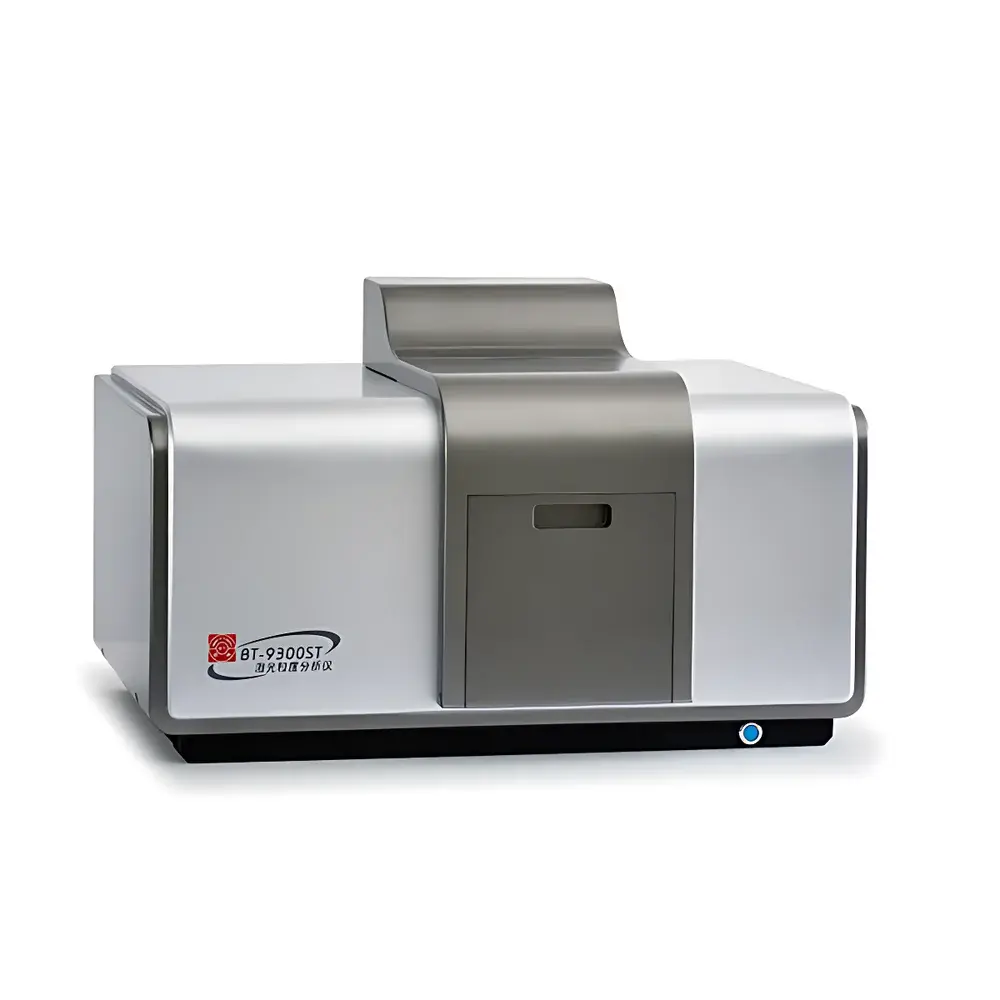
Bettersize BT-9300ST Laser Particle Size Analyzer
| Brand | Bettersize |
|---|---|
| Origin | Liaoning, China |
| Manufacturer Type | Direct Manufacturer |
| Regional Classification | Domestic (China) |
| Model | BT-9300ST |
| Pricing | Upon Request |
| Dispersion Method | Wet Dispersion |
| Instrument Type | Benchtop Laboratory Laser Diffraction Analyzer |
| Measurement Range | 0.05–1500 µm |
| Repeatability | ≤1% (D50, NIST-traceable standard reference materials) |
| Single-Measurement Time | ≤1 s |
| Optical System | Patented Dual-Lens Configuration |
| Laser Source | High-Power Fiber-Coupled Laser (638 nm) |
| Detector Array | 88-Channel Photodiode Array (Forward, Side, and Backward Scattering) |
| Scattering Theory | Mie Scattering (default), Fraunhofer Diffraction (optional) |
| Regulatory Compliance | ISO 13320:2020, GB/T 19077–2024, GB/T 41949–2022, USP <429>, EP 2.9.38, ChP 0982 |
| Data Integrity | FDA 21 CFR Part 11 Compliant Audit Trail & Electronic Signature Support |
| Dispersion System | Integrated Auto-Circulating Wet Module with Ultrasonic Probe (0–50 W, adjustable), Auto-Fill, Auto-Drain, Bubble Elimination, and Self-Cleaning Functions |
| Operating Modes | SOP-Driven One-Touch Mode, Manual Mode, Continuous Monitoring Mode |
| Power Supply | 100–240 VAC, 50/60 Hz, 2.5 A |
Overview
The Bettersize BT-9300ST Laser Particle Size Analyzer is a compact, benchtop-grade instrument engineered for high-precision particle size distribution (PSD) analysis via laser diffraction. It operates on the physical principle of light scattering—specifically, Mie scattering theory for optically heterogeneous particles and Fraunhofer approximation for larger, opaque particles—enabling robust quantification across a broad dynamic range from 0.05 µm to 1500 µm. Its patented dual-lens optical architecture ensures optimal collection of forward-, side-, and backward-scattered light, significantly enhancing angular signal resolution and minimizing truncation errors inherent in single-lens systems. This design directly contributes to improved accuracy in D10, D50, and D90 determinations, as verified against NIST-traceable standard reference materials (SRMs). The system integrates a fiber-coupled 638 nm laser source and an 88-channel photodetector array, delivering high signal-to-noise ratio and consistent angular sampling. As a fully self-contained wet dispersion platform, the BT-9300ST eliminates external peristaltic pumps or manual fluid handling, reducing variability and supporting GLP/GMP-aligned workflows.
Key Features
- Patented dual-lens optical system enabling full angular coverage (0.01°–140°) and superior signal fidelity across the entire measurement range
- Integrated wet dispersion module with programmable ultrasonic energy (0–50 W), auto-fill, auto-drain, real-time water-level monitoring, and bubble elimination logic
- One-touch SOP-driven operation: automatic optical alignment, sample circulation, ultrasonication, measurement, data saving, and system cleaning—all executed without user intervention
- FDA 21 CFR Part 11–compliant software with role-based access control, electronic signatures, and immutable audit trail logging
- Compliance-ready reporting aligned with pharmacopeial standards (USP , EP 2.9.38, ChP 0982) and international metrological guidelines (ISO 13320:2020)
- Benchtop footprint (≤0.4 m²) and low power consumption (≤300 W), suitable for shared lab environments and QA/QC stations with space constraints
Sample Compatibility & Compliance
The BT-9300ST accommodates a wide spectrum of particulate materials suspended in aqueous or organic media—including inorganic pigments, metal powders, ceramic precursors, battery cathode/anode materials, pharmaceutical excipients, agrochemical formulations, and colloidal dispersions. Its wet dispersion system is validated for use with refractive indices ranging from 1.3 to 3.0 and absorption coefficients up to 10⁴ cm⁻¹. All measurement protocols adhere to ISO 13320:2020 requirements for instrument calibration, validation, and uncertainty estimation. Built-in accuracy verification routines allow daily performance qualification using certified SRMs (e.g., NIST SRM 1963, ISO 11171). The system supports full traceability documentation required for regulatory submissions under ICH Q5A, FDA IND/NDA, and EMA CTD modules.
Software & Data Management
The proprietary Bettersize Particle Analysis Software (v5.x) provides a validated, multi-user interface with configurable SOP templates, batch processing, statistical trend analysis (X-bar/R charts), and automated report generation in PDF/A-1b or Excel-compatible formats. Raw scattering intensity data is stored in HDF5 format with metadata embedding (operator ID, timestamp, instrument serial number, environmental conditions). All user actions—including parameter changes, calibration events, and result overrides—are logged in a tamper-evident audit trail compliant with FDA 21 CFR Part 11 Annex 11 and EU GMP Annex 11. Data export supports LIMS integration via ASTM E1384-compliant XML schema.
Applications
- Quality control of mineral fillers (calcium carbonate, talc, kaolin) and functional ceramics (zirconia, silicon carbide, alumina)
- Process optimization of lithium-ion battery electrode slurries (NMC, LFP, graphite, SiOx)
- Regulatory testing of inhalable drug particles (DPIs, nebulized suspensions) per USP
- R&D of nanomaterials including quantum dots, metal-organic frameworks (MOFs), and polymer nanoparticles
- Environmental monitoring of sediment and soil particulates in compliance with ISO 11277
- Food ingredient characterization (starch granules, dairy powders, spice blends) per Codex Alimentarius guidelines
FAQ
What optical theory does the BT-9300ST use by default, and when should Fraunhofer theory be selected?
The instrument defaults to Mie scattering theory, which accounts for particle refractive index and absorption—essential for accurate sub-10 µm analysis. Fraunhofer theory may be applied for coarse, opaque particles (>50 µm) where optical constants are unknown or difficult to define.
Is the BT-9300ST suitable for GMP-regulated pharmaceutical manufacturing?
Yes—its software includes 21 CFR Part 11 compliance features, IQ/OQ documentation templates, and validation support for USP and EP 2.9.38 method verification.
How is instrument accuracy maintained over time?
Through daily performance qualification using certified reference materials and biannual optical alignment verification; all calibration records are retained in the embedded audit trail.
Can the system handle high-viscosity suspensions or abrasive slurries?
The integrated circulation pump and ceramic-lined flow cell support viscosities up to 100 mPa·s and solid concentrations up to 20% w/v; optional corrosion-resistant wet module kits are available for aggressive media.
Does the BT-9300ST support networked deployment and remote diagnostics?
Yes—the instrument supports TCP/IP connectivity, centralized fleet management via Bettersize CloudLink, and secure remote troubleshooting with operator consent and session logging.



