
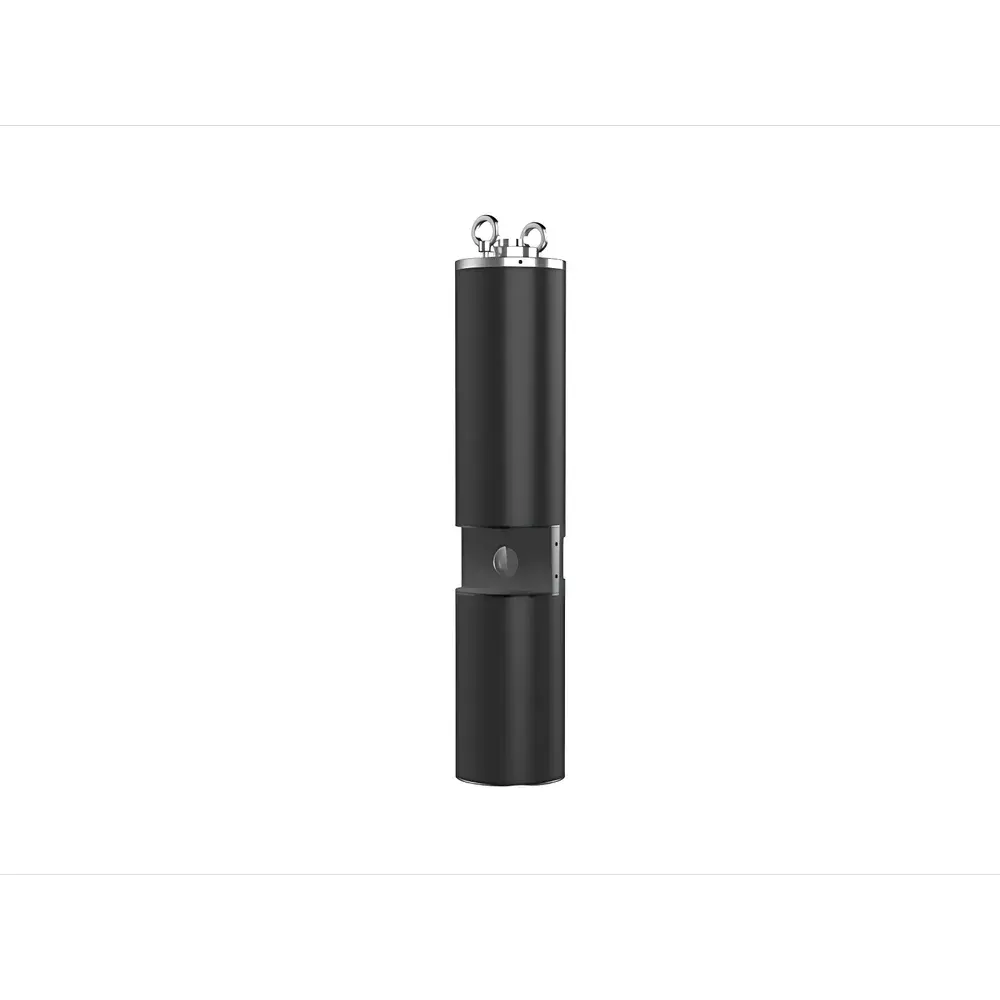
BFA-3000 FPI In Vivo Fluorescence Algae Classification and Chlorophyll a Analyzer
| Brand | FPI (Fortune Photonics Instrumentation) |
|---|---|
| Origin | Zhejiang, China |
| Manufacturer | Yes |
| Country of Origin | China |
| Model | BFA-3000 |
| Application Mode | Portable & Online Dual-Mode |
| Depth Rating | Up to 200 m submersible |
| Measurement Principle | In vivo chlorophyll a fluorescence excitation with multi-wavelength LED array |
| Compliance | Designed for field-deployable water quality monitoring per ISO 10260, ASTM D3731, and EPA Method 445.0 (Chlorophyll a by in vivo fluorescence) |
| Data Output | Real-time spectral fluorescence response, taxonomic group quantification (e.g., Cyanobacteria, Diatoms, Green Algae, Cryptophytes), Chl-a concentration (µg/L), and vertical profile logging |
Overview
The BFA-3000 FPI In Vivo Fluorescence Algae Classification and Chlorophyll a Analyzer is an engineered field-deployable instrument designed for real-time, reagent-free quantification of phytoplankton biomass and taxonomic composition in natural waters. It operates on the principle of in vivo chlorophyll a fluorescence spectroscopy—exciting native photosynthetic pigments with discrete, narrow-band LEDs across 405 nm, 450 nm, 520 nm, 590 nm, and 635 nm wavelengths—and detecting resultant emission spectra (650–750 nm) to resolve contributions from major algal functional groups. Unlike extraction-based spectrophotometric or HPLC methods, the BFA-3000 delivers continuous, non-destructive measurement without sample filtration, preservation, or chemical treatment—enabling high-temporal-resolution profiling in dynamic aquatic environments. Its dual-mode architecture supports both handheld deployment for rapid emergency assessment and fixed-mount integration into buoy-based or riverine monitoring stations.
Key Features
- Multi-wavelength excitation system with five precisely calibrated LED sources enabling discriminative fluorescence fingerprinting of cyanobacteria, diatoms, chlorophytes, cryptophytes, and dinoflagellates based on accessory pigment signatures (e.g., phycocyanin, fucoxanthin, peridinin)
- Integrated optical background subtraction algorithm that dynamically corrects for interference from colored dissolved organic matter (CDOM), turbidity-induced scattering, variable light source intensity, and ambient light leakage
- Ruggedized titanium-alloy housing rated IP68 and certified for continuous operation at depths up to 200 meters—validated under hydrostatic pressure cycling per IEC 60529 and MIL-STD-810G
- Dual operational configuration: battery-powered portable mode (8-hour runtime, GPS-tagged sampling) and 24/7 online mode (RS-485/Modbus RTU, 4–20 mA analog output, optional cellular or LoRaWAN telemetry)
- Self-calibrating optical path with embedded reference photodiodes and temperature-compensated photomultiplier tube (PMT) detection ensuring long-term signal stability across 0–35 °C operating range
Sample Compatibility & Compliance
The BFA-3000 is validated for use in freshwater systems including lakes, reservoirs, drinking water intakes, and river cross-sections with turbidity ≤ 100 NTU and salinity ≤ 5 ppt. It meets analytical performance criteria outlined in ISO 10260:2021 (Water quality — Determination of chlorophyll a — In vivo fluorescence method) and aligns with U.S. EPA Method 445.0 for field-deployable Chl-a estimation. While not intended for regulatory compliance reporting without parallel lab validation, its data are suitable for trend analysis, early-warning cyanobacterial bloom detection, and GLP-aligned environmental monitoring programs. The instrument’s firmware supports audit-trail logging (per FDA 21 CFR Part 11 Annex 11 principles) when deployed with secure networked data acquisition systems.
Software & Data Management
FPI AquaView™ Desktop Software (v3.2+) provides full control, spectral visualization, and automated taxonomic classification using a pre-trained multivariate regression model built on >12,000 reference spectra from globally curated phytoplankton cultures and field-collected samples. Raw fluorescence intensity matrices (excitation × emission) are exportable in HDF5 format for third-party chemometric analysis (e.g., PARAFAC, PCA). Cloud synchronization via FPI Connect™ enables centralized dashboard visualization, threshold-based alerting (e.g., Microcystis >5,000 cells/mL), and time-series interpolation for vertical distribution mapping. All calibration logs, firmware versions, and sensor health diagnostics are stored with timestamped metadata for QA/QC traceability.
Applications
- Early detection and spatial tracking of cyanobacterial harmful algal blooms (cyanoHABs) in drinking water source protection zones
- Vertical profiling of phytoplankton community structure across thermoclines and metalimnetic layers using winch-deployed sondes
- Long-term station monitoring at hydropower intake structures, irrigation canals, and wastewater-impacted rivers
- Emergency response during algal toxin incidents—providing Chl-a and functional group data within seconds to inform mitigation decisions
- Research-grade validation of satellite-derived ocean color products (e.g., Sentinel-3 OLCI, Landsat-9 OLI-2) through in situ ground-truthing campaigns
FAQ
Does the BFA-3000 require daily calibration or reagent replacement?
No—its solid-state optical design eliminates consumables. A factory-performed baseline calibration is retained for ≥12 months; optional field verification using NIST-traceable fluorescence standards is recommended quarterly.
Can it distinguish between toxic and non-toxic strains of Microcystis?
No—it classifies at the functional group level (e.g., “cyanobacteria”) but cannot resolve intraspecific genotypic or toxin-producing capability. It serves as a quantitative screening tool, not a molecular assay.
Is the instrument compatible with existing SCADA or telemetry infrastructure?
Yes—native Modbus RTU and ASCII protocol support enables direct integration with PLCs, RTUs, and legacy environmental data management systems without middleware.
What is the minimum detectable Chl-a concentration?
The limit of detection is 0.05 µg/L in clear freshwater under optimal conditions; performance degrades linearly with increasing turbidity and CDOM absorption above 20 cm⁻¹ at 440 nm.
How is data integrity ensured during extended unattended deployment?
Internal microSD card (32 GB included) stores redundant raw spectra and processed outputs with cyclic overwrite protection. Power-fail recovery preserves last valid measurement state and resumes logging upon voltage restoration.
Related Products







