
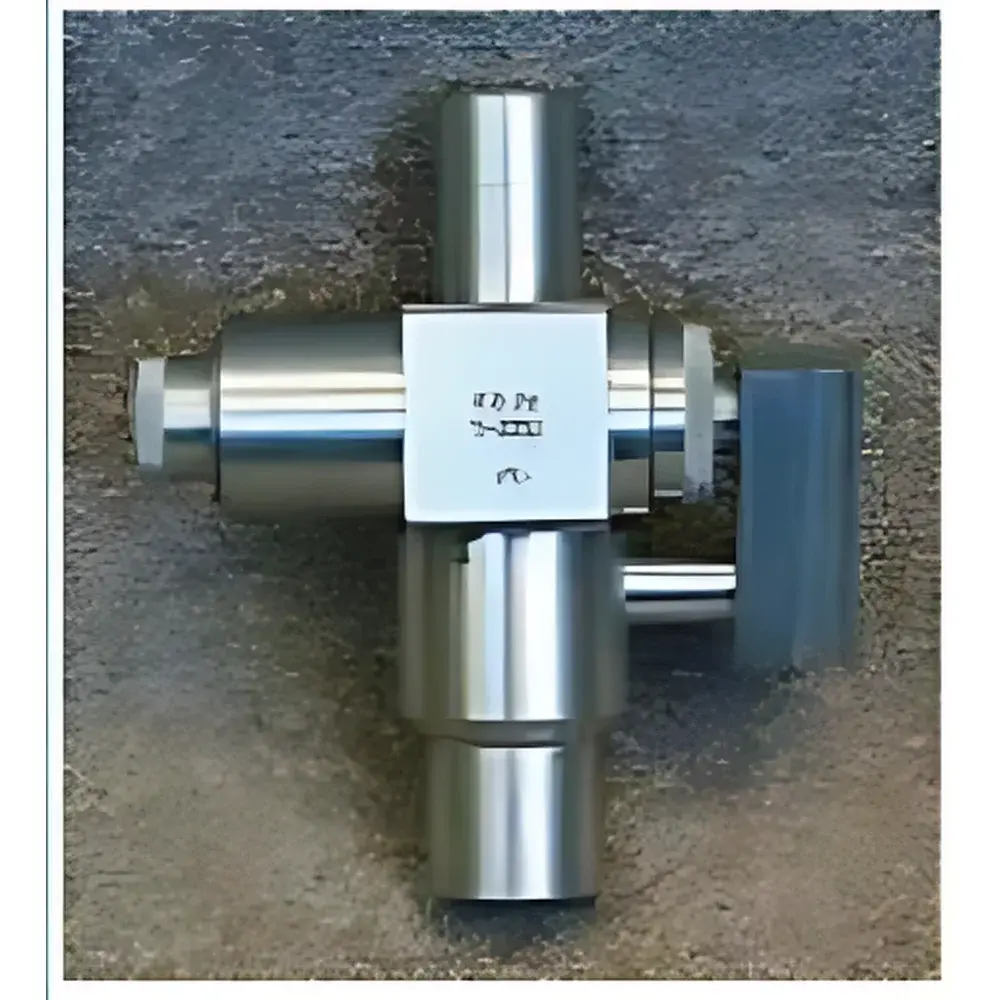
BGI VSCC Cyclone Cutpoint Separator for PM2.5 Ambient Air Sampling
| Brand | BGI |
|---|---|
| Origin | USA |
| Model | VSCC |
| Regulatory Designation | U.S. EPA Reference Method (RFPS-0498-116) |
| EPA EQPM Certification | EQPM-0202-1428 (upgraded to Reference Method, October 17, 2006) |
| Cutpoint | 2.5 µm aerodynamic diameter (D₅₀) |
| Operating Principle | Inertial cyclonic separation |
| Maintenance Interval | Up to 30 days continuous 24-hr sampling before cleaning |
| Cleaning Method | Dry, tool-free, field-cleanable with lint-free cloth and deionized water |
| Compatibility | Direct drop-in replacement for WINS impactor-based FRM samplers (e.g., Thermo Fisher Partisol 2025, Teledyne API models, Met One BAM-1020, etc.) |
Overview
The BGI VSCC Cyclone Cutpoint Separator is a precision-engineered inertial particle size selector designed exclusively for regulatory-grade ambient PM2.5 monitoring. It operates on the principle of cyclonic separation—leveraging centrifugal force and aerodynamic drag to achieve sharp, reproducible cutpoints at an aerodynamic diameter of 2.5 µm (D50). Unlike impaction-based systems, the VSCC eliminates liquid surfaces, oil films, or temperature-sensitive substrates, thereby removing artifacts associated with aerosol re-entrainment, volatilization, or gas-phase interference during sampling. Certified by the U.S. Environmental Protection Agency (EPA) as Reference Method RFPS-0498-116—and concurrently designated EQPM-0202-1428—the VSCC is the first and only cyclonic device granted full FRM (Federal Reference Method) status for PM2.5. Its performance curve was rigorously validated against the WINS (Well Impactor Ninety Six) reference impactor, demonstrating statistically equivalent penetration characteristics across the critical 0.5–10 µm range under standardized wind tunnel and field conditions per 40 CFR Part 53.
Key Features
- U.S. EPA Reference Method certification (RFPS-0498-116), effective since October 17, 2006—no other cyclone separator holds this designation.
- True dry-collection architecture: zero reliance on oil, grease, or adhesive-coated substrates; eliminates maintenance associated with impactor plates and solvent cleaning.
- Tool-free, field-serviceable design: cleaned in situ using only lint-free wipes and deionized water—no disassembly, no calibration drift post-cleaning.
- 30-day uninterrupted sampling capability under continuous 24-hour operation, meeting EPA requirements for unattended FRM deployment.
- Direct mechanical and aerodynamic compatibility with all major FRM-compliant samplers including Thermo Fisher Partisol™ 2025i, Teledyne API 370/400 series, Met One BAM-1020, and similar inlet manifolds.
- Stable cutpoint performance across ambient temperature (−30 °C to +50 °C) and relative humidity (10–95% RH), verified per ISO 29463-3:2017 Annex D protocols.
Sample Compatibility & Compliance
The VSCC is intended for use with gravimetric and beta-attenuation PM2.5 samplers operating under 40 CFR Part 53 Appendix L (FRM) and Appendix O (EQPM). It satisfies all physical and metrological criteria for “second-stage” size-selective inlets in multi-stage sampling trains. Its geometry and flow dynamics are fully traceable to NIST SRM 1691 (aerosol calibration spheres) and validated against EPA-defined wind tunnel test protocols. The device complies with ISO/IEC 17025:2017 requirements for measurement uncertainty estimation in environmental testing laboratories. As a component of certified FRM systems, it supports data integrity frameworks required under U.S. Clean Air Act §103, EU Directive 2008/50/EC, and WHO Air Quality Guidelines reporting standards.
Software & Data Management
While the VSCC itself is a passive mechanical device without embedded electronics, its integration into automated monitoring networks relies on seamless interoperability with OEM data acquisition systems. When deployed with EPA-certified samplers (e.g., Partisol 2025i), it contributes directly to audit-ready datasets compliant with EPA’s Data Validation and Verification (DVV) framework. All operational logs—including sampling duration, volumetric flow rate, temperature, pressure, and filter change timestamps—are captured in accordance with 40 CFR Part 58 Appendix A and FDA 21 CFR Part 11-compliant audit trails when paired with validated telemetry platforms. BGI provides full technical documentation packages—including calibration certificates, EPA test reports, and installation schematics—for GLP/GMP-aligned quality management systems.
Applications
- Federal Reference Method (FRM) and Federal Equivalent Method (FEM) compliance monitoring at NAAQS-designated ambient air quality stations.
- Long-term trend analysis of fine particulate matter in urban, rural, and background sites per EPA’s Air Quality System (AQS) reporting requirements.
- Indoor air quality (IAQ) assessment in schools, hospitals, and office buildings where low-maintenance, non-volatile sampling is critical.
- Toxic air contaminant (TAC) studies requiring artifact-free collection of semi-volatile organic compounds (SVOCs) and metals without thermal or solvent-induced bias.
- Research-grade aerosol characterization in laboratory wind tunnels and exposure chambers, especially where repeated cycling and rapid turnaround are essential.
- Calibration transfer studies between impactor-based and cyclonic size-selection methodologies under controlled ISO 16000-22 environments.
FAQ
Is the VSCC approved for use in official NAAQS monitoring networks?
Yes. It is certified under EPA Reference Method RFPS-0498-116 and listed in the EPA’s FRM/FEM Compendium as an authorized second-stage size selector.
Does the VSCC require recalibration after cleaning?
No. Its geometry-based cutpoint is invariant; no field recalibration is needed following standard deionized water wipe cleaning.
Can it be used with beta-attenuation monitors (BAM) without modification?
Yes—provided the BAM model is EPA-certified for FRM use and features a compatible inlet manifold (e.g., Met One BAM-1020 with optional VSCC adapter kit).
What is the maximum allowable sampling flow rate?
The VSCC is rated for nominal 16.7 L/min (1 m³/hr) per EPA FRM specifications; deviations beyond ±2% require flow verification via primary calibrators traceable to NIST.
Is there a documented uncertainty budget for the cutpoint performance?
Yes. BGI’s EPA submission includes full GUM-compliant uncertainty analysis (k = 2) showing ±0.12 µm D50 uncertainty at 2.5 µm under standard conditions (25 °C, 101.3 kPa).







