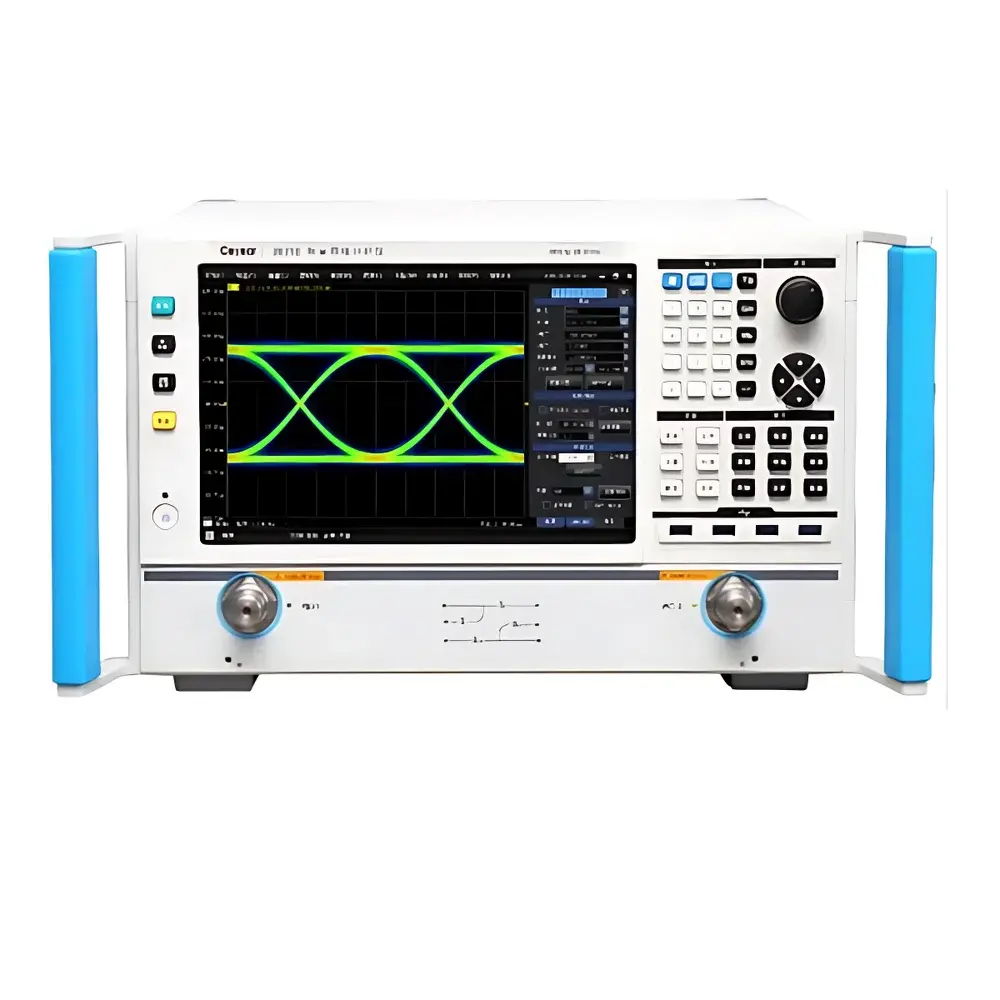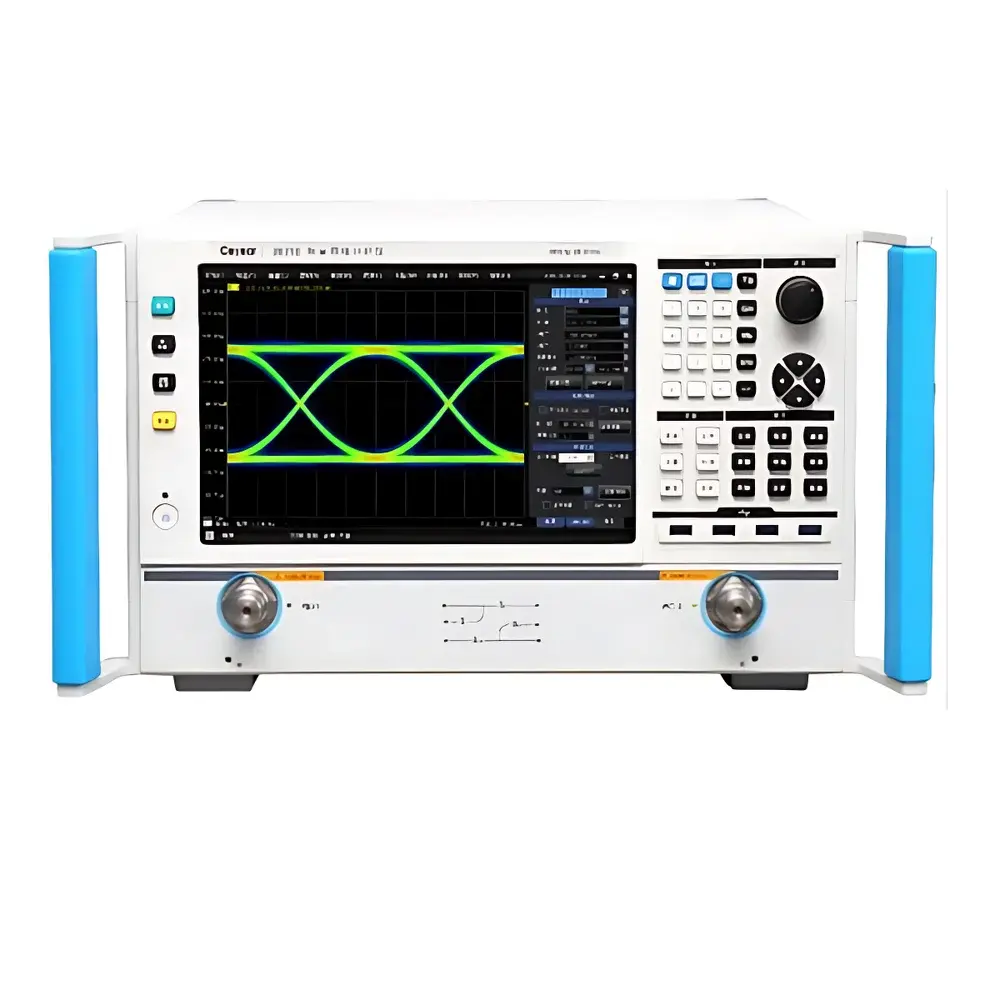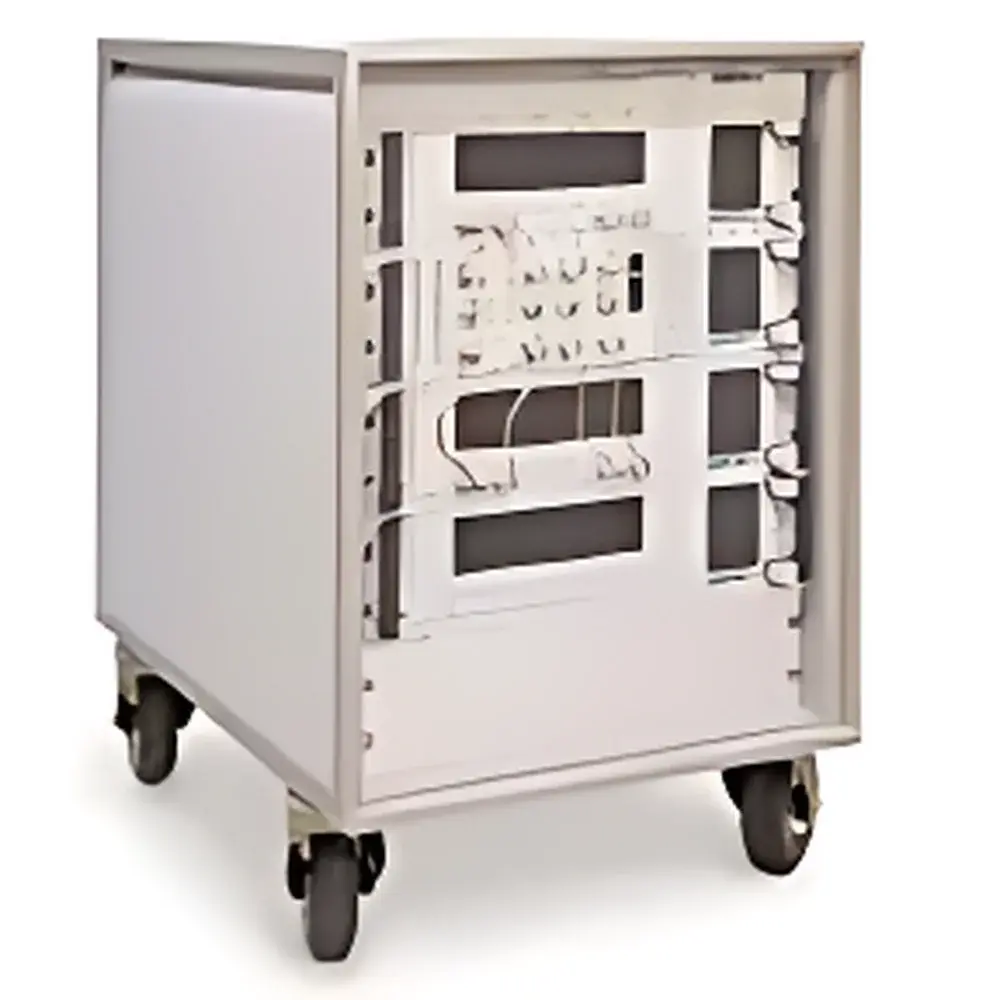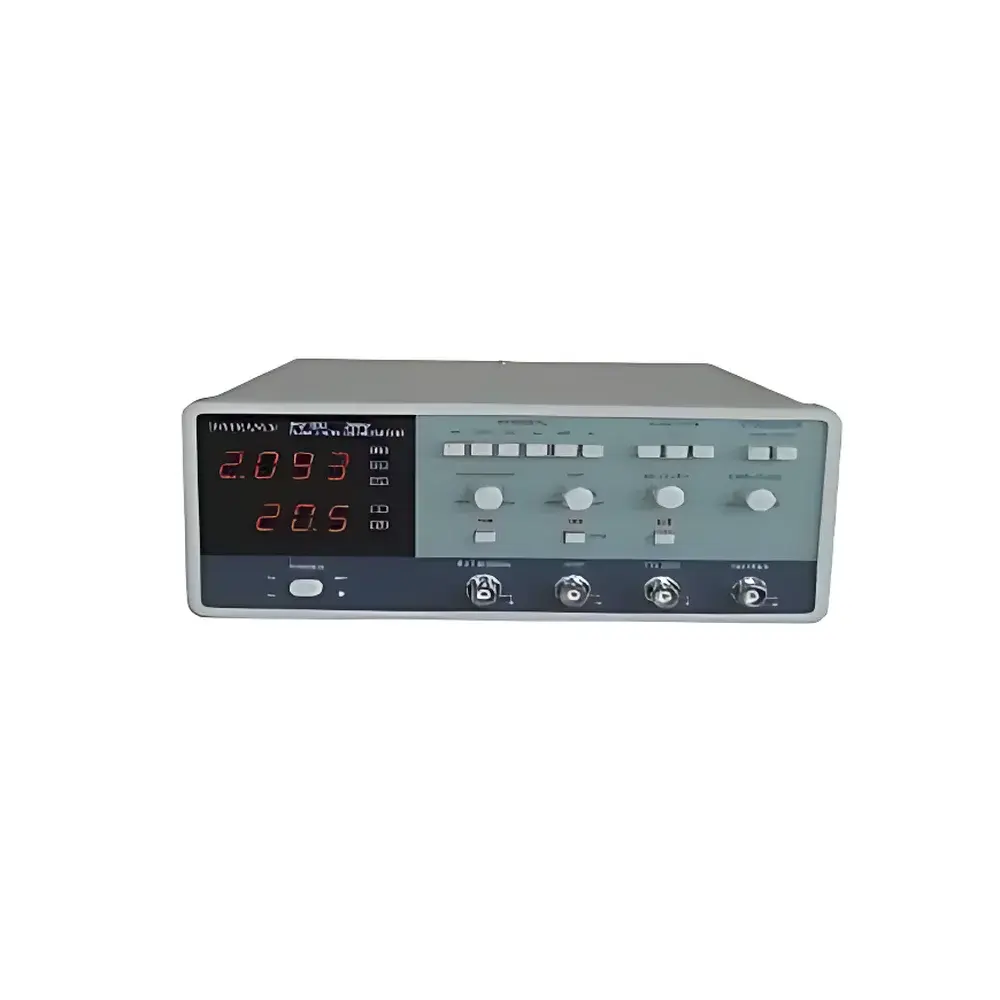
Biaozhuo WTJ-5A Eddy Current Testing Instrument Calibration System
| Brand | Biaozhuo |
|---|---|
| Model | WTJ-5A |
| Frequency Range | 10 Hz to 20 MHz |
| Internal Timebase Accuracy | ±1 × 10⁻⁶ |
| Voltage Range (Vpp) | 40 mV to 20 V |
| Voltage Measurement Accuracy | ±4% |
| Origin | Shanghai, China |
| Compliance | JJG (CAAC) 0061–2001 |
Overview
The Biaozhuo WTJ-5A Eddy Current Testing Instrument Calibration System is a purpose-built metrological reference instrument engineered for the traceable calibration and verification of eddy current testing (ECT) equipment used in aerospace, power generation, and manufacturing quality assurance. It operates on the principle of generating and measuring precisely defined sinusoidal excitation signals—essential for validating the performance of ECT instruments that rely on electromagnetic induction to detect surface and near-surface discontinuities in conductive materials. Unlike legacy calibration approaches requiring multiple standalone signal sources, frequency counters, and oscilloscopes, the WTJ-5A integrates core metrological functions into a single, self-contained unit. Its design adheres strictly to the technical requirements outlined in JJG (CAAC) 0061–2001, the Chinese Civil Aviation Administration’s official verification regulation for eddy current flaw detectors, ensuring compliance with national metrological standards applicable to non-destructive testing (NDT) laboratories and field service teams.
Key Features
- Single-unit verification of critical ECT instrument parameters: excitation frequency, frequency stability, output voltage amplitude (Vpp), and voltage stability.
- Wide dynamic frequency coverage from 10 Hz to 20 MHz, accommodating low-frequency conductivity measurements and high-frequency crack detection configurations.
- Dual timebase architecture—switchable between high-stability internal quartz oscillator (±1 × 10⁻⁶ accuracy) and external 10 MHz reference input for synchronization with primary lab standards.
- Integrated real-time waveform display with digital frequency and peak-to-peak voltage measurement capabilities—eliminating dependency on auxiliary test equipment during routine calibration.
- Optimized for both benchtop laboratory use and portable field deployment, featuring ruggedized enclosure, battery-compatible operation (optional), and intuitive front-panel interface with clear parameter readouts.
- Direct one-cable connection topology minimizes setup complexity and reduces measurement uncertainty introduced by interconnect losses or grounding loops.
Sample Compatibility & Compliance
The WTJ-5A is compatible with all commercially available eddy current flaw detectors utilizing sinusoidal excitation, including handheld, benchtop, and automated multi-channel systems. It supports standard 50 Ω and high-impedance probe drive interfaces. As a verification standard—not a reference standard—it is intended for intermediate-level calibration within accredited NDT laboratories operating under ISO/IEC 17025:2017. Its validation protocol aligns with JJG (CAAC) 0061–2001, which specifies permissible error limits for frequency and voltage outputs across the operational bandwidth. While not certified to international primary standards such as ISO 17025 Clause 6.5.2 for reference material traceability, it enables laboratories to demonstrate technical competence in ECT instrument verification when used in conjunction with documented uncertainty budgets and periodic inter-laboratory comparisons.
Software & Data Management
The WTJ-5A operates as a stand-alone hardware calibrator without embedded firmware-based data logging. However, its analog and digital outputs are fully compatible with external PC-based acquisition systems using USB or GPIB interfaces (via optional adapter modules). Users may integrate measurement records—including timestamped frequency, Vpp, and stability readings—into laboratory information management systems (LIMS) or electronic notebooks compliant with GLP and FDA 21 CFR Part 11 requirements, provided the host software implements audit trail, electronic signature, and data integrity controls. Calibration certificates generated from WTJ-5A measurements must include full uncertainty statements referencing the instrument’s specified accuracy, environmental conditions (temperature, humidity), and operator identification per ISO/IEC 17025 Section 7.8.
Applications
- Periodic verification of ECT instrument excitation channels prior to aircraft component inspection (e.g., turbine blades, landing gear).
- Performance validation of conductivity meters used in aluminum alloy sorting and heat-treatment verification.
- Supporting accreditation audits for NDT Level 3 personnel responsible for calibration program development.
- Training platform for NDT technicians learning fundamental signal integrity concepts in electromagnetic testing.
- On-site calibration support for maintenance depots where transport of ECT units to central labs is logistically impractical.
FAQ
Does the WTJ-5A provide traceable calibration certificates?
No—the WTJ-5A itself is a calibration tool, not a certified reference standard. Traceability must be established through periodic calibration of the WTJ-5A against a higher-tier standard (e.g., NIST-traceable RF signal analyzer or metrology-grade function generator) performed by an ISO/IEC 17025-accredited provider.
Can it verify phase-sensitive ECT instruments?
The WTJ-5A measures amplitude and frequency of sinusoidal excitation signals only; it does not assess phase linearity, harmonic distortion, or impedance matching—parameters requiring vector network analyzer (VNA) or dedicated ECT simulator systems.
Is external power required for field use?
Yes—standard operation uses AC mains (100–240 V, 50/60 Hz). A DC power option (12 V input) is available for mobile applications but must be specified at time of order.
What environmental conditions affect measurement accuracy?
Specified accuracy applies at 23 °C ± 5 °C and relative humidity ≤ 75% non-condensing. Temperature drift beyond this range may impact internal timebase stability and analog amplifier gain; users should allow 30-minute warm-up before critical measurements.
Is firmware upgrade support available?
Firmware updates are limited to bug fixes and are distributed exclusively via authorized Biaozhuo service centers. No user-accessible update interface is provided to maintain metrological integrity and regulatory compliance.