
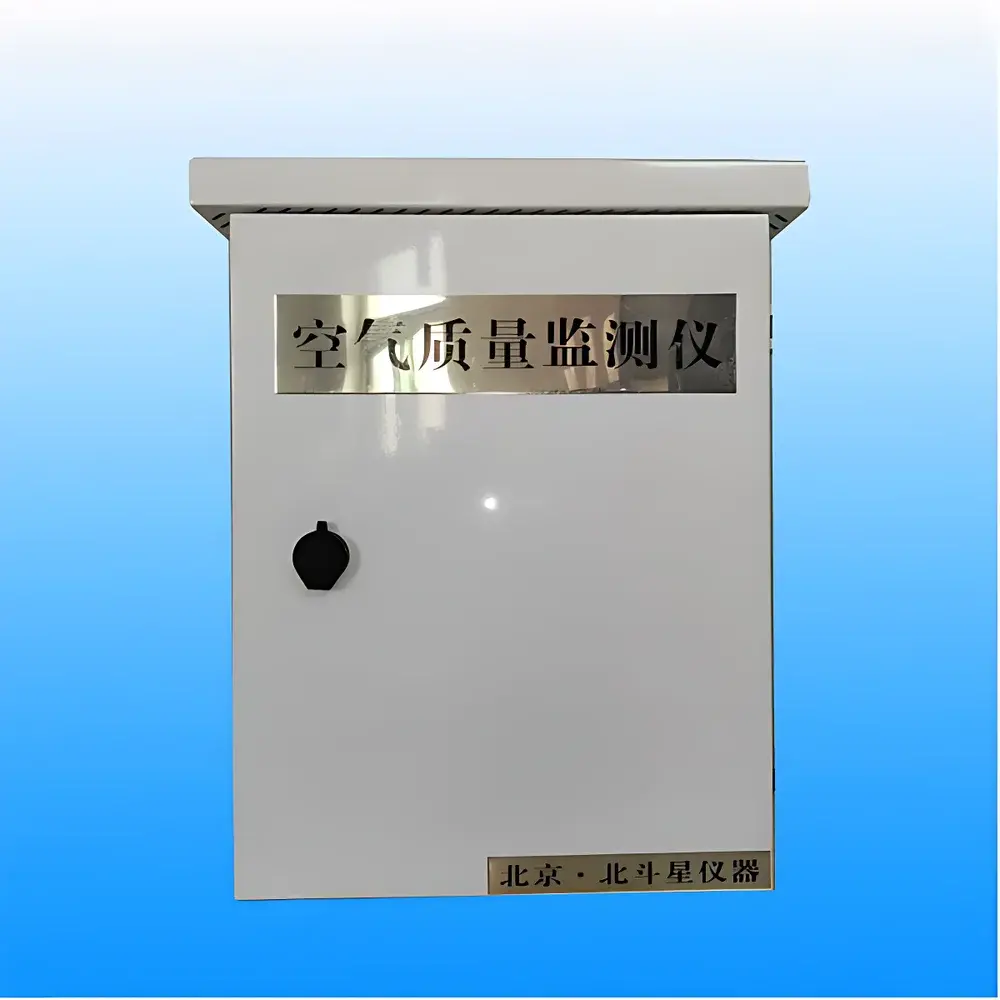
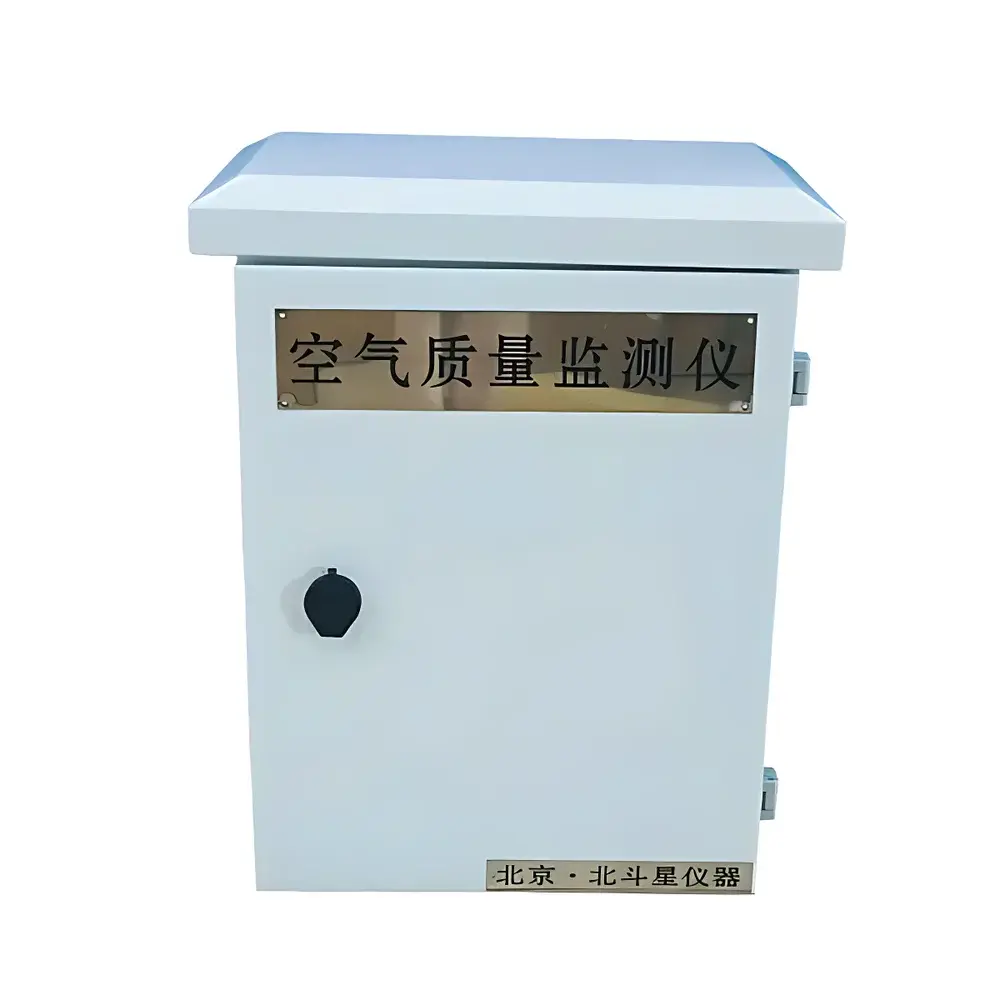
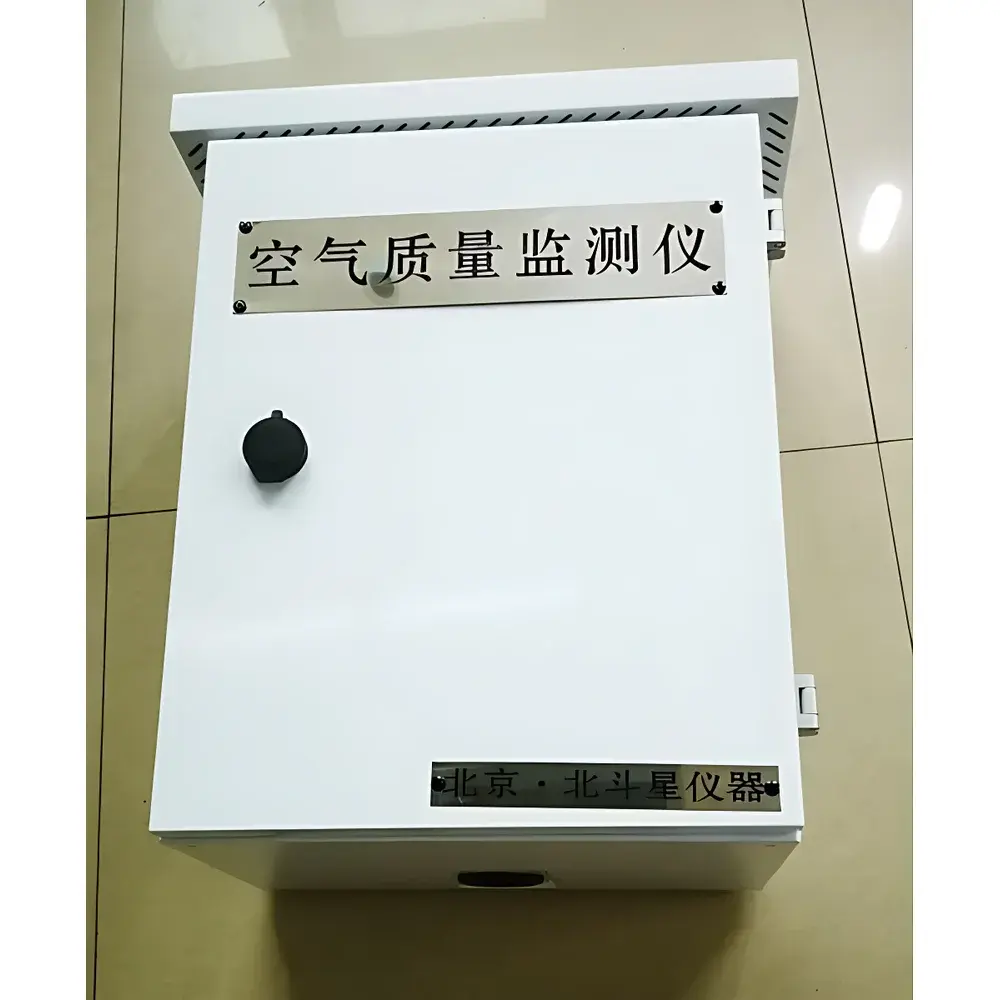
Bigdipper wAir2000SR-5s01 Fixed-Mount 5-Gas Air Quality Monitoring System for Civil Defense Shelters
| Brand | Bigdipper |
|---|---|
| Origin | Beijing, China |
| Manufacturer Type | OEM/ODM Manufacturer |
| Model | wAir2000SR-5s01 (CO, CO₂, NH₃, Toxic Gas, O₂) |
| Detection Parameters | CO (0.1–500/1000 ppm), CO₂ (0–1/5 %v/v), NH₃ (0.1–100 ppm), Toxic Gas (0.1–1000 ppm), O₂ (0–30 %v/v) |
| Temperature Range | −40 to +100 °C |
| Humidity Range | 0–99 %RH |
| Accuracy | ±2% R (CO, O₂), ±1% R (CO₂), ±10% R (NH₃), ±5% R (Tox) |
| Repeatability | Specified per gas |
| Display | 4×16 Character LCD |
| Communication | RS232/RS485 Dual-Mode Serial Interface |
| Power Supply | 220 V AC, <10 W |
| Enclosure Rating | NEMA 4 / IP56 |
| Dimensions | 300 × 500 × 250 mm (W×H×D) |
| Data Logging | 24 Groups (Non-Volatile Memory) |
| Warm-up Time | 3–5 min |
| Mounting | Wall-Mounted Fixed Installation |
Overview
The Bigdipper wAir2000SR-5s01 is a fixed-mount, microprocessor-controlled air quality monitoring system engineered specifically for continuous, real-time surveillance of confined and critical environments—particularly civil defense shelters, NBC (Nuclear, Biological, Chemical) control centers, underground command posts, and protected infrastructure facilities. It employs electrochemical (EC) sensor technology for selective, stable detection of five key atmospheric parameters: carbon monoxide (CO), carbon dioxide (CO₂), ammonia (NH₃), broad-spectrum toxic gases (Tox), and oxygen (O₂). Each sensor is calibrated against traceable reference standards and operates within defined linear ranges validated per ISO 17025-compliant internal procedures. The system’s architecture integrates embedded firmware with hardware-level fault diagnostics, enabling autonomous operation without external PC dependency while supporting full remote data acquisition via standard serial protocols.
Key Features
- Integrated 5-channel detection platform with field-replaceable electrochemical sensors optimized for low-concentration toxicant identification in low-ventilation environments
- Industrial-grade NEMA 4 / IP56 enclosure rated for dust- and water-resistant operation in humid or mechanically demanding shelter interiors
- Real-time 4×16 character LCD display cycling through all measured parameters, ambient temperature (−40 to +100 °C), and relative humidity (0–99 %RH)
- User-configurable alarm thresholds with visual (LED) and audible (buzzer) alert outputs for each gas channel; alarm events stored in non-volatile memory
- Onboard data logging capacity for up to 24 sets of time-stamped multi-parameter records, retained during power loss
- Dual-mode RS232/RS485 interface compliant with MODBUS RTU protocol for integration into SCADA, BMS, or centralized NBC monitoring networks
- Self-diagnostics including sensor drift compensation, zero-point validation via ambient air calibration, and optional span calibration using certified gas standards
Sample Compatibility & Compliance
The wAir2000SR-5s01 is designed for direct sampling of ambient air in sealed or semi-sealed spaces where rapid detection of chemical hazards is mission-critical. Its sensor array responds selectively to target analytes under typical shelter environmental conditions (−20 to +50 °C operational range, ≤95 %RH non-condensing). While not certified to IEC 61508 SIL or ATEX directives (intended for non-explosive atmospheres only), the system meets functional safety expectations for civil defense applications as defined in GB 50038–2005 (China Standard for Design of Civil Air Defense Shelters) and aligns with technical requirements referenced in NATO AEP-55 and U.S. DoD TM 3-220-1 for NBC early warning systems. All firmware and calibration routines support audit-ready operation under GLP principles, with timestamped event logs suitable for regulatory review.
Software & Data Management
No proprietary software is required for basic operation—the device functions autonomously with local display and alarm logic. For data retrieval and long-term trending, the RS485 interface supports connection to third-party industrial software platforms (e.g., Ignition, WinCC, or custom Python-based daemons) using standard MODBUS register mapping. Logged data includes gas concentration values, temperature, humidity, alarm status flags, and system uptime. All communication traffic is unencrypted but deterministic and repeatable—suitable for air-gapped networks common in secure facility deployments. Firmware updates are performed via physical UART access using documented bootloader commands; no over-the-air (OTA) capability is implemented, preserving integrity in isolated operational contexts.
Applications
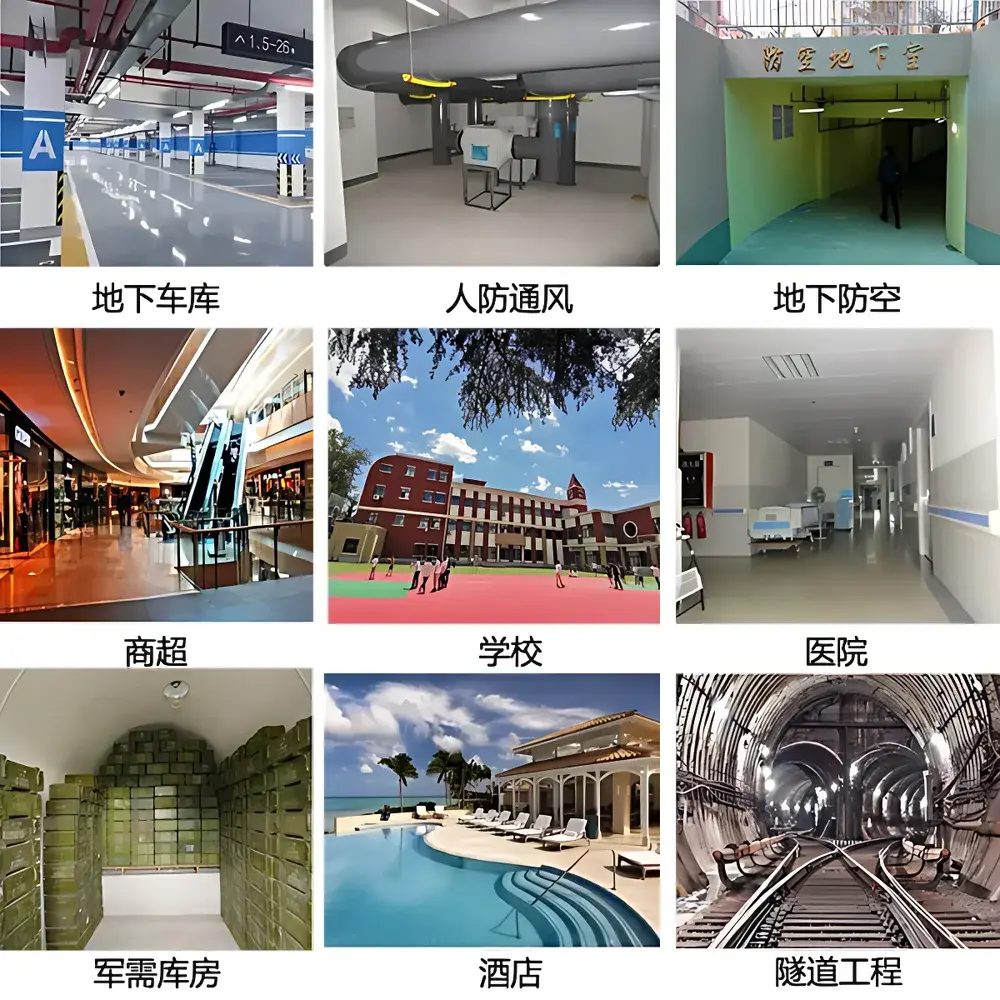
- Continuous air quality assurance in civil defense bunkers, subway emergency shelters, and hardened command facilities
- Early-warning toxic agent detection at shelter entry points (e.g., airlock vestibules, filter rooms, NBC intake zones)
- Verification of ventilation system performance by tracking CO₂ buildup and O₂ depletion trends over time
- Monitoring for accidental NH₃ leakage from refrigeration units or Tox accumulation from degraded materials in long-term storage areas
- Integration into multi-sensor NBC control centers where wAir2000SR serves as the primary gaseous threat input layer alongside radiation and biological detectors
- Compliance verification for routine inspections mandated by provincial civil air defense bureaus and national infrastructure safety regulations
FAQ
What toxic gases does the “Tox” channel detect?
The Tox channel uses a broad-spectrum electrochemical sensor calibrated for organophosphorus compounds (e.g., sarin simulants), nitrogen oxides, chlorine, hydrogen sulfide, and other electrophilic agents commonly associated with chemical warfare agents or industrial leaks.
Is the system compatible with existing building management systems (BMS)?
Yes—via RS485 MODBUS RTU, it provides register-mapped analog-equivalent outputs for each gas channel, enabling seamless integration into Schneider EcoStruxure, Siemens Desigo, or Honeywell Enterprise Buildings Integrator platforms.
Can sensor modules be replaced in the field without recalibration?
Each EC sensor module includes factory-programmed calibration coefficients stored in onboard EEPROM; replacement requires only mechanical installation and confirmation of baseline stability—not full recalibration—though annual verification against certified gas standards is recommended.
Does the unit meet FDA 21 CFR Part 11 requirements?
No—this is a physical environmental monitor, not a regulated clinical or pharmaceutical device; however, its audit log structure and immutable timestamping support equivalent documentation rigor for internal QA/QC use.
What is the expected service life of the electrochemical sensors?
Typical operational lifetime is 24–36 months under continuous use at room temperature; accelerated aging occurs above 40 °C or in high-humidity (>85 %RH) environments without proper filtration.
Related Products







