
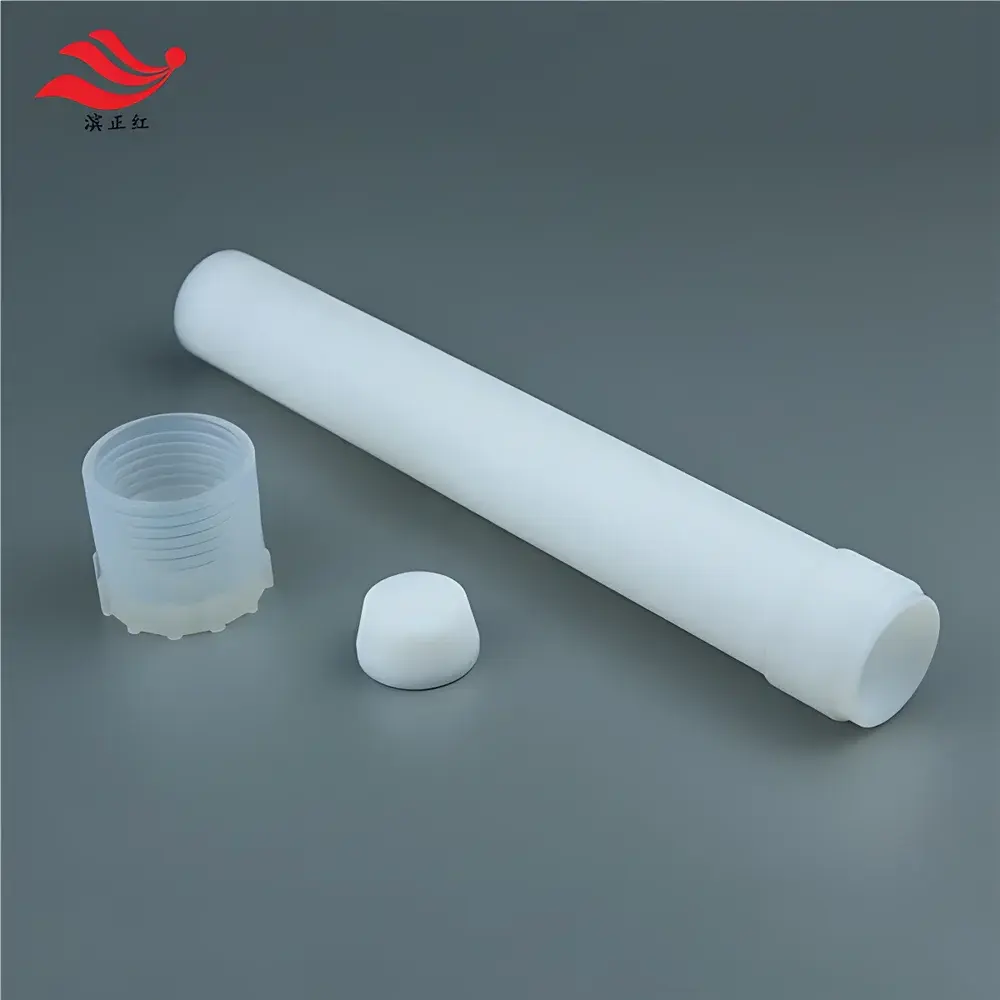
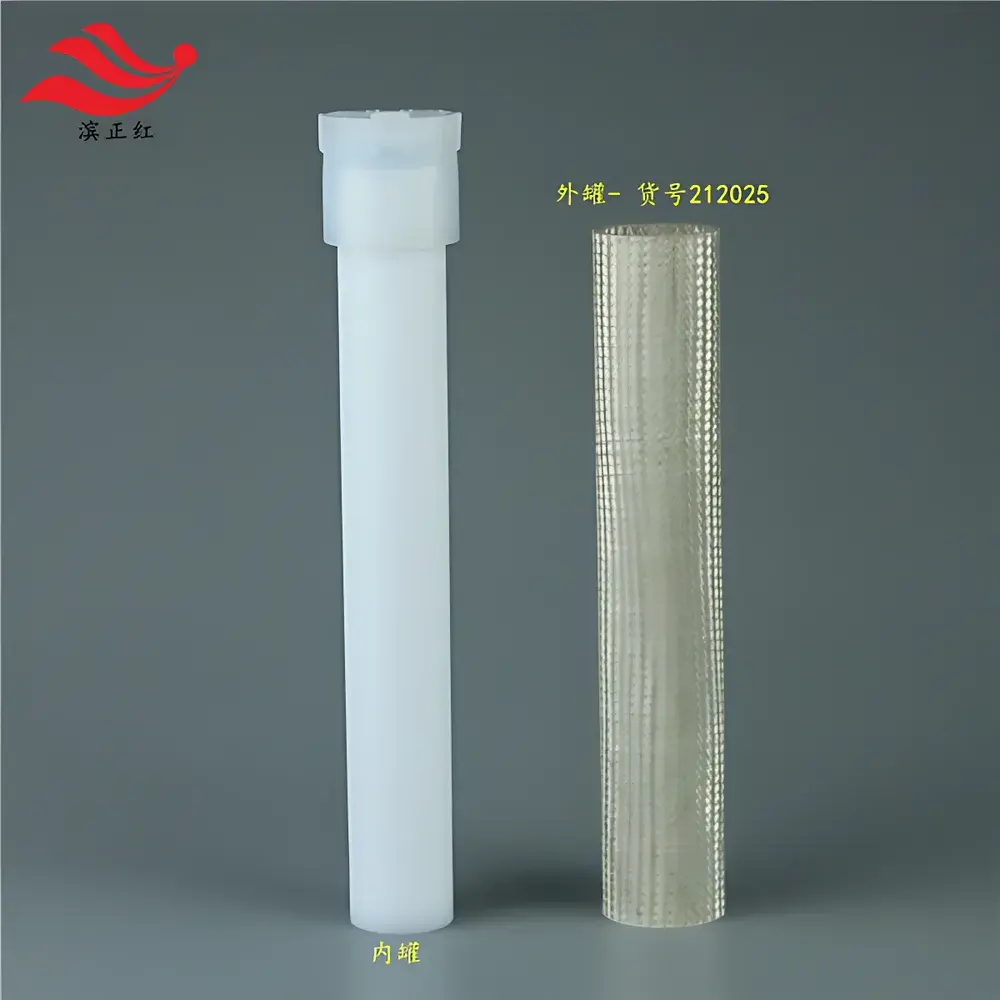
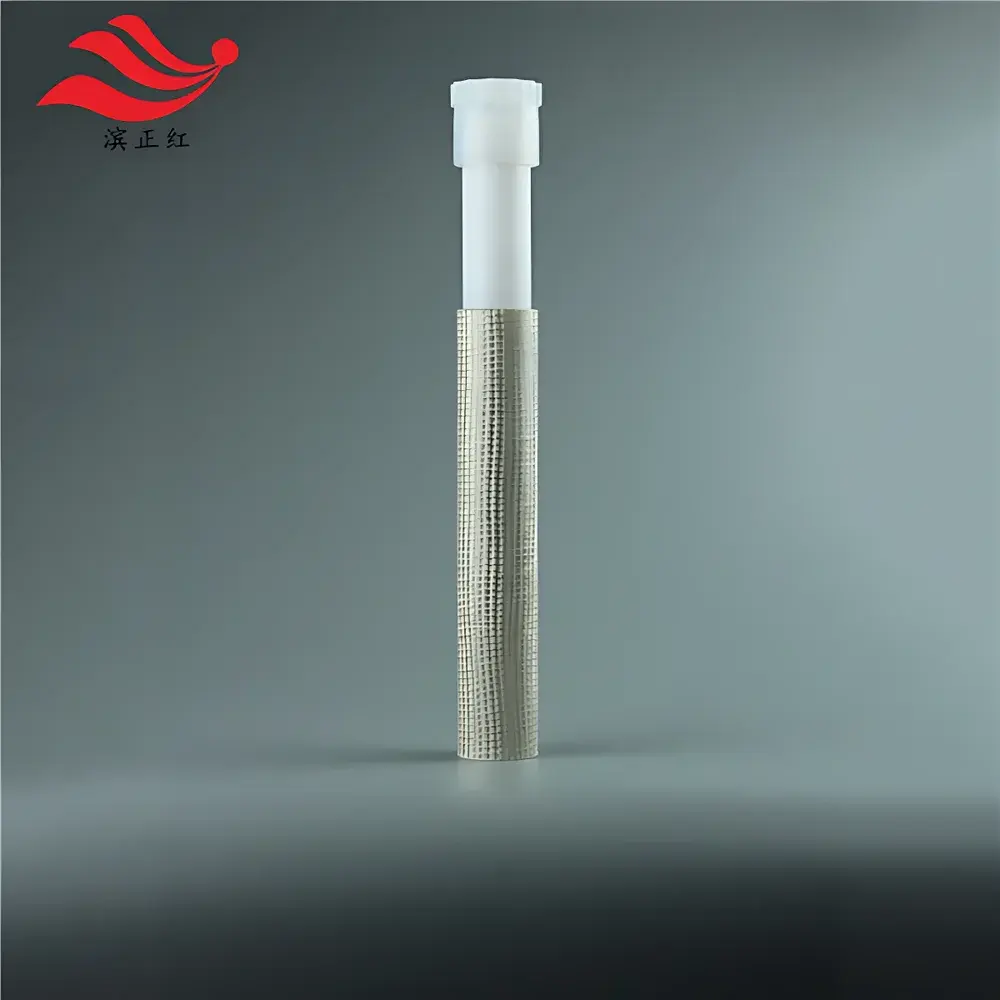
Binzhenghong ZH-55mL TFM Microwave Digestion Vessels for OneTouch Systems (40-Position Configuration)
| Brand | Binzhenghong |
|---|---|
| Origin | Jiangsu, China |
| Manufacturer Type | Direct Producer |
| Country of Origin | China |
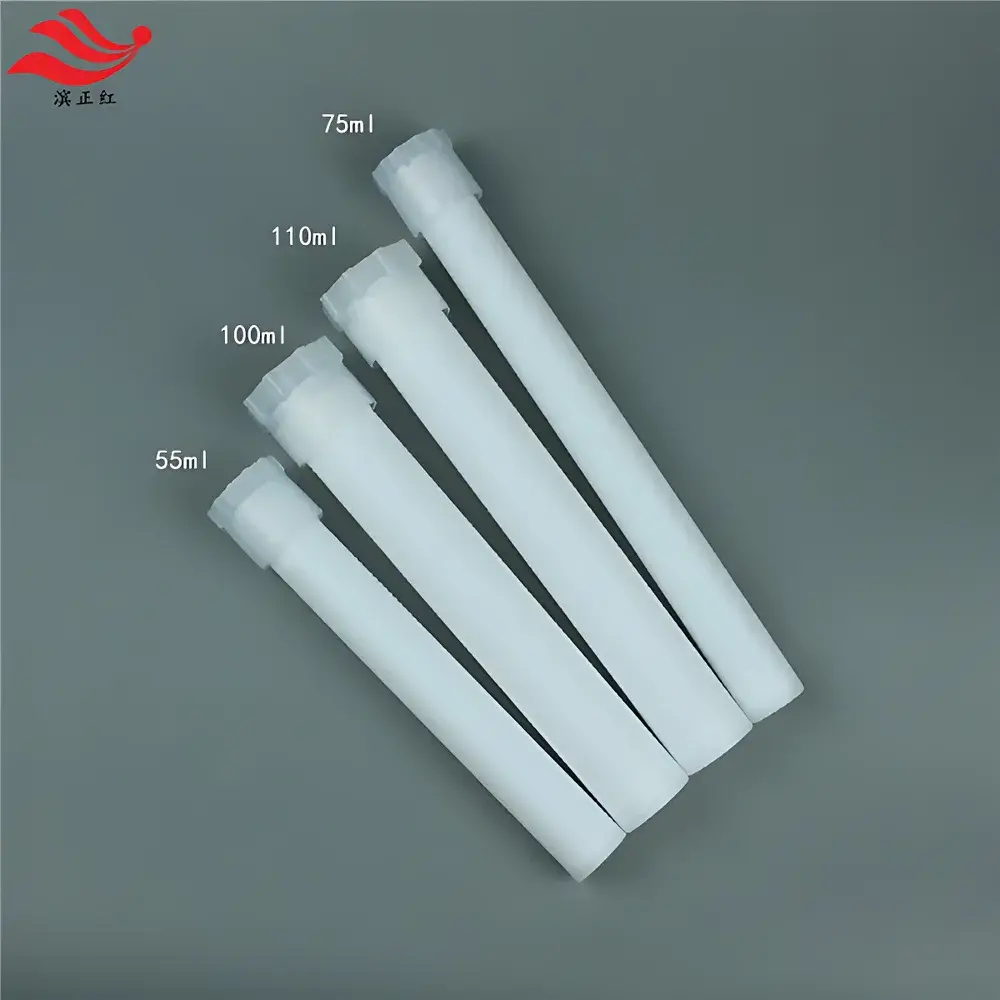
| Model | ZH-55mL (also available in 25mL, 75mL, 100mL, 110mL variants) |
| Vessel Body Material | TFM™ (perfluoroalkoxy alkane) |
| Lid Material | PFA (perfluoroalkoxy) |
| Compression Ring | PTFE/TFM or optional PFA |
| Outer Jacket Material | Aerospace-grade aramid fiber (Kevlar®-reinforced composite) |
| Temperature Range | −200 °C to +260 °C (short-term up to +300 °C) |
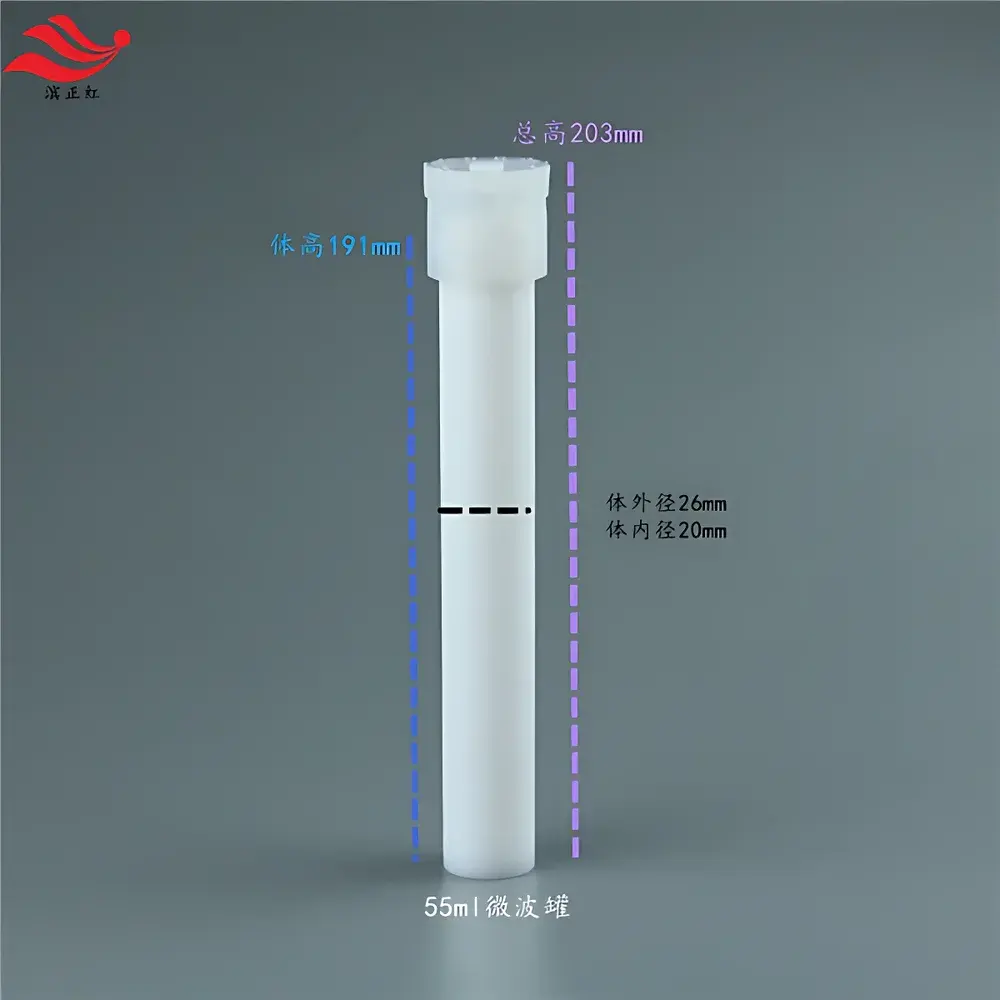
| Dimensions (55mL) | Total Height: 203 mm, Body Height: 191 mm, Outer Diameter: 26 mm, Inner Diameter: 20 mm |
| Compatible Instruments | CEM MARS 5, MARS 6, MARS 6 CLASSIC, XP55T, EXPRESS, OneTouch |
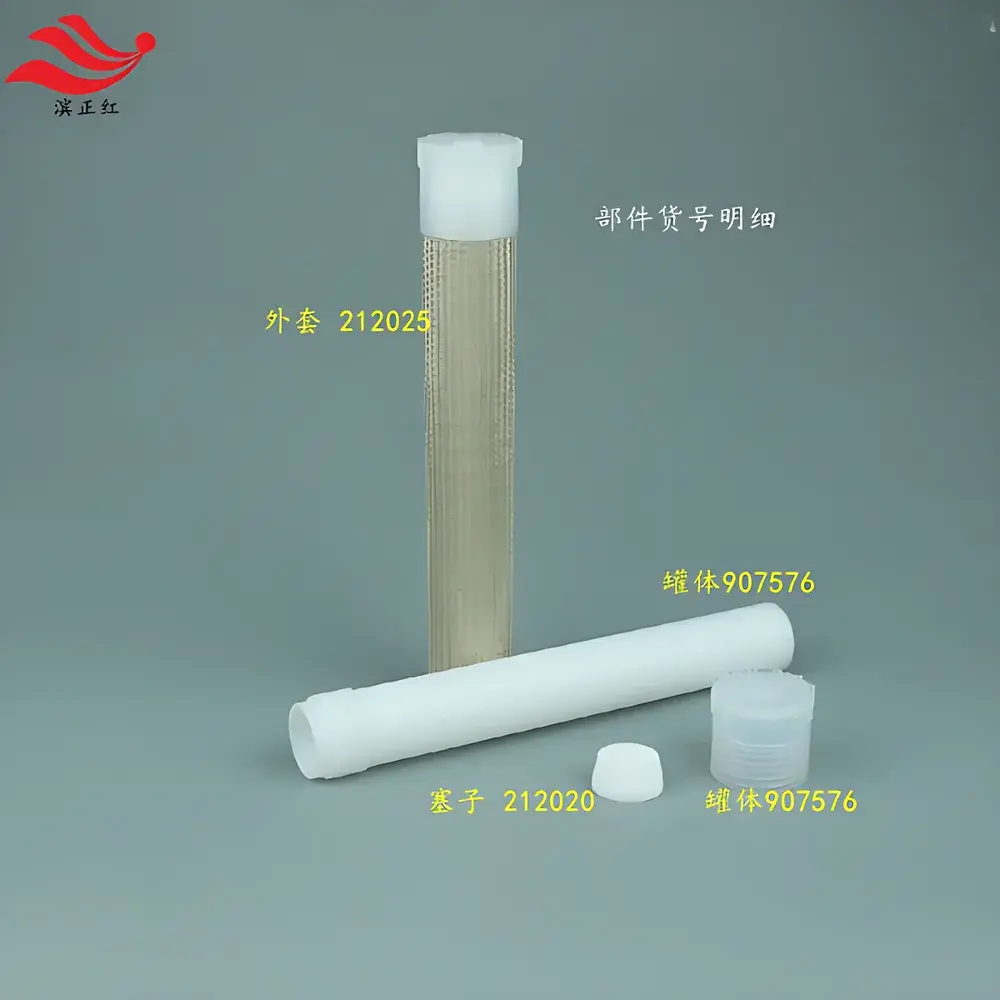
| Accessories Catalog Numbers | Vessel Set (Body + Lid) 907576, Cap Seal 212020, Outer Jacket 212025 |
| Compatible Graphite Block Adapters | ZH-XJ-24, ZH-XJ-40, ZH-XJ-42 (for 29 × 160–170 mm tubes) |
Overview
The Binzhenghong ZH-55mL TFM Microwave Digestion Vessels are engineered for high-pressure, high-temperature closed-vessel microwave-assisted acid digestion in compliance with standardized sample preparation workflows for elemental analysis. Designed specifically for integration with CEM OneTouch and other 40-position microwave platforms—including MARS 5, MARS 6, XP55T, EXPRESS, and MARS 6 CLASSIC—these vessels utilize a dual-material architecture: TFM™ polymer for the vessel body and PFA for the sealing lid. TFM offers superior chemical resistance, lower extractables, and enhanced thermal stability compared to standard PTFE or PFA, making it ideal for aggressive digestions involving hydrofluoric acid (HF), aqua regia, or mixed oxidizing acids under elevated pressure (up to 80 bar) and temperature (up to 300 °C short-term). The outer containment jacket is constructed from aerospace-grade aramid fiber (Kevlar®-reinforced composite), providing mechanical integrity, impact resistance, and thermal insulation during rapid microwave heating cycles.
Key Features
- Chemically inert TFM™ body ensures minimal background contamination and consistent recovery for trace-metal analysis (e.g., ICP-MS, ICP-OES, AAS)
- PFA lids with precision-machined sealing surfaces guarantee repeatable torque-driven closure and leak-free operation across >100 digestion cycles
- Optimized geometry (20 mm ID × 191 mm body height) supports uniform microwave coupling and minimizes hot-spot formation during ramp-and-hold protocols
- Compatible with automated rotor handling systems on OneTouch and MARS platforms—no manual alignment required
- Available in multiple volumetric configurations (25 mL, 55 mL, 75 mL, 100 mL, 110 mL) to support diverse sample mass requirements and matrix types (soil, tissue, polymer, catalysts)
- Outer jackets rated for repeated exposure to ≥260 °C; validated for use in GLP/GMP environments requiring documented thermal history and material traceability
Sample Compatibility & Compliance
These digestion vessels accommodate solid, semi-solid, and liquid samples across environmental, clinical, food, and geochemical laboratories. They meet ASTM D5511 (anaerobic biodegradation), EPA Method 3050B/3051A/3052 (acid digestion for metals), and ISO 11885 (water quality—determination of selected elements by ICP-AES). The TFM/PFA material system complies with USP for extractables profiling and demonstrates ≤0.5 ng/mL metal leachates (Cr, Ni, Cu, Zn, Pb) after 3 consecutive HF/HNO₃ digestions per USP /. Vessels are supplied with full material certifications (RoHS, REACH, FDA-compliant polymer declarations) and batch-specific test reports for dimensional consistency and burst pressure validation (tested per ISO 17025-accredited protocol).
Software & Data Management
While the vessels themselves are passive hardware components, their design enables full traceability within instrument control software ecosystems. When used with CEM’s iWave or MARS Touch software, each vessel position corresponds to a unique sample ID and digestion method profile. The standardized dimensions and thermal response characteristics ensure reproducible power absorption curves—critical for method transfer between labs. All accessory part numbers (e.g., 907576, 212020, 212025) are embedded in CEM’s consumables database for automated inventory tracking and audit-ready calibration logs. Data generated using these vessels satisfies FDA 21 CFR Part 11 requirements when paired with electronic lab notebooks (ELN) that enforce user authentication, audit trails, and electronic signatures.
Applications
- Multi-element quantification in soil and sediment per EPA 6010D and 6020B
- Heavy metal screening in pharmaceutical excipients and APIs (ICH Q3D)
- Digestion of biological tissues (liver, bone, hair) for biomonitoring studies
- Decomposition of lithium-ion battery cathodes (NMC, LFP) prior to transition metal analysis
- Preparation of certified reference materials (CRMs) for inter-laboratory proficiency testing
- Routine QC/QA for wastewater sludge, fly ash, and industrial catalysts
FAQ
Can these vessels be used with hydrofluoric acid (HF)?
Yes—the TFM™ body exhibits exceptional resistance to HF at concentrations up to 40% v/v below 220 °C; always pair with appropriate PFA lids and follow CEM’s HF-specific safety protocols.
What is the maximum recommended operating pressure?
The vessels are validated for continuous operation up to 80 bar; burst pressure exceeds 120 bar per third-party ISO 17025 testing.
Are replacement parts traceable to manufacturing lot?
Yes—each catalog number includes a serialized batch code linked to raw material certificates, dimensional inspection reports, and thermal cycling validation data.
Do you offer cleaning and reuse validation protocols?
Standardized cleaning procedures (HNO₃/HF rinse, ultrasonic deionized water wash, 120 °C drying) are provided; reuse is validated for up to 150 cycles with performance monitoring per ASTM E2915.
Is compatibility confirmed with non-CEM microwave systems?
Physical fit has been verified with Milestone ETHOS UP and Anton Paar Multiwave PRO rotors; method transfer requires empirical optimization of power ramp profiles and hold times.



