
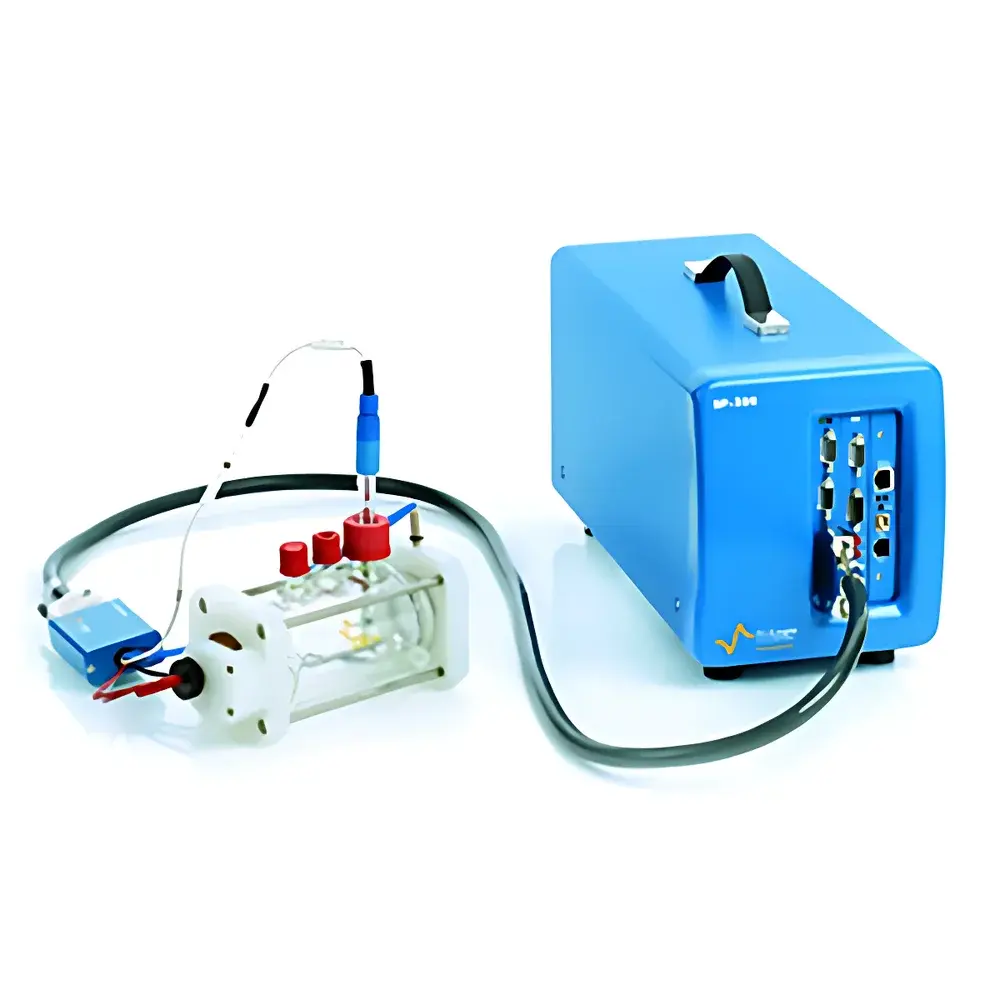
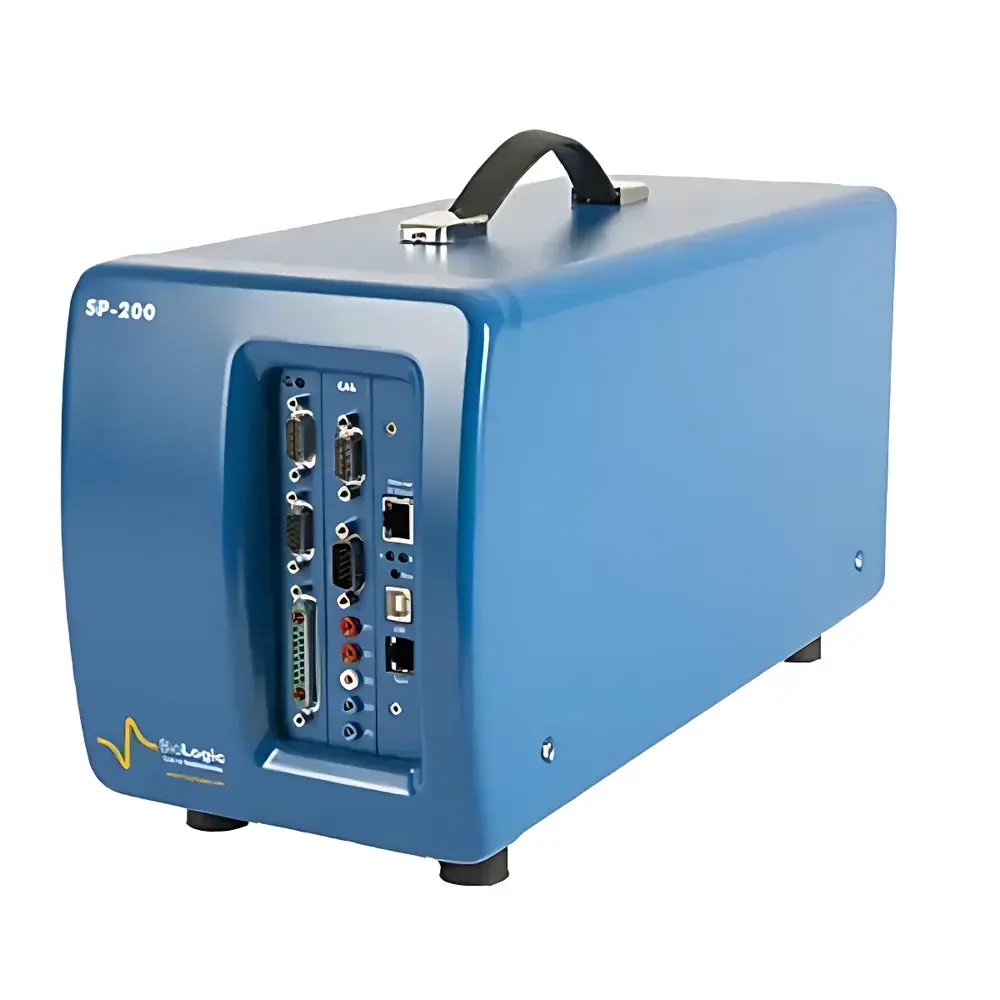
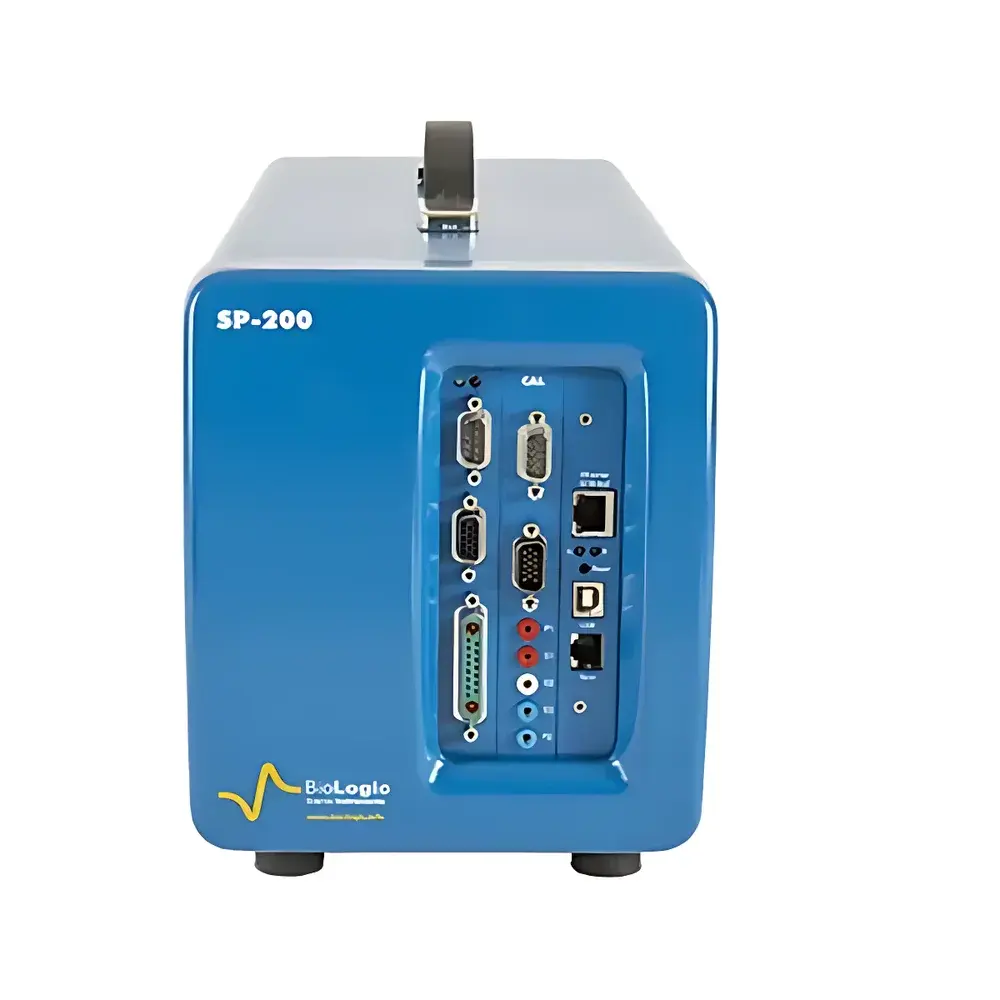
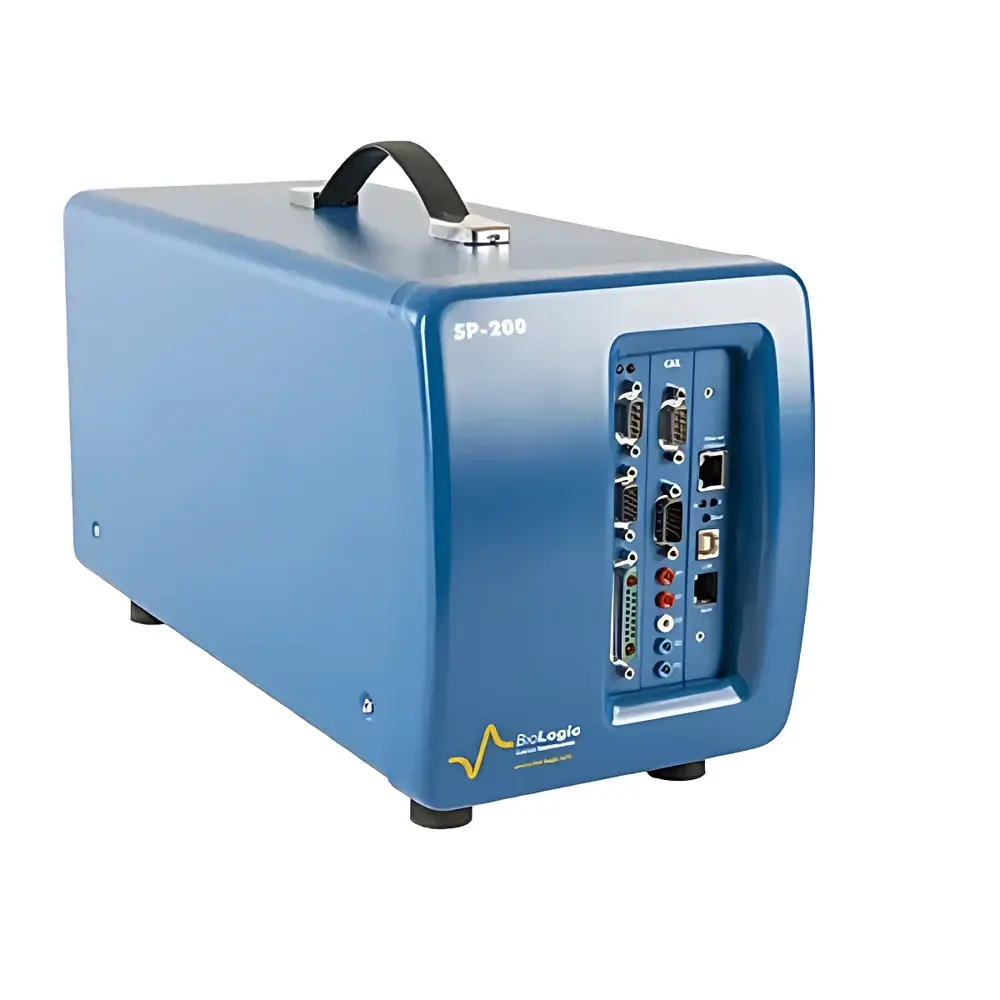
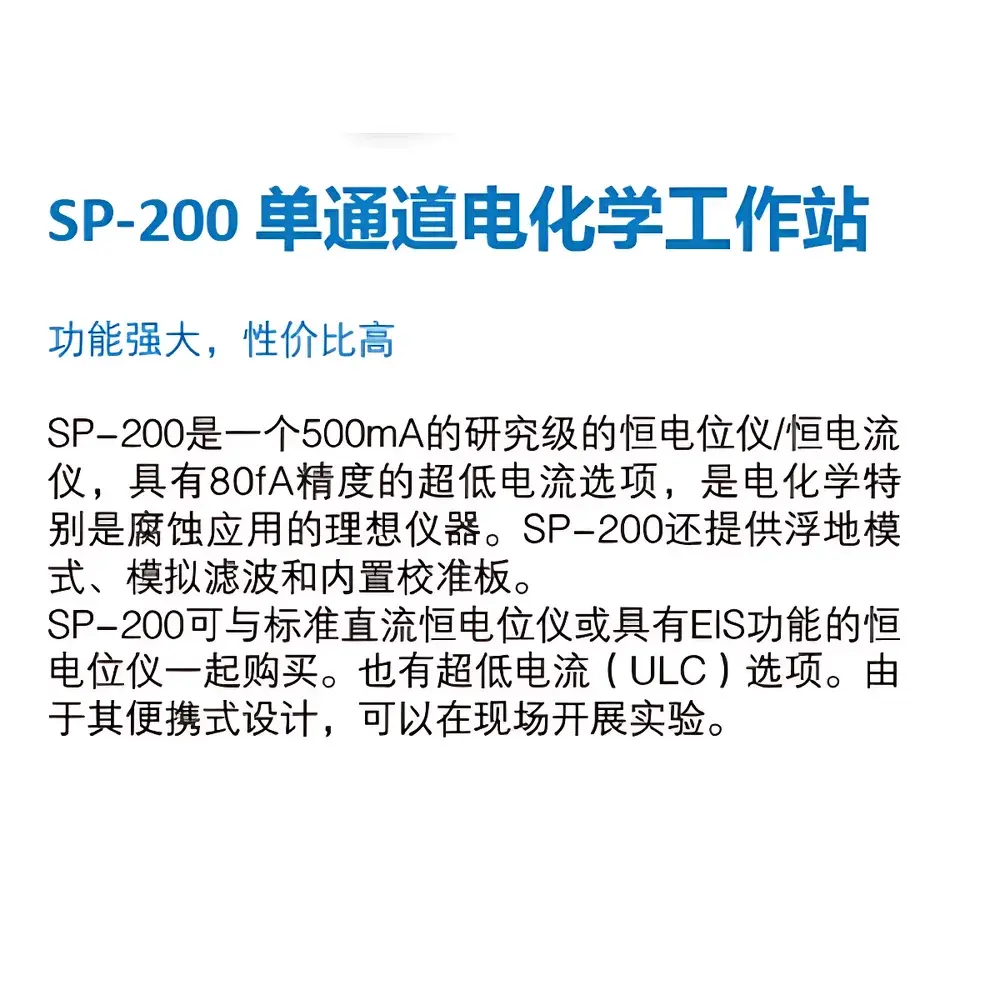
Bio-Logic SP-200 Single-Channel Electrochemical Workstation
| Brand | Bio-Logic |
|---|---|
| Origin | France |
| Model | SP-200 |
| Instrument Type | Portable Electrochemical Workstation |
| Channel Count | Single-Channel |
| Current Range | ±500 mA |
| Current Resolution | 76 aA |
| Potential Accuracy | ±0.1% of full scale |
| Potentiostatic Range | ±12 V |
| EIS Frequency Range | 10 µHz – 7 MHz |
| Voltage Resolution | 1 µV (dynamic range adjustable down to 1 µV) |
| Data Acquisition Rate | 1,000,000 points/second |
| Optional ULC Module | 100 pA (down to 1 pA) |
Overview
The Bio-Logic SP-200 is a research-grade, single-channel potentiostat/galvanostat with integrated high-frequency electrochemical impedance spectroscopy (EIS) capability up to 7 MHz. Engineered for precision and versatility in fundamental and applied electrochemistry, the SP-200 operates on a dual-core digital signal processing architecture that ensures stable control during fast transient measurements and ultra-low-noise acquisition across wide dynamic ranges. Its core measurement principle relies on real-time feedback-controlled current and potential regulation using high-stability analog front-ends, coupled with a 24-bit ADC and adaptive sampling algorithms. Designed for both laboratory benchtop and field-deployable use, the SP-200 features a compact, fanless aluminum chassis rated IP20 for electromagnetic compatibility and thermal stability under continuous operation. It supports all standard potentiostatic, galvanostatic, and hybrid control modes—including potentiodynamic, galvanodynamic, and zero-resistance ammeter (ZRA/ZVC) configurations—making it suitable for corrosion monitoring, battery interface characterization, and kinetic analysis of redox-active biological systems.
Key Features
- Integrated broadband EIS analyzer covering 10 µHz to 7 MHz with phase accuracy < ±0.3° and magnitude accuracy < ±0.1 dB
- Ultra-low current resolution down to 76 aA (attocurrent level), extendable to 1 pA with optional Ultra-Low Current (ULC) module
- Potential control accuracy of ±0.1% of full scale over ±12 V range; voltage resolution configurable down to 1 µV via dynamic range optimization
- Real-time data acquisition at up to 1 MS/s (1,000,000 points per second) with hardware-based triggering and timestamp synchronization
- Modular analog I/O architecture supporting external signal conditioning, analog filtering (Bessel or Butterworth), and grounded-electrode (grounded-cell) operation
- Nine user-selectable bandwidth settings for optimized response during battery cycling and pulse techniques (e.g., GITT, PITT)
- Built-in self-calibration routines traceable to NIST-certified references; automated calibration verification before each experiment
Sample Compatibility & Compliance
The SP-200 interfaces with standard three-electrode electrochemical cells (working, counter, reference), microelectrodes, rotating disk electrodes (RDE), and custom sensor platforms including printed electrodes, enzymatic biosensors, and solid-state electrolyte stacks. It complies with ISO 12944-6 (corrosion protection), ASTM G5/G102 (electrochemical corrosion testing), and USP (particulate matter in injectables, when used in dissolution cell setups). For regulated environments, EC-Lab® software supports 21 CFR Part 11 compliance through electronic signatures, audit trails, role-based access control, and immutable raw data archiving. All firmware and driver binaries are digitally signed and validated at boot time to ensure integrity in GLP/GMP workflows.
Software & Data Management
Controlled exclusively by EC-Lab® v11.x software, the SP-200 provides over 50 pre-programmed electrochemical techniques—including cyclic voltammetry, chronoamperometry, Mott-Schottky analysis, differential pulse voltammetry, linear/cyclic polarization, and multi-step sequence protocols. The software includes advanced EIS modeling tools based on Levenberg-Marquardt and Simplex nonlinear least-squares fitting algorithms, alongside an open-access EIS simulation library (EC-Lab® Simulation Suite) for equivalent circuit development. Raw data is stored in HDF5 format with embedded metadata (timestamp, instrument ID, method parameters, calibration logs). Export options include CSV, MATLAB (.mat), and ASCII-compatible formats compatible with third-party analysis platforms such as Python (SciPy, impedance.py), OriginPro, and Thermo Fisher Avantage.
Applications
- Battery R&D: In-situ SEI formation studies, Li-ion interfacial charge transfer resistance mapping, solid-electrolyte interphase (SEI) evolution via low-frequency EIS
- Corrosion science: Electrochemical noise analysis (ENA), localized pitting detection, polarization resistance monitoring in chloride-containing media
- Electrocatalysis: Kinetic evaluation of HER/OER catalysts using Tafel analysis and EIS-derived double-layer capacitance
- Biosensors & bioelectrochemistry: Redox probing of immobilized enzymes, DNA hybridization kinetics, mediator-free glucose oxidation
- Photoelectrochemistry: Transient photocurrent decay analysis, intensity-modulated photocurrent spectroscopy (IMPS)
- Materials characterization: Conductivity profiling of conductive polymers, defect density estimation in metal oxides via Mott-Schottky plots
FAQ
Does the SP-200 support true four-electrode (Kelvin) configuration for high-impedance measurements?
Yes — the SP-200’s analog architecture allows independent sensing of working electrode potential via a dedicated reference input, enabling true four-terminal potentiostatic control when paired with appropriate cell hardware.
Can EC-Lab® software be deployed in networked lab environments with centralized license management?
Yes — floating license models are available for institutional deployments, supporting concurrent access across Windows-based workstations connected via LAN or VLAN.
Is the 7 MHz EIS capability usable with standard coaxial cables and BNC connections?
Yes — the SP-200 includes automatic cable compensation routines and supports calibrated coaxial cabling (e.g., RG-174) up to 2 m in length without significant phase distortion below 1 MHz; for >1 MHz operation, shielded triaxial cabling is recommended.
How is instrument calibration maintained over time and temperature drift?
The SP-200 performs internal reference checks every 24 hours or upon power-up; users may initiate manual calibration at any time using the built-in 10 ppm/°C voltage and current standards. Calibration certificates are generated in PDF and embedded in HDF5 files.
What safety protections are implemented during high-current experiments (±500 mA)?
Hardware-enforced current limiting, overtemperature shutdown (<65°C), short-circuit detection with sub-millisecond response, and galvanically isolated analog outputs compliant with IEC 61010-1 CAT II 300 V.




