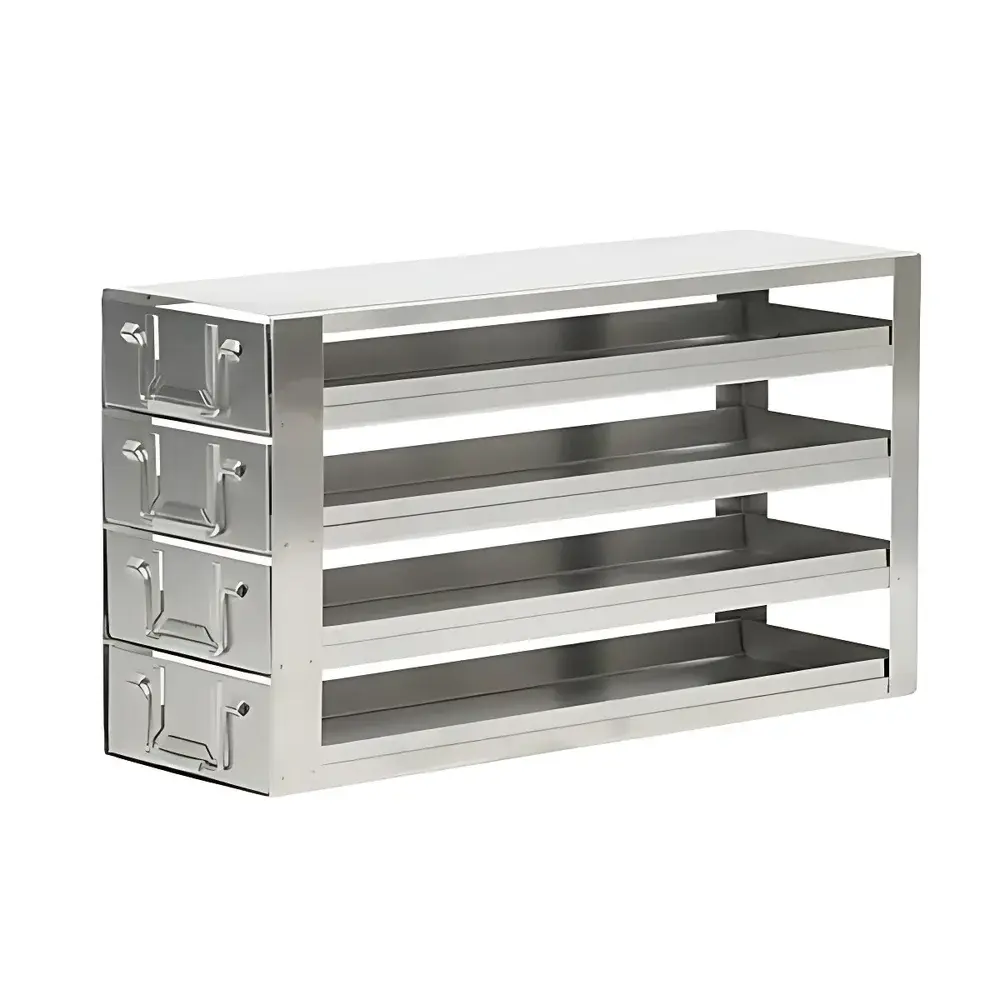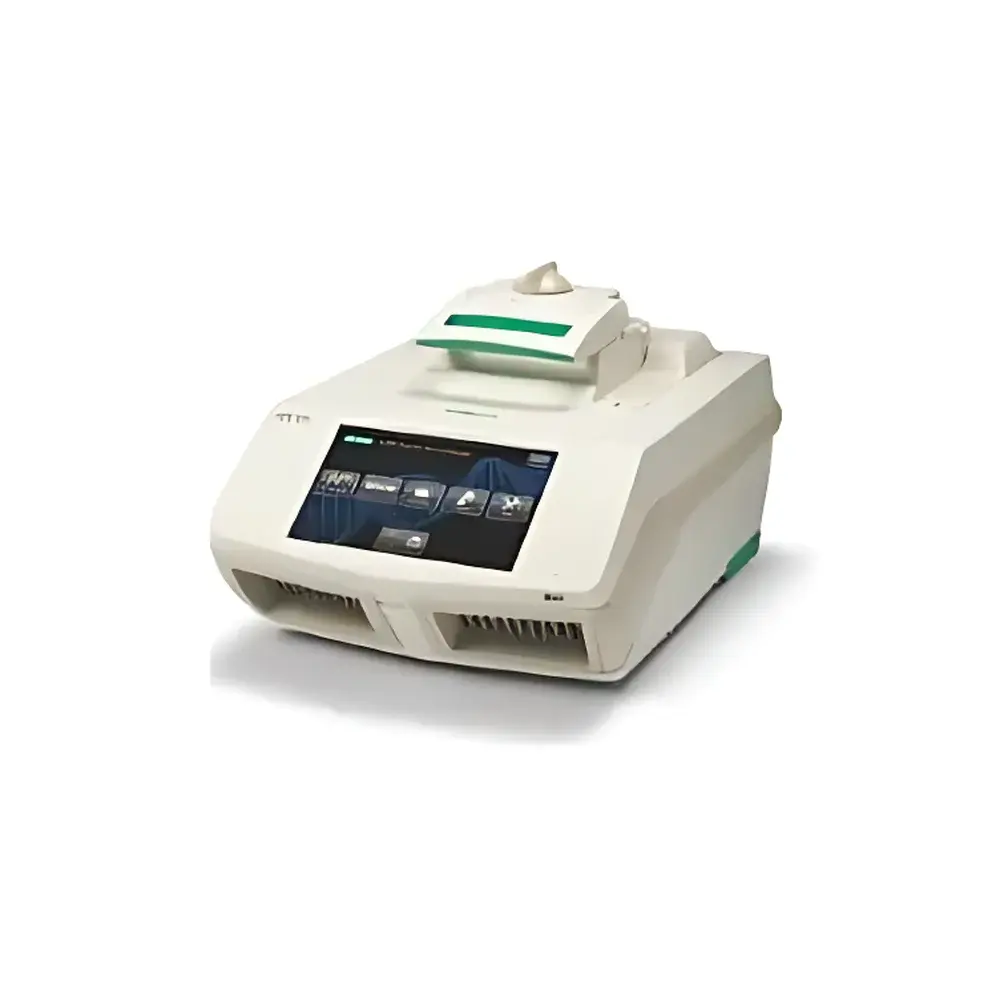
Bio-Rad C1000 Touch™ 384-Well Thermal Cycler
| Brand | Bio-Rad |
|---|---|
| Origin | USA |
| Model | C1000 Touch™ 384-Well |
| Instrument Type | Gradient Thermal Cycler |
| Sample Capacity | 384-well plate |
| Max Heating Rate | 2.5 °C/s |
| Temperature Accuracy | ±0.2 °C at 90 °C |
| Well-to-Well Temperature Uniformity | ±0.4 °C within 10 s at 90 °C |
| Temperature Gradient Range | 1–24 °C across 12 columns |
| Gradient Accuracy | ±0.2 °C (last column) |
| Operating Temperature Range | 0–100 °C |
| Input Power | 850 W max |
| Display | 8.5-inch color LCD touchscreen |
| Onboard Memory | >1,000 protocols |
| Dimensions (W×D×H) | 33 × 45.7 × 20.3 cm |
| Weight | 10.4 kg |
Overview
The Bio-Rad C1000 Touch™ 384-Well Thermal Cycler is a high-performance, modular gradient thermal cycler engineered for precision nucleic acid amplification in demanding molecular biology laboratories. It operates on the fundamental principle of controlled, rapid thermal cycling—repeated heating and cooling of reaction mixtures to denature DNA, anneal primers, and extend amplicons via thermostable DNA polymerase. Its proprietary honeycomb-shaped aluminum heating block ensures uniform heat transfer and rapid thermal equilibration across all 384 wells, enabling reproducible amplification kinetics critical for multiplex assays, low-abundance target detection, and high-throughput genotyping workflows. Designed and manufactured in the United States, the system complies with IEC 61010-1 safety standards and supports ISO/IEC 17025-compliant laboratory operations through audit-ready logging and user-access controls.
Key Features
- Modular architecture supporting six interchangeable reaction modules—including the 384-well gradient module, dual 48-well, 96-well fast, 96-well deep-well, CFX96™ optical, and CFX384™ optical modules—enabling seamless transition between endpoint PCR, qPCR, and digital PCR configurations without tools.
- 8.5-inch capacitive color touchscreen with intuitive graphical interface and stepwise protocol builder; supports multi-touch gestures for drag-and-drop temperature ramp editing and real-time cycle monitoring.
- Honeycomb block design minimizes thermal mass and maximizes surface-area-to-volume ratio, achieving full thermal equilibrium across all wells within 10 seconds at 90 °C (±0.4 °C uniformity) and enabling a maximum ramp rate of 2.5 °C/s.
- Advanced programming suite featuring three modes: manual step-based entry, template-driven protocol generation, and Auto-Programmer—a sequence-aware tool that calculates optimal denaturation, annealing, and extension times based on amplicon length, primer Tm, and polymerase kinetics.
- AOI (Anti-Over-Tightening Interface) lid mechanism prevents excessive pressure on tube caps or plate seals, reducing risk of well deformation, sample leakage, or seal failure during thermal cycling.
- Onboard Windows CE 6.0 operating system with password-protected folders, role-based access control, and optional “Secure Mode” compliant with GLP/GMP environments requiring user authentication and operation traceability.
Sample Compatibility & Compliance
The C1000 Touch 384-well module accommodates standard ANSI/SLAS-compliant 384-well plates (full-skirted, semi-skirted, or unskirted), low-profile PCR plates, and compatible optical plates for downstream fluorescence detection when paired with CFX modules. All modules meet RoHS Directive 2011/65/EU and are certified to UL 61010-1 and CSA C22.2 No. 61010-1 for electrical safety. The instrument supports FDA 21 CFR Part 11 compliance when used with Bio-Rad’s CFX Maestro™ Software (v4.0+), providing electronic signatures, audit trails, and immutable run logs required for regulated QC/QA labs.
Software & Data Management
Protocols and run data are stored locally in non-volatile memory (>1,000 protocols retained), with unlimited expansion via USB 2.0 flash drives. Five USB-A ports support peripherals including barcode scanners, external mice, and storage devices; one USB-B port enables direct connection to Windows PCs (XP or later) for remote control and centralized management. Up to 32 units can be synchronized over a LAN using Bio-Rad’s CFX Connect™ network utility, enabling coordinated high-throughput scheduling, cross-instrument validation, and consolidated reporting. Export formats include CSV, PDF, and XML for LIMS integration and automated data ingestion into ELN platforms.
Applications
- High-density SNP genotyping and allelic discrimination assays requiring stringent thermal uniformity across 384 reactions.
- Library preparation for next-generation sequencing (NGS), including adapter ligation amplification and target enrichment PCR.
- Expression profiling via endpoint RT-PCR with parallel optimization of multiple primer sets using column-wise temperature gradients (1–24 °C range).
- Diagnostic assay development under CLIA- or CAP-accredited conditions, where traceable calibration, user accountability, and error logging are mandatory.
- qPCR assay transfer and verification between instruments, leveraging identical thermal profiles and gradient fidelity across C1000 Touch and CFX series platforms.
FAQ
Is the C1000 Touch 384-well module compatible with real-time PCR detection?
Yes—when combined with the CFX384™ Optical Reaction Module, the C1000 Touch platform functions as a fully integrated real-time PCR system supporting up to five fluorescent channels and melt curve analysis.
Can temperature calibration be performed in-house?
Yes—the instrument supports user-executed block calibration using NIST-traceable thermistor probes, with results logged and exportable for internal quality records.
Does the system support LIMS connectivity?
Direct LIMS integration is achieved via CSV/XML exports and Bio-Rad’s API-enabled CFX Maestro™ Software, which supports HL7 and ASTM E1384 message formatting for clinical lab environments.
What is the expected service life of the heating block under continuous use?
The solid aluminum honeycomb block is rated for ≥500,000 thermal cycles (0–100 °C) with no degradation in uniformity or ramp performance, validated per Bio-Rad’s accelerated lifetime testing protocol.
Are firmware updates provided free of charge?
Yes—Bio-Rad releases validated firmware updates quarterly via its official support portal; each release includes revision history, installation instructions, and regulatory impact statements for GxP users.
Related Products