
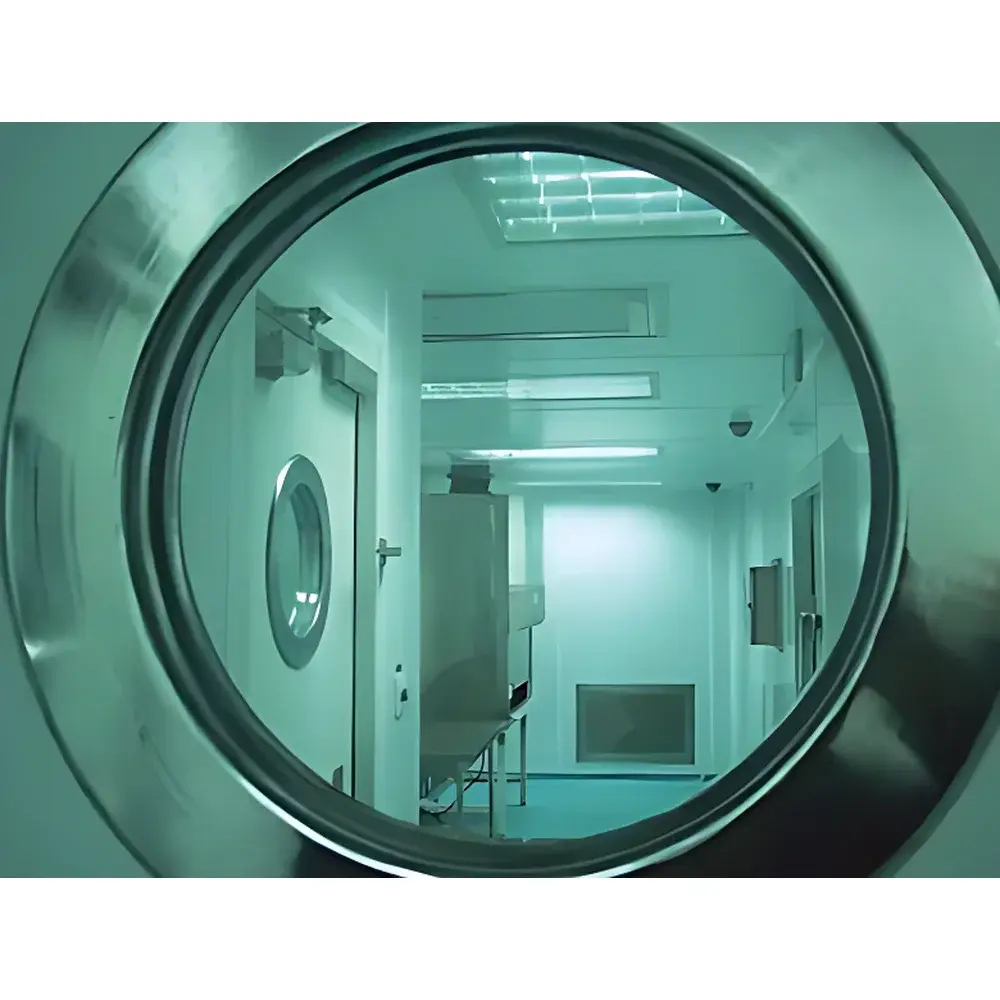
Bio-Safety Level 3 (BSL-3) Fixed, Prefabricated & Mobile Laboratory System – Techcomp P3 Series
| Brand | Techcomp |
|---|---|
| Origin | Shanghai, China |
| Manufacturer Type | Direct Manufacturer |
| Country of Origin | China |
| Model | P3 |
| Pricing | Upon Request |
Overview
The Techcomp P3 Series Bio-Safety Level 3 (BSL-3) Laboratory System is an integrated engineering solution designed to meet the stringent containment, operational integrity, and regulatory compliance requirements for handling Risk Group 3 (RG3) pathogens. It comprises three distinct deployment configurations—fixed architectural, prefabricated modular, and vehicle-mounted mobile—each engineered to deliver consistent biosafety performance across diverse operational contexts. The system operates on the fundamental principle of directional airflow control (via negative pressure cascades), HEPA-filtered supply and exhaust air handling, and physical barrier integrity verified per ISO 14644-1 Class 7 cleanroom standards and GB 19489–2008 (China’s General Requirements for Biosafety Laboratories). All variants are structurally validated to maintain ≥12 air changes per hour (ACH) in core containment zones, with exhaust air subjected to dual-stage HEPA filtration (≥99.995% @ 0.3 µm) and, where required, thermal or chemical decontamination prior to atmospheric release.
Key Features
- Three-tier deployment architecture: fixed-site (building-integrated), factory-assembled prefabricated modules (ISO container-based), and fully integrated vehicular platforms (tractor-trailer or rigid chassis mounted)
- Compliance-engineered containment: certified BSL-3 performance per national and international biosafety frameworks including WHO Laboratory Biosafety Manual (4th ed.), CDC/NIH Biosafety in Microbiological and Biomedical Laboratories (BMBL, 6th ed.), and GB 19489–2008
- Integrated mechanical systems: redundant variable-air-volume (VAV) HVAC with real-time differential pressure monitoring across all zones (e.g., anteroom → lab → equipment room), automated sash interlocks for BSCs, and fail-safe alarm protocols for pressure loss or filter saturation
- Modular construction methodology: prefabricated units undergo full functional commissioning—including airflow mapping, leak testing, and decontamination cycle validation—prior to shipment, enabling site assembly and recommissioning within ≤72 hours
- Human-centered engineering: ergonomic workstation layouts, service-access panels for maintenance without containment breach, remote diagnostic interfaces supporting SNMP/Modbus TCP, and integrated UPS-backed critical systems
Sample Compatibility & Compliance
The P3 Series accommodates a broad spectrum of biological agents classified under WHO Risk Group 3, including but not limited to Mycobacterium tuberculosis, Francisella tularensis, and West Nile virus. Structural materials comply with ASTM E84 (flame spread index ≤25) and ISO 10993-5 (cytotoxicity assessment). All electrical systems conform to IEC 60364-7-710 (medical locations) and GB 50311 (structured cabling). The laboratory design supports seamless integration with ISO/IEC 17025-accredited quality management systems and fulfills prerequisite infrastructure conditions for CNAS accreditation and provincial-level biosafety laboratory acceptance per China’s Ministry of Science and Technology (MOST) guidelines.
Software & Data Management
The embedded Building Management System (BMS) provides centralized monitoring of pressure differentials, airflow rates, filter status, temperature/humidity, and alarm events via a web-enabled HMI interface. Audit trails are retained for ≥18 months and support GLP/GMP-aligned data integrity principles. Optional FDA 21 CFR Part 11-compliant software modules enable electronic signatures, role-based access control, and immutable record generation for regulatory submissions. Remote diagnostics utilize TLS 1.2–encrypted MQTT communication, allowing authorized technicians to perform firmware updates, calibration verification, and fault tree analysis without physical presence.
Applications
- Public health emergency response: rapid deployment of field-deployable diagnostics during outbreaks of emerging infectious diseases
- Reference laboratory services: routine pathogen isolation, culture, and molecular characterization under accredited BSL-3 conditions
- Vaccine and therapeutic development: preclinical evaluation of live-attenuated or viral-vector candidates requiring high-containment facilities
- Biodefense research: aerosol challenge studies, environmental persistence assays, and antiviral screening under controlled exposure scenarios
- Training and capacity building: standardized teaching laboratories for biosafety officer certification programs and competency assessments
FAQ
What biosafety level does the P3 Series achieve, and how is certification validated?
The system is engineered and verified to meet BSL-3 requirements per GB 19489–2008 and WHO BSL-3 criteria. Certification requires third-party commissioning—including duct leakage testing, HEPA filter integrity scans (DOP/PAO), and dynamic pressure cascade verification—conducted prior to final acceptance.
Can the prefabricated modules be reconfigured for different spatial layouts or upgraded post-installation?
Yes. Modular units employ standardized structural interfaces and utility raceways compliant with ISO/PAS 22301, enabling future expansion, re-zoning, or integration of new analytical instrumentation without compromising containment integrity.
Does the mobile variant retain full BSL-3 functionality while in transit?
No. BSL-3 operations are suspended during transport. The vehicle platform is certified for secure transport only; containment activation and operational readiness commence upon mechanical stabilization, leveling, utility connection, and recommissioning at the destination site.
Is remote monitoring compatible with existing hospital or public health IT infrastructure?
Yes. The BMS supports standard protocols (BACnet/IP, Modbus TCP) and can be integrated into enterprise SCADA or CMMS platforms via configurable API gateways, subject to network segmentation and firewall policy alignment.
What documentation is provided for regulatory submission and facility acceptance?
A complete commissioning dossier is delivered, including as-built drawings, test reports (airflow, pressure, filter integrity), material safety data sheets (MSDS), equipment calibration certificates, and SOP templates aligned with ISO/IEC 17025 and GLP requirements.




