
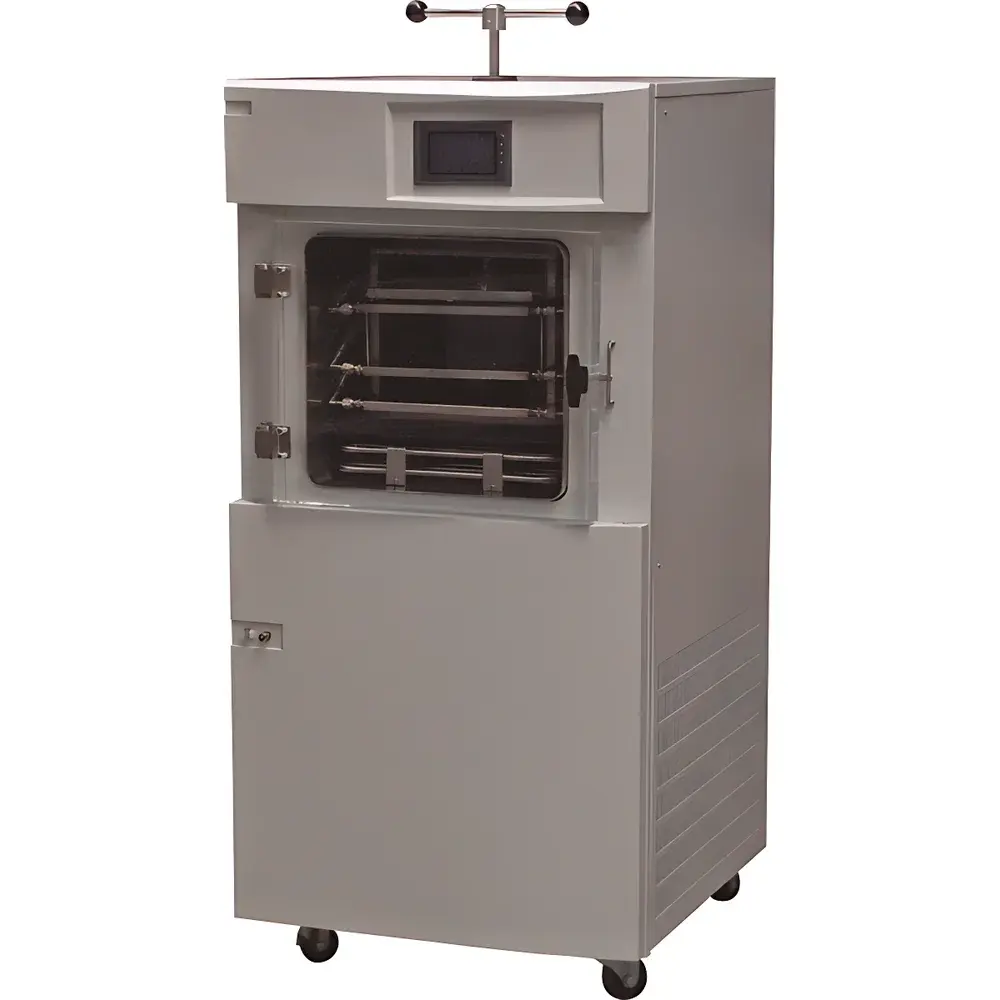
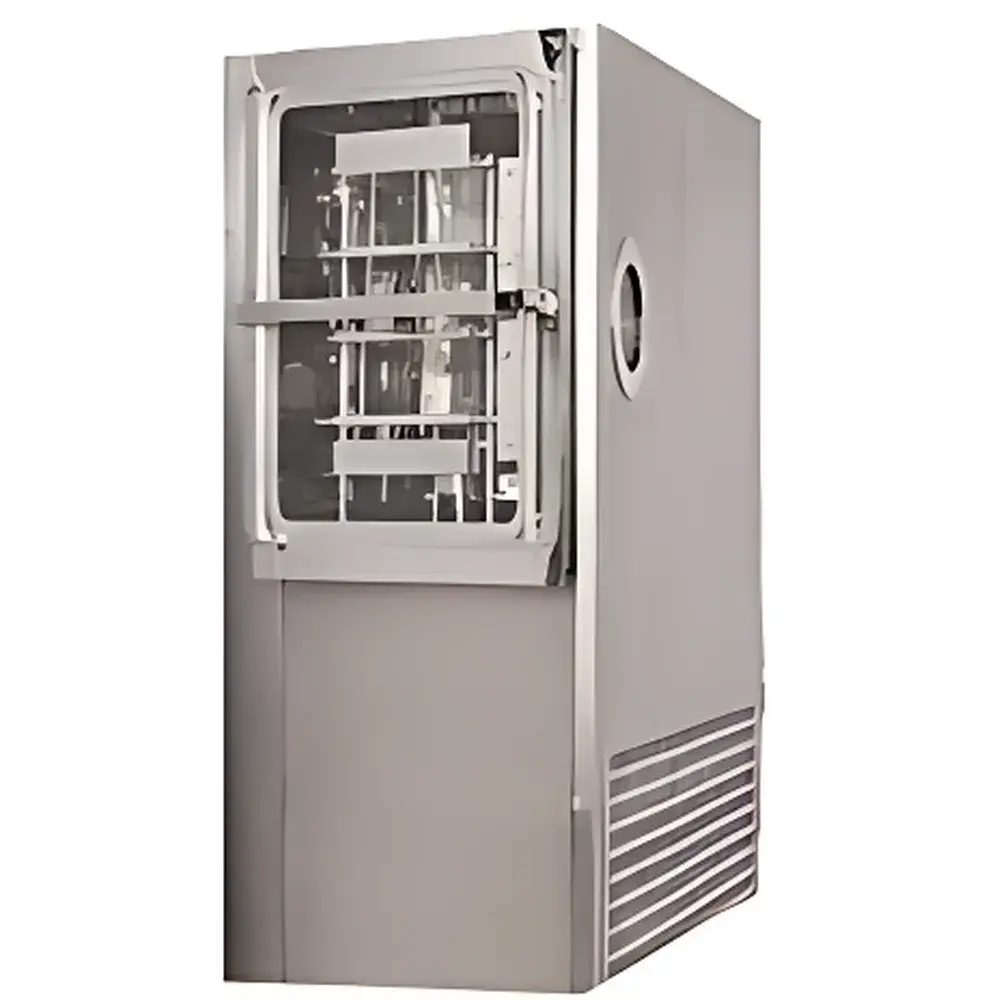
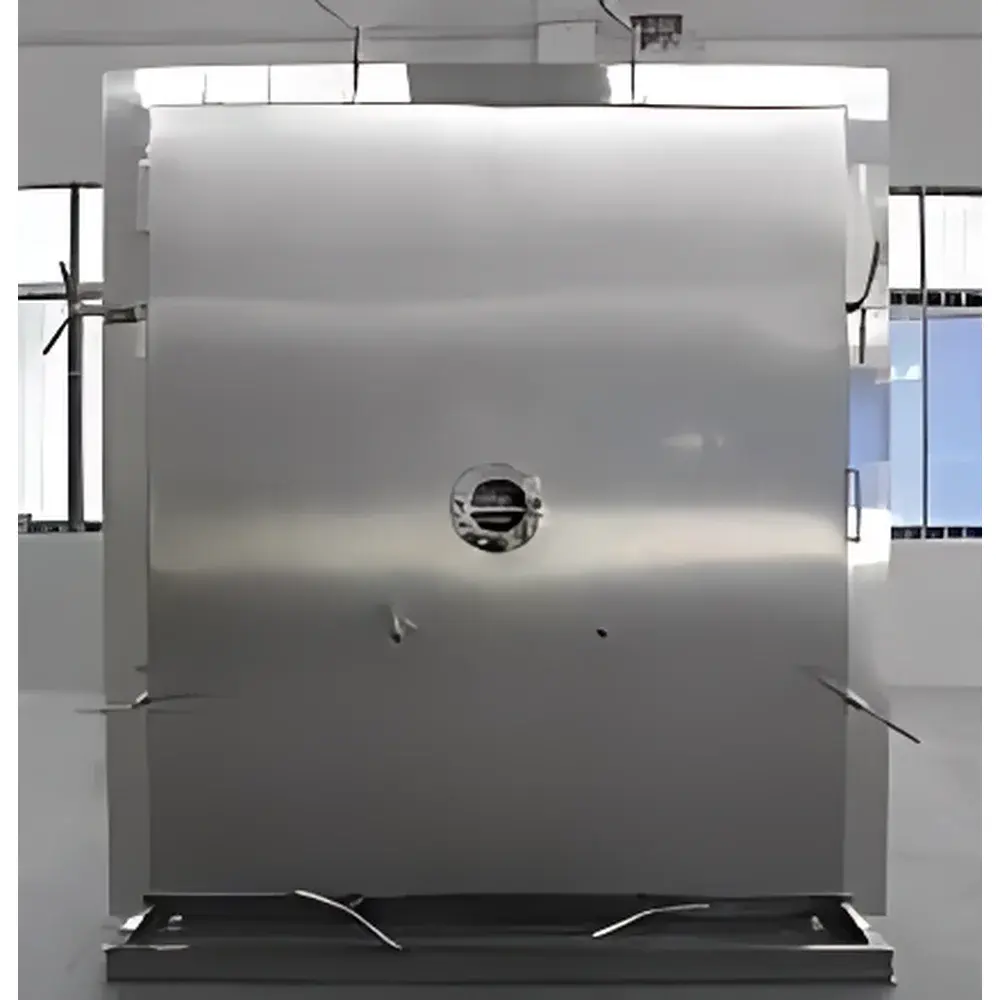
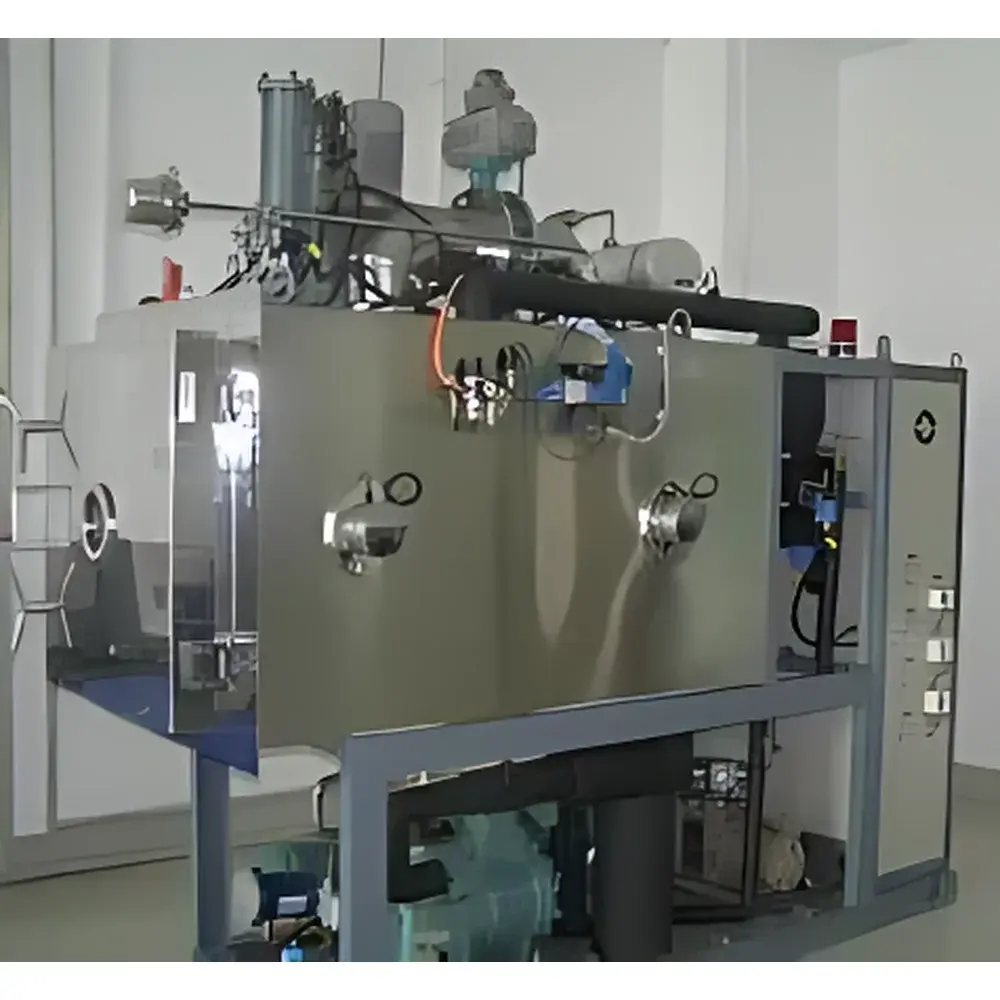
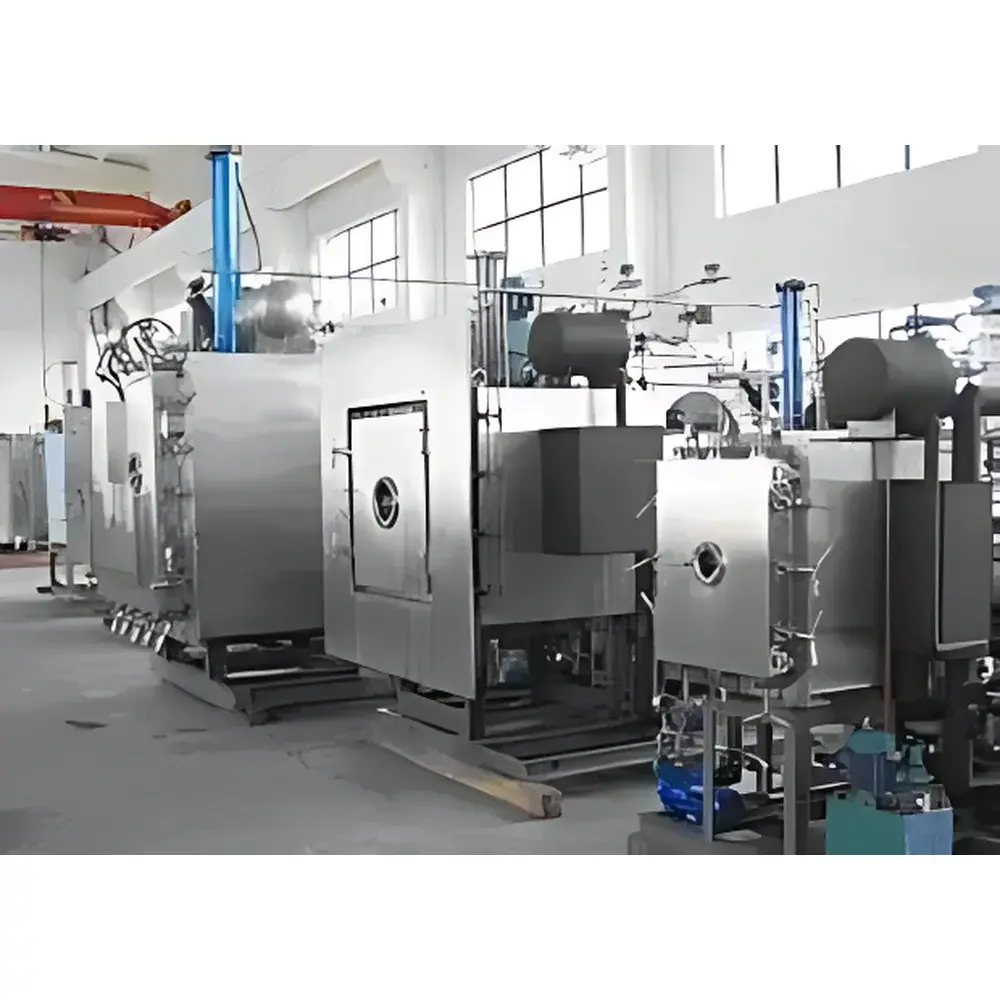
BIOCOOL Pilot2-4L Pilot-Scale Freeze Dryer
| Brand | BIOCOOL |
|---|---|
| Origin | Beijing, China |
| Model | Pilot2-4L |
| Type | Standard Shelf-Type Freeze Dryer |
| Application | Pilot-Scale Processing |
| Lyophilization Area | 0.2 m² |
| Ultimate Vacuum | <7 Pa |
| Condensate Capacity (24 h) | 4 L/24h |
| Cold Trap Temperature (No Load) | <−55 °C |
| Refrigeration Method | Direct Cooling |
| Shelf Temperature Range (No Load) | −40 °C to +60 °C |
| Shelf Spacing | 80 mm |
| Compressor Power | 7/8 HP |
| Vacuum Pump Speed | 2 L/s |
| Safety Features | Overcurrent Protection, Overload Protection, 36 V Low-Voltage Heating Circuit, Shelf Overtemperature Protection, Vacuum Process Interlock, Vacuum Pump Anti-Backflow Device |
| Warranty | 18 Months (Excluding Vacuum Pump) |
Overview
The BIOCOOL Pilot2-4L is a robust, industrial-grade pilot-scale freeze dryer engineered for reproducible lyophilization process development and small-batch manufacturing under controlled laboratory or cleanroom conditions. It operates on the fundamental principles of sublimation-based drying: frozen samples are subjected to deep vacuum (<7 Pa), enabling ice to transition directly from solid to vapor without passing through the liquid phase. Heat is precisely delivered via electrically heated shelves to sustain the sublimation front while maintaining product integrity—critical for thermolabile biologics, pharmaceuticals, diagnostics, and functional food ingredients. With a lyophilization area of 0.2 m² and a 4 L/24 h condensate capacity, the Pilot2-4L bridges the gap between benchtop R&D units and full production freeze dryers, supporting scalability studies compliant with ICH Q5C, USP , and ISO 20932-2:2020 guidelines for lyophilized product stability.
Key Features
- Optimized vacuum chamber with reinforced transparent door fabricated using dual-seal fusion technology—ensures long-term vacuum integrity (>10,000 cycles) and extends service life by 100% versus conventional gasketed designs.
- Integrated shelf pre-freezing capability eliminates the need for external ultra-low temperature freezers, reducing workflow interruption and cross-contamination risk.
- High-efficiency, low-noise scroll compressor (7/8 HP) and 2 L/s oil-lubricated vacuum pump deliver stable deep-vacuum performance across extended cycles.
- Programmable shelf temperature control per layer using fuzzy PID algorithm with real-time thermal loop monitoring; heating elements employ corrosion-resistant, high-emissivity alloy for uniform heat distribution.
- Non-electric cold trap defrost system utilizing pressurized inert gas purging—eliminates electrical hazards, reduces defrost time by >60%, and avoids water ingress into refrigeration circuits.
- Optional endpoint determination module performs automated residual moisture assessment during desorption drying via pressure rise test (PRT) or capacitance-based dew point correlation—supports compliance with FDA 21 CFR Part 11 audit trails when paired with PC database storage.
- Multi-stage pulse backfill system (slow/medium/fast modes) enables controlled inert gas reintroduction—prevents particle dispersion in fragile amorphous matrices such as monoclonal antibody formulations or probiotic powders.
- Industrial 10.1″ capacitive touchscreen HMI with intuitive icon-driven navigation; no manual required for routine operation. Supports both manual mode (for empirical parameter optimization) and fully automated cycle execution.
- Real-time data acquisition at 50 ms intervals for shelf temperature, chamber pressure, and cold trap temperature—enabling high-fidelity process mapping and PAT (Process Analytical Technology) integration.
Sample Compatibility & Compliance
The Pilot2-4L accommodates vials (with optional stoppering), bulk trays, and external flasks via multi-port manifold configuration. It is validated for aqueous solutions, suspensions, and pastes with eutectic temperatures above −40 °C—suitable for proteins, vaccines, enzymes, herbal extracts, and microbial cultures. All wetted surfaces comply with ASTM F800-22 standards for biocompatibility. Vacuum and temperature sensors are field-calibratable per ISO/IEC 17025 requirements. Optional features—including co-located eutectic point measurement, organic solvent trapping, and oil mist filtration—extend compatibility to ethanol-, acetone-, or tert-butanol-based formulations. The system architecture supports GLP/GMP-aligned documentation: electronic signatures, user access levels, and event-logged audit trails are available when configured with PC database storage and remote monitoring modules.
Software & Data Management
Data logging options include onboard flash memory (retains ≥90 days of compressed cycle logs), USB mass storage (user-supplied), or networked PC database (SQL-based, timestamped, and encrypted). All stored datasets contain full thermodynamic profiles—shelf temperature vs. time, chamber pressure vs. time, and cold trap temperature vs. time—for post-cycle analysis and DOE (Design of Experiments) refinement. The freeze-drying recipe library stores up to 500 user-defined protocols, each supporting multi-step ramp/hold segments with conditional logic (e.g., “proceed to next step if pressure rise <0.5 Pa/min”). Remote supervision over Ethernet or RS485 permits status monitoring and emergency pause/resume commands within 1.5 km line-of-sight range—ideal for centralized facility management. Calibration certificates for temperature (±0.3 °C) and vacuum (±2% FS) sensors can be generated and exported in PDF format.
Applications
- Pharmaceutical process development: formulation screening, cycle optimization, and stability batch production for clinical trial materials.
- Vaccine and therapeutic protein preservation: maintaining secondary structure integrity and biological activity post-lyophilization.
- Diagnostics: stabilization of enzyme conjugates, antigen-antibody complexes, and lateral flow reagents.
- Functional food & nutraceuticals: retention of probiotic viability, polyphenol antioxidant capacity, and volatile flavor compounds.
- Academic research: cryo-structural studies, lyophilization kinetics modeling, and excipient interaction analysis.
- Contract development and manufacturing organizations (CDMOs): GMP-compliant small-volume API and drug product manufacturing.
FAQ
What distinguishes the Pilot2-4L from standard lab-scale freeze dryers?
The Pilot2-4L employs direct-cooling shelf architecture with independent thermal control per layer, integrated pre-freezing, and programmable vacuum modulation—features typically reserved for production-grade systems. Its 0.2 m² area and 4 L/24 h condensate capacity enable statistically meaningful batch sizes for scale-up studies.
Is the system compliant with 21 CFR Part 11 for electronic records?
Yes—when equipped with PC database storage and user authentication modules, the system provides role-based access, electronic signatures, and immutable audit trails meeting FDA 21 CFR Part 11 Subpart B requirements.
Can it handle organic solvents like ethanol or acetone?
With the optional organic solvent trap and oil mist filter, the Pilot2-4L safely condenses low-boiling-point solvents while protecting the vacuum pump and refrigeration circuit.
How is calibration performed and how often is it recommended?
Temperature and vacuum sensors support two-point field calibration using NIST-traceable references. Annual calibration is recommended; verification checks should accompany each critical batch.
Does the system support IQ/OQ documentation packages?
BIOCOOL provides standardized IQ/OQ templates aligned with ASTM E2500-22 and EU Annex 15. Installation and operational qualification support—including sensor mapping, leak testing, and cycle repeatability reports—is included with commissioning services.
Related Products



