
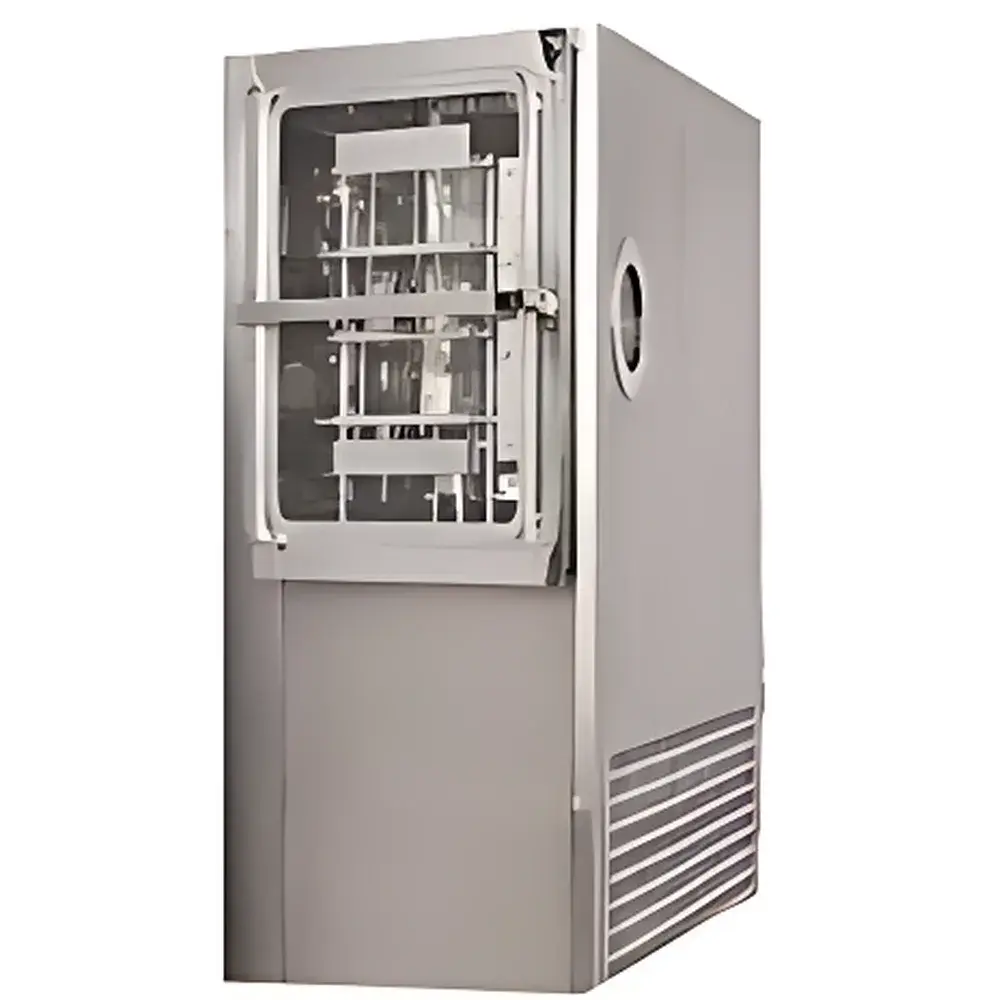
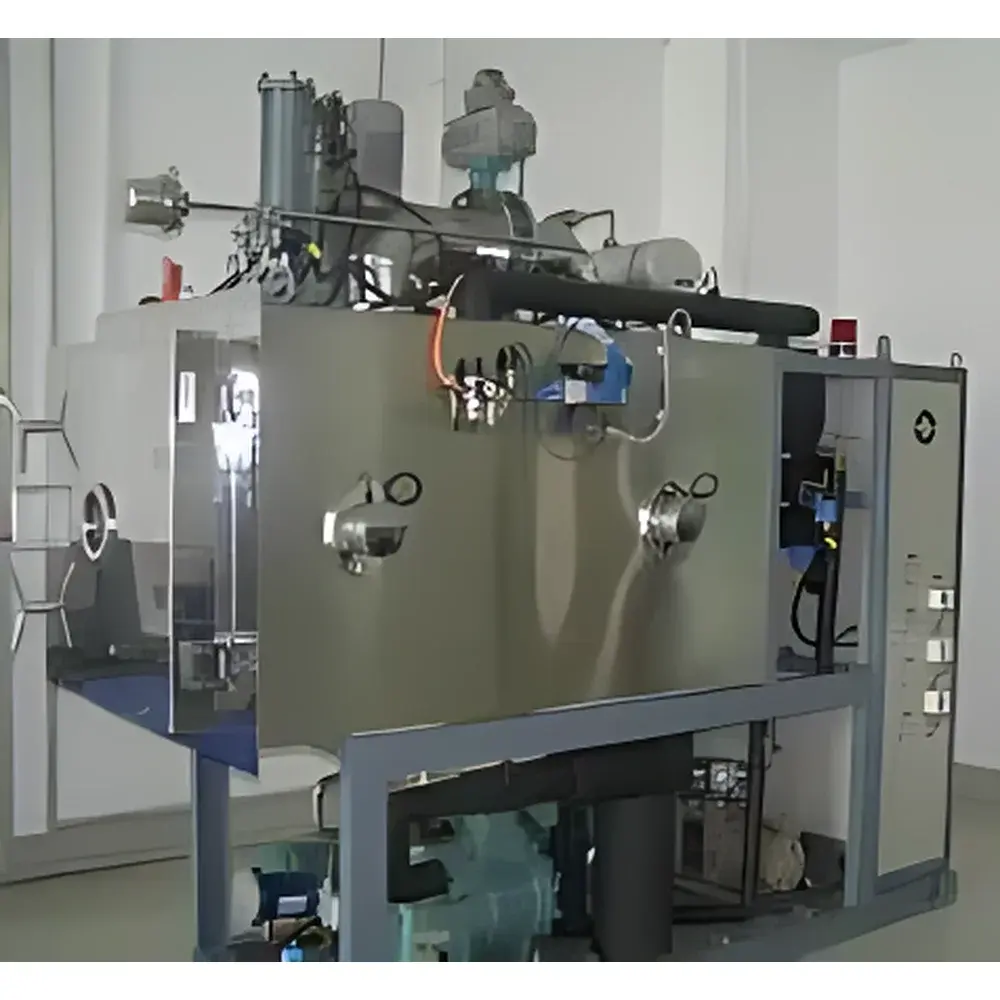
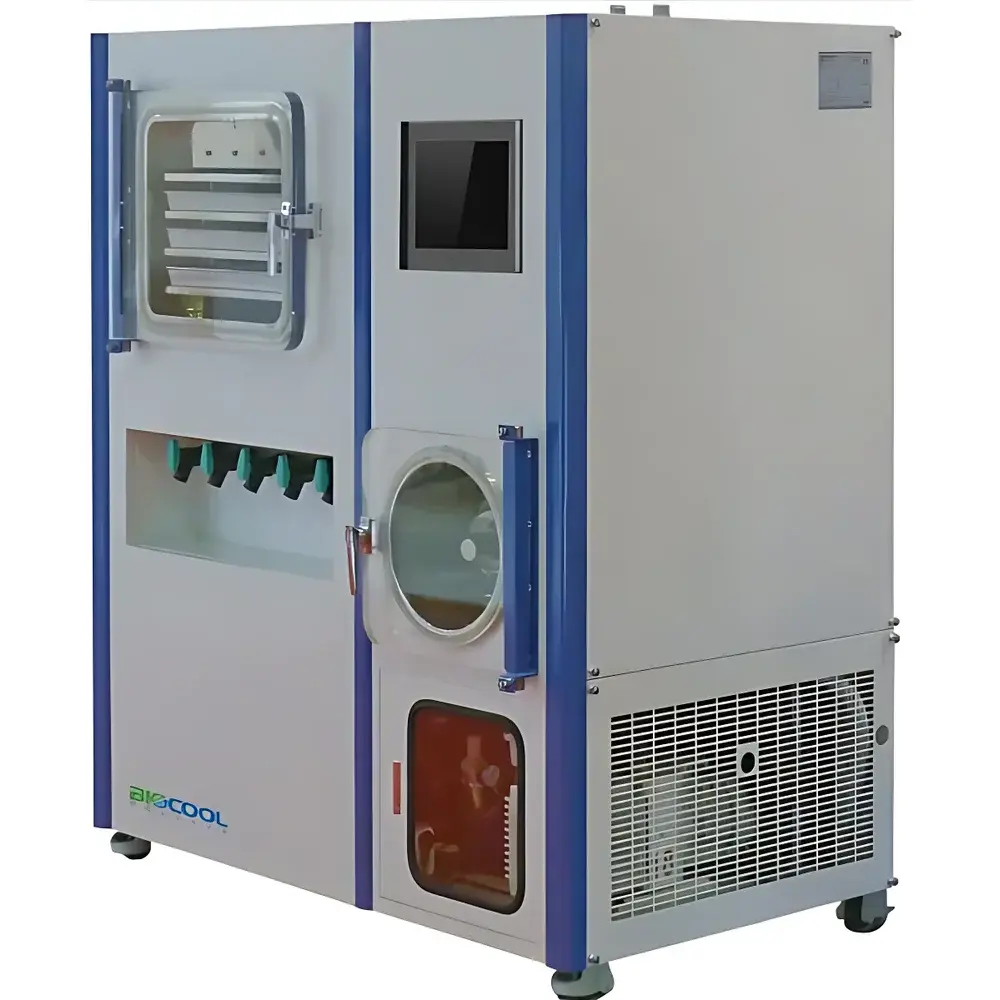
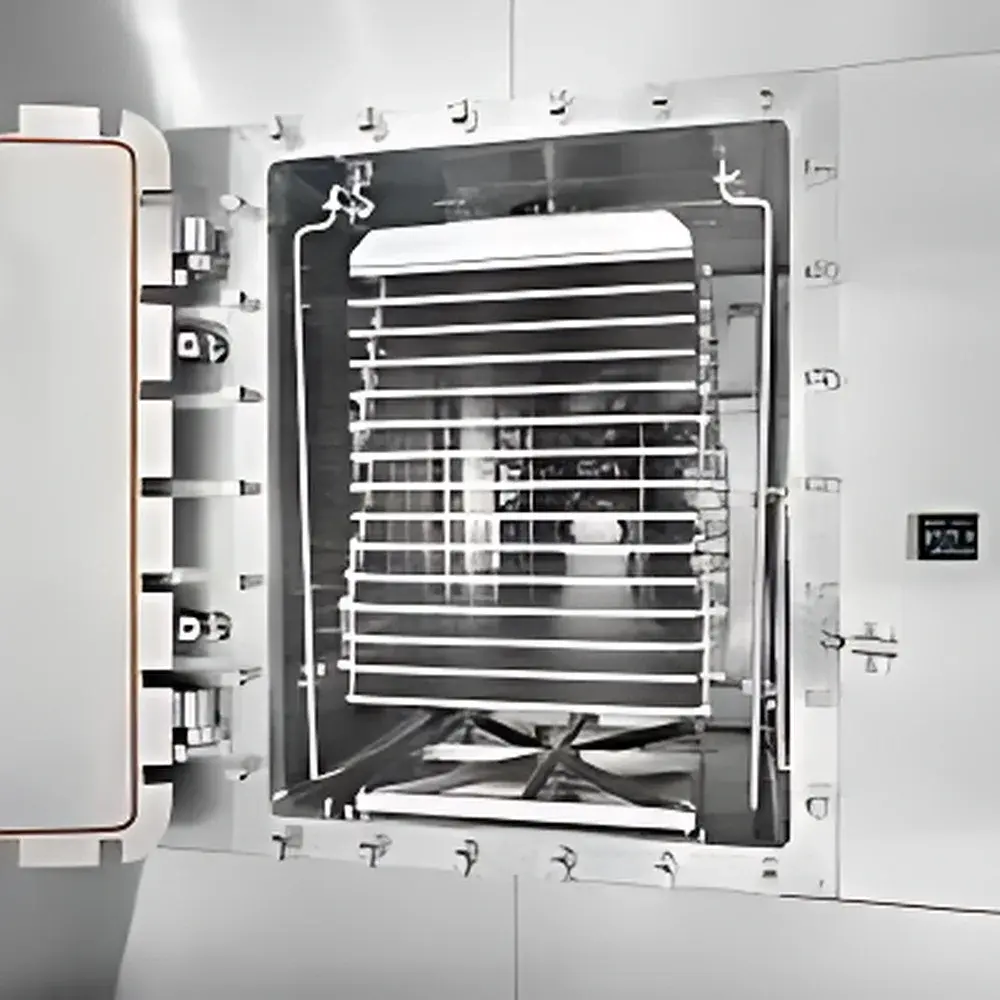
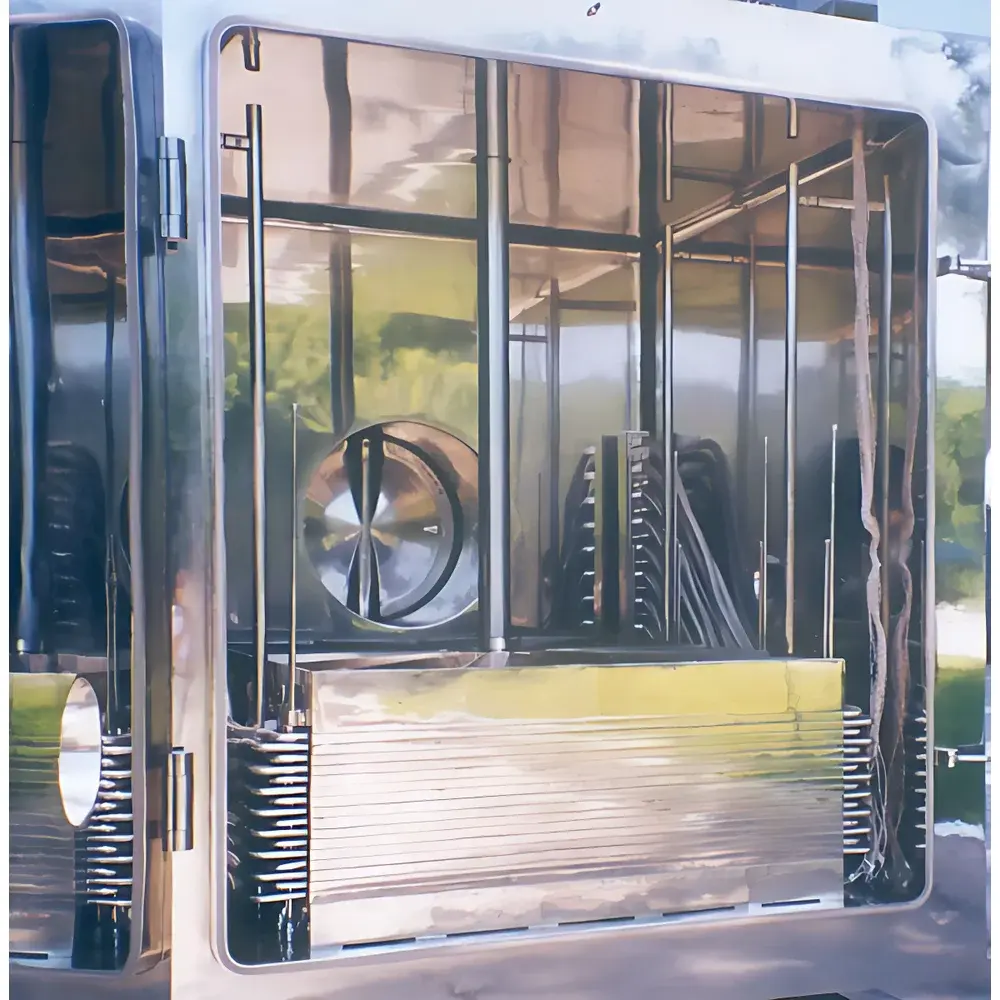
BIOCOOL Pilot3-6T Benchtop Pilot-Scale Freeze Dryer with Full-Function Silicone Oil Heating/Cooling System
| Brand | BIOCOOL |
|---|---|
| Origin | Beijing, China |
| Manufacturer Type | Authorized Distributor |
| Country of Origin | China |
| Model | Pilot3-6T (Full-Function Silicone Oil-Based Freeze Dryer) |
| Instrument Type | Shelf-Type Freeze Dryer |
| Application Scope | Pilot-Scale Production |
| Lyophilization Area | 0.3 m² |
| Ultimate Vacuum | ≤ 1 Pa |
| Condensate Capacity (24 h) | 6 kg/24 h |
| Cold Trap Temperature | ≤ −85 °C |
| Shelf Temperature Range (Empty Load) | ≤ −50 °C to +70 °C |
| Shelf Dimensions | 300 mm × 500 mm |
| Number of Shelves | 2 + 1 Radiant Shelf |
| Shelf Spacing | 100 mm |
| Installed Power | 3 kW |
| Air-Cooling Airflow | ≈ 6 m³/h |
| Overall Dimensions (W×D×H) | ≈ 780 × 1520 × 1800 mm |
| Net Weight | ≈ 450 kg |
| Noise Level | ≤ 70 dB(A) |
| Compliance Standards | GMP, GB/T 5226.1–1996, ISO 9001-based manufacturing |
Overview
The BIOCOOL Pilot3-6T is a fully functional, silicone oil-heated and cooled benchtop pilot-scale freeze dryer engineered for reproducible lyophilization process development, scale-up validation, and small-batch GMP-compliant production. It operates on the fundamental principles of sublimation under controlled low-pressure and cryogenic conditions: frozen product water is removed directly from solid to vapor phase without passing through liquid state, preserving thermolabile structures, biological activity, and physical integrity. With a validated shelf area of 0.3 m² and a cold trap rated to ≤ −85 °C, the system supports consistent drying of up to 6 kg of aqueous material per 24-hour cycle—making it suitable for preclinical formulation studies, stability batch runs, and early-phase clinical trial material manufacturing. Its dual-shelf architecture (2 active shelves + 1 radiant shelf) enables precise thermal uniformity across load zones, while the silicone oil circulation system ensures high-resolution temperature control (±0.5 °C typical) across the full operating range (−50 °C to +70 °C, empty load).
Key Features
- Silicone oil-based heating and cooling system for superior shelf temperature accuracy, stability, and repeatability—critical for defining robust primary and secondary drying endpoints.
- Dual active shelves (300 mm × 500 mm each) plus one radiant shelf, spaced at 100 mm intervals, optimized for uniform heat transfer and scalable loading configurations (e.g., ≥900 × 22 mm vials or ≥6 L bulk solution).
- High-efficiency cold trap with condensing capacity of 6 kg/24 h and operational temperature ≤ −85 °C, minimizing vapor backstreaming and ensuring rapid pressure recovery during vacuum hold phases.
- Ultimate system vacuum ≤ 1 Pa, achieved via a dual-stage oil-lubricated rotary vane pump and integrated vacuum regulation valve—compatible with both water and organic solvent vapor loads.
- GMP-aligned mechanical design: stainless steel 316L chamber and shelves; electropolished surfaces; sloped drain channels; IP54-rated electrical cabinet; and full traceability of all wetted components per ASME BPE guidelines.
- Integrated safety interlocks including overtemperature cutoff, vacuum loss alarm, door seal integrity monitoring, and automatic defrost sequencing with condensate level sensing.
Sample Compatibility & Compliance
The Pilot3-6T accommodates diverse sample formats—including serum vials (≥900 × 22 mm), trays, and custom molds—across pharmaceutical, biotech, diagnostic, and food R&D applications. Its construction and control architecture comply with key regulatory frameworks: design adheres to Good Manufacturing Practice (GMP) Annex 1 principles for sterile processing environments; electrical safety conforms to GB/T 5226.1–1996 (equivalent to IEC 60204-1); and mechanical integrity follows ISO 9001-certified manufacturing protocols. While not pre-validated out-of-box, the system provides full documentation support for IQ/OQ/PQ execution—including calibrated PT100 sensors (traceable to NIM), vacuum transducer calibration records, and temperature mapping templates aligned with ASTM E2297 and EU Annex 15 requirements.
Software & Data Management
Equipped with an embedded industrial PLC and 10.1″ HMI touchscreen interface, the Pilot3-6T delivers real-time monitoring of shelf temperature, chamber pressure, cold trap temperature, and elapsed cycle time. All critical process parameters are logged at user-defined intervals (default: 10 s) into encrypted CSV files stored on internal SD card or external USB drive. Audit trail functionality supports GLP/GMP data integrity requirements: each entry includes timestamp, operator ID, parameter value, and event type (e.g., setpoint change, alarm activation). Optional Ethernet connectivity enables integration with SCADA or MES systems via Modbus TCP; raw data export complies with FDA 21 CFR Part 11 readiness when paired with third-party electronic signature modules.
Applications
- Formulation optimization of monoclonal antibodies, vaccines, and recombinant proteins under variable ramp rates and annealing protocols.
- Process characterization and design space definition per ICH Q5C and Q8(R2) guidelines.
- Stability study batches (ICH Q1–Q5) requiring strict environmental control and full parameter traceability.
- Lyophilized diagnostic reagent development—including enzyme conjugates, lateral flow assay components, and PCR master mixes.
- Academic and contract research organizations (CROs) performing method transfer between lab-scale and production-scale freeze dryers.
FAQ
What is the maximum batch size supported by the Pilot3-6T?
The system supports up to 6 kg of water-equivalent load per 24-hour cycle, corresponding to approximately 900 × 22 mm serum vials or 6 L of bulk solution.
Does the unit include validation documentation?
Factory-supplied documentation includes equipment specifications, wiring diagrams, spare parts list, and calibration certificates for critical sensors. Full IQ/OQ/PQ protocols and execution support are available upon request.
Is the cold trap designed for organic solvent compatibility?
Yes—the condenser chamber and refrigeration circuit are constructed with materials resistant to common lyophilization solvents (e.g., ethanol, acetone, tert-butanol), though solvent-specific condensation efficiency should be verified experimentally.
Can shelf temperature be ramped independently per shelf?
No—shelves operate in synchronized mode via shared silicone oil loop; however, the radiant shelf enables improved top-layer heat transfer uniformity without independent control.
What power supply requirements apply?
A dedicated 220 V ±10 %, 50 Hz single-phase circuit with 16 A breaker and proper grounding is required. The 3 kW installed rating reflects peak demand during compressor startup and shelf heating phases.



