
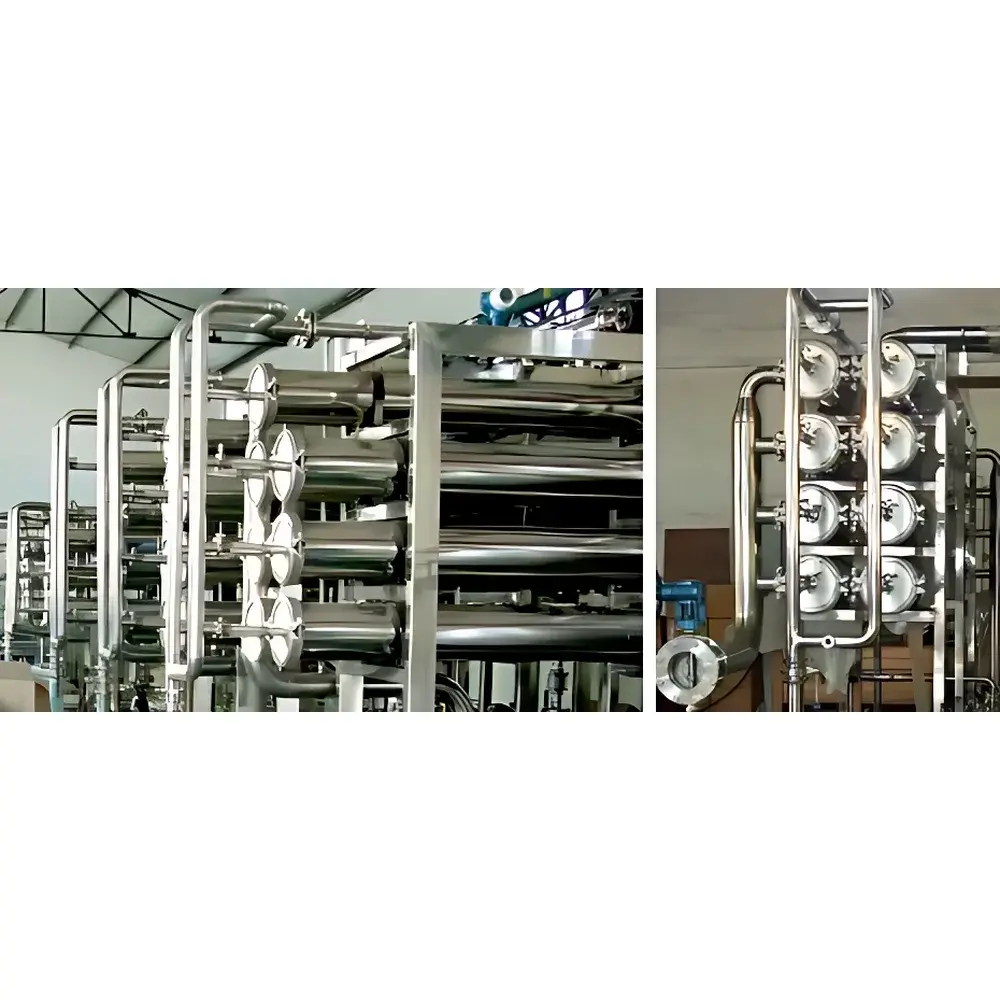
New Biolink NF-Series Laboratory Nanofiltration System
| Brand | New Biolink |
|---|---|
| Origin | Beijing, China |
| Manufacturer Type | Authorized Distributor |
| Product Category | Domestic |
| Model | NF-Series |
| Pricing | Available Upon Request |
| Sample Processing | Industrial Wastewater & Process Streams |
| Molecular Weight Cut-Off (MWCO) | 100–1000 Da |
| Membrane Charge | Surface-Charged (Donnan Exclusion Dominant) |
| Divalent Ion Rejection | >90% (e.g., SO₄²⁻, Ca²⁺, Mg²⁺) |
| Monovalent Ion Rejection | 10–40% (e.g., Na⁺, Cl⁻) |
| Operating Temperature Range | 5–45 °C |
| Max Inlet Pressure | 25 bar |
| Feed pH Range | 3–11 |
| Membrane Material | Polyamide Thin-Film Composite (TFC) |
| System Configuration | Benchtop Skid-Mounted with Recirculation Loop, Pressure Control, and Permeate Monitoring |
Overview
The New Biolink NF-Series Laboratory Nanofiltration System is an engineered benchtop platform designed for selective solute separation based on molecular size, charge, and hydration radius. Unlike reverse osmosis (RO) or ultrafiltration (UF), nanofiltration (NF) operates under moderate hydraulic pressure (typically 5–25 bar) and exploits Donnan exclusion—leveraging the fixed surface charge of polyamide thin-film composite membranes—to achieve preferential rejection of multivalent ions while permitting partial passage of monovalent salts. This electrostatic discrimination enables simultaneous concentration and desalting of thermolabile biomolecules without phase change, making the system particularly suitable for downstream processing in pharmaceutical, biotechnological, and food-grade applications where preservation of structural integrity and functional activity is critical.
Key Features
- Benchtop skid-mounted architecture with integrated feed tank, high-pressure pump, pressure regulator, temperature sensor, and real-time permeate flow monitoring
- Surface-charged polyamide TFC membrane elements with nominal MWCO of 100–1000 Da—validated per ASTM D4189 and ISO 15712 standards for retention profiling
- Adjustable crossflow velocity and transmembrane pressure to optimize flux, fouling resistance, and selectivity across diverse feed matrices
- Chemical-resistant wetted parts (316L stainless steel, EPDM gaskets, PTFE tubing) compatible with pH 3–11 and common CIP agents (e.g., citric acid, NaOH)
- Low-energy operation: typically consumes <1.5 kWh/m³ permeate at 15–20 bar—significantly lower than thermal evaporation or ion exchange regeneration cycles
- No acid/base regeneration waste streams; eliminates secondary disposal liabilities associated with resin-based desalting
Sample Compatibility & Compliance
The NF-Series accommodates complex aqueous feeds including fermentation broths, enzymatic hydrolysates, fruit juice extracts, dye effluents, and spent alkaline wash streams from fiber production or banknote manufacturing. It supports GLP-compliant process development when operated with calibrated pressure transducers and validated flow meters. While not certified to FDA 21 CFR Part 11 out-of-the-box, the system’s analog I/O interface allows integration with compliant SCADA or LIMS platforms supporting audit trail generation, user access control, and electronic signature capability. All materials comply with USP Class VI and EU 10/2011 food-contact regulations where applicable.
Software & Data Management
The system includes a programmable logic controller (PLC)-based local HMI for setting and logging operational parameters—including inlet pressure, retentate temperature, permeate volume, and cumulative runtime. Optional Ethernet-enabled data acquisition modules support CSV export and time-stamped event logging. For advanced analysis, raw flux and rejection data can be exported for post-processing in MATLAB, Python (Pandas), or industry-standard tools such as UNICORN or DeltaV—enabling calculation of mass balance, rejection coefficients (R = 1 − Cp/Cf), and fouling index (SDI). All firmware updates are delivered via secure HTTPS with SHA-256 signature verification.
Applications
- Pharmaceutical intermediate purification: concentration and partial desalting of β-lactam antibiotics (6-APA, 7-ACA), macrolides (erythromycin), glycopeptides (vancomycin), and enzyme inhibitors (acarbose, orlistat)
- Biopolymer processing: glutathione, mycophenolic acid, and phenylalanine recovery with concurrent removal of residual sulfate or phosphate salts
- Food & nutraceuticals: fructose enrichment from hydrolyzed starch, oligosaccharide fractionation (GOS, FOS), and low-temperature juice clarification without aroma loss
- Industrial wastewater valorization: recovery of caustic soda from viscose rayon production or intaglio printing rinse water—reducing NaOH procurement costs by up to 70%
- Drinking water upgrading: removal of natural organic matter (NOM), hardness ions, and micropollutants (e.g., endocrine disruptors) ahead of final disinfection
FAQ
What feed pretreatment is required prior to nanofiltration?
Feed streams must be prefiltered to ≤5 µm (e.g., cartridge or bag filtration) to prevent membrane surface blinding. High-suspended-solids broths may require centrifugation or microfiltration (0.2–0.45 µm) as a polishing step.
Can this system operate continuously for extended periods?
Yes—the recirculation loop design supports unattended 72-hour runs with automated shutdown on pressure deviation (>±15%) or temperature excursion (>±3 °C). Routine CIP is recommended every 8–12 operating hours depending on feed fouling potential.
Is membrane cleaning chemistry included?
No—cleaning agents (e.g., 0.1% citric acid for inorganic scaling, 0.1% NaOH + 0.05% NaOCl for biofouling) must be selected based on feed characterization and validated per manufacturer guidelines. New Biolink provides a certified cleaning protocol library upon request.
How is rejection performance verified?
Rejection is calculated gravimetrically or via conductivity/IC measurement of feed and permeate. Certified reference standards (e.g., Na₂SO₄, MgCl₂, NaCl) are used during commissioning to establish baseline R-values per ASTM D4189-18 Annex A3.
Does the system support GMP documentation packages?
Yes—upon order, New Biolink supplies IQ/OQ documentation templates, material traceability records (MTRs), and calibration certificates for all field-installed sensors, aligned with ISO 9001:2015 and Annex 11 principles.



