
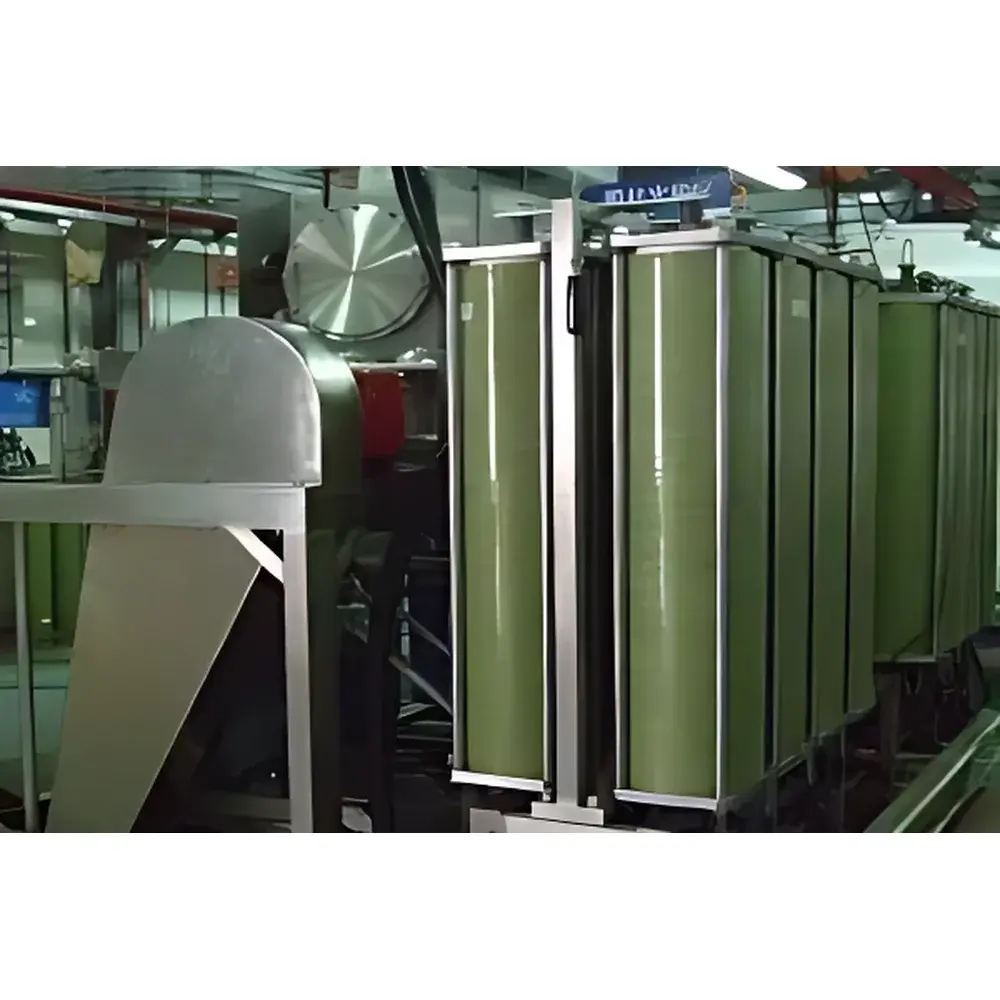
New Biolink Ultra-High-Pressure Reverse Osmosis (UHP-RO) Membrane Concentration System
| Brand | New Biolink |
|---|---|
| Model | UHP-RO Series |
| Max Operating Pressure | 20 MPa |
| Membrane Type | High-Pressure Tolerant RO Element with Open-Channel Feed Spacer |
| Feed Compatibility | High-Salinity Wastewater (TDS up to 120,000 mg/L) |
| Recovery Rate | ≥75% (system-dependent) |
| Origin | Beijing, China |
| Application | Laboratory-Scale Wastewater Concentration and Brine Minimization |
Overview
The New Biolink Ultra-High-Pressure Reverse Osmosis (UHP-RO) Membrane Concentration System is a purpose-engineered laboratory-scale purification platform designed for the selective concentration and volume reduction of high-salinity aqueous waste streams. Unlike conventional RO systems limited to ≤6–8 MPa, this system operates at up to 20 MPa—sufficient to overcome the osmotic pressure of brines exceeding 100,000 mg/L total dissolved solids (TDS). It functions on the principle of pressure-driven solvent (water) transport through a semi-permeable polyamide thin-film composite (TFC) membrane, while rejecting multivalent ions (e.g., Ca²⁺, SO₄²⁻), monovalent salts (NaCl, KCl), colloids, and non-volatile organics. The system is not intended for potable water production or molecular weight cutoff-based fractionation; rather, it serves as a pre-concentration step prior to thermal evaporation, crystallization, or zero-liquid discharge (ZLD) integration in research and pilot-scale environmental engineering workflows.
Key Features
- Stainless steel (316L) high-pressure fluid path rated for continuous operation at 20 MPa, with integrated pressure relief valves and real-time digital pressure monitoring.
- Custom-designed open-channel feed spacers that minimize hydraulic dead zones and reduce fouling propensity during extended operation with suspended solids or organic-laden feedwaters.
- Modular membrane housing accommodating standard 2.5″ or 4″ diameter spiral-wound elements—compatible with third-party UHP-RO membranes meeting ASTM D4194 and ISO 3183 specifications.
- Variable-speed high-pressure pump with closed-loop flow control to maintain stable crossflow velocity (0.5–2.5 m/s) across the membrane surface, mitigating concentration polarization.
- Integrated temperature-compensated conductivity and pH sensors for real-time feed/permeate quality tracking—calibrated per ISO 7888 and ASTM D1125 protocols.
- Compact footprint (<0.8 m²) and CE-compliant electrical architecture suitable for Class II biosafety and chemical fume hood environments.
Sample Compatibility & Compliance
The UHP-RO system is validated for use with synthetic and real-world high-salinity wastewaters, including flue gas desulfurization (FGD) blowdown, reverse osmosis concentrate from municipal desalination plants, produced water from oil & gas operations, and electroplating rinse effluents. Feed streams must be pre-filtered to ≤5 µm particulate matter (via cartridge or multimedia filtration) and stabilized for free chlorine (<0.1 mg/L) to prevent membrane oxidation. The system complies with ISO 9001 manufacturing controls and supports GLP-aligned documentation: all operational parameters (pressure, flow, temperature, conductivity) are timestamped and exportable in CSV/Excel format for audit readiness. While not certified under FDA 21 CFR Part 11, its data logging architecture permits configuration for electronic signature and audit trail implementation in regulated R&D settings.
Software & Data Management
The embedded controller features a 7-inch capacitive touchscreen HMI running a deterministic real-time OS. All process variables—including transmembrane pressure (TMP), permeate flux (L/m²·h), salt rejection (%), and cumulative energy consumption (kWh/m³)—are logged at user-defined intervals (1 s to 10 min). Data export supports USB flash drive transfer and optional Ethernet/Wi-Fi connectivity for SCADA integration. The accompanying PC software (Windows 10/11 compatible) enables comparative analysis across multiple runs, automated report generation (PDF/HTML), and overlay visualization of fouling index trends (SDI, MFI-UF). Raw logs conform to IEEE 1512-2019 metadata standards for traceability.
Applications
- Pre-concentration of RO reject streams to reduce downstream evaporator load in ZLD pilot studies.
- Salinity gradient modeling and membrane fouling mechanism investigation under elevated osmotic stress conditions.
- Recovery of valuable ions (e.g., Li⁺, Mg²⁺) from hypersaline geothermal brines via staged UHP-RO + electrodialysis coupling.
- Validation of antiscalant and cleaning agent performance under realistic field-relevant pressures and recovery ratios.
- Development of dynamic fouling mitigation strategies using real-time permeate flux decay modeling (e.g., Hermia’s cake filtration vs. complete blocking models).
FAQ
What is the maximum allowable feed TDS for stable operation?
The system has been tested with synthetic brines up to 120,000 mg/L TDS at 15–20 MPa; however, sustained operation above 100,000 mg/L requires rigorous pretreatment and periodic CIP cycles.
Can this system be used with organic solvents or low-pH acidic streams?
No—membrane compatibility is limited to aqueous solutions within pH 2–11 and <5% v/v low-molecular-weight alcohols (e.g., methanol); exposure to ketones, chlorinated hydrocarbons, or strong oxidizers will degrade the polyamide layer.
Is remote monitoring supported out-of-the-box?
Standard configuration includes local HMI and USB data export; optional Modbus TCP or OPC UA gateways enable integration into existing lab automation networks.
Does the system include validation documentation for GxP environments?
Factory test reports (FAT), material certifications (EN 10204 3.1), and IQ/OQ templates are provided; full PQ execution requires site-specific challenge testing per ICH Q5A and USP .



