
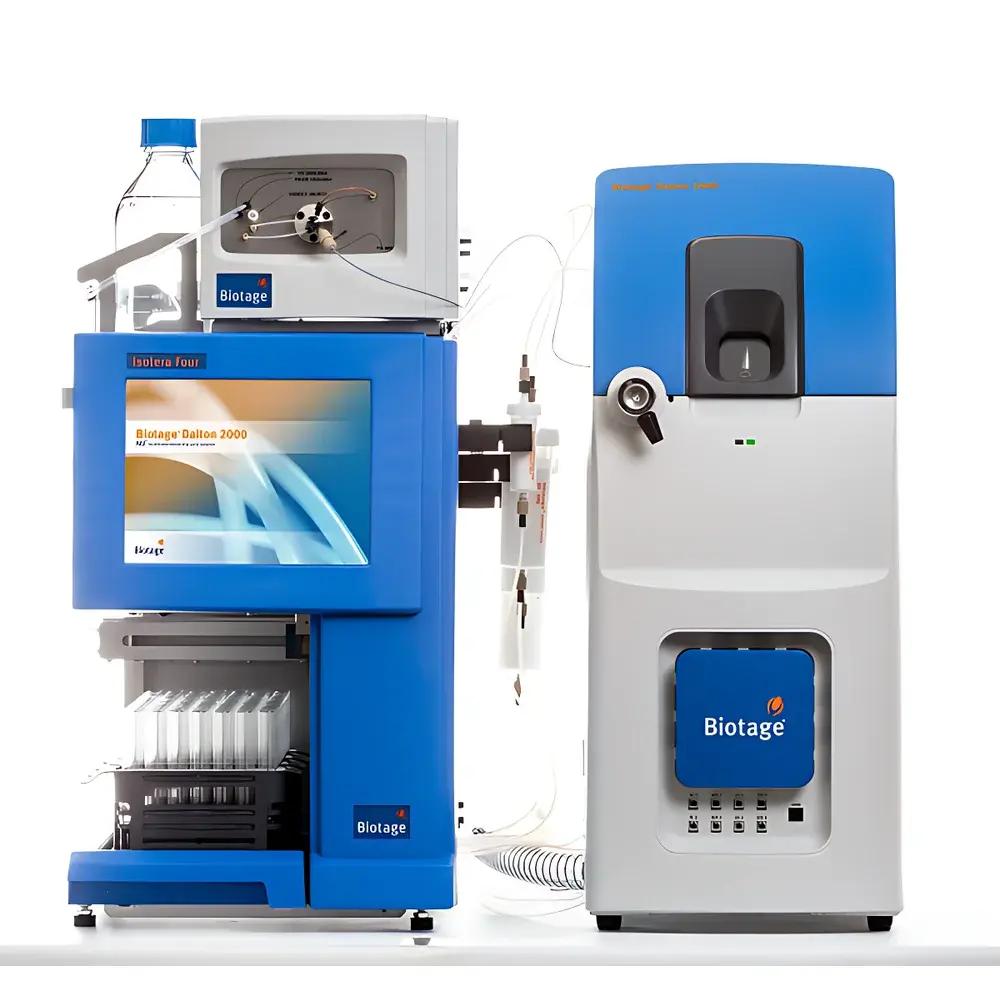
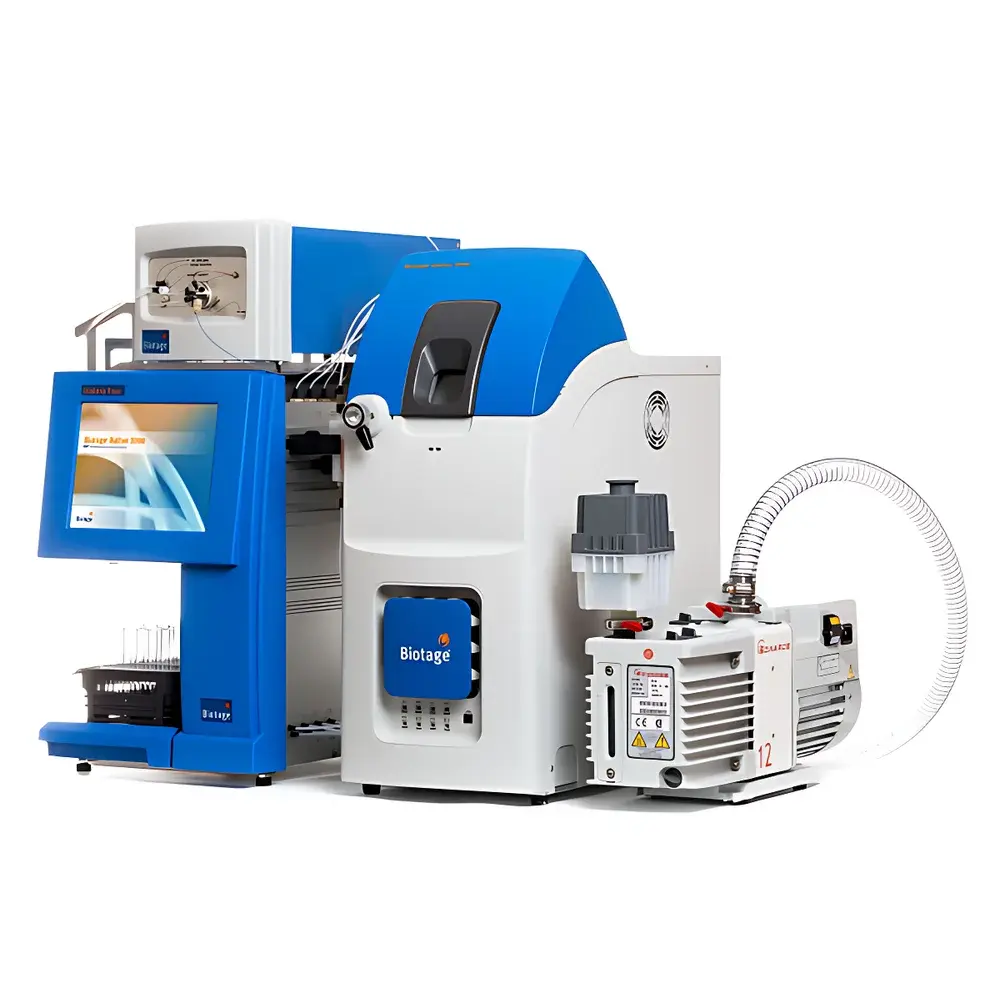

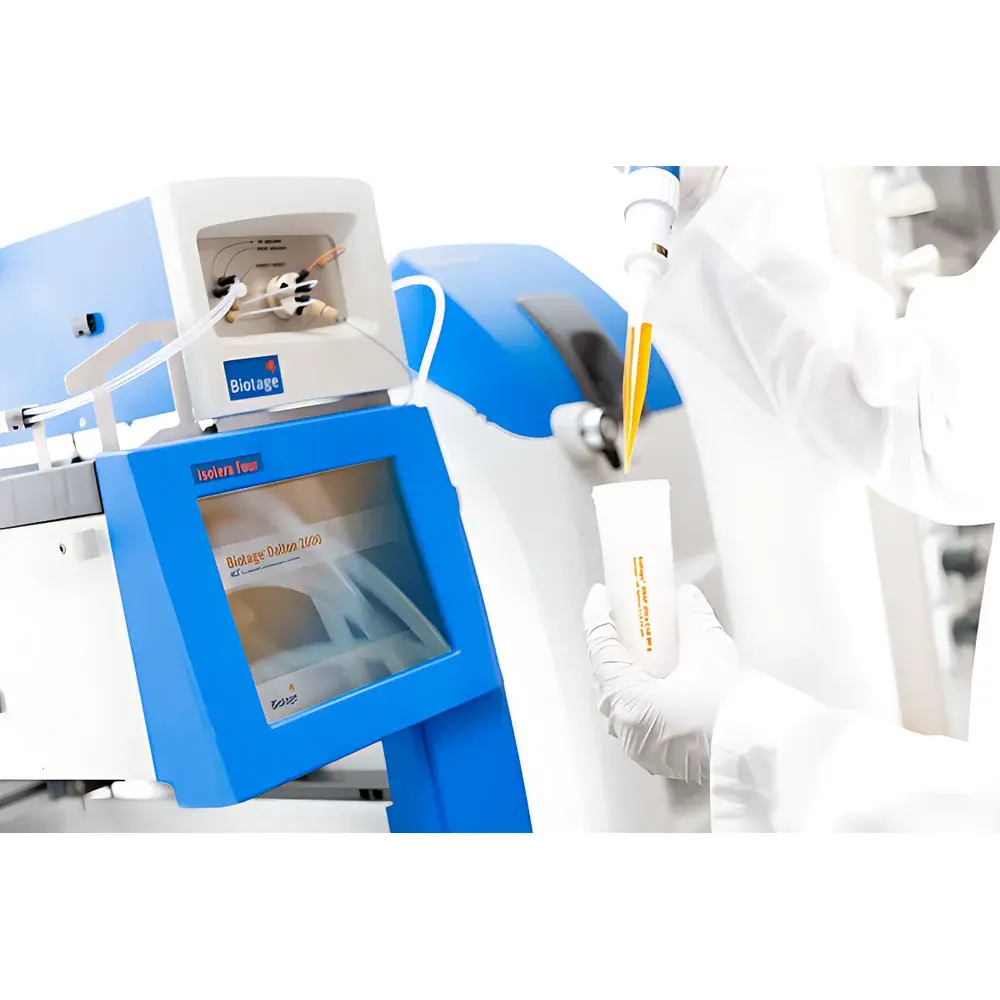
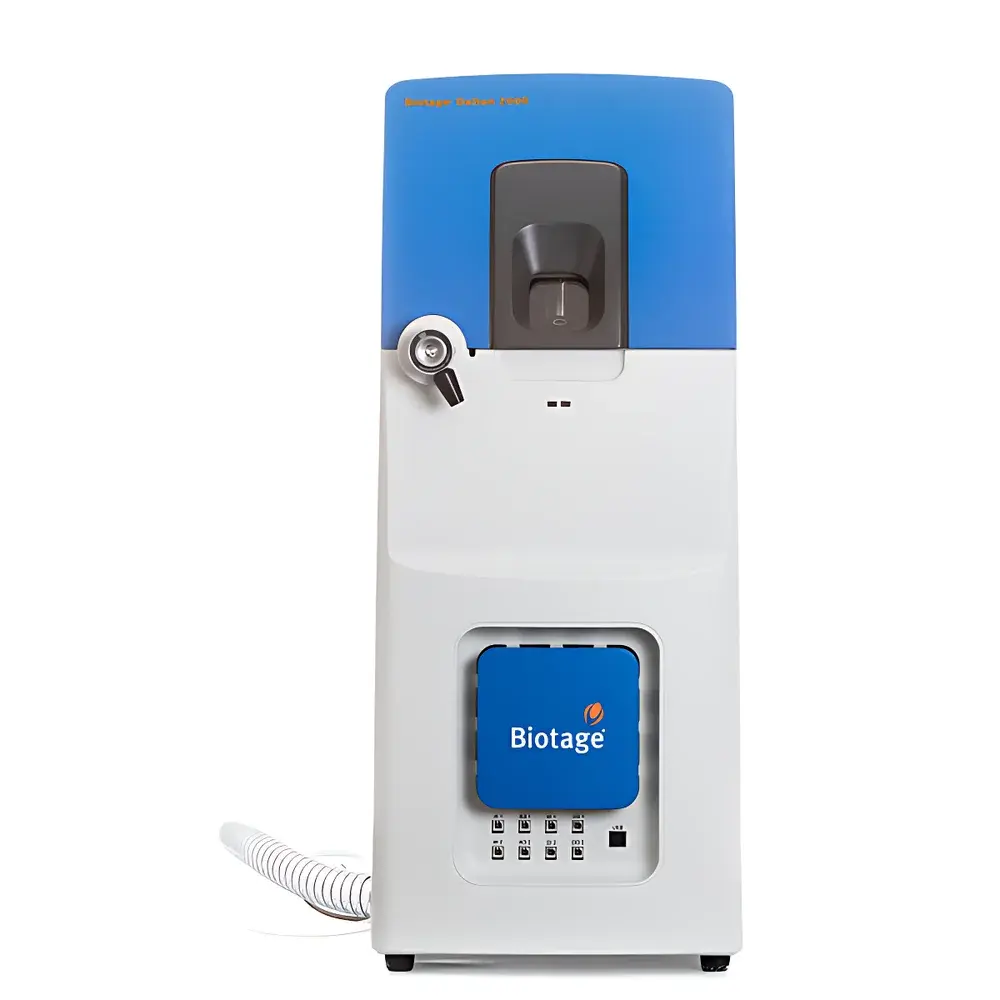
Biotage Isolera Dalton 2000 Preparative Flash Chromatography System with Integrated Single-Quadrupole Mass Spectrometer
| Brand | Biotage |
|---|---|
| Origin | Sweden |
| Model | Isolera Dalton 2000 |
| Application Level | Laboratory |
| Instrument Type | Medium-to-Low Pressure Preparative Liquid Chromatography System |
| Flow Rate Range | 1–200 mL/min |
| Flow Accuracy | RSD ≤ 0.5% |
| Flow Precision | RSD ≤ 0.2% |
| Maximum Operating Pressure | 145 psi |
| Wavelength Accuracy | ≤ ±1 nm |
| Wavelength Repeatability | 0.1 nm |
| Baseline Noise | ≤ 2 × 10⁻⁵ AU (peak-to-peak, methanol, 1 mL/min, 254 nm, 20 °C) |
| Data Acquisition Rate | 10 Hz |
| Mass Range | m/z 80–2000 |
| Ionization Modes | Simultaneous Positive/Negative APCI (ESI optional) |
Overview
The Biotage Isolera Dalton 2000 is an integrated preparative flash chromatography system engineered for real-time mass-directed fraction collection. Unlike conventional offline purification workflows, this platform combines a high-performance medium-pressure flash purification engine (Isolera Spektra) with a compact, benchtop single-quadrupole mass spectrometer (Dalton 2000) and a proprietary intelligent interface—the Dalton Nanolink. The system operates on atmospheric pressure chemical ionization (APCI), with electrospray ionization (ESI) available as an optional source. Its core function is to enable structural confirmation *during* purification: as compounds elute from the column, the Dalton 2000 acquires full-scan or selected-ion mass spectra in real time, triggering automated fraction collection based on user-defined m/z targets. This eliminates post-purification analytical bottlenecks—particularly critical in pharmaceutical lead optimization, where rapid iteration between synthesis, purification, and structural verification dictates project velocity.
Key Features
- Real-time, mass-triggered fraction collection during flash chromatography runs
- Simultaneous positive- and negative-ion mode detection without hardware reconfiguration
- Dalton Nanolink interface ensures precise, flow-compensated sample splitting across column dimensions (0.5–100 mm i.d.) and flow rates (1–200 mL/min)
- Two acquisition-driven collection modes: Total Ion Chromatogram (TIC)-based range collection (e.g., m/z 90–2000) and Extracted Ion Chromatogram (XIC)-based targeted collection for up to four distinct m/z values per run
- “End Run After Peak” logic: automatically terminates the run upon successful detection and collection of a predefined target ion signal—only active in XIC mode
- Onboard mass calibration and lock-mass capability ensure long-term mass accuracy stability (±0.1 Da over 24 h)
- Direct infusion MS capability for rapid compound characterization independent of LC separation
Sample Compatibility & Compliance
The Isolera Dalton 2000 supports standard flash solvents (hexane, EtOAc, DCM, MeOH, ACN, water, and common modifiers) and accommodates both normal-phase and reversed-phase silica-based columns. It complies with GLP-relevant data integrity requirements: all acquisition parameters, fraction triggers, and collection events are timestamped and logged within the Biotage Horizon software suite. Audit trails meet FDA 21 CFR Part 11 criteria for electronic records and signatures when deployed with appropriate system configuration and administrative controls. Method files include embedded metadata (operator ID, instrument serial, calibration date), and raw MS/Chromatographic data are stored in vendor-neutral .CDF format for third-party reprocessing. The system is validated for use in early-stage small-molecule drug discovery per ICH M7 and Q5 guidelines, where structural identity confirmation is required prior to biological testing.
Software & Data Management
Controlled via Biotage Horizon software, the platform provides unified method development, instrument control, and data review. Horizon implements a role-based access control (RBAC) architecture, supporting defined user privileges (e.g., operator, supervisor, administrator). All MS and UV data are acquired synchronously at 10 Hz and co-registered to retention time. Fraction collection decisions are logged with full traceability—including trigger m/z, intensity threshold, integration window, and physical vial position. Raw data exports support ASTM E1946-compliant formats (.cdf, .mzML) and can be imported into third-party cheminformatics platforms (e.g., ChemAxon, ACD/Labs). Software updates follow ISO 13485-aligned change control procedures; version history and patch notes are maintained in the embedded documentation module.
Applications
- Rapid purification of synthetic intermediates and final compounds in medicinal chemistry campaigns
- Isolation of natural product analogs from complex extracts using mass-guided fractionation
- Removal of closely eluting impurities with identical UV profiles but distinct molecular weights
- Verification of reaction completeness and byproduct identification during route scouting
- Preparative-scale isolation of deuterated or isotopically labeled standards for quantitative bioanalysis
- Supporting regulatory submissions by providing contemporaneous structural evidence alongside purified material
FAQ
Can the Dalton 2000 operate independently of the Isolera purification system?
Yes—it functions as a standalone direct-infusion mass spectrometer with full scanning and targeted acquisition capabilities.
Is ESI ionization mandatory, or is APCI sufficient for most small-molecule applications?
APCI is the standard and recommended source for typical flash-eluting compounds (MW < 1,000 Da); ESI is optional and primarily used for polar or thermally labile analytes.
How does the Nanolink maintain consistent MS sensitivity across varying flow rates?
It employs a dynamic split ratio algorithm that adjusts the diverted flow to the MS based on real-time pump output, maintaining constant nebulizer gas load and ion transmission efficiency.
Does the system support GMP-compliant reporting for regulated environments?
When configured with Horizon’s 21 CFR Part 11 module (including electronic signatures, audit trail review, and secure backup), it meets documentation requirements for non-clinical laboratory studies under GLP.
What is the minimum detectable amount for a target compound during online MS detection?
Detection limits depend on compound ionizability and matrix effects; typical LODs range from 10–100 ng on-column for APCI-optimized small molecules under standard flash conditions.





