
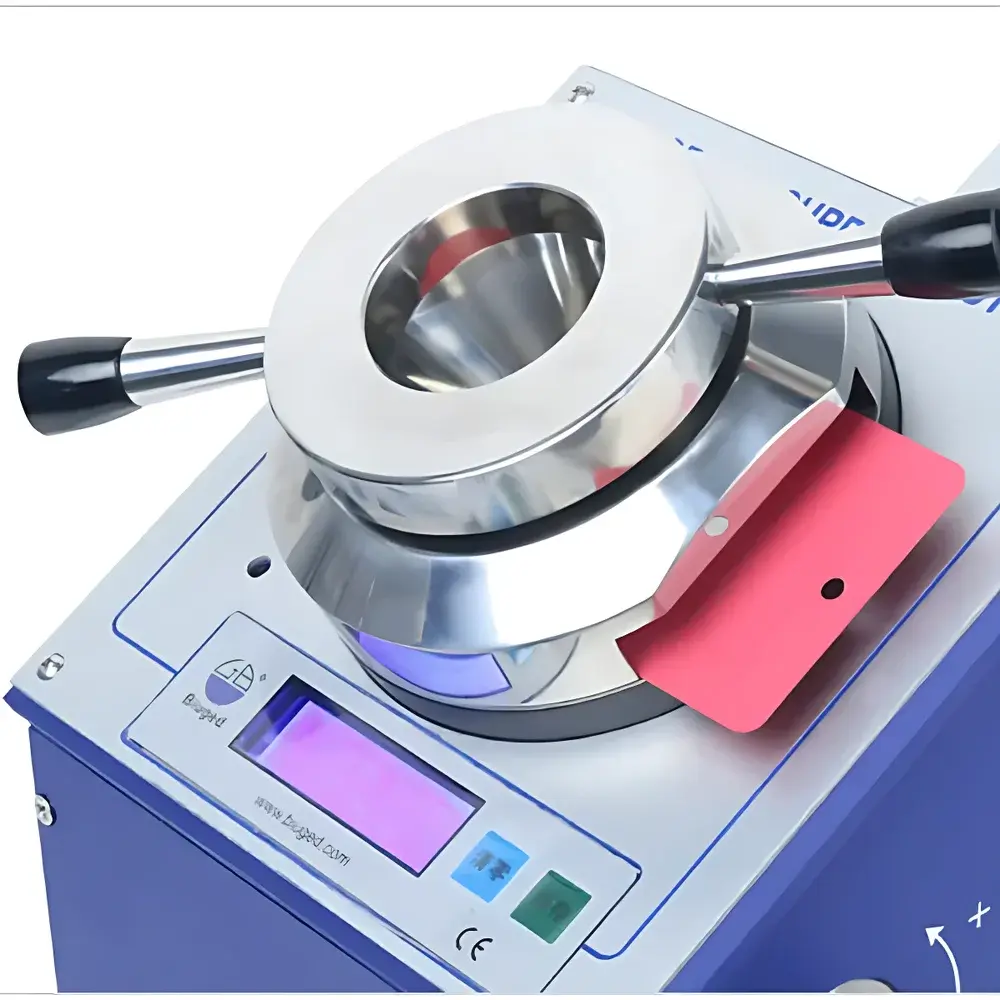
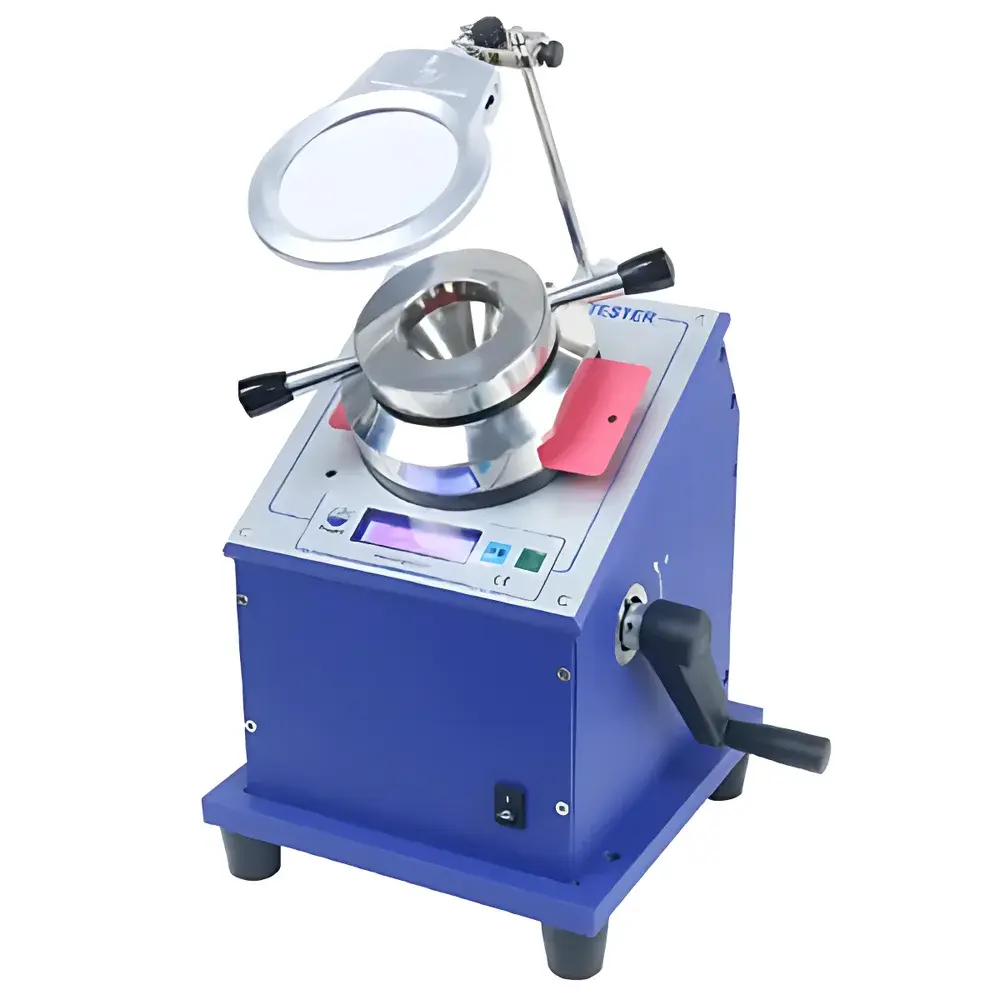
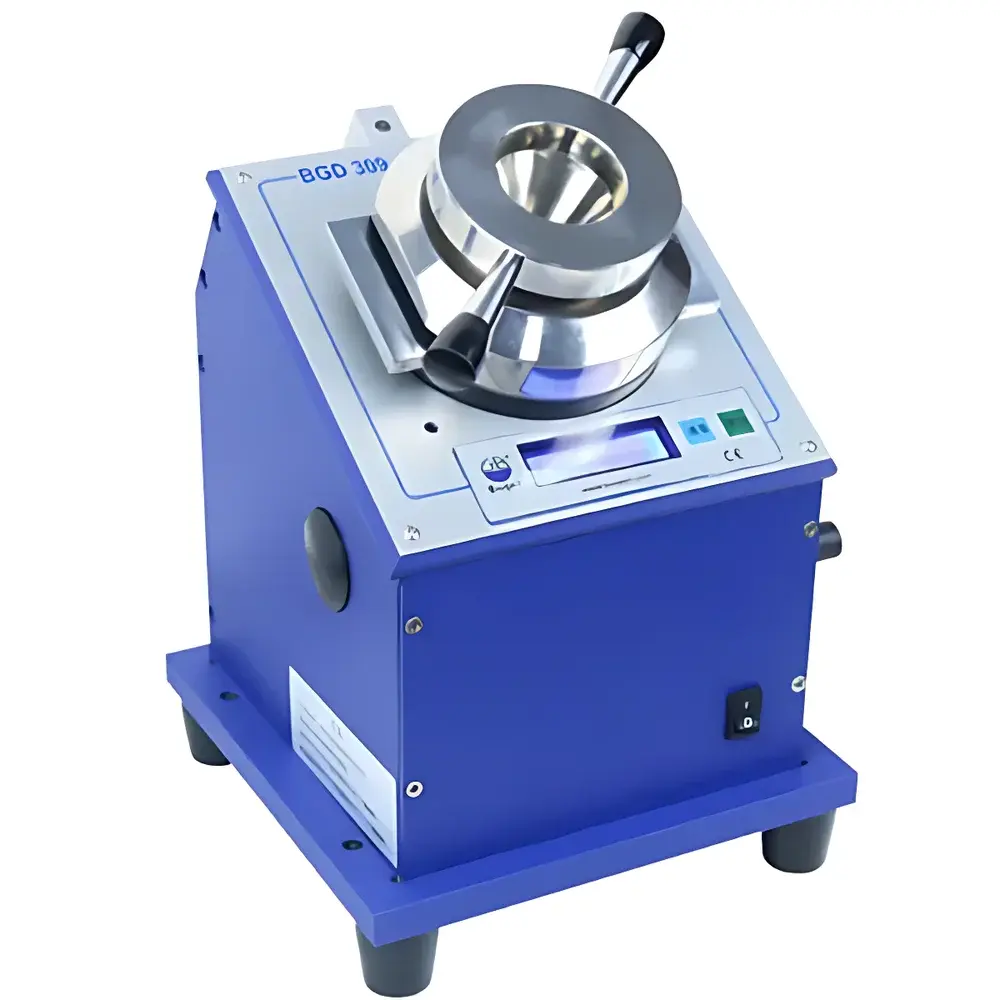
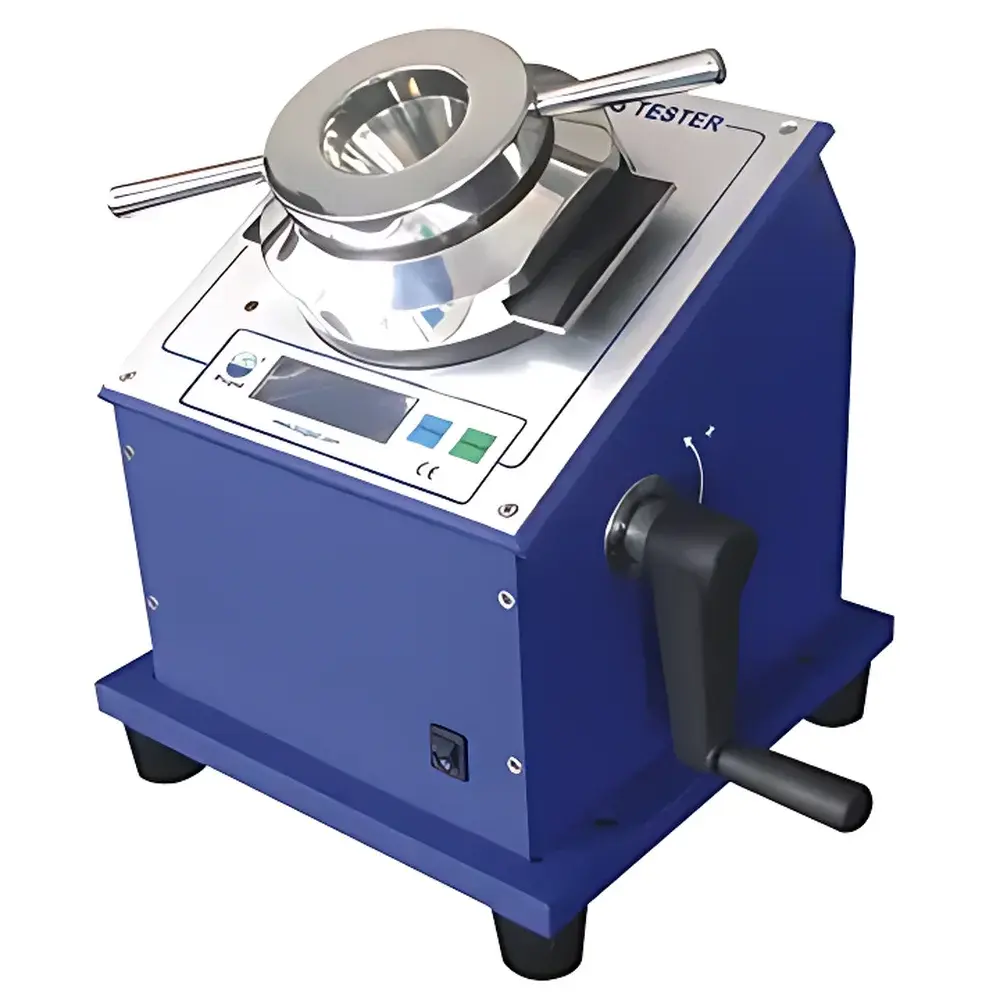
Biuged BGD 309 Erichsen Cupping Tester
| Brand | Biuged |
|---|---|
| Origin | Guangdong, China |
| Manufacturer Type | Direct Manufacturer |
| Model | BGD 309 |
| Cupping Punch Diameter | 20 mm |
| Maximum Indentation Depth | 12 mm |
| Depth Resolution | 0.01 mm (via high-precision linear position sensor) |
| Depth Graduation | 0.1 mm |
| Maximum Test Force | 2500 N |
| Specimen Thickness Range | 0.3–1.25 mm |
| Dimensions (L×W×H) | 290 × 240 × 370 mm |
| Net Weight | 28 kg |
Overview
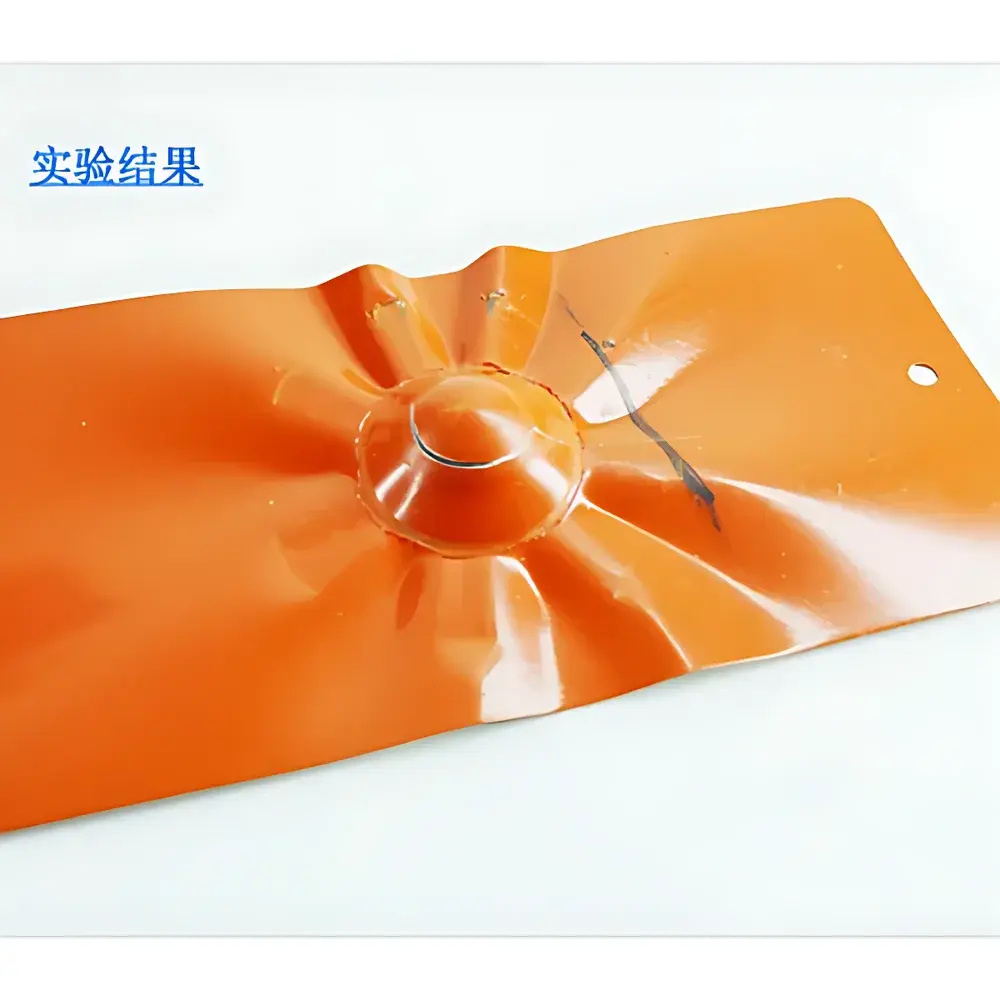
The Biuged BGD 309 Erichsen Cupping Tester is a precision mechanical instrument engineered for standardized evaluation of coating ductility and adhesion performance on rigid substrates under controlled biaxial deformation. Operating on the fundamental principle of the Erichsen cupping test—where a hemispherical punch progressively deforms a clamped flat specimen until coating failure occurs—the BGD 309 quantifies the critical indentation depth (Erichsen number, in mm) at which cracking, flaking, or delamination initiates. This measurement provides an objective, reproducible metric for comparative assessment of film integrity across formulation batches, curing conditions, or substrate-coating interface compatibility. Designed to comply strictly with ISO 1520, ASTM D4145 (equivalent to DIN EN ISO 1520), GB/T 9753, and BS 3900-E3, the instrument delivers metrologically traceable results suitable for quality control laboratories in automotive OEM supply chains, appliance manufacturing, coil coating facilities, and R&D departments evaluating protective organic coatings on metal, plastic, or composite panels.
Key Features
- Automated coordinate positioning system: Maintains zero-reference memory for punch position during continuous operation (power-on retention), eliminating manual re-zeroing and minimizing operator-induced positional drift between tests.
- High-resolution linear position sensing: Integrated non-contact displacement transducer achieves 0.01 mm resolution in indentation depth measurement—exceeding the 0.1 mm graduation requirement of ISO 1520 while enabling finer trend analysis in process validation studies.
- Universal substrate adaptability: Accommodates coated specimens from 0.3 mm to 1.25 mm thickness, including cold-rolled steel, aluminum alloys, galvanized sheet, and rigid polymer substrates such as ABS or polycarbonate.
- Manual zero-reset functionality: Allows immediate recalibration of punch origin prior to each test cycle, supporting method flexibility for non-standard geometries or multi-point testing protocols.
- Integrated 10× illuminated magnifier: Supplied as standard equipment; enables unambiguous visual identification of first crack initiation, edge lifting, or interfacial separation per ISO 1520 Annex A criteria.
- Ergonomic handwheel drive: Precision-machined gear reduction mechanism ensures smooth, low-effort force application with tactile feedback—critical for maintaining consistent loading rate during manual operation per GB/T 9753 Clause 6.2.
Sample Compatibility & Compliance
The BGD 309 supports standardized testing of organic coatings—including liquid paints, powder coatings, and conversion coatings—applied to metallic substrates (e.g., EN 10131 DC01, ASTM A653 G90) and select non-metallic panels meeting dimensional stability requirements under biaxial strain. All test procedures align with ISO/IEC 17025–compliant laboratory practices when operated within specified environmental conditions (23 ± 2 °C, 50 ± 5 % RH). The instrument’s mechanical design and calibration traceability support audit readiness for ISO 9001, IATF 16949, and OEM-specific coating specifications (e.g., Ford WSS-M2P195-A2, GMW 14872). Calibration certificates are issued against NIST-traceable reference standards for displacement and force verification.
Software & Data Management
While the BGD 309 operates as a stand-alone mechanical tester without embedded digital control, its architecture supports integration into LIMS and QA documentation workflows via optional analog output (0–10 V) for depth signal logging. Users may connect external data acquisition systems compliant with FDA 21 CFR Part 11 requirements—including electronic signatures, audit trails, and secure data archiving—when paired with validated third-party DAQ hardware and software. Raw test records—including specimen ID, operator, date/time stamp, measured Erichsen number, and pass/fail designation per acceptance criteria—are retained in accordance with GLP principles for regulatory submissions and internal CAPA investigations.
Applications
- Quality assurance of pre-painted metal coils used in refrigerator cabinets, washing machine drums, and HVAC enclosures.
- Formulation screening of acrylic, epoxy, and polyester-based topcoats for improved stretchability without loss of corrosion resistance.
- Process validation of curing oven dwell time and temperature profiles in continuous coil coating lines.
- Adhesion benchmarking of primer-surfacer systems on galvanized steel substrates prior to electrocoat application.
- Failure analysis of field-returned components exhibiting post-forming coating defects (e.g., “orange peel” cracking after deep drawing).
FAQ
What standards does the BGD 309 conform to?
ISO 1520, ASTM D4145, GB/T 9753, and BS 3900-E3.
Can the instrument test non-metallic substrates?
Yes—provided the substrate maintains dimensional rigidity under load and falls within the 0.3–1.25 mm thickness range.
Is force calibration required before each test?
No; the 2500 N maximum force capacity is mechanically limited by the punch-stroke stop and does not require dynamic load cell recalibration for routine use.
How is the Erichsen number determined visually?
Using the included 10× LED-lit magnifier, operators identify the first observable crack or delamination event at the specimen surface or interface, then read the corresponding depth value from the calibrated scale.
Does the device support automated data export?
Not natively—but analog depth output enables connection to external DAQ systems configured for CSV or database logging in regulated environments.



