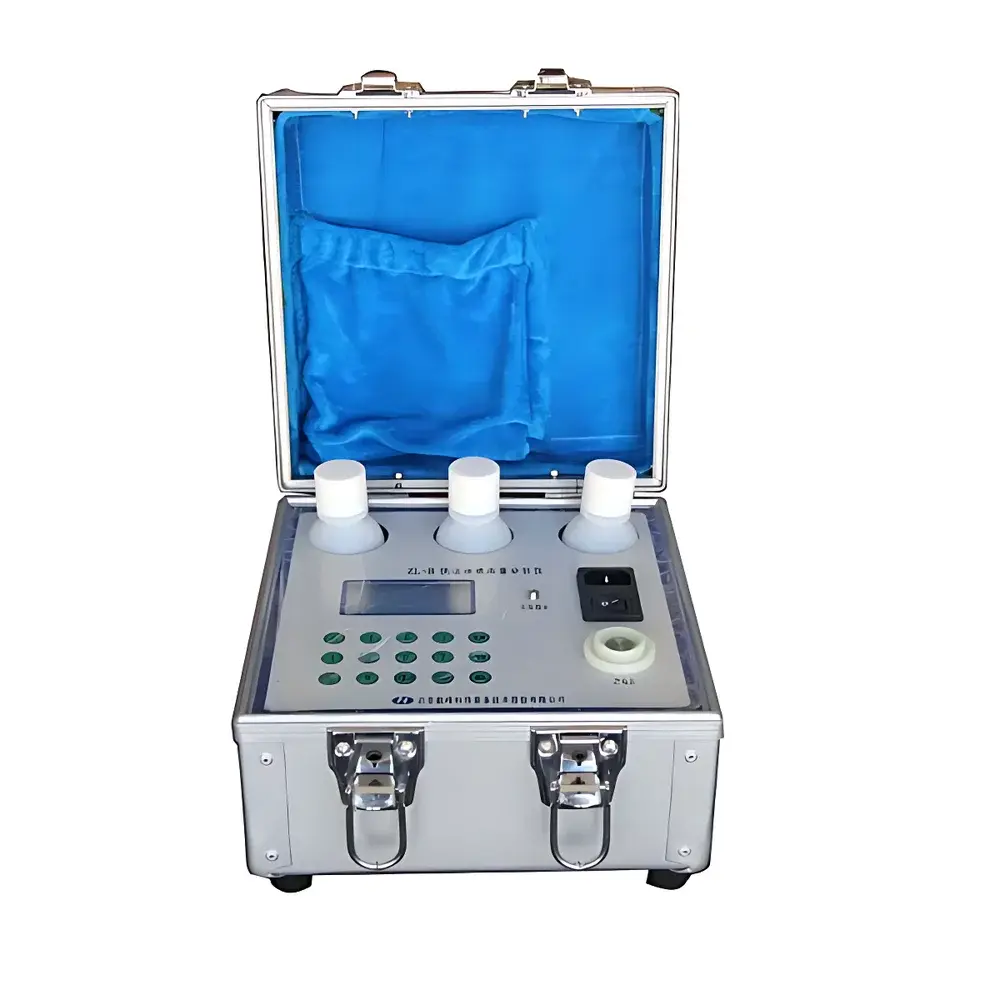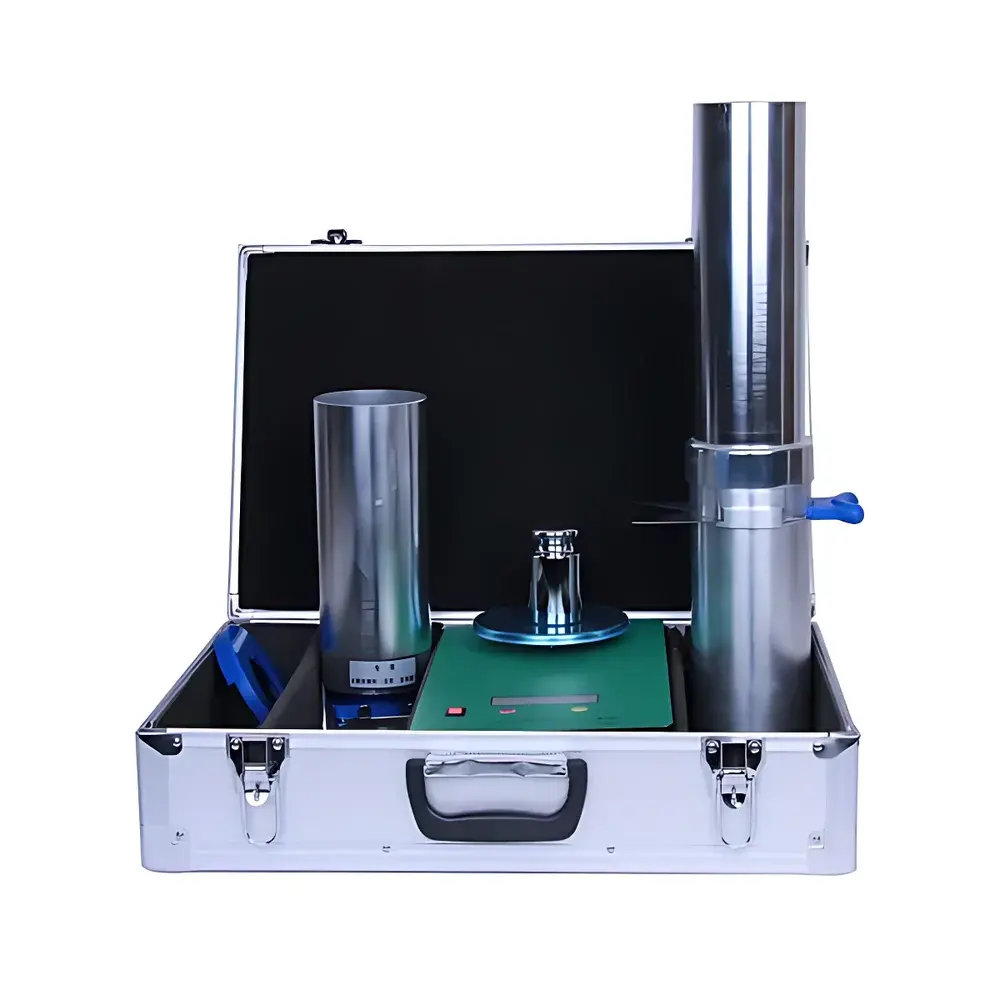
BLD-1000 Portable Electronic Grain Test Weight Analyzer
| Origin | Beijing, China |
|---|---|
| Manufacturer Type | Authorized Distributor |
| Regional Origin | Domestic (PRC) |
| Model | BLD-1000 |
| Price Range | USD 1,400–7,000 |
| Instrument Type | Portable |
| Measurement Time | ≤0.2 s |
| Sample Mass | 1000 ±2 g |
| Hopper Orifice Diameter (Small Grain) | 30 mm |
| Hopper Orifice Diameter (Large Grain) | 40 mm |
| Grain Cylinder Volume | 1000 ±1.5 mL |
| Resolution | 1 g |
| Power Consumption | 10 W |
| Operating Temperature | 5–40 °C |
| Relative Humidity | <90% RH |
| Power Supply | AC 220 V, 50 Hz |
| Rechargeable Battery | Integrated (Li-ion, optional operation mode) |
Overview
The BLD-1000 Portable Electronic Grain Test Weight Analyzer is a precision field and laboratory instrument engineered for rapid, standardized determination of test weight (also known as bulk density or volumetric mass density) in cereal grains—including wheat, paddy rice, sorghum, and maize. It operates on the gravimetric displacement principle defined in GB/T 5498–2013 “Grains and Oilseeds—Determination of Test Weight” and complies with measurement requirements specified in GB 1353–2018 “Maize”. Unlike traditional mechanical testers relying on manual filling and tapping, the BLD-1000 automates grain flow control via gravity-fed hoppers with calibrated orifices, ensuring consistent sample compaction and minimizing operator-induced variability. Its compact, battery-compatible architecture enables deployment at grain receiving stations, silos, elevators, and mobile inspection units—supporting real-time quality gatekeeping during procurement and storage operations.
Key Features
- Portable, ruggedized chassis with integrated rechargeable lithium-ion battery for uninterrupted operation in off-grid or mobile environments
- Dual-hopper configuration: interchangeable 30 mm (for small-grain cereals) and 40 mm (for large-grain cereals) orifices to maintain optimal flow dynamics per grain morphology
- Precision-machined 1000 ±1.5 mL stainless-steel grain cylinder meeting dimensional tolerances mandated by GB/T 5498
- High-stability load cell with 1 g resolution and full-scale capacity of 1000 ±2 g, validated against NIST-traceable reference masses
- Automated measurement cycle completed in ≤0.2 seconds, including fill, settle, and weight acquisition phases
- Low-power design (10 W nominal), compatible with AC 220 V/50 Hz mains or DC input via external power bank (optional)
- Environmental operating range: 5–40 °C ambient temperature and <90% RH non-condensing humidity
Sample Compatibility & Compliance
The BLD-1000 supports standardized test weight assessment across major cereal commodities regulated under Chinese national grain standards. It accommodates naturally dried or conditioned samples of wheat (Triticum aestivum), paddy rice (Oryza sativa), sorghum (Sorghum bicolor), and dent/field maize (Zea mays). Each measurement conforms to the fixed-volume, free-fall methodology described in GB/T 5498–2013, which specifies controlled grain discharge through a defined orifice into a calibrated cylinder, followed by surface leveling and mass recording. The instrument’s physical dimensions, hopper geometry, and cylinder volume are certified to meet metrological traceability requirements for official grain grading and commercial arbitration testing. While not certified to ISO/IEC 17025 for accredited calibration laboratories, its design aligns with routine quality control protocols used in grain trading, storage management, and regulatory compliance workflows governed by the State Administration for Market Regulation (SAMR) and the National Food and Strategic Reserves Administration (NFSRA).
Software & Data Management
The BLD-1000 operates as a standalone hardware system without embedded firmware-based data logging or cloud connectivity. All measurements are displayed in real time on a high-contrast LCD screen with unit toggling (g/L, kg/hL, lb/bu). Optional printer modules (models denoted with “P” suffix) support thermal receipt-style output compliant with GB/T 17297–1998 “Specifications for Thermal Printers Used in Agricultural Instruments”. For enterprise-level traceability, users may manually record results into LIMS or ERP systems using standardized templates aligned with ISO 22000 food safety documentation frameworks. No proprietary software installation is required; no drivers, USB interfaces, or Bluetooth pairing are implemented—ensuring operational simplicity and long-term serviceability in resource-constrained agricultural infrastructure.
Applications
- On-site verification of grain acceptance criteria at purchasing points, cooperatives, and state reserve depots
- Pre-storage quality triage to identify moisture-damaged, sprouted, or shriveled kernels affecting bulk density
- Batch-to-batch consistency monitoring during blending and loading operations
- Supporting statutory reporting under China’s Grain Circulation Supervision Regulations (Order No. 408 of the State Council)
- Field validation of harvest maturity and drying efficacy prior to transport
- Technical training and extension services delivered by provincial agricultural academies and grain research institutes
FAQ
Does the BLD-1000 require annual calibration certification?
Yes—users must perform periodic verification using certified reference weights (e.g., 500 g and 1000 g Class M2 or better) per GB/T 5498 Annex A. Full recalibration by an authorized metrology lab is recommended every 12 months or after 5,000 measurement cycles.
Can the BLD-1000 measure broken or mixed-grade grain samples?
It can physically process such samples, but GB/T 5498 mandates use of representative, unsorted, and undamaged lots for official test weight reporting. Mixed or fragmented samples yield non-compliant values and should be pre-sifted per GB/T 5494.
Is the instrument suitable for export-oriented grain inspection?
While widely accepted domestically, international buyers requiring USDA FGIS, GAFTA, or ISO 7970 compliance should verify equivalence with local regulatory authorities, as the BLD-1000 is designed specifically to Chinese national standards.
What maintenance is required beyond daily cleaning?
Hopper orifices and cylinder interior must be wiped with lint-free cloth after each session; avoid solvents. Load cell protection caps should remain installed when not in use. Battery health should be assessed quarterly if operating >60% of duty cycle on rechargeable mode.