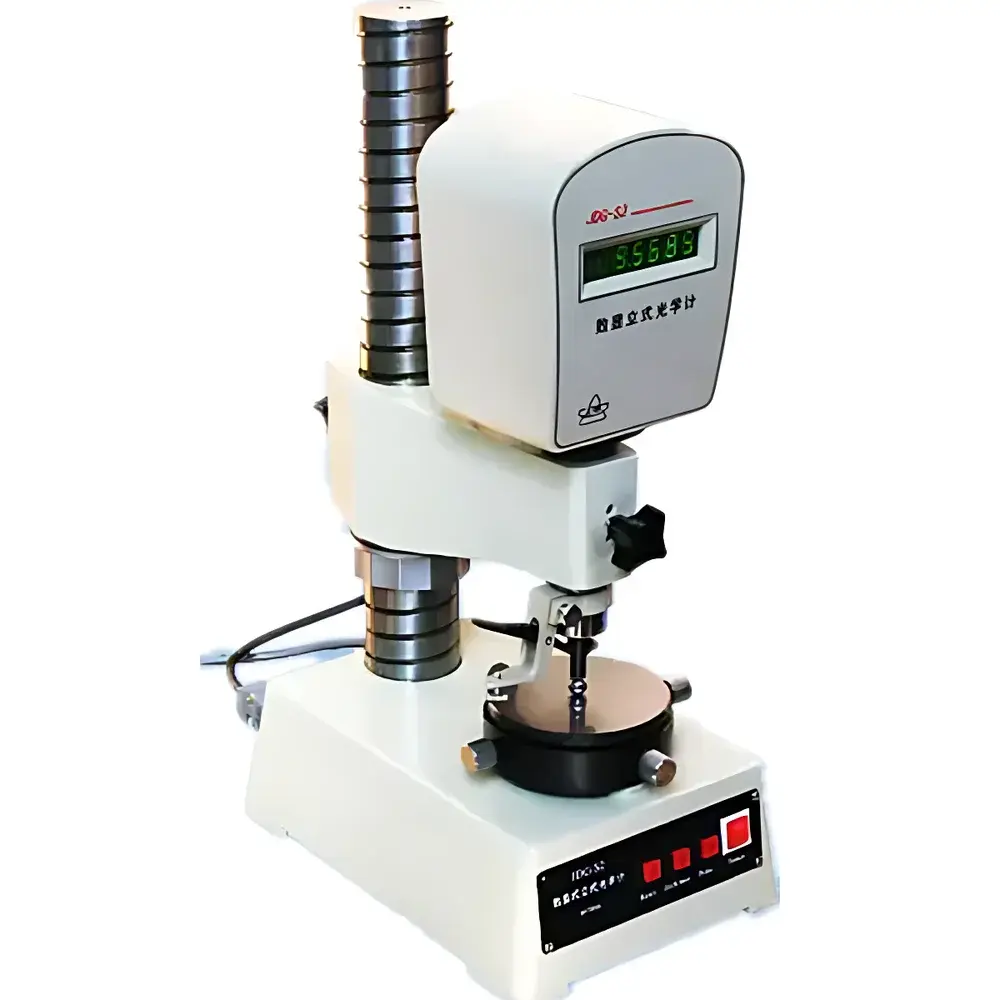
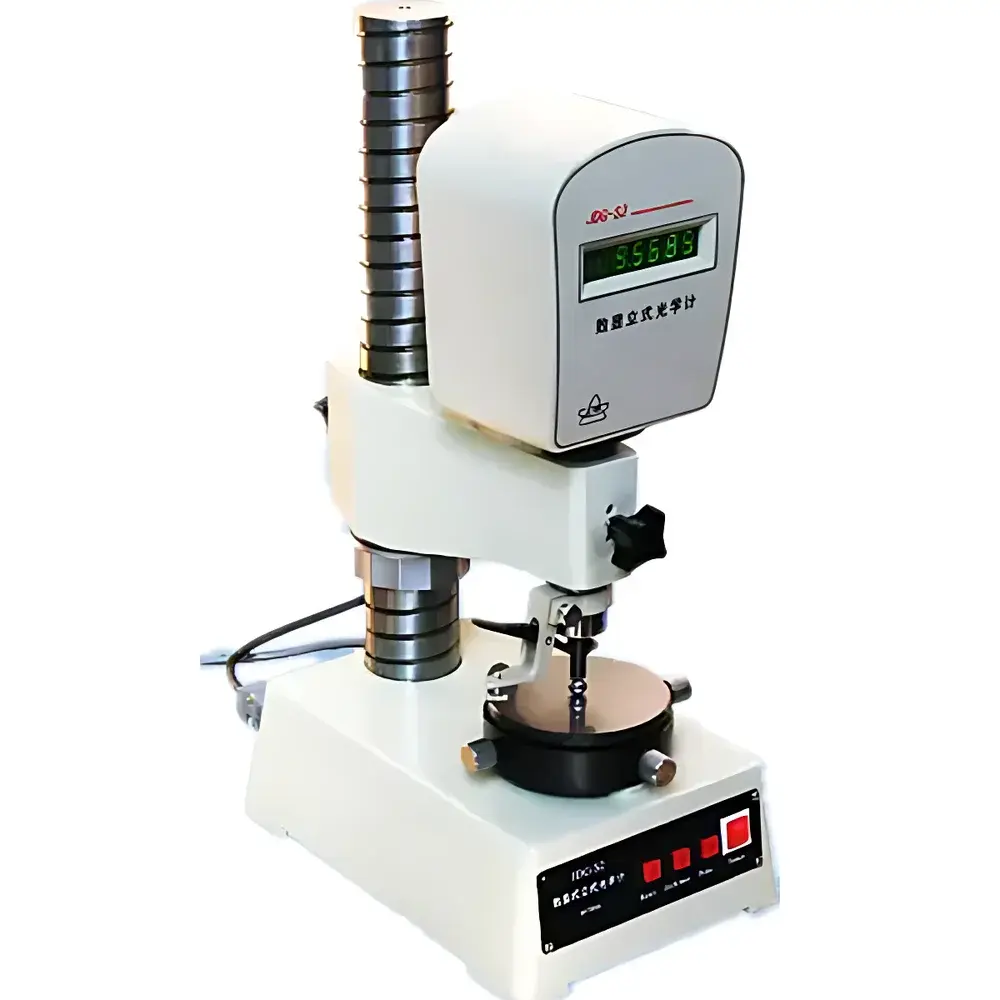
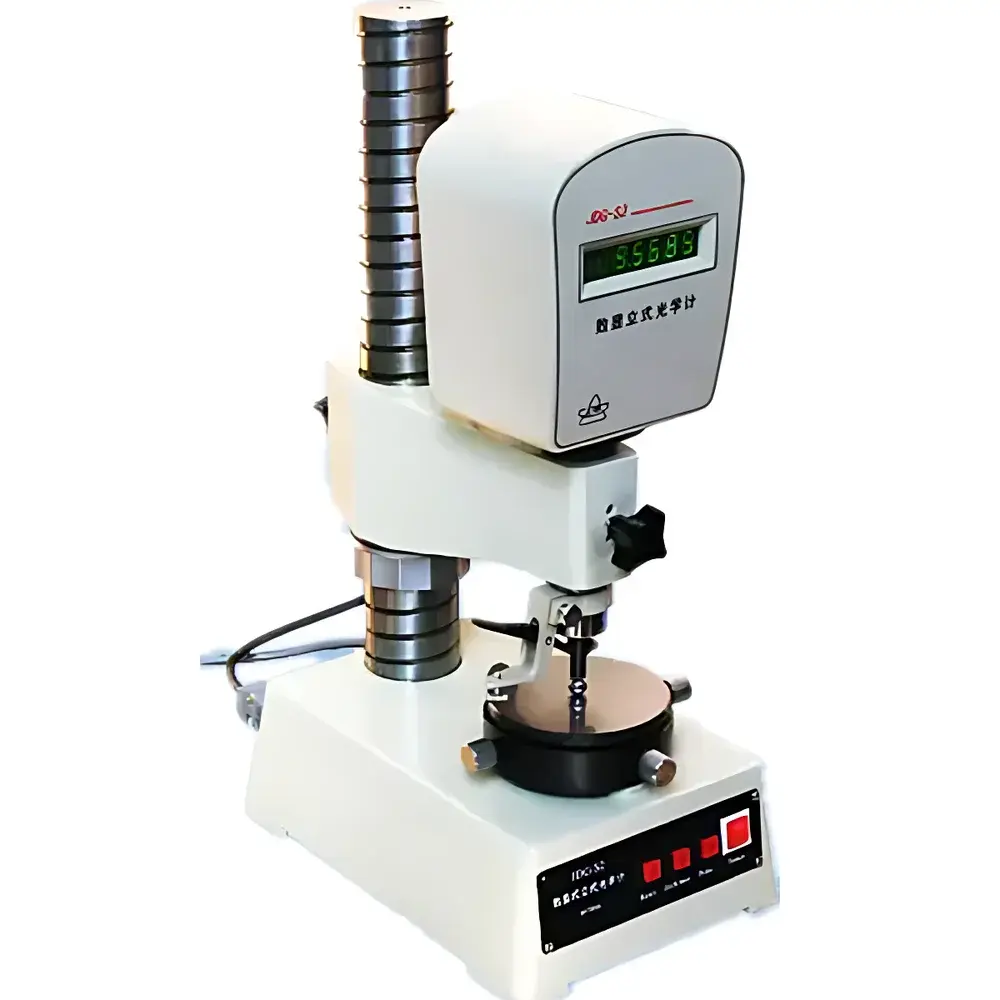
BM JDG-S2 Digital Vertical Optical Comparator
| Brand | BM |
|---|---|
| Origin | Shanghai, China |
| Manufacturer Type | Authorized Distributor |
| Country of Origin | China |
| Model | JDG-S2 |
| Price | Upon Request |
| Max. Measured Length | 200 mm |
| Direct Measurement Range | 10 mm |
| Minimum Display Resolution | 0.1 µm |
| Measuring Force | (2 ± 0.2) N |
| Indication Repeatability | 0.1 µm |
| Maximum Permissible Error (MPE) | ±0.25 µm |
| Total Measurement Uncertainty | ±(0.5 + L/100) µm (L in mm) |
| Readout | Digital LCD Display |
| Dimensions (W×D×H) | 300 × 170 × 410 mm |
| Net Weight | 18 kg |
Overview
The BM JDG-S2 Digital Vertical Optical Comparator is a precision mechanical-optical length measurement instrument engineered for high-accuracy comparative metrology in calibration laboratories, quality control environments, and R&D facilities. It operates on the principle of optical lever amplification combined with digital displacement transduction: a calibrated standard (e.g., grade 5 gauge blocks) is placed under the measuring anvil, and the difference between the standard and the test piece is translated into a linear displacement signal via a precision-ground measuring spindle and lever system. This displacement is sensed by a high-stability linear variable differential transformer (LVDT) or capacitive sensor—depending on configuration—and converted into a digital readout with 0.1 µm resolution. Designed for vertical orientation, the JDG-S2 minimizes gravitational sag effects on the measuring system and ensures consistent loading geometry across repeated measurements. Its rigid granite base and thermally stable cast-iron column provide mechanical isolation from vibration and thermal drift—critical for achieving ≤0.1 µm repeatability in controlled environments (20 ± 1 °C, 40–60% RH).
Key Features
- High-resolution digital display with 0.1 µm minimum increment and real-time stability indication
- Precision-machined measuring head incorporating hardened steel anvils and low-hysteresis elastic elements
- Controlled measuring force of (2 ± 0.2) N—maintained via calibrated spring mechanism compliant with ISO 3650 and JJG 146 metrological requirements
- Direct measurement range of 10 mm, extendable to 200 mm total workpiece height via adjustable stage and auxiliary supports
- Robust mechanical architecture: 18 kg mass, granite base plate, and vibration-damped column design for enhanced static stability
- Modular head assembly—detachable as a standalone displacement sensor for integration into custom fixtures or in-process monitoring setups
Sample Compatibility & Compliance
The JDG-S2 is optimized for dimensional verification of solid, rigid artifacts with parallel or planar features—including grade 5 gauge blocks, cylindrical plug gauges, steel balls (Ø1–25 mm), line standards, and precision-machined reference parts. Its vertical configuration accommodates both axial and radial measurement orientations for rods, pins, and thin plates. Non-metallic materials—including polymer films, paper substrates, and composite laminates—can be measured within thickness ranges of 10–500 µm when mounted on a zero-reference stage and subjected to consistent, non-deforming load. The instrument conforms to fundamental metrological principles outlined in ISO/IEC 17025:2017 (clause 6.4 on equipment suitability), and its performance specifications align with national verification regulations JJG 30–2012 (Optical Comparators) and JJG 146–2011 (Gauge Block Calibration). While not certified to ISO 9001 or ISO 13857 directly, it supports traceable measurement processes when used with accredited reference standards and documented uncertainty budgets.
Software & Data Management
The JDG-S2 operates as a standalone analog-to-digital comparator with no embedded microprocessor or onboard data logging. However, its RS-232 or optional USB-to-serial interface enables bidirectional communication with external PCs running third-party metrology software (e.g., MET/CAL, GAGEpack, or custom LabVIEW/VB.NET applications). Output format is ASCII-based, supporting time-stamped readings, statistical batch reporting (mean, std dev, max/min), and export to CSV or Excel-compatible formats. When integrated into GLP- or GMP-regulated workflows, the system supports audit-trail-enabled data capture—provided the host software implements 21 CFR Part 11-compliant electronic signatures, user access controls, and change history logging. No firmware updates or cloud connectivity are available; all calibration and maintenance records must be retained manually per ISO/IEC 17025 clause 8.3.
Applications
- Calibration of grade 5 gauge blocks and line standards in secondary metrology labs
- In-process verification of machined dimensions during high-precision turning, grinding, and lapping operations
- Thickness profiling of flexible substrates (e.g., PET film, aluminum foil, battery separator membranes)
- Research-grade displacement monitoring in tribology, thermal expansion, or creep studies
- Verification of geometric tolerances (flatness, parallelism, step height) on silicon wafers and optical components
- Education and training in classical length metrology principles and uncertainty analysis
FAQ
Is the JDG-S2 suitable for ISO/IEC 17025-accredited calibration services?
Yes—when operated with traceable reference standards, documented environmental controls, and validated uncertainty budgets, it meets the technical requirements for routine gauge block and length standard calibration up to 200 mm.
Can the measuring head be mounted horizontally?
No—the mechanical design, gravity compensation, and force application geometry are optimized exclusively for vertical use; horizontal mounting invalidates metrological performance claims.
What is the recommended recalibration interval?
Annually under normal laboratory use; semi-annually if used in production environments exceeding 4 hours/day or subject to temperature fluctuations >±2 °C.
Does the instrument support automatic temperature compensation?
No—it lacks integrated temperature sensors; users must apply material-specific thermal expansion corrections manually based on ambient and part temperature measurements.
Is NIST-traceable calibration documentation included?
A factory calibration report with as-found/as-left data and uncertainty statements is provided; full NIST-traceable certification requires separate engagement with an ISO/IEC 17025-accredited calibration provider.