
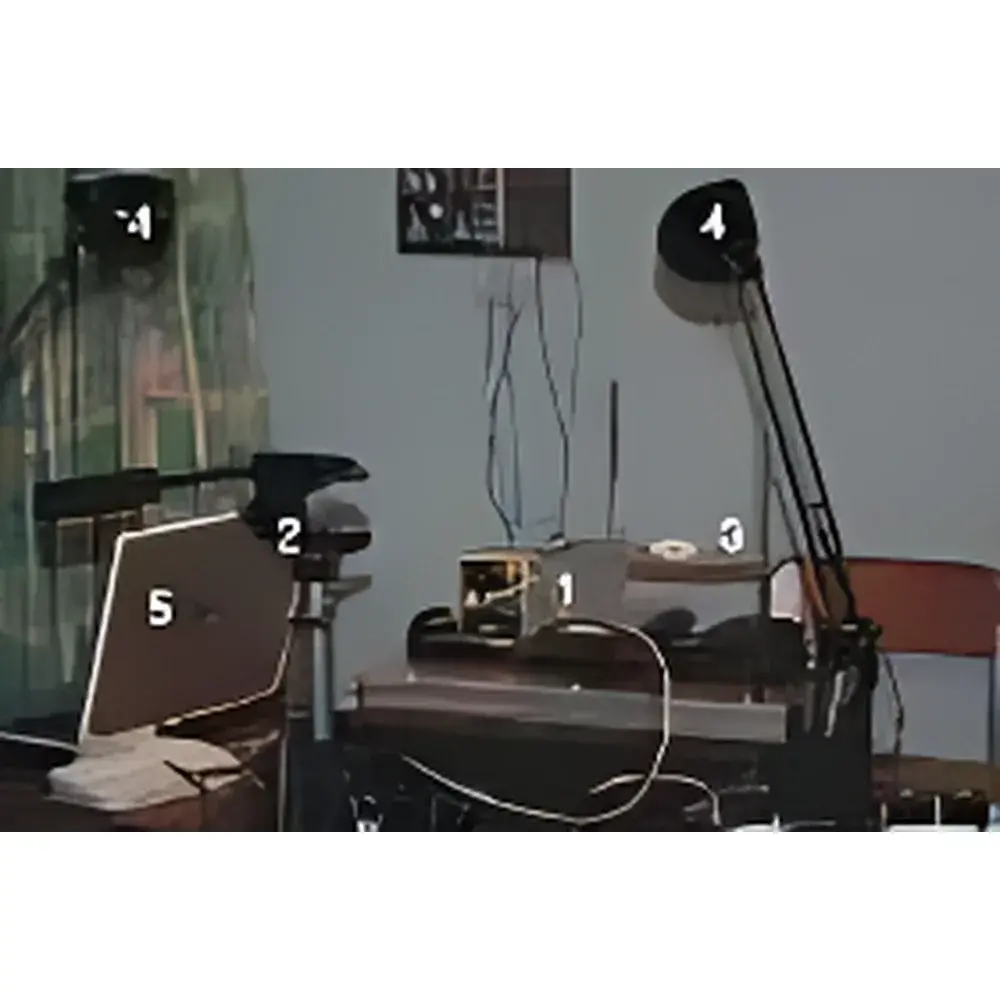
BodyImager Hyperspectral Imaging System
| Origin | Finland |
|---|---|
| Import Category | Imported |
| Model | BodyImager |
| Pricing | Upon Request |
Overview
The BodyImager Hyperspectral Imaging System is a clinical-grade, non-invasive optical imaging platform engineered for spatially resolved spectral analysis of biological tissues. It operates on the principle of push-broom hyperspectral imaging—acquiring contiguous, narrow-band spectral data (typically across the visible to near-infrared range, e.g., 400–1000 nm) at each pixel location to generate a three-dimensional data cube (x, y, λ). This enables quantitative mapping of tissue chromophores—including hemoglobin oxygenation, melanin concentration, and collagen distribution—based on their intrinsic spectral signatures. Designed specifically for translational biomedical research and point-of-care preclinical assessment, the system integrates calibrated illumination, precise mechanical scanning, and spectral radiometric calibration protocols to ensure inter-session reproducibility and cross-site comparability. Its architecture supports standardized acquisition workflows aligned with emerging consensus frameworks for optical biomarker validation in dermatology, dentistry, and minimally invasive endoscopic prototyping.
Key Features
- Modular hardware configuration comprising a high-sensitivity push-broom hyperspectral camera (with spectral resolution ≤ 5 nm FWHM), synchronized with a co-registered RGB digital camera for anatomical reference and real-time visualization.
- Dual halogen broadband illumination units with diffused collimation optics, providing uniform, low-heat irradiance (≤ 10 mW/cm² at sample plane) compliant with IEC 62471 photobiological safety standards.
- Motorized linear translation stage with sub-millimeter positional repeatability (±0.05 mm), enabling consistent field-of-view registration across repeated acquisitions—critical for longitudinal monitoring of tissue response.
- Integrated chin rest and adjustable limb positioning fixtures, designed to minimize motion artifacts during static acquisition of facial, oral, lingual, palmar, and plantar surfaces.
- Fully enclosed optical path with ambient light shielding, ensuring stable signal-to-noise ratio (SNR > 60 dB typical at 100 ms integration time) under standard laboratory or clinical room lighting conditions.
Sample Compatibility & Compliance
The BodyImager system is validated for ex vivo and in vivo surface-level imaging of human soft tissues without contrast agents or ionizing radiation. Compatible sample types include intact facial epidermis, gingival mucosa, dorsal tongue epithelium, volar hand skin, plantar foot skin, and surgically exposed visceral surfaces (e.g., liver, colon serosa) under controlled surgical lighting. All optical components meet ISO 13485:2016 requirements for medical device manufacturing quality systems. Data acquisition protocols support audit trails and electronic signatures in accordance with FDA 21 CFR Part 11 when deployed with validated software configurations. The system’s spectral calibration traceability follows NIST-traceable standards via onboard tungsten-halogen and reflectance reference tiles.
Software & Data Management
Acquisition and processing are performed using proprietary, CE-marked software (v4.2+) running on Windows-based laptop hardware included in the system bundle. The software provides real-time spectral preview, automated dark-current and flat-field correction, region-of-interest (ROI) extraction, and export of calibrated hypercubes in ENVI-compatible .hdr/.dat format. Advanced analysis modules include spectral unmixing (using constrained least-squares algorithms), oxygen saturation mapping (based on modified Beer–Lambert modeling), and PCA-driven anomaly detection. All raw and processed datasets are stored with embedded metadata (timestamp, illumination intensity, stage position, operator ID), supporting GLP-compliant documentation and retrospective reprocessing. Export options include DICOM-SR for PACS integration and CSV/TIFF for third-party statistical platforms (e.g., MATLAB, Python scikit-learn).
Applications
- Facial tissue assessment: Detection of microvascular changes associated with rosacea, melasma, or post-inflammatory hyperpigmentation through spectral slope analysis in the 500–600 nm band.
- Dental and periodontal evaluation: Quantification of gingival blood volume and oxygenation pre- and post-brushing or scaling, supporting objective assessment of inflammatory status.
- Lingual diagnostics: Differentiation of papillary morphology and vascular patterns linked to nutritional deficiency syndromes or early-stage oral malignancy screening.
- Peripheral perfusion monitoring: Dynamic mapping of cutaneous oxygenation gradients in diabetic foot ulcers or Raynaud’s phenomenon under thermal challenge.
- Intraoperative tissue characterization: Real-time differentiation of tumor margins versus healthy parenchyma during laparoscopic or open procedures, pending IRB-approved protocol deployment.
FAQ
Is the BodyImager system FDA-cleared or CE-marked?
The BodyImager system carries CE marking under Class IIa Medical Device Directive (93/42/EEC) for diagnostic support applications. It is not currently FDA 510(k)-cleared; regulatory pathways for U.S. clinical use are under active development.
Can the system be integrated with existing hospital IT infrastructure?
Yes—via DICOM-SR export and HL7-compatible metadata tagging. Integration with PACS, EMR, and OR scheduling systems requires site-specific validation and network security review.
What spectral range and resolution does the core HSI camera cover?
The standard configuration spans 400–1000 nm with spectral sampling intervals of 2.5 nm and optical resolution ≤ 5 nm FWHM. Custom NIR extensions up to 1700 nm are available upon request.
Does the system require external calibration before each use?
A full radiometric calibration using supplied reference tiles is recommended daily; quick-check dark/flat-field corrections are executed automatically prior to each acquisition session.
Is training and application support provided?
Comprehensive on-site installation, operator certification, and application-specific protocol development are included in the initial deployment package, with annual technical support contracts available.
Related Products






