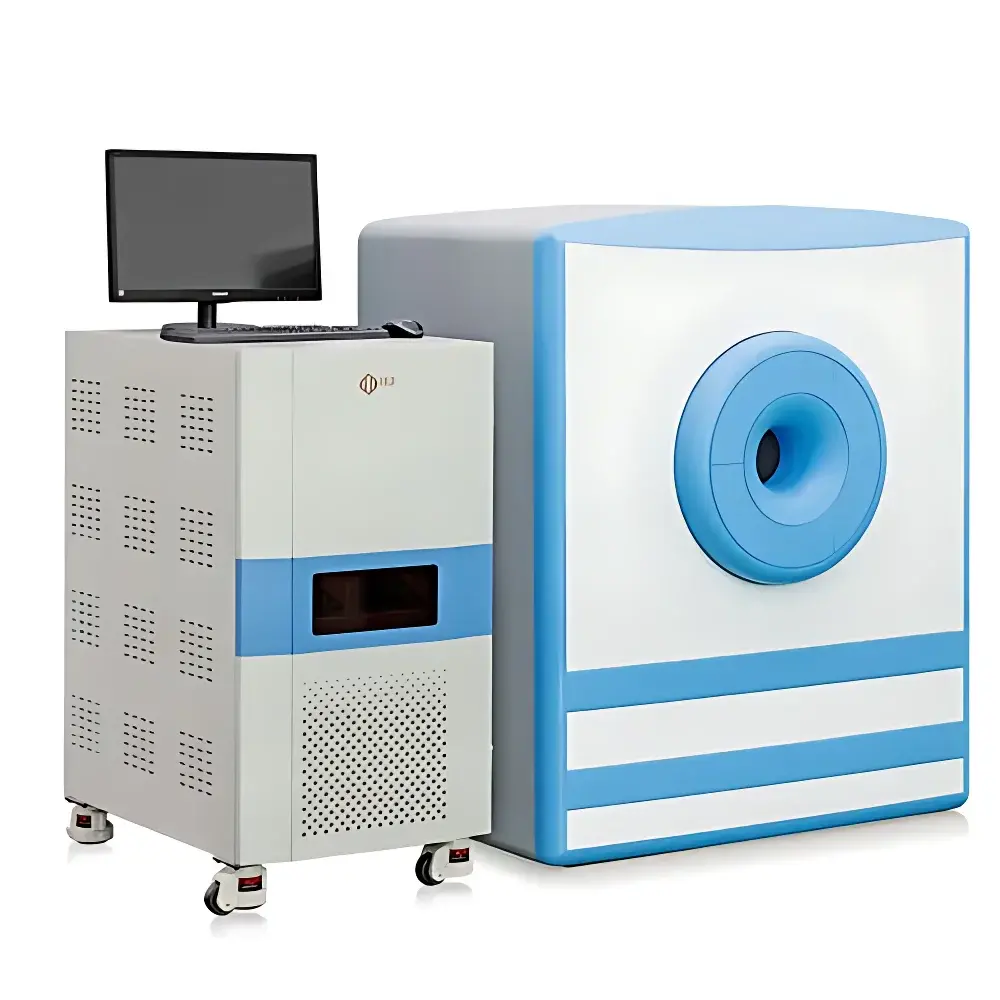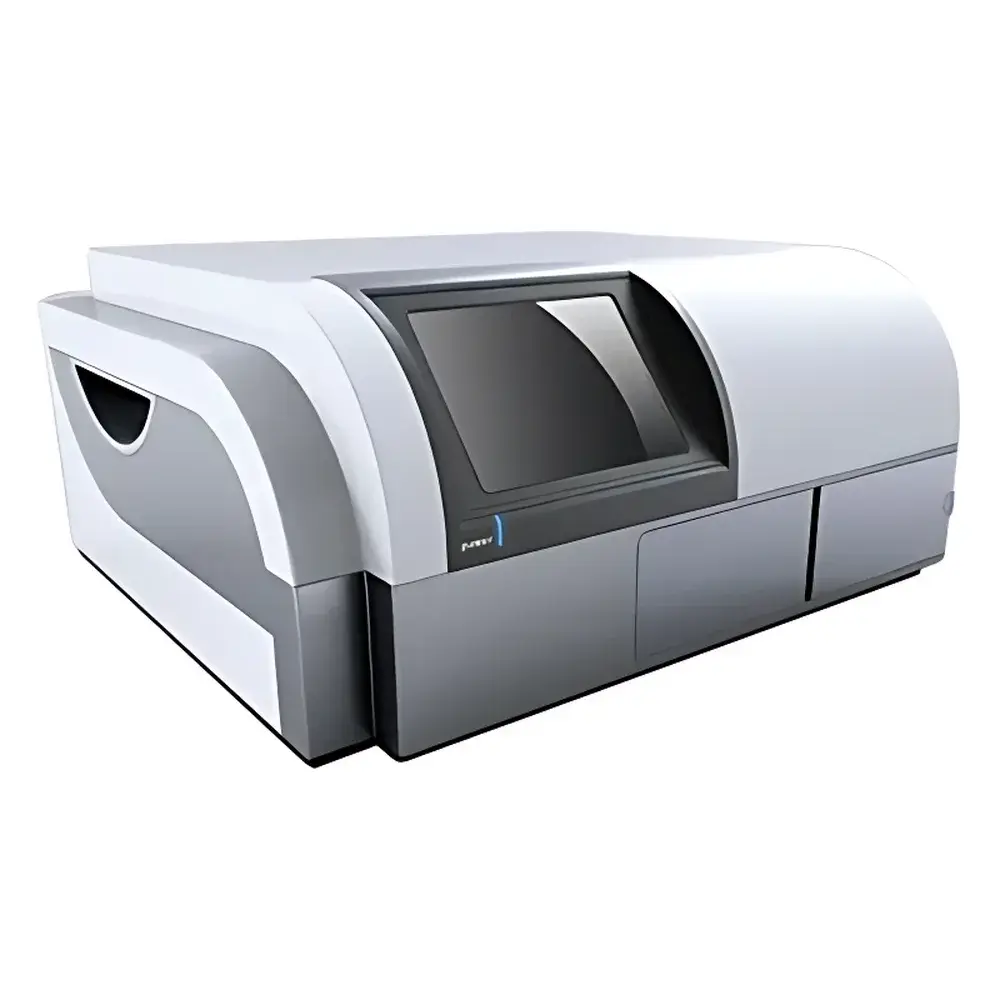
Bohui BH400 Fluorescent Immunochromatographic Analyzer
| Brand | Bohui |
|---|---|
| Origin | Beijing, China |
| Manufacturer Type | Authorized Distributor |
| Product Origin | Domestic (China) |
| Model | BH400 |
| Pricing | Available Upon Request |
| Detection Principle | Fluorescent Immunochromatography (Dual-Antibody Sandwich) |
| Assay Format | Multiplex Lateral Flow Immunoassay (LFIA) |
| Target Analytes | Rotavirus, Enteric Adenovirus, Norovirus, Astrovirus |
| Measurement Mode | Quantitative Fluorescence Intensity (Excitation/Emission Optimized for Europium Chelate or Similar Lanthanide Label) |
| Linear Range | 0–500 ng/mL (Fluorescein Reference Standard) |
| Background Noise | <50 fluorescence units (10 consecutive blank test strip readings, mean) |
| Accuracy | ±5% of labeled value (fluorescein calibrator) |
| Precision (CV) | ≤10% at 100 ng/mL |
| Stability | <5% signal drift within 20 min |
| Total Assay Time per Sample | <30 s (instrument readout only |
| full assay including sample application and migration | ≤60 min) |
| Power Supply | AC 220 V, 50 Hz |
| Operating Environment | Indoor use |
| Dimensions (W×D×H) | 400 × 436 × 200 mm |
Overview
The Bohui BH400 Fluorescent Immunochromatographic Analyzer is a dedicated quantitative lateral flow immunoassay (LFIA) platform engineered for clinical virology laboratories requiring rapid, objective, and multiplexed detection of four major enteric viral pathogens: rotavirus, enteric adenovirus, norovirus, and astrovirus. Unlike conventional visual interpretation of immunochromatographic strips, the BH400 employs time-resolved fluorescence (TRF) detection—optimized for lanthanide-based labels such as europium chelates—to quantify antigen-antibody binding signals with high sensitivity and minimal background interference. The system operates on the dual-antibody sandwich principle: sample-derived viral antigens bind to fluorescently labeled monoclonal antibodies in the conjugate pad, and the resulting immune complexes migrate along a nitrocellulose membrane where they are captured by virus-specific immobilized antibodies in discrete test lines. Each test line corresponds to one target analyte, enabling simultaneous qualitative and semi-quantitative assessment from a single sample application. Designed for integration into medium-throughput clinical labs, the BH400 delivers instrument-based result interpretation within 30 seconds per test strip—significantly reducing inter-operator variability and eliminating subjective visual scoring limitations inherent in traditional rapid tests.
Key Features
- Four-plex detection capability: Simultaneous quantification of rotavirus, enteric adenovirus, norovirus, and astrovirus antigens in a single run.
- Objective fluorescence intensity measurement: Eliminates human reading error through calibrated TRF photometry with optimized excitation/emission optics.
- Extended analytical window: Supports reliable signal acquisition up to 60 minutes post-strip application—accommodating variable membrane migration kinetics across different sample matrices (e.g., stool suspensions, nasopharyngeal swab eluates).
- High reproducibility: Coefficient of variation (CV) ≤10% at 100 ng/mL reference standard; linear dynamic range spanning 0–500 ng/mL (r ≥ 0.990).
- Robust baseline stability: Signal drift <5% over 20-minute continuous operation; average background noise <50 fluorescence units (10 blank strip measurements).
- Compact benchtop architecture: Footprint of 400 × 436 × 200 mm; designed for space-constrained clinical laboratory environments.
- Regulatory-aligned design: Compliant with IEC 61010-1 safety standards for electrical equipment; supports audit-ready operation under GLP and ISO 15189-accredited workflows.
Sample Compatibility & Compliance
The BH400 is validated for use with human stool specimens, rectal swabs, and viral transport media–diluted samples processed using the companion Bohui multiplex immunofluorescence assay kit. Specimen handling follows CLSI EP22-A and ISO 15197 guidelines for pre-analytical variables affecting antigen stability. The analyzer meets electromagnetic compatibility (EMC) requirements per IEC 61326-1 and electrical safety per IEC 61010-1. While not FDA 510(k)-cleared or CE-IVDR certified out-of-the-box, the system’s hardware architecture and software logging capabilities support validation pathways compliant with 21 CFR Part 11 (electronic records/signatures), EU Annex 11 (computerized systems), and ISO/IEC 17025 clause 5.9 (method validation). All calibration and performance verification procedures are documented per manufacturer specifications and align with internal quality control (IQC) protocols required by CAP and COLA-accredited laboratories.
Software & Data Management
The BH400 integrates a Windows-based embedded operating system with proprietary analysis software supporting bidirectional HL7 v2.x messaging and ASTM E1381-compliant data export. Instrument-generated results—including raw fluorescence intensity values, peak height ratios, and qualitative calls (positive/negative/invalid)—are automatically timestamped and stored locally with user-accessible audit trails. Data export formats include CSV, PDF, and XML, facilitating seamless integration with LIS (Laboratory Information Systems) and HIS (Hospital Information Systems). Audit log entries capture operator ID, test ID, calibration history, QC run timestamps, and any manual overrides—ensuring traceability for regulatory inspections. Software updates are delivered via secure USB firmware packages with SHA-256 checksum verification; no internet connectivity is required during routine operation.
Applications
The BH400 serves as a frontline diagnostic tool in hospital microbiology and pediatric gastroenterology laboratories for differential diagnosis of acute infectious diarrhea. Its multiplex capability enables efficient triage of outbreaks linked to rotavirus (common in infants), norovirus (dominant in institutional settings), and less prevalent but clinically significant agents such as astrovirus and enteric adenovirus. The system supports surveillance studies requiring standardized antigen quantification across multi-site trials, epidemiological cohort analyses, and antimicrobial stewardship initiatives aimed at reducing unnecessary antibiotic prescriptions in viral gastroenteritis. Additionally, its modular optical design allows future expansion to additional enteric targets—including sapovirus and enterovirus serotypes—through reconfiguration of test strip layout and software parameter mapping.
FAQ
What sample types are validated for use with the BH400?
Stool homogenates, rectal swab eluates, and diluted viral transport media specimens—processed according to the manufacturer’s specified extraction protocol.
Does the BH400 require daily calibration?
No. The system performs automatic self-checks at startup; calibration verification is recommended before each batch using the supplied fluorescent calibrator strip.
Can the BH400 be integrated into an existing LIS without custom development?
Yes—via standard HL7 ADT and ORU messages; configuration templates are provided for major LIS vendors including Cerner, Epic, and Sunquest.
Is the instrument suitable for point-of-care (POC) deployment?
It is intended for centralized clinical lab use—not POC—due to environmental requirements (temperature/humidity control) and need for trained technical staff.
How is data integrity ensured during power interruption?
All active assays and logs are written to non-volatile memory prior to display; unsaved results persist through unexpected shutdown and resume upon reboot.