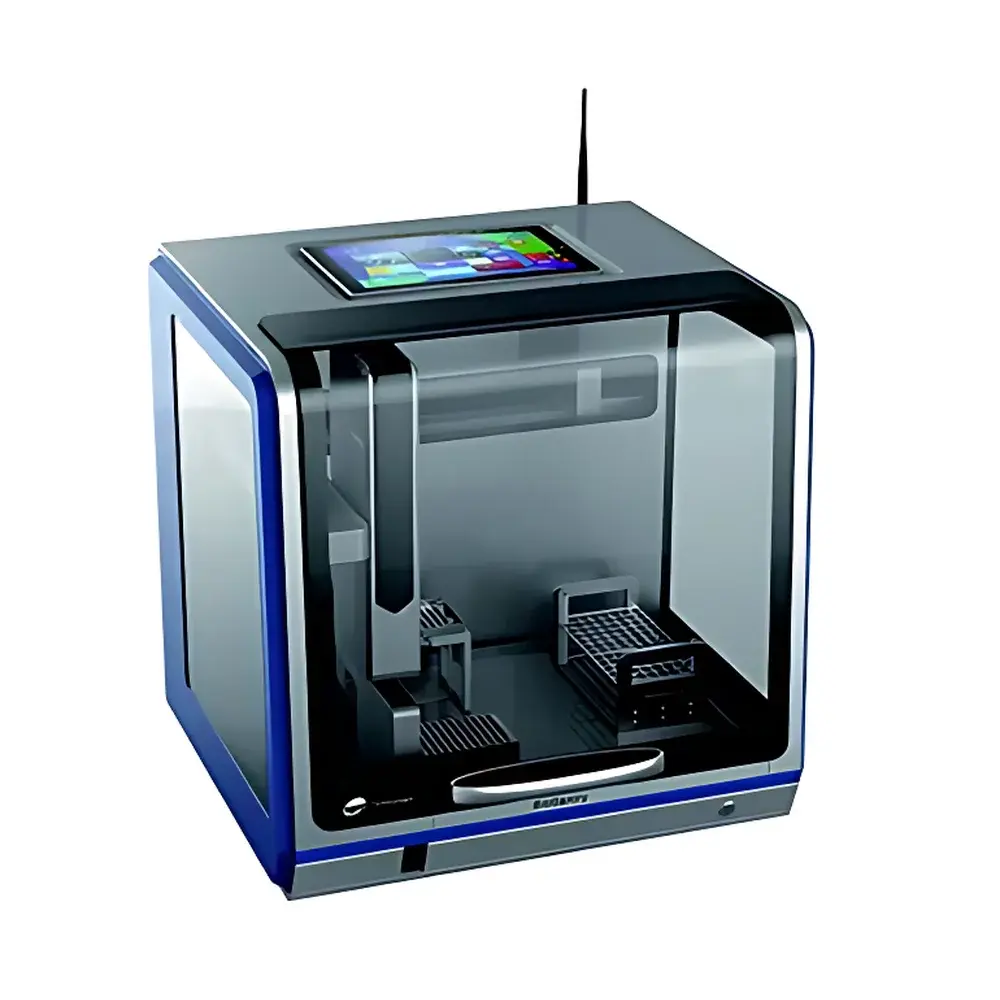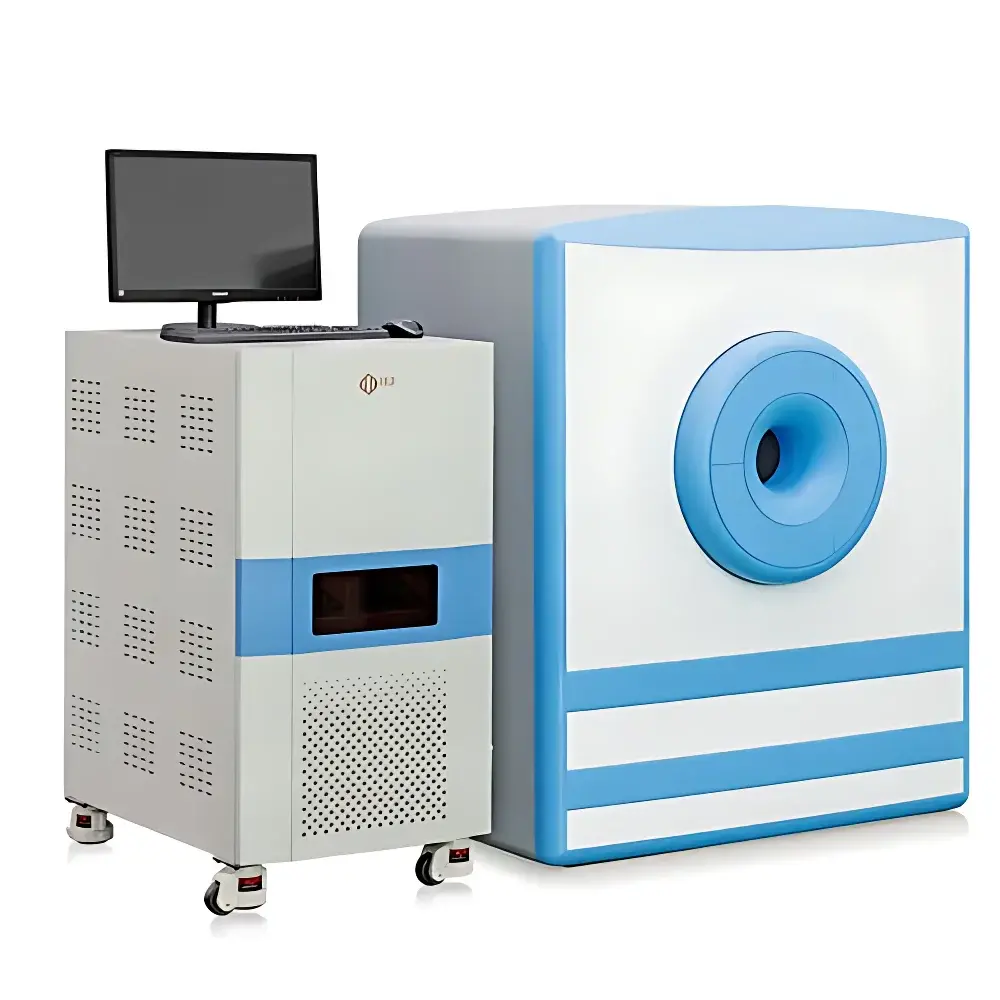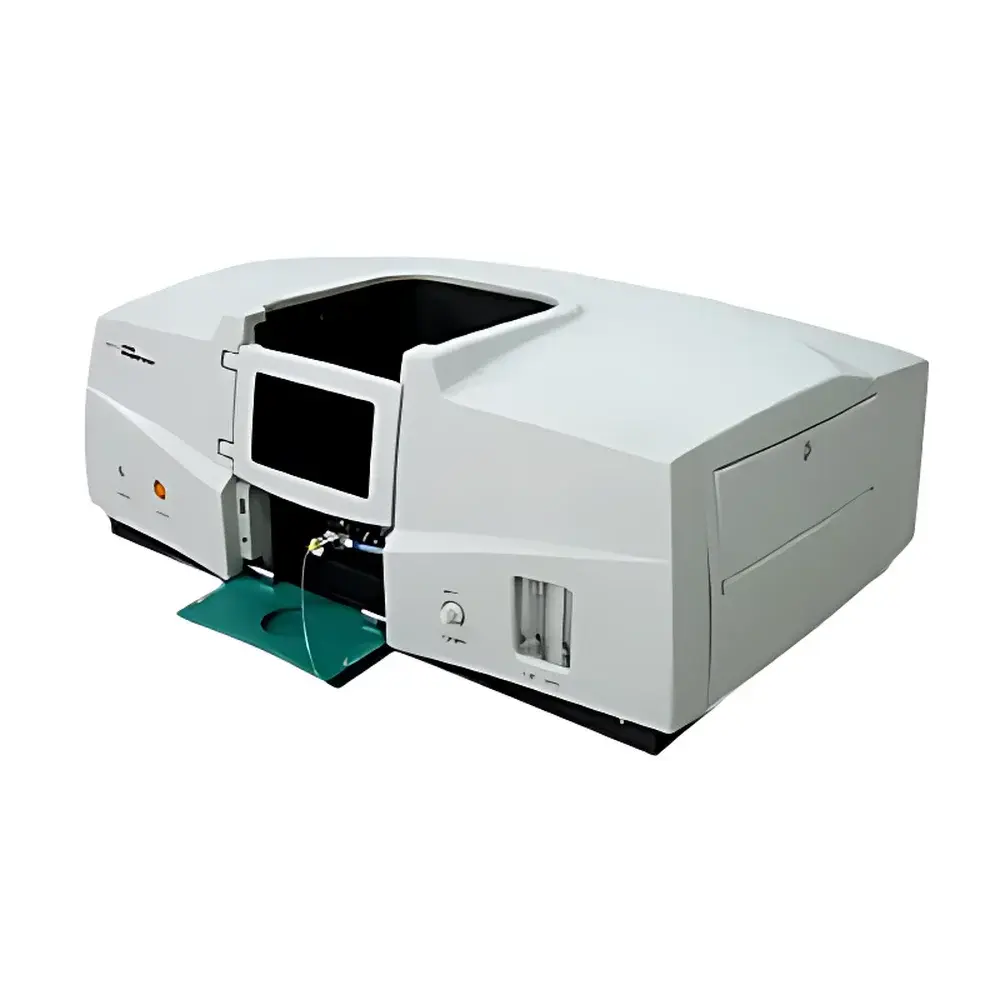
Bohui Innovation BH5500S Medical Flame Atomic Absorption Spectrometer
| Brand | Bohui Innovation |
|---|---|
| Origin | Beijing, China |
| Model | BH5500S |
| Analysis Method | Flame Atomic Absorption Spectrometry (FAAS) |
| Sample Types | Whole Blood, Serum, Breast Milk, Urine |
| Simultaneous Multi-Element Detection | Cu, Zn, Ca, Mg, Fe |
| Atomizer | Premixed 100 mm Single-Slit Titanium Burner |
| Wavelength Range | 190–650 nm |
| Spectral Bandwidth | 0.15–2.0 nm |
| Absorbance Range | 0–2 Abs |
| Baseline Stability | ≤0.005 Abs per 30 min (for Cu, Zn, Ca, Mg, Fe) |
| Precision | ≤1.0% RSD (Abs > 0.1) |
| Light Sources | Composite Hollow Cathode Lamps (Cu/Zn/Ca |
| Monochromator | Holographic Grating |
| Nebulizer | Optimized High-Efficiency Pneumatic Nebulizer |
| Nebulization Chamber | PTFE-lined with Tapered Geometry and Rear Drain Design |
| Burner Head | Pure Titanium |
| Safety Systems | Acetylene Anti-Flashback Valve, Pressure/Flow Dual Monitoring, Power-Fail Cut-off, Burner Explosion Protection |
| Power Supply | AC 220 ± 22 V, 50 ± 1 Hz, 300 VA |
| Dimensions | 782 × 560 × 338 mm |
| Operating Environment | 10–30 °C, RH ≤70%, Atmospheric Pressure 0.070–0.106 MPa, Vibration-Free & Corrosion-Free Ambient |
| Software | Integrated Clinical FAAS Data Acquisition & Reporting Suite with Audit Trail Capability |
Overview
The Bohui Innovation BH5500S Medical Flame Atomic Absorption Spectrometer is a CE-marked, Class II medical device (Registration No.: Jing Yao Jian Xie (Zhun) Zi 2013 Di 2400398 Hao) engineered for quantitative elemental analysis in clinical laboratories. It employs flame atomic absorption spectrometry (FAAS), a well-established, reference-grade technique standardized under ISO 8288, ASTM D1688, and CLSI EP21-A. In this method, liquid samples are pneumatically nebulized into a fine aerosol, desolvated and atomized in a premixed air-acetylene flame, generating ground-state free atoms. These atoms absorb characteristic radiation emitted by element-specific hollow cathode lamps at defined wavelengths (e.g., Cu at 324.8 nm, Zn at 213.9 nm, Ca at 422.7 nm, Mg at 285.2 nm, Fe at 248.3 nm). The spectrometer measures the attenuation of this radiation—proportional to analyte concentration—via a holographic grating monochromator and low-noise photomultiplier detection. Designed exclusively for clinical specimen matrices—including whole blood (40 µL), serum (300 µL), breast milk (150 µL), and urine (150 µL)—the BH5500S delivers simultaneous five-element quantification within 2–3 seconds per run, supporting high-throughput routine diagnostics without hardware reconfiguration.
Key Features
- Multi-Matrix Clinical Workflow Integration: A single instrument platform supports standardized protocols for four distinct biological matrices. Sample-type selection is software-driven—no mechanical lamp swaps, burner adjustments, or gas parameter recalibrations required between whole blood, serum, breast milk, or urine assays.
- Patented Multi-Angle Lamp Array (ZL 01 2 19460.3): Five independent hollow cathode lamps (including Cu/Zn/Ca and Ca/Mg/Fe composites, plus a dedicated Fe lamp) are mounted at precisely engineered angular offsets. This eliminates spectral interference from adjacent emission lines, avoids intensity degradation caused by multi-element lamp co-emission, and ensures each element is measured exclusively on its primary analytical line—maximizing signal-to-noise ratio and long-term calibration stability.
- Optimized Titanium Atomization System: Features a 100 mm single-slit titanium burner head—resistant to oxidation, corrosion, and thermal shock—with rapid thermal equilibrium (<60 s warm-up). Combined with a factory-tuned high-efficiency pneumatic nebulizer and PTFE-lined tapered nebulization chamber, it achieves consistent aerosol generation, minimal memory effect, and laminar waste drainage—critical for trace-level clinical measurements.
- Comprehensive Safety Architecture: Integrates acetylene anti-flashback valves, dual-pressure-and-flow monitoring (air and fuel), electromagnetic shutoff upon power failure or pressure drop, and explosion-resistant burner housing—fully compliant with IEC 61010-1 and GB 4793.1 safety requirements for laboratory equipment.
Sample Compatibility & Compliance
The BH5500S is validated for direct analysis of unmodified clinical specimens per manufacturer-defined protocols. Whole blood analysis requires no dilution or acid digestion; serum, breast milk, and urine undergo only minimal dilution (1:10 to 1:50) with ultrapure water or matrix-matched blanks. All measurement procedures align with Good Laboratory Practice (GLP) documentation standards and support audit readiness for CAP, CLIA, and ISO 15189-accredited laboratories. Instrument firmware and software comply with data integrity principles outlined in FDA 21 CFR Part 11, including electronic signature capability, operator-level access control, and immutable audit trails for all calibration, QC, and patient result events.
Software & Data Management
The embedded Windows-based clinical FAAS software provides full lifecycle data management: automated calibration curve generation (linear and quadratic), real-time QC flagging (Westgard rules), batch processing of up to 96 samples, auto-calculation of elemental concentrations using internal standard correction where applicable, and export of structured reports (CSV, PDF, XML) compatible with LIS/HIS interfaces. All raw absorbance spectra, integration parameters, lamp current settings, and gas flow logs are timestamped and archived. Software updates are delivered via secure authenticated channels and require dual-operator authorization—ensuring version control and regulatory traceability.
Applications
The BH5500S serves as a dedicated platform for nutritional status assessment and metabolic disorder screening in hospital laboratories and reference centers. Primary clinical applications include: monitoring copper and zinc deficiencies in pediatric and geriatric populations; evaluating calcium-magnesium imbalances in chronic kidney disease and preeclampsia; assessing iron stores in anemia workups; and quantifying trace elements in maternal-infant health programs (e.g., lactation surveillance). Its speed, reproducibility, and matrix flexibility make it suitable for daily use in high-volume clinical chemistry departments requiring CLIA-waived or moderate-complexity testing capabilities.
FAQ
Is the BH5500S certified for in vitro diagnostic use in the EU or USA?
The device holds Chinese NMPA registration as a Class II medical device. It is not CE-IVDR certified nor FDA 510(k)-cleared; users must verify local regulatory acceptance prior to deployment.
Can the system be integrated with a laboratory information system (LIS)?
Yes—via HL7 v2.x or ASTM E1384-compliant bidirectional interface; configuration requires LIS-side mapping of LOINC codes for Cu, Zn, Ca, Mg, and Fe.
What maintenance intervals are recommended for clinical operation?
Nebulizer capillary cleaning every 200 runs; burner head inspection every 500 runs; annual optical alignment and lamp energy verification by authorized service engineer.
Does the software support GLP-compliant electronic records?
Yes—audit trail logging, user authentication, electronic signatures, and data backup/export functions meet ALCOA+ principles and are configurable to satisfy ISO 17025 and CAP checklist requirements.
Are consumables such as hollow cathode lamps and nebulizers supplied by Bohui Innovation?
Original equipment manufacturer (OEM) lamps, titanium burners, PTFE nebulization chambers, and certified calibration standards are available directly through Bohui Innovation’s global distributor network.