
Bortec HDEM-1 High-Voltage DC Combined Electric Field Strength Monitoring System
| Origin | Canada |
|---|---|
| Manufacturer Type | Authorized Distributor |
| Origin Category | Imported |
| Model | HDEM-1 |
| Pricing | Upon Request |
Overview
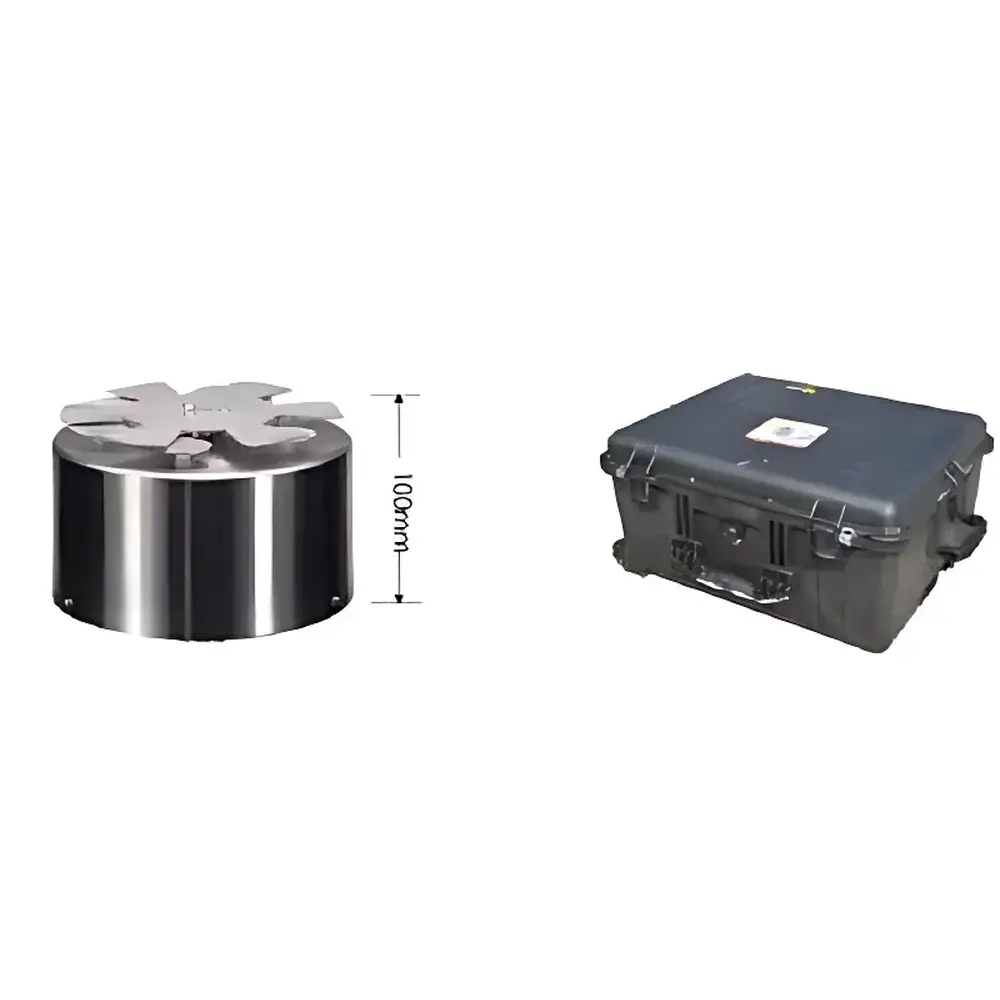
The Bortec HDEM-1 High-Voltage DC Combined Electric Field Strength Monitoring System is a precision-engineered instrument designed for continuous, high-fidelity measurement of ground-level electrostatic field intensity beneath HVDC transmission lines and converter stations. It operates on the principle of rotating-field modulation (commonly referred to as “field mill” technology), where a grounded, rotating chopper disk periodically interrupts the incident electric field, inducing an AC signal proportional to the ambient DC field strength. This signal is then demodulated, amplified, and digitized with high linearity and low drift. The system complies with key national standards including DL/T 1089–2008 (“Measurement Methods for Combined Electric Field Strength and Ion Current Density in HVDC Converter Stations and Transmission Lines”) and aligns with international practices referenced in IEEE Std 644 and IEC 61786-2 for electromagnetic field assessment. Its primary application domain includes regulatory compliance monitoring, environmental impact assessment, public complaint resolution, and long-term site surveillance in utility infrastructure projects.
Key Features
- Ultra-low profile probe design: ≤100 mm height ensures minimal field distortion at ground level — fully compliant with DL/T 1089–2008 requirement of <200 mm sensor-to-ground distance.
- Large-diameter field mill: ≥152 mm monolithic rotor with precision ball-bearing brushless DC motor ensures mechanical stability, consistent rotational velocity, and long-term repeatability under thermal and mechanical stress.
- Integrated speed monitoring system: External optical sensor + internal feedback loop maintains nominal RPM within ±0.5% tolerance — critical for accurate field reconstruction and drift suppression.
- Micro-gap contamination-resistant architecture: Patented sealing geometry prevents dust ingress and water penetration into the motor chamber, enabling reliable operation under IPX5-rated conditions (direct rain jet exposure).
- Wide dynamic range: –100 kV/m to +100 kV/m full-scale measurement capability with selectable resolution modes (0.01 kV/m or 0.05 kV/m).
- High-speed acquisition: 0.1 s response time, 0.2 s sampling interval, and 1 s display refresh rate support both transient event capture and steady-state averaging.
- Robust environmental rating: Operational temperature range from –40 °C to +60 °C; total system mass: 2.0 kg; compact footprint: Ø170 mm × H110 mm.
Sample Compatibility & Compliance
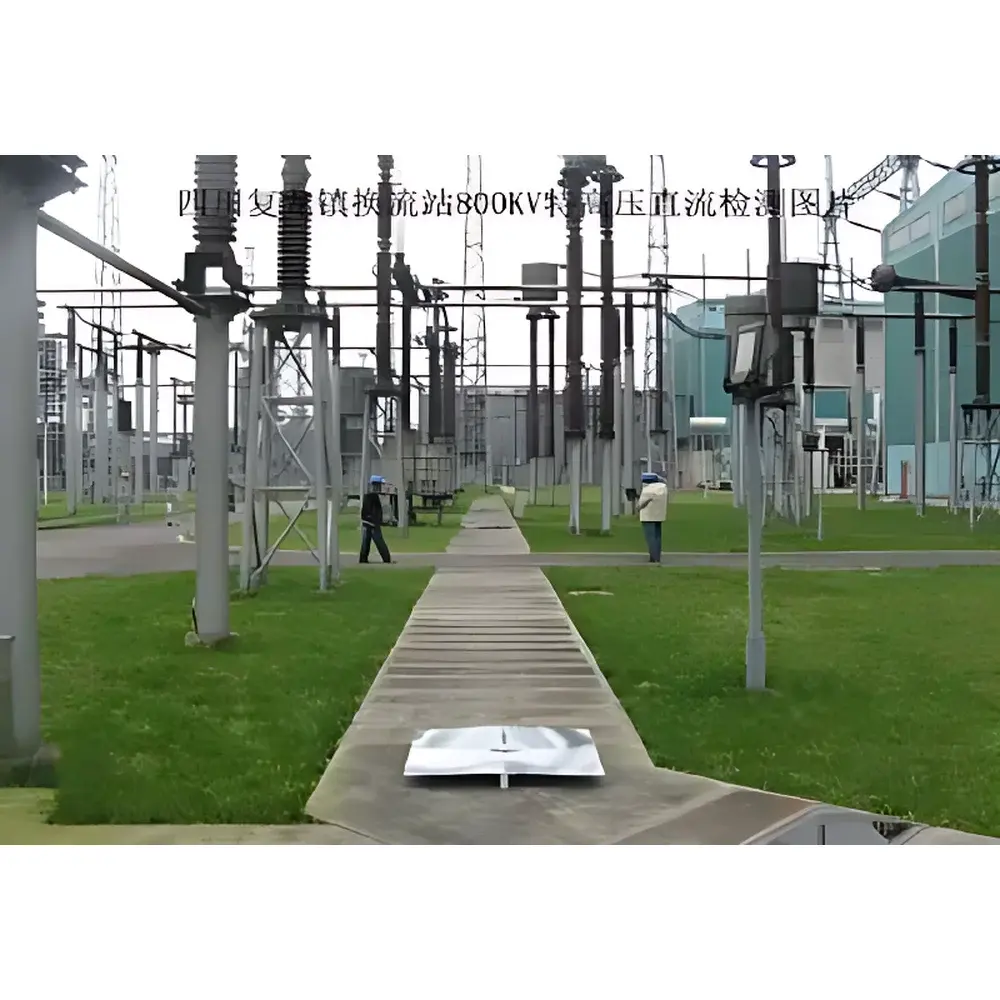
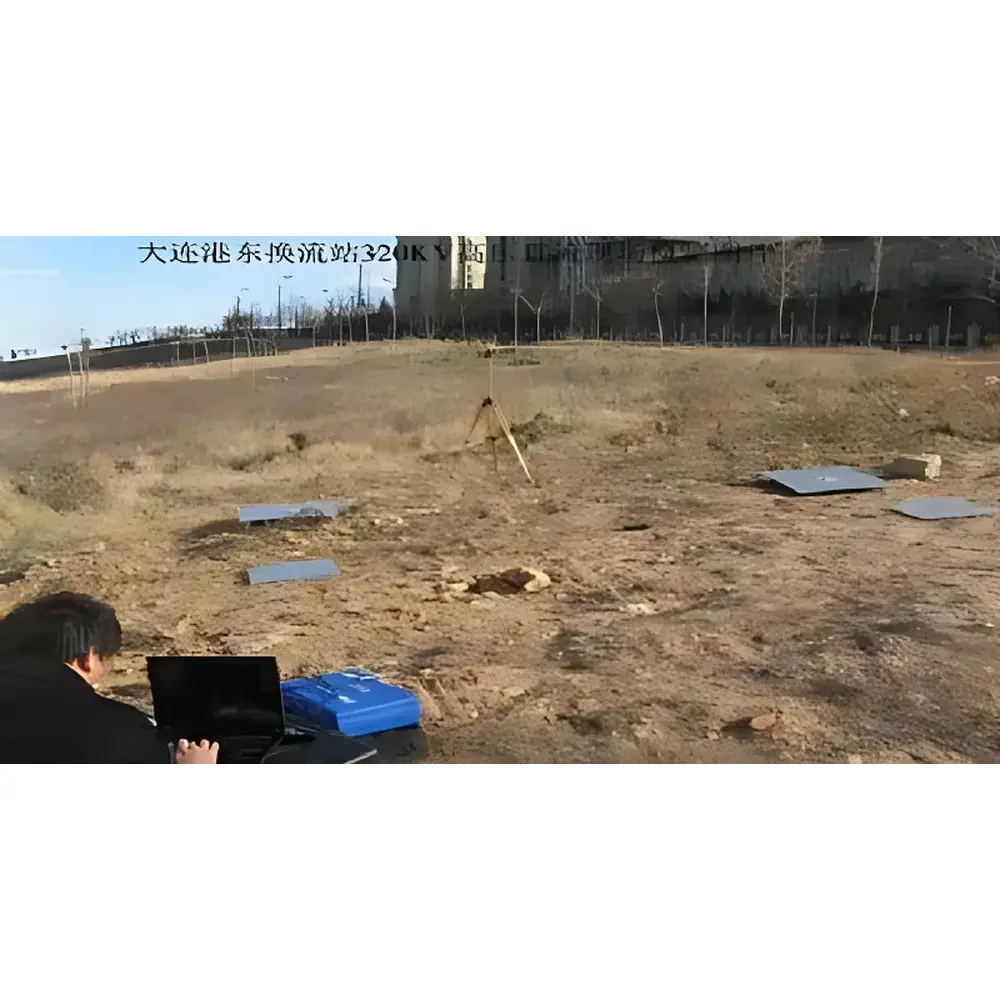
The HDEM-1 is optimized for open-field deployment on natural or engineered ground surfaces. It requires a standardized 1 m × 1 m conductive reference ground plane (included as foldable aluminum plate) to establish stable zero-potential reference per DL/T 1089–2008. The system is not intended for use inside shielded enclosures or near highly reflective metallic structures without prior calibration correction. All electrical outputs — analog differential (1 V/kV/m), single-ended (0.5 V/kV/m), and digital fiber-optic (50/125 multimode, ST connector) — are galvanically isolated to eliminate ground-loop interference. The instrument meets EMC requirements per IEC 61326-1 (industrial environment) and supports audit-ready data logging compliant with GLP/GMP principles when used with optional timestamped metadata tagging.
Software & Data Management
The bundled Windows-compatible software (compatible with Windows XP through Windows 10, 32-/64-bit) provides real-time visualization, configurable alarm thresholds (e.g., field strength >5 kV/m triggers audible/visual alert), and automated statistical reporting. It computes percentile-based metrics (E99%, E95%, E80%, E50%, E5%, E1%, Edef) per IEC 62110 guidelines for exposure assessment. Data export is supported in CSV and XML formats with full metadata headers (timestamp, GPS coordinates if external module connected, battery voltage, RPM status, ambient temperature). Wireless telemetry uses a proprietary 2.4 GHz star-topology transceiver network (16-channel, 25 dBm transmit power) with built-in packet loss detection and forward error correction — minimizing measurement uncertainty introduced by RF interference. Firmware updates and configuration changes can be performed remotely via secure serial-over-IP channel.
Applications
- Regulatory monitoring of HVDC corridor electric fields in accordance with national grid codes and environmental protection regulations.
- Pre-commissioning verification and post-installation validation of corona mitigation measures (e.g., conductor bundling, grading rings).
- Public health and community engagement: Objective documentation of field levels near residential zones to address citizen concerns.
- Long-term unattended deployment: Integrated lithium battery enables 24-hour continuous operation; optional solar charging kit extends field duration indefinitely.
- Research-grade spatial mapping: Multi-node synchronized acquisition across distributed probe arrays supports 2D field gradient analysis and source localization modeling.
FAQ
Does the HDEM-1 require annual recalibration?
Yes — traceable calibration against NIST-traceable reference field generators is recommended every 12 months or after any physical impact or extreme environmental exposure.
Can the system operate autonomously without a PC connection?
Yes — all probes feature embedded non-volatile memory for up to 30 days of buffered data (1-minute intervals); local storage is retained during power loss.
Is the grounding plate mandatory for every measurement?
Yes — per DL/T 1089–2008, a 1 m × 1 m conductive ground plane is required to define the measurement reference potential; omission invalidates compliance reporting.
What is the effect of wind on field mill rotation stability?
Wind speeds up to 15 m/s have no measurable impact on RPM stability due to aerodynamic rotor profiling and active speed regulation circuitry.
How does the system handle atmospheric background field variations?
Advanced dual-stage analog filtering (10 dB/decade roll-off) combined with adaptive digital baseline subtraction suppresses diurnal atmospheric field fluctuations (typically 100–400 V/m), preserving DC measurement integrity.
Related Products







