
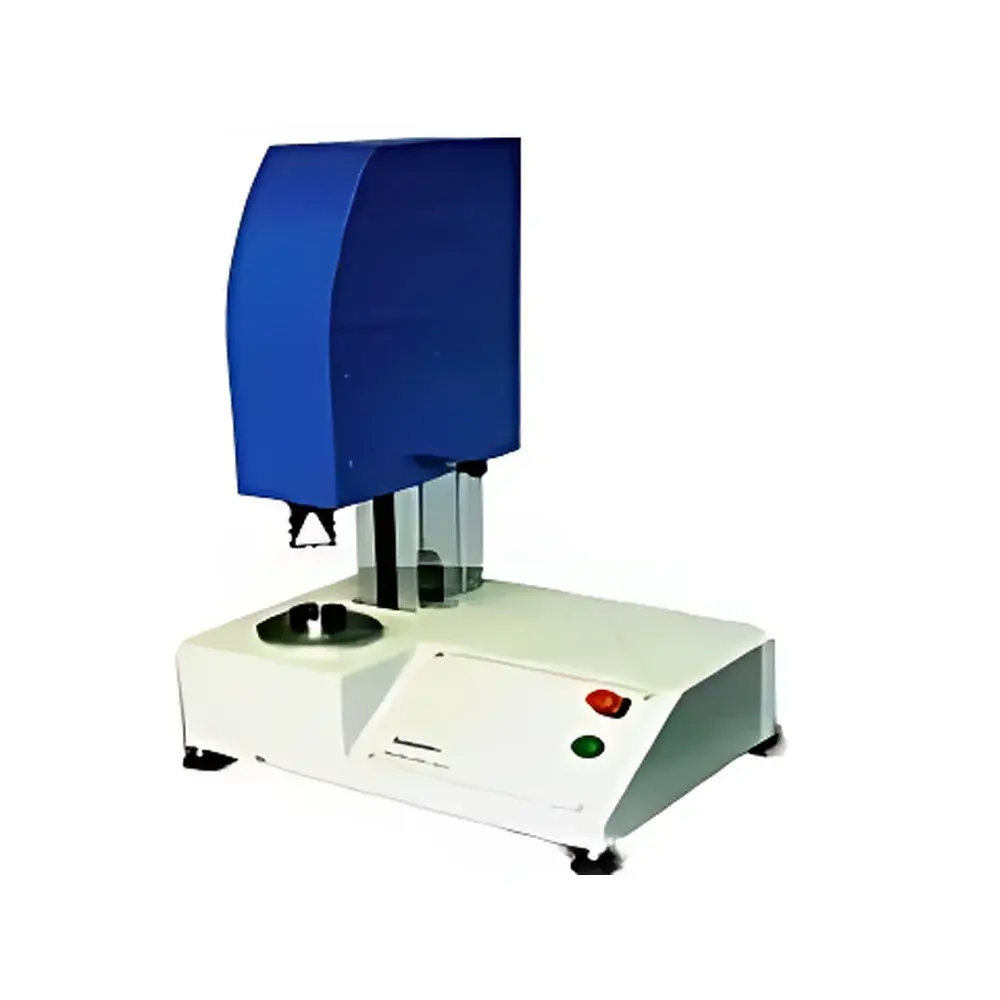
Brabender GlutoPeak Gluten Aggregation Tester
| Brand | Brabender |
|---|---|
| Origin | Germany |
| Model | GlutoPeak |
| Operating Speed | 3333 rpm |
| Test Temperature | 33 °C (thermostatically controlled, double-jacketed cup) |
| Sample Mass | 3–10 g |
| Typical Test Duration | 60–600 s |
| Output Parameters | Peak Time (s), Peak Torque (mN·m), Curve Shape Profile |
| Compliance | Designed for ISO 21415-1, ICC Standard No. 178, AACC Method 22-85 |
Overview
The Brabender GlutoPeak Gluten Aggregation Tester is a dedicated rotational mixing instrument engineered to quantitatively assess the gluten aggregation behavior of wheat flour, wholemeal flour, and isolated gluten suspensions. It operates on the principle of controlled high-shear hydration and mechanical induction of gluten network formation under standardized thermal and hydrodynamic conditions. During testing, a precisely weighed sample (3–10 g) is dispersed in a fixed volume of water (typically 10 g) within a thermostatically regulated, double-jacketed sample cup maintained at 33 °C — a temperature selected to reflect optimal gluten viscoelastic development without thermal denaturation. The system applies a constant rotational speed of 3333 rpm via a precision-machined paddle, generating reproducible shear stress that initiates hydration, protein swelling, and subsequent disulfide-mediated cross-linking of gliadin and glutenin fractions. The resulting torque response—measured in real time via a high-resolution load cell—is directly proportional to the evolving resistance of the forming gluten matrix. This yields a characteristic torque-time curve: an initial lag phase (hydration), followed by a sharp ascending limb (network assembly), a distinct peak (maximum structural integrity), and a descending limb (mechanical breakdown). The GlutoPeak thus delivers objective, operator-independent metrics—primarily peak time (tmax) and peak torque (τmax)—that correlate strongly with functional baking performance, dough strength, and end-product quality.
Key Features
- Thermostatic double-jacketed sample cup ensuring ±0.2 °C stability at 33 °C throughout the entire test cycle
- Precision-engineered stainless-steel paddle with defined geometry and dynamic balancing for consistent shear field generation
- High-resolution torque transducer (resolution ≤ 0.01 mN·m) and real-time data acquisition at ≥10 Hz sampling rate
- Automated test initiation, timing, and shutdown—no manual intervention required post-loading
- Compact footprint and modular design compatible with standard laboratory benchtop environments
- Minimal consumables: reusable sample cups and paddles; no disposable cartridges or proprietary reagents
Sample Compatibility & Compliance
The GlutoPeak is validated for use with refined wheat flours (including hard red winter, soft white, durum), wholemeal flours, vital wheat gluten, and gluten-free cereal blends containing gluten-reactive proteins. It accommodates both routine QC screening and R&D-level comparative studies. Methodologically, it aligns with internationally recognized standards including ISO 21415-1 (Cereal and cereal products — Determination of gluten aggregation properties — Part 1: GlutoPeak method), ICC Standard No. 178 (Gluten aggregation test using the GlutoPeak), and AACC International Method 22-85 (Gluten Aggregation Test). Its operational parameters support GLP-compliant documentation when integrated with Brabender’s optional audit-trail-enabled software package, fulfilling traceability requirements per FDA 21 CFR Part 11 for regulated food manufacturing environments.
Software & Data Management
The instrument is operated via Brabender’s proprietary GlutoPeak Control Software, which provides real-time visualization of torque-time curves, automatic peak detection algorithms, and configurable pass/fail thresholds based on user-defined tmax and τmax limits. All raw data—including timestamped torque values, environmental logs (temperature, RPM), and operator metadata—are stored in encrypted .gpk binary format, exportable to CSV or PDF for LIMS integration. The software supports multi-user access control, electronic signatures, and full audit trail functionality, enabling compliance with GMP documentation practices. Batch reporting tools allow statistical analysis across multiple samples (e.g., coefficient of variation for tmax, trend monitoring over production shifts).
Applications
- Flour mill quality assurance: rapid classification of incoming wheat lots and finished flour grades
- Bakery R&D: correlation of GlutoPeak parameters with dough rheology (e.g., Mixolab, Farinograph), bread loaf volume, and crumb structure
- Grain breeding programs: high-throughput phenotyping of gluten strength in segregating populations
- Gluten-free product development: detection of residual gluten aggregation capacity in alternative grain formulations
- Regulatory verification: supporting claims related to “strong”, “medium”, or “weak” gluten content in labeling
- Supplier qualification: objective benchmarking against contractual specifications for gluten functionality
FAQ
What does peak time (tmax) indicate about flour quality?
Peak time reflects the kinetics of gluten network formation — shorter tmax values (e.g., 60–180 s) correspond to rapidly aggregating, strong-gluten flours suitable for pan bread; longer times (300–600 s) indicate delayed or weak aggregation, typical of biscuit or cake flours.
Is calibration required before each test?
No routine recalibration is needed between tests; however, daily verification using a certified torque standard and temperature probe is recommended per ISO/IEC 17025 guidelines.
Can the GlutoPeak replace the Farinograph or Mixolab?
It does not measure dough consistency or starch gelatinization; rather, it complements those instruments by isolating and quantifying the pure gluten aggregation phase — offering orthogonal insight into protein functionality.
How is sample moisture content accounted for?
Users must input the measured moisture content of the flour prior to testing; the software automatically adjusts the dry basis mass calculation to ensure consistent hydration ratios across variable moisture lots.
Is maintenance complex?
Routine maintenance is limited to periodic cleaning of the cup and paddle with ethanol or mild detergent, and annual verification of temperature and torque sensors by an authorized Brabender service technician.



